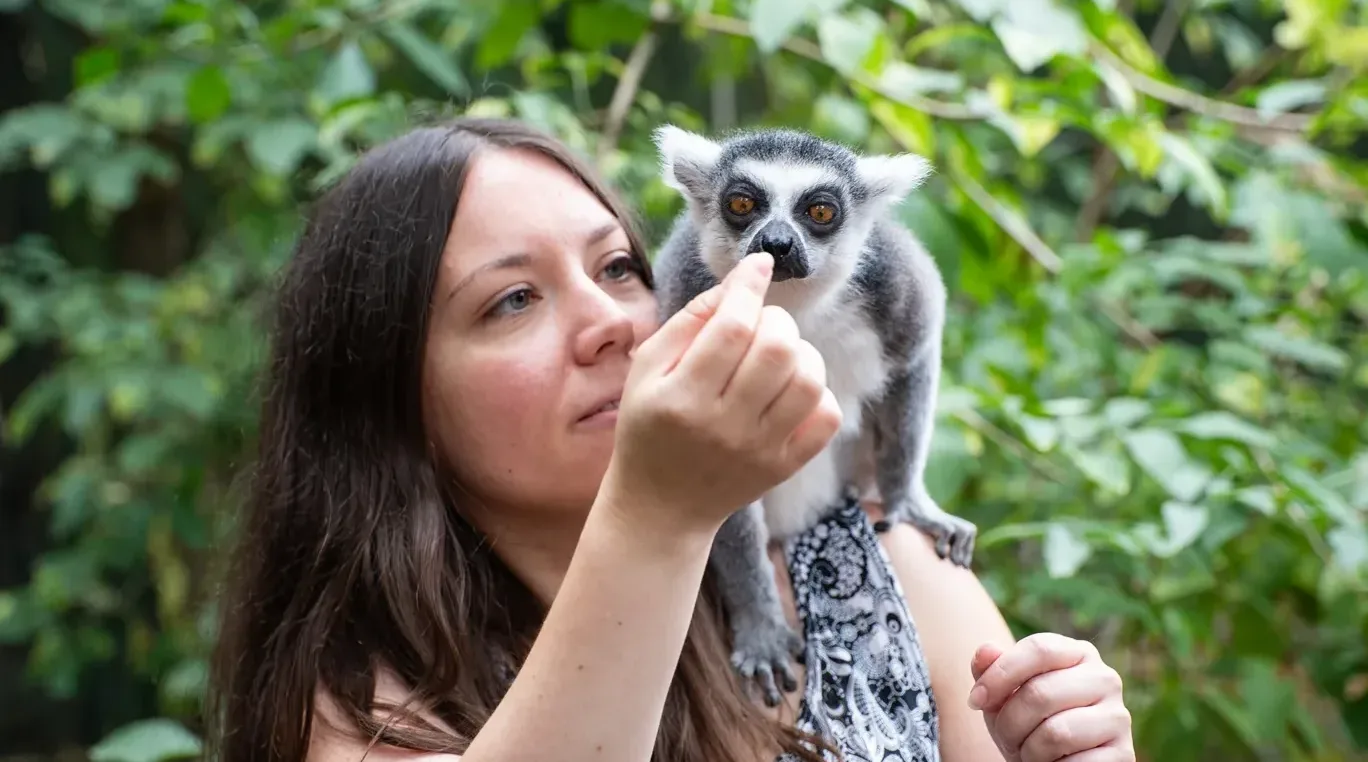
As burnout and psychological distress rise sharply, Zoo d’Amnéville and the University of Lorraine (Centre Pierre Janet and the INSPIIRE laboratory) are launching ZooCare-EMDR. This research program aims to treat work-related distress and mental health challenges by combining EMDR psychotherapy with immersion in the living world at a zoo, without ever forcing animals to participate.
This innovative approach will be presented to prospective donors at a launch and fundraising event on Tuesday, November 17, 2026, starting at 6:00 p.m. at Zoo d’Amnéville. Actress and director Isabelle Nanty will be in attendance.
A major societal challenge
According to an OpinionWay survey*, 45% of working adults in France experience moderate or severe psychological distress. Burnout and work-related exhaustion are on the rise, affecting employees’ health and businesses’ financial stability through absenteeism, employee turnover and extended medical leave.
“Faced with findings like these, we can’t stand by and do nothing,” says Professor Cyril Tarquinio, director of Centre Pierre Janet. “As our society changes, we need to rethink how we care for people and explore new approaches. ZooCare-EMDR is one of these pioneering approaches, backed by a scientific research project.”
*OpinionWay survey conducted for Empreinte Humaine between February and March 2025
An innovative clinical protocol focused on work-related burnout
The first part of the project, ZooCare-Work, is designed for adults experiencing work-related distress, including burnout, anxiety about returning to work, or traumatic events on the job. Through a series of group sessions at the zoo, participants first find space to step back and feel calmer by connecting with nature: observing animals, walking nature trails, and spending time in a therapeutic garden designed with the European Institute of Ecology. They then work through painful workplace experiences using EMDR in a private room away from the animal areas and out of public view.
“Living things are at the heart of the program,” says Albane Pillaire, President of Zoo d’Amnéville. “They connect—and reconnect—us with one another. And here at Zoo d’Amnéville, we have an exceptional setting that feels almost removed from the outside world.” Researchers believe this natural setting may help regulate emotions and support psychotherapy. “Of course, this
would be an indirect form of care. In-depth work with a psychologist remains essential,” Professor Tarquinio explains. The expected clinical outcomes include a significant reduction in burnout (as measured by the SMBM), less rumination, and a renewed ability to set boundaries and recover. Researchers believe this setting may help regulate emotions and support psychotherapy.
The program’s originality and strength lie in its interdisciplinary approach, bringing together clinical psychologists, animal care staff, veterinarians, and researchers.
Animal welfare: essential to the project
The program follows the One Health approach: benefits for people must never come at the expense of animals. The animals’ behavior will be monitored continuously, and staff will have the authority to stop a session immediately if an animal shows signs of stress.
“Even in an enclosed space, an animal must be able to move out of public view and choose whether or not to interact with us. That gives the animal control,” says ethologist Thomas Grangeat, deputy zoological director. The enclosures will be adapted to ensure animals can withdraw whenever they choose.
Seeking donors to bring this medical initiative to life in our region
To move from research to implementation, the project is seeking donors to support four areas of investment:
- Hiring clinical psychologists and research engineers;
- Creating a private clinical space outside the animal areas and dedicated observation areas for groups;
- Funding doctoral fellowships for a research dissertation;
- Creating a social and therapeutic horticulture space with the European Institute of Ecology.
Supporting ZooCare-EMDR means helping build a pioneering model of care for young people and workplace mental health, while placing our region at the forefront of an approach to medicine connected to the living world.
To support the project, visit this page.
What is EMDR therapy?
Recommended by the World Health Organization (WHO) for treating trauma and post-traumatic stress, EMDR (Eye Movement Desensitization and Reprocessing) therapy uses alternating bilateral stimulation—eye movements, tapping, or sounds—to help the brain reprocess painful memories and ease their emotional impact.
ZooCare-EMDR aims to test whether this therapy can also help people experiencing work-related burnout.