Loxodonta africana

African elephant

Order: Proboscidea / Family: Elephantidae / Genus: Loxodonta

What is an African elephant?

The African elephant is the largest land mammal in the world!

Females stand between 2.2 and 2.6 meters tall and weigh between 2,000 and 3,500 kilograms. Males stand between 3.2 and 4 meters tall and weigh between 4,500 and 6,100 kilograms.

It would seem that the largest male encountered to date weighed over 10,800 kilograms! The main distinguishing feature is certainly the trunk; this organ is a fusion of the upper lip with the nose and contains no bones. It can measure 2 meters in length and weigh over 100 kilograms. Studies suggest that it is made up of 100,000 to 150,000 muscles. By comparison, the human body contains only 639 muscles in total! As a result, the trunk is very agile and allows the elephant to grasp its surroundings. In fact, at its tip are two small “fingers” that allow it to pick up small objects. It can delicately pick up a leaf or throw a log several meters away. The trunk also serves for breathing, especially for its sense of smell, and is used to store food or water, up to 15 liters! Equipped with many vibrissae, it allows the elephant to probe its environment by touch. It also has numerous vibrissae on its lower lip, allowing it to easily locate its mouth, which is completely invisible to it.

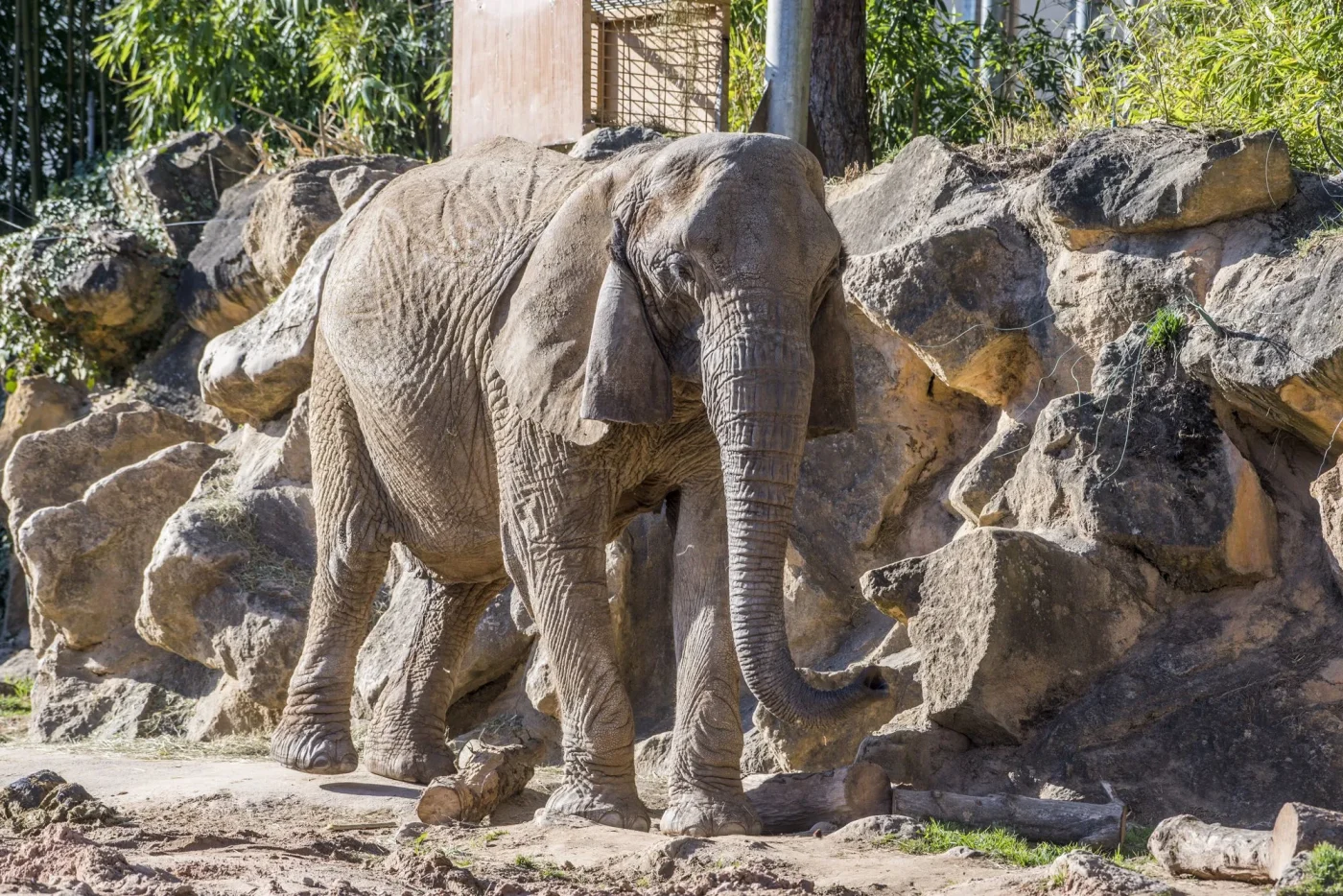
The legs are round and the internal toes are not visible. Only the nails are visible.

The massive head has two large ears that are very thin and highly vascularized, allowing regulation of body temperature. The heat from the blood evaporates during its journey through the ear, so cooler blood returns to the body.

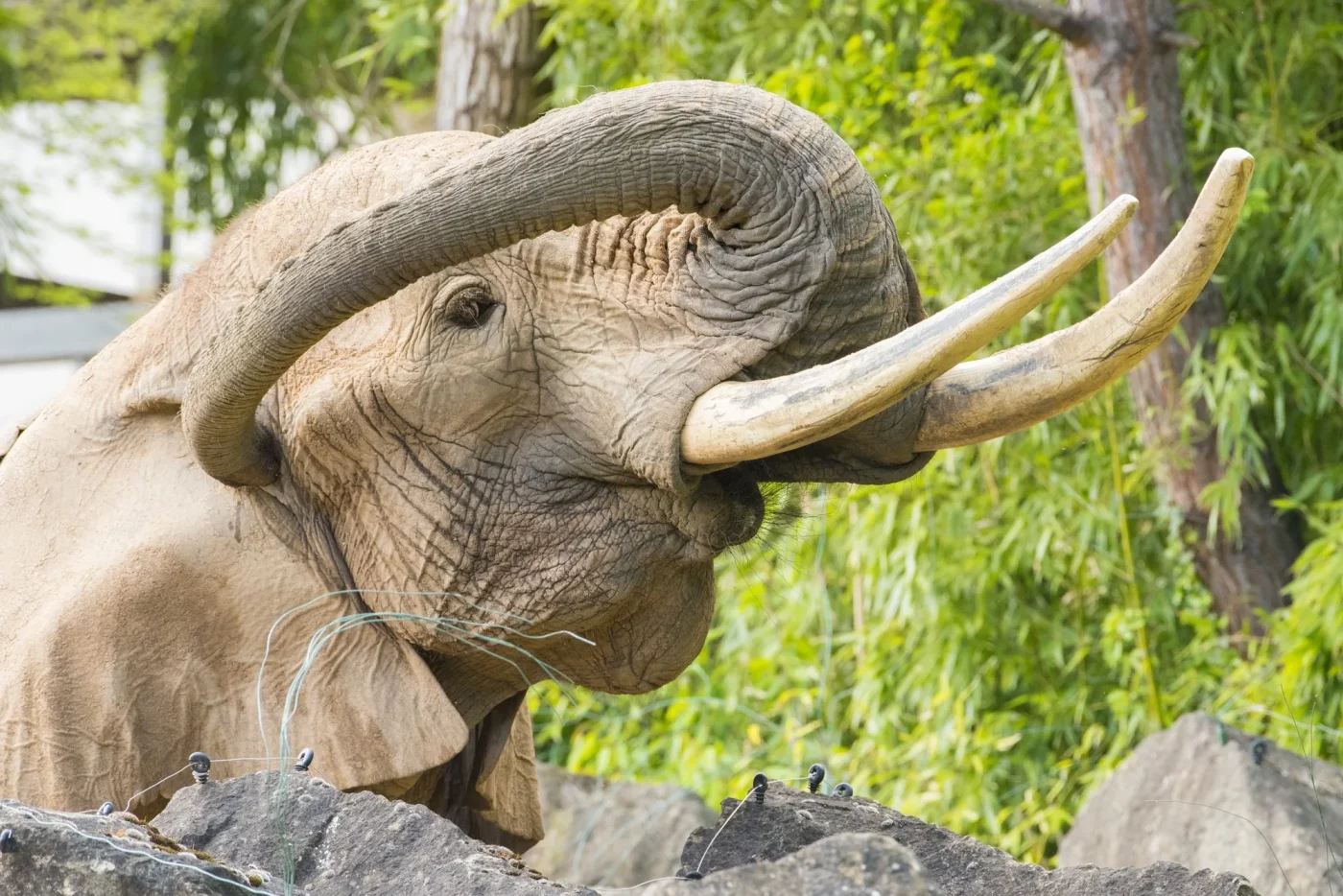
Their tusks are actually overgrown teeth – they are their incisors! They can reach up to 11 feet 6 inches long for the largest individuals and weigh more than 220 pounds each! Some old individuals even have tusks that touch the ground, these are called “big tuskers”—a term that comes from the word “tusk,” which means tusk in English. Including the tusks, the elephant only has six teeth at a time: 2 tusks and 4 (pre)molars. The (pre)molars are replaced six times during the animal’s life; once worn out, a molar moves forward and makes room for the next one. After the sixth replacement, there are no more teeth left to replace the old ones. The first three teeth to come in are the premolars, followed by the three molars. That makes 24 (pre)molars over the course of an individual’s life.

This pachyderm has thick skin about 3 centimeters (1.2 inches) with a grayish color. The skin is mostly rough and wrinkled, but smooth areas are present at delicate spots such as at the joints and the belly. Hair is rare but can be found along the back, around the tail, around the eyes, around the mouth, and on the trunk.

Recent studies have shown that African elephant skin is not flat but is made up of many papillae and deep crevices. These crevices are crucial for the elephant’s survival because they allow the skin to store 5 to 10 times more water than smooth skin. This water evaporates slowly using the body’s heat, which helps prevent overheating.

Studies have shown that, on the contrary, the skin of Asian elephants does not have deep crevices. This could be explained by the fact that they live in less hot, more humid areas where temperature regulation by evaporation is not as necessary.

Weight

2 to 3.5 t for females and 4.5 to 6.2 t for males

Habitat

Savanna, grassland, forest, desert, delta, marsh, coast

Diet

Herbivore

Gestation

22 months

Longevity

60-70 years

Longevity

12-17 years

Location

Mali, South Africa, and Ethiopia
Frequently Asked Questions

Where does the African elephant live?

Historically, the African savanna elephant was present throughout the African continent. Nowadays, it has disappeared from most of its original range and only occupies 15% of it.

Currently, it is found from Mali in the north and west to South Africa in the south and Ethiopia in the east.

They inhabit many different environments such as savannas, bushlands, grasslands, forests, and even deserts.

There are 3 species of elephants on Earth: one in Asia and two in Africa.

The Asian elephant, Elephas maximus, and the African elephants, which are divided into 2 species, Loxodonta africana and Loxodonta cyclotis, known respectively as the savanna elephant and the forest elephant. Forest elephants are generally smaller and have thinner and straighter tusks, which help them move through the forest.

Behavior

A gregarious animal, it lives in herds of 6 to 70 individuals led by the matriarch, often the oldest in the group. The males are solitary.

They are active animals throughout the 24 hours of a day. Constantly searching for food, they sleep only 4 hours per day, with periods of rest early in the morning and around midday.

They cover an average distance of 10 kilometers per day, but this depends on the food density. If there are abundant food resources, they will move very little; on the other hand, they can travel up to 40 kilometers in a single day if food becomes scarce. Therefore, it is not uncommon to see them undertake migrations of several hundred kilometers over the course of the seasons.

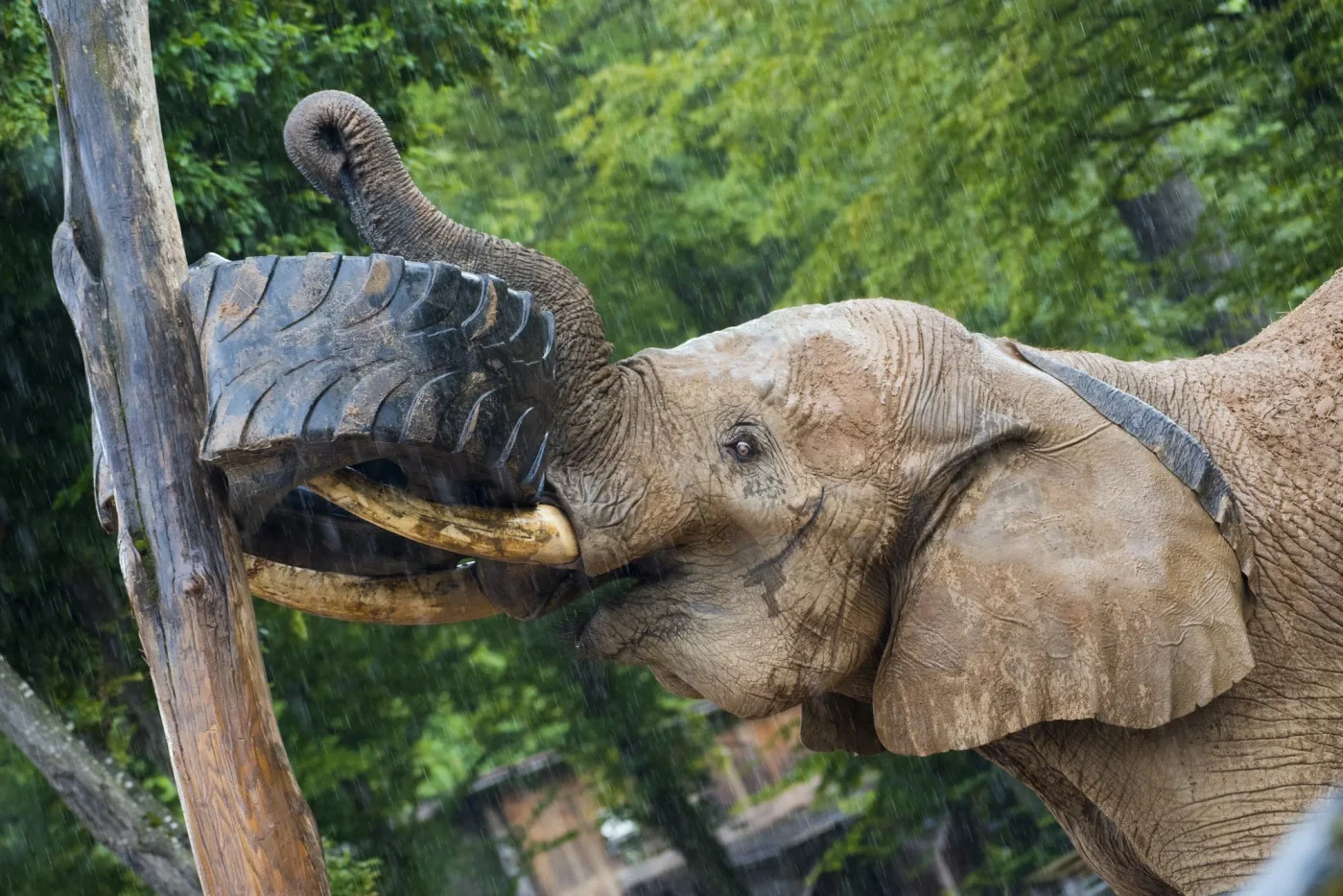
They use their trunks to spray themselves with water or to cover themselves with mud in order to protect their skin, maintain hydration, and regulate body temperature. They enjoy taking baths in water, mud, or dust.

Among elephants, communication is carried out through many vocalizations: grunting, rumbling, sniffing, and trumpeting. They are capable of emitting very low-frequency sounds, around 20 Hz, allowing them to communicate over several kilometers. In this way, they can warn other herds of their presence or signal that they are ready to reproduce.

They also use certain postures, their ears, trunk, and the sense of touch to communicate.

The elephant is considered a bioengineering species because of its importance for biodiversity. For example, it positively influences the diversity of reptiles and amphibians due to its ability to create diverse habitats when it breaks a tree.

It seems that elephants and white egrets have a mutualistic relationship. The birds rid the skin of all the parasites found there and are thus fed. This is therefore beneficial both to the elephant and the bird.

What does he eat?

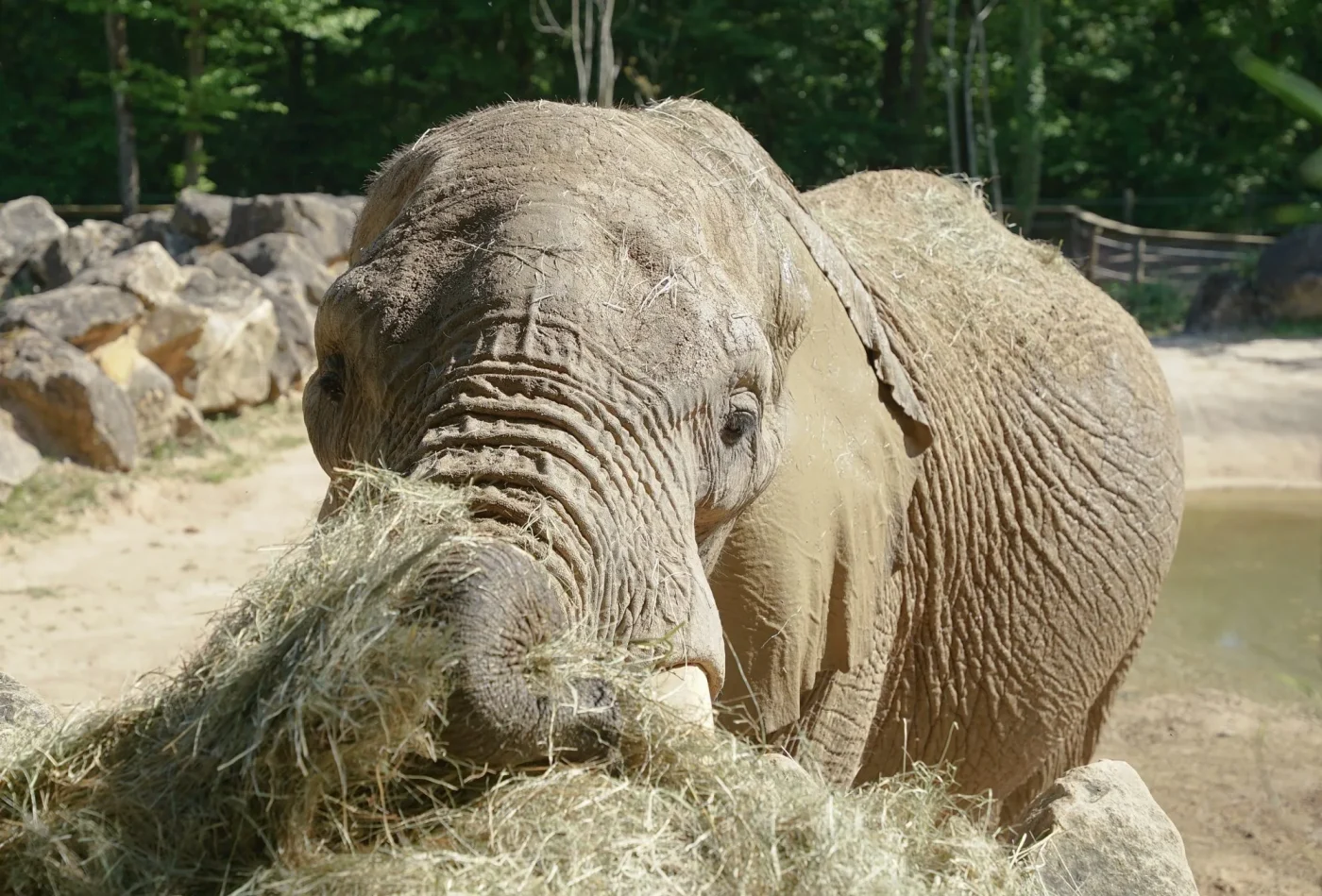
African savanna elephants are herbivores and consume a wide variety of foods: leaves, fruits, grasses, wood, bark, roots…

They are capable of knocking down relatively small trees to access food more easily. They can also stand on their two hind legs to reach food higher up.

Additionally, they use their trunk to store both food and water, which they will then pour into their mouth. During the dry season, an elephant consumes between 150 and 170 kilograms per day, with diets made up of 80% grass and 20% wood. During the rainy season, it consumes between 200 and 280 kilograms, with diets composed of 60% grass and 40% wood. To avoid deficiencies, they sometimes eat earth, which is rich in minerals. They drink between 80 and 200 liters of water per day.

Reproduction strategy

Reproduction takes place throughout the year. Males detect females in heat thanks to the smell of their urine. From that point, the solitary male approaches the group of females and marks the area using his tusks and a chemical substance on trees and bushes. Confrontations can break out between males for access to females. The winner then tries to court the female by caressing her with his trunk until she reciprocates. A female may mate with several males during her heat.

After 22 months of gestation, the female most often gives birth to one calf at a time; cases of twins are relatively rare. Birth takes place away from the group and the male does not participate in parental care. All members of the clan help raise the young. Due to the investment the mother makes in her calf, she only gives birth every 3 to 9 years and will, on average, only have 4 calves in her lifetime.

Newborns weigh between 90 and 120 kilograms and are weaned at around 4 months but continue to nurse for comfort until 3 years old. They become independent at about 8 years, but sexual maturity comes only at 11 years for females and 20 years for males.

Life expectancy is between 60 and 70 years.

Lions, African wild dogs, hyenas, and crocodiles may attack the young. As for adults, they very rarely fall prey to predators.

Conservation

The IUCN has classified the African savanna elephant as endangered. This is justified by the halving of the population over the past 75 years. Nevertheless, this population decline is not uniform across the entire African continent. In fact, some populations are stable or increasing, while others are experiencing varying degrees of decline.

Legal hunting in certain areas as well as poaching for their meat, skin, and tusks, which are made of ivory, greatly impact the species.

Moreover, human expansion leads to loss of habitat. To slow the decrease in their numbers, certain populations are relocated to protected areas. Unfortunately, about 70% of their range is still unprotected.

Life at the park

Here at the Amnéville zoo live a male, Niko (26 years old), and a female named Inga (40 years old) who both came from a circus.

Other animals to discover