What is an African elephant?
The African elephant is the largest land mammal in the world!
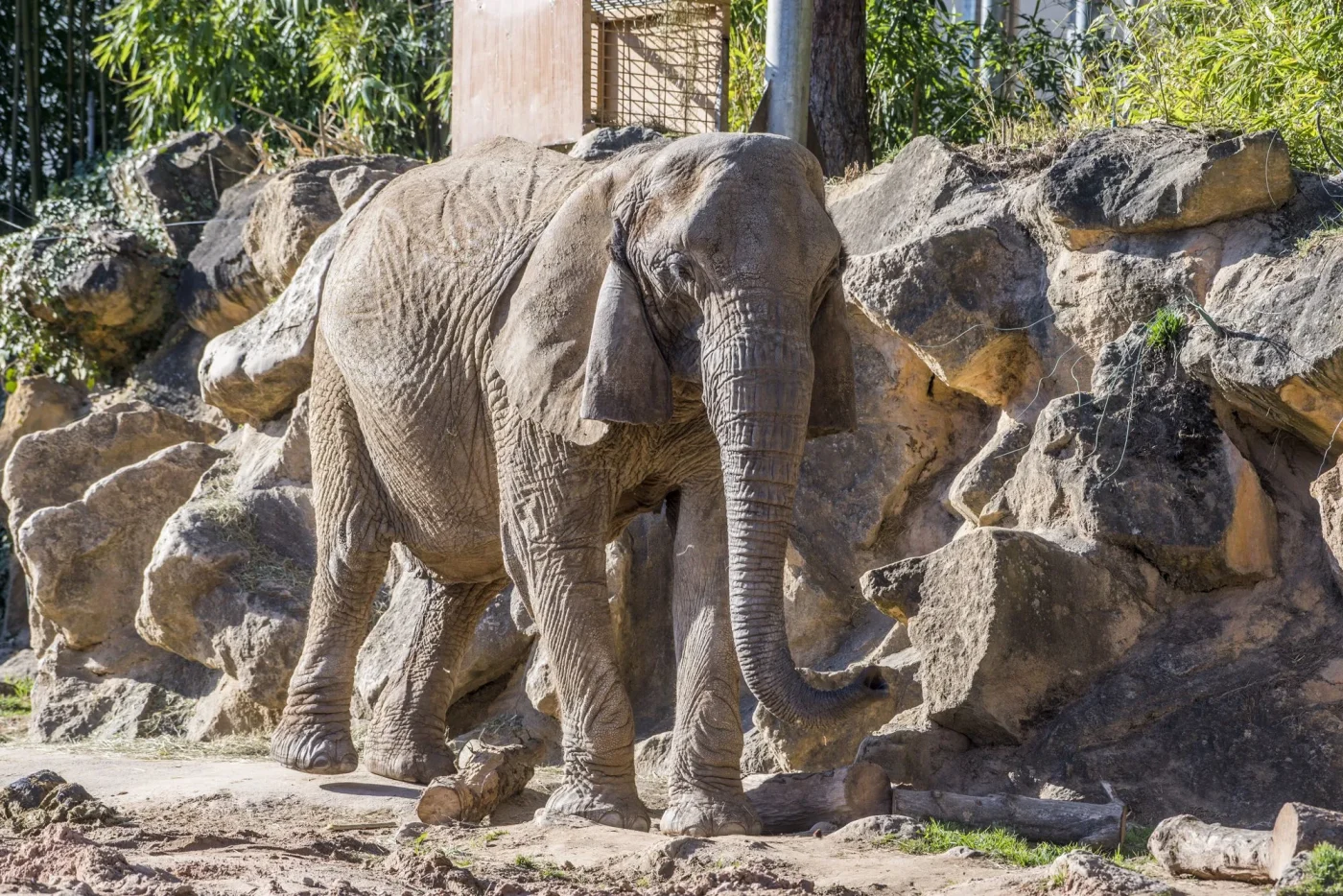
Females stand between 2.2 and 2.6 meters tall and weigh between 2,000 and 3,500 kilograms. Males stand between 3.2 and 4 meters tall and weigh between 4,500 and 6,100 kilograms.
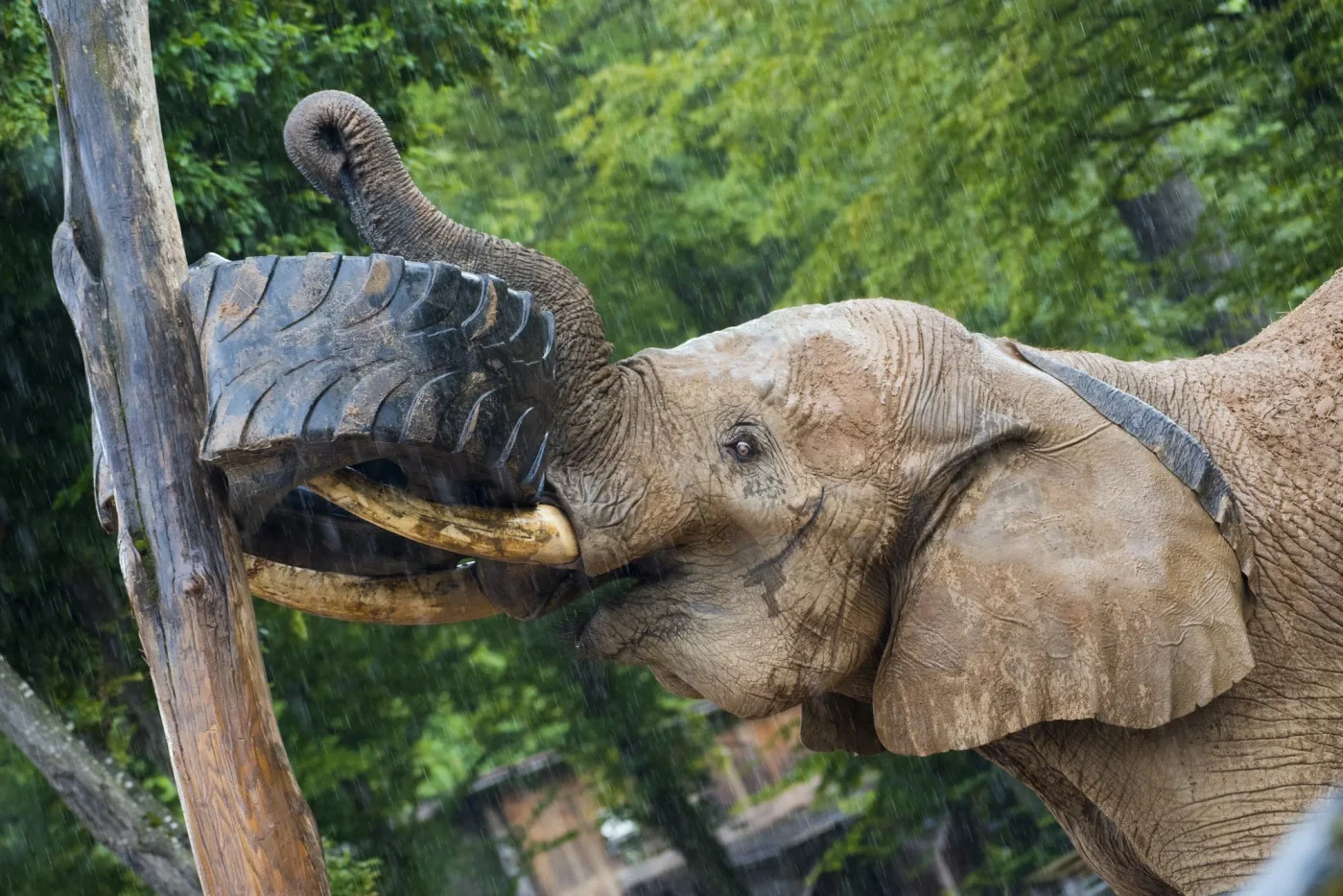
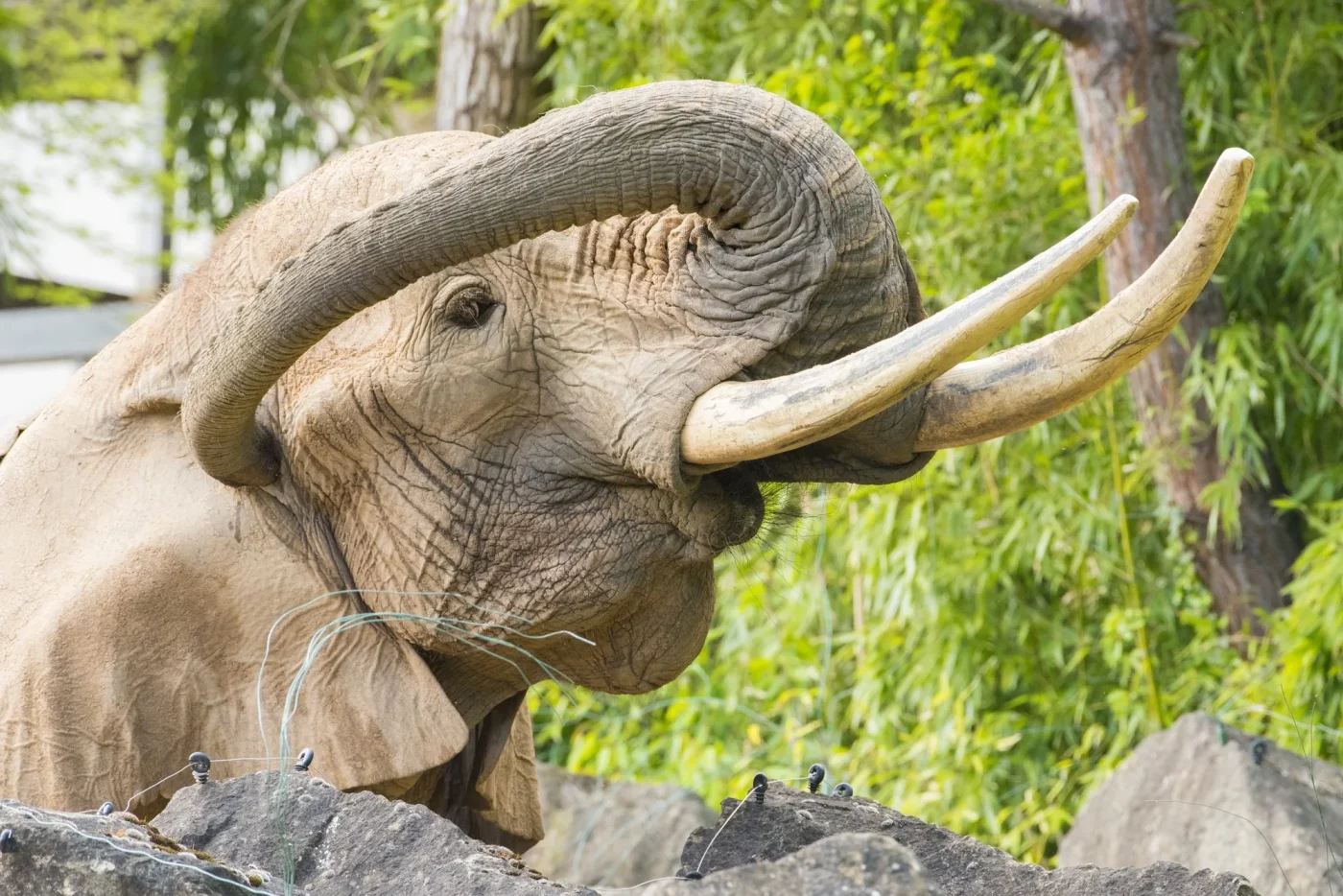
It would seem that the largest male encountered to date weighed over 10,800 kilograms! The main distinguishing feature is certainly the trunk; this organ is a fusion of the upper lip with the nose and contains no bones. It can measure 2 meters in length and weigh over 100 kilograms. Studies suggest that it is made up of 100,000 to 150,000 muscles. By comparison, the human body contains only 639 muscles in total! As a result, the trunk is very agile and allows the elephant to grasp its surroundings. In fact, at its tip are two small “fingers” that allow it to pick up small objects. It can delicately pick up a leaf or throw a log several meters away. The trunk also serves for breathing, especially for its sense of smell, and is used to store food or water, up to 15 liters! Equipped with many vibrissae, it allows the elephant to probe its environment by touch. It also has numerous vibrissae on its lower lip, allowing it to easily locate its mouth, which is completely invisible to it.
The legs are round and the internal toes are not visible. Only the nails are visible.
The massive head has two large ears that are very thin and highly vascularized, allowing regulation of body temperature. The heat from the blood evaporates during its journey through the ear, so cooler blood returns to the body.
Their tusks are actually overgrown teeth – they are their incisors! They can reach up to 11 feet 6 inches long for the largest individuals and weigh more than 220 pounds each! Some old individuals even have tusks that touch the ground, these are called “big tuskers”—a term that comes from the word “tusk,” which means tusk in English. Including the tusks, the elephant only has six teeth at a time: 2 tusks and 4 (pre)molars. The (pre)molars are replaced six times during the animal’s life; once worn out, a molar moves forward and makes room for the next one. After the sixth replacement, there are no more teeth left to replace the old ones. The first three teeth to come in are the premolars, followed by the three molars. That makes 24 (pre)molars over the course of an individual’s life.
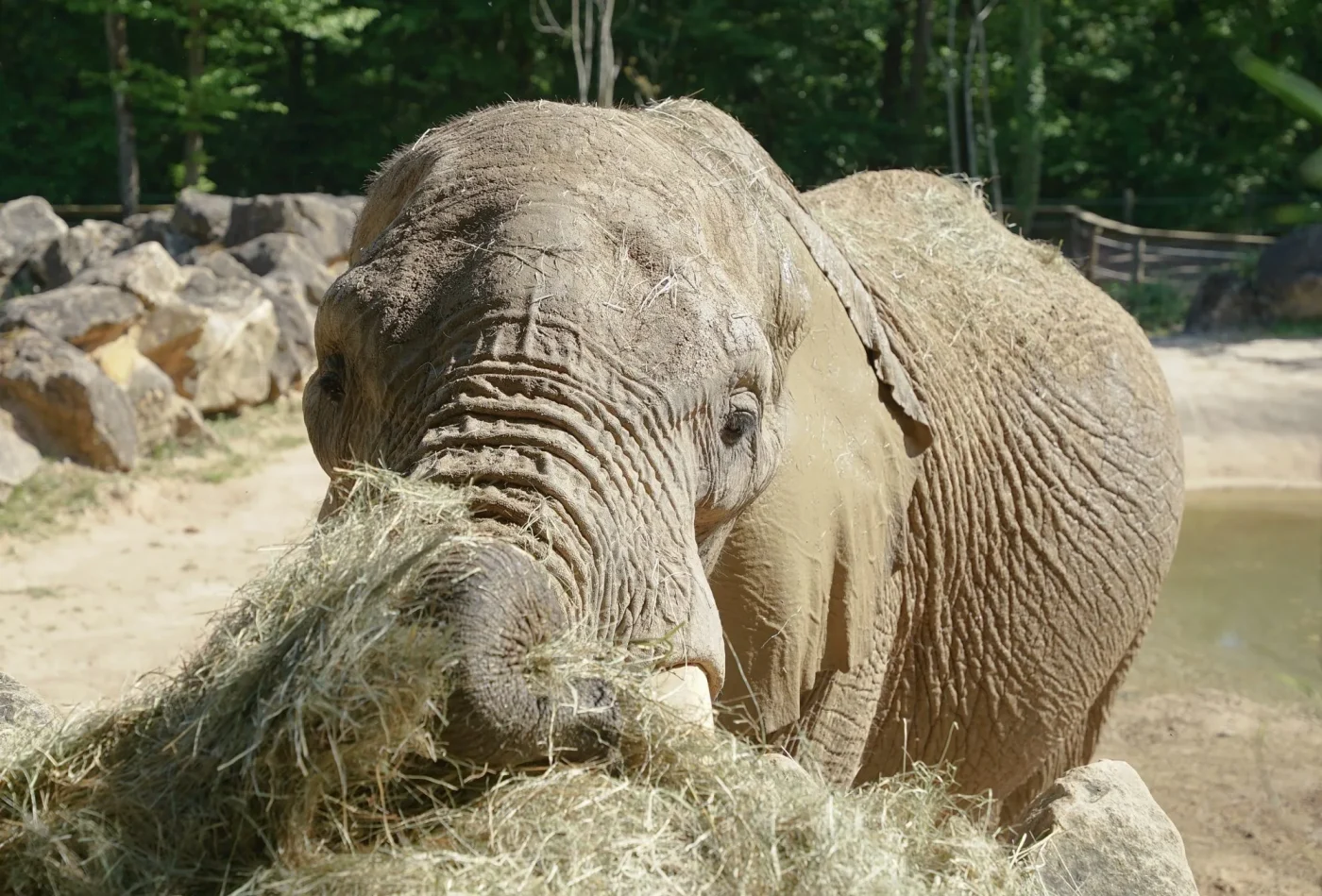
This pachyderm has thick skin about 3 centimeters (1.2 inches) with a grayish color. The skin is mostly rough and wrinkled, but smooth areas are present at delicate spots such as at the joints and the belly. Hair is rare but can be found along the back, around the tail, around the eyes, around the mouth, and on the trunk.
Recent studies have shown that African elephant skin is not flat but is made up of many papillae and deep crevices. These crevices are crucial for the elephant’s survival because they allow the skin to store 5 to 10 times more water than smooth skin. This water evaporates slowly using the body’s heat, which helps prevent overheating.
Studies have shown that, on the contrary, the skin of Asian elephants does not have deep crevices. This could be explained by the fact that they live in less hot, more humid areas where temperature regulation by evaporation is not as necessary.