Zalophus californianus

California sea lion

Order: Carnivora / Family: Otariidae / Genus: Zalophus

What is a California sea lion?

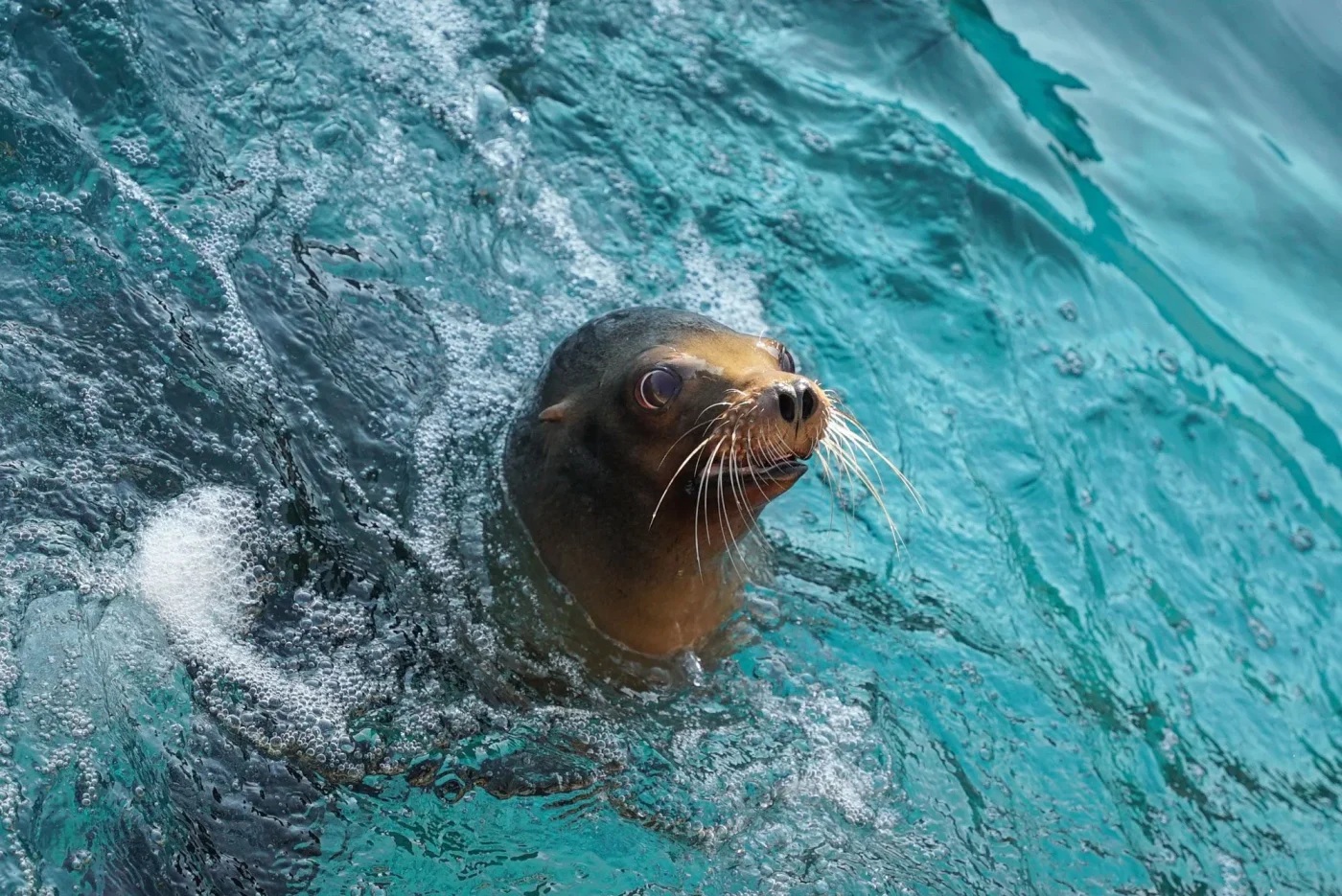
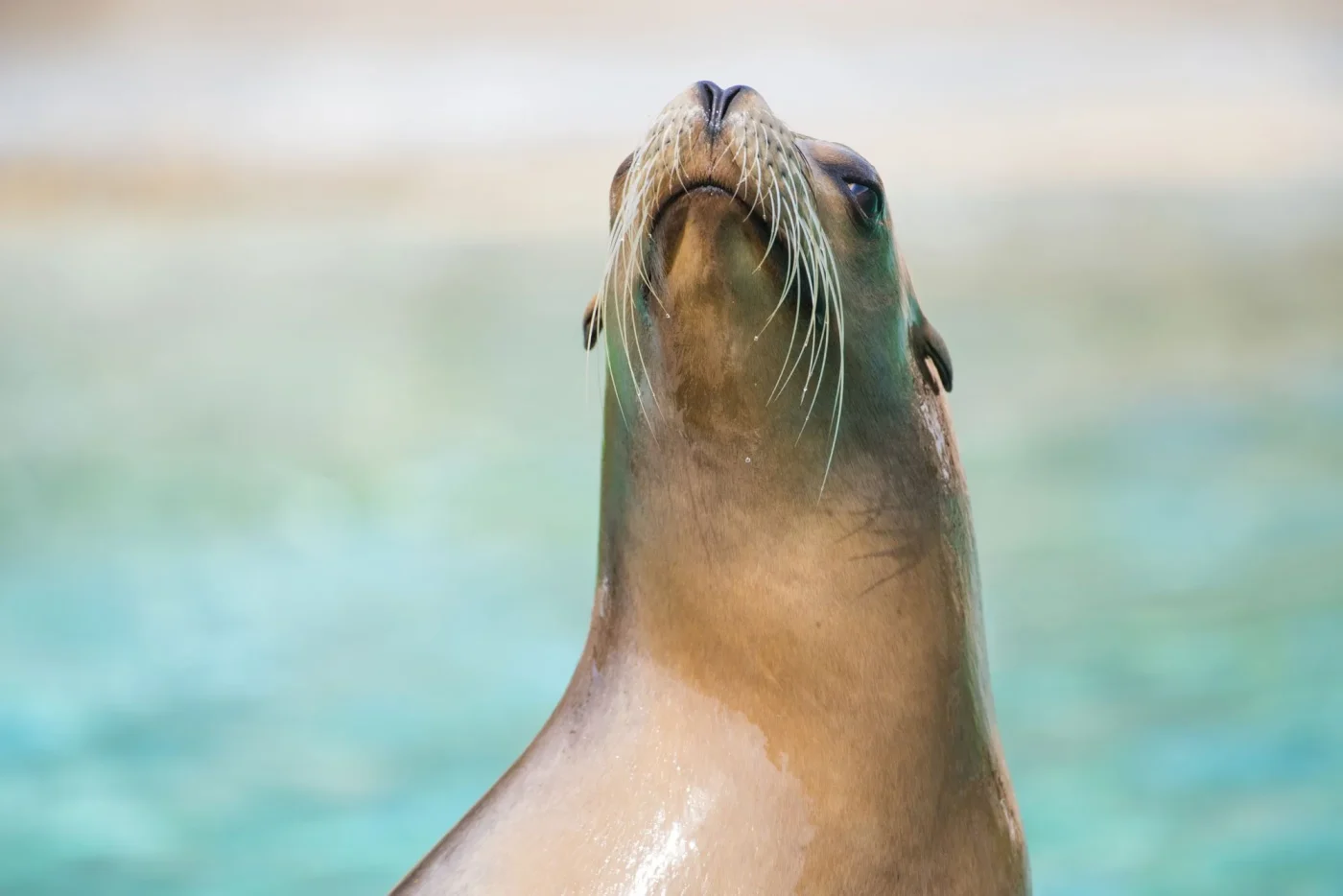
California sea lions have dark brown to black fur with lighter areas on the belly and sides. They have clearly visible external ear flaps at the ears, which also makes it easy to distinguish them from seals, who do not have them and only have a hole. All four limbs are robust enough to allow them to stand on them and run. They end in flippers with claws.

It is easy to distinguish a female from a male because there is a strong sexual dimorphism. Adult males weigh three to four times more than females and have darker fur. Males weigh on average 275 kilograms for a length of 2.55 meters, but some individuals can weigh more than 390 kilograms. Females, on the other hand, only weigh 90 kilograms on average for a length of 1.80 meters, up to a maximum of 110 kilograms. In addition to being more robust, males have a sagittal crest, a bony ridge at the top of the skull allowing the attachment of jaw muscles.

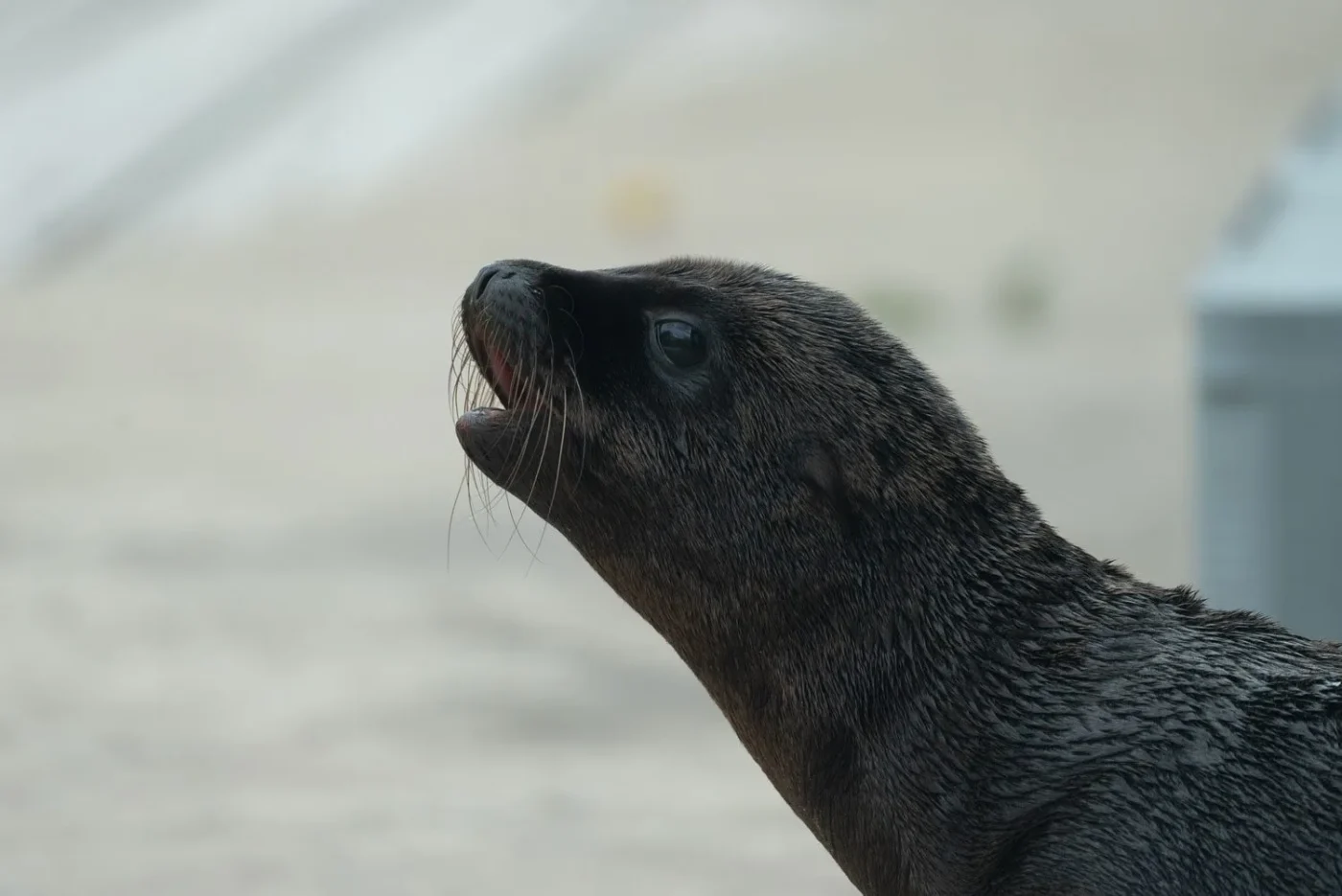
Pups are born with a thick brownish down, which is replaced during a molt by a black adult coat within the first months of their life.

Weight

Male: 2.2m – 200 - 300kg / Female: 2 m - 110 kg

Habitat

Coastal marine environment, supra-littoral and epipelagic zones

Diet

Carnivore

Gestation

11 months

Longevity

20 - 25 years

Longevity

12-17 years

Location

West coast of North/Central America and Pacific Ocean
Frequently Asked Questions

Where does the California sea lion live?

The geographic range of the California sea lion, or Zalophus californianus, extends all along the Pacific coasts of Mexico, the United States, and Canada. It is also found on the Baja and Tres Marias islands, the Galapagos, as well as in the Sea of Japan.

California sea lions, often called sea lions, are one of 14 species of sea lions living on Earth. They mainly frequent the seacoasts, but some individuals, both males and females, have already been spotted in rivers. These marine mammals also like human-made structures such as docks or oil platforms. During the breeding period, males can be observed defending their territory, while females look after the young, who need a rich diet to develop properly.

Behavior

Outside the breeding season, which lasts from May to July, California sea lions show a geographic separation by sex. Males are found in the northern part of the range, while females are in the south.

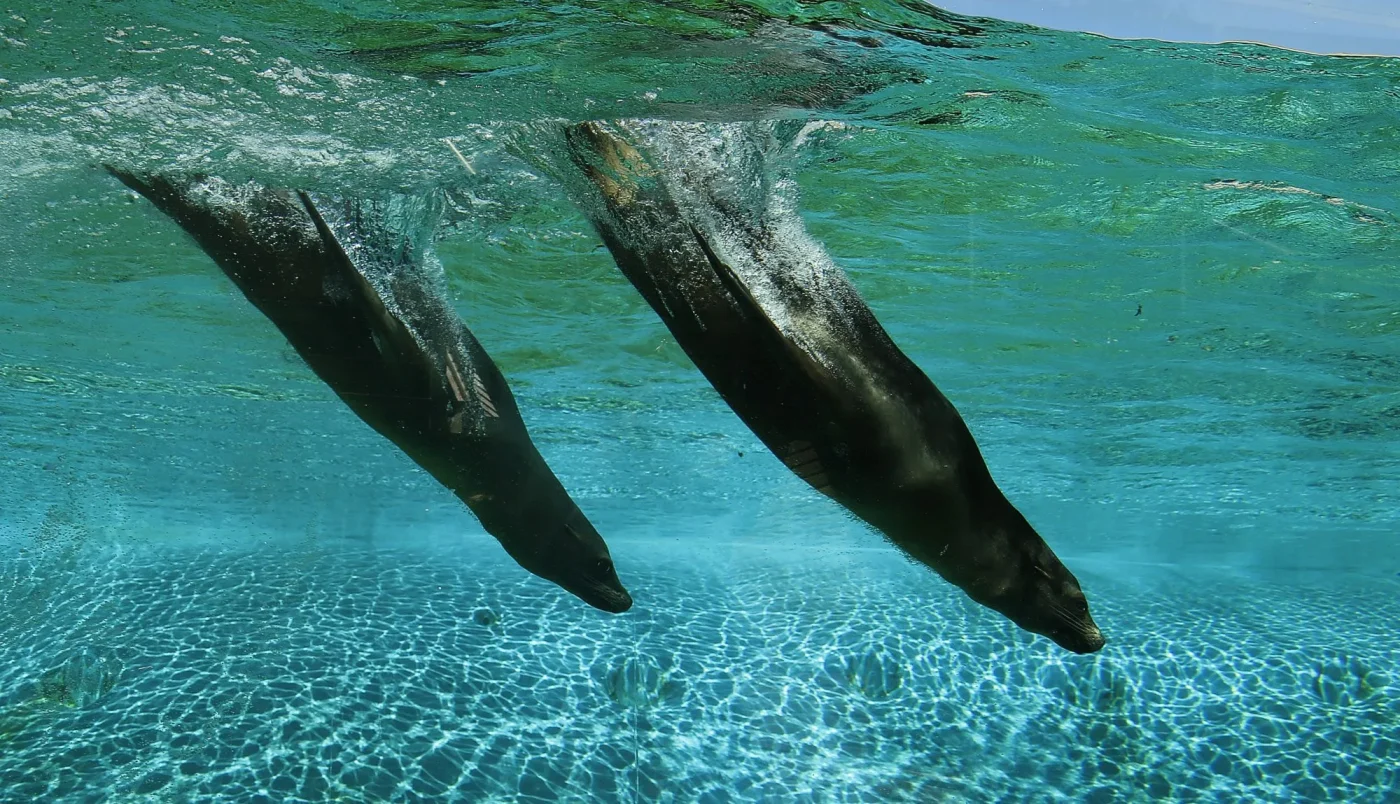
These are semi-aquatic mammals that spend a lot of time on land grooming, resting, and socializing. The sea lion can sleep lying on the ground or standing upright on its legs. Very agile on land, it can gallop at speeds close to 25-30 km/h. However, at the slightest danger, it dives into the water for refuge. Very comfortable in the water, it can swim at over 30 km/h and dive to depths of 274 meters. Like others, it uses echolocation to orient and navigate underwater. It is capable of holding its breath for 5 minutes.

The sea lion cannot sweat or pant, so it depends on external conditions to regulate its body temperature. In order to avoid overheating, it must find shaded areas or take refuge in the water.

What does she eat?

California sea lions feed exclusively in the aquatic environment. Their prey is diverse: anchovies, herring, whiting, hake, squid, octopus…

They can feed alone or in small groups, large gatherings are quite rare and only occur when there is a large amount of food available. Instances of cooperative fishing with other species such as seabirds or cetaceans have already been observed.

The predators of California sea lions are orcas, great white sharks, and bull sharks.

Breeding strategy

The breeding season stretches from May to July, when the females are on land to care for their newborn. Conflicts then arise between males seeking females. The males become territorial in order to occupy the beaches where the females are found. These areas are called rookeries. The male thus stays on land to remain with his partners and does not eat at all during this entire period. That is why there is a renewal of males about every 2 weeks.

Gestation lasts 11 months, so the females give birth to their pups from May to June. They then gather in large numbers on the beaches for birthing and for caring for the young during the first weeks. Females go into heat 28 days after giving birth. This is when the males arrive for mating, and then the pattern repeats year after year. At birth, the young sea lions measure about 75 centimeters long and weigh 5 to 6 kilograms.

The young are nursed for 6 to 12 months, depending on the mother’s vigor or the availability of food resources.

After the breeding season, some males migrate northward to the southeast of Alaska! Others remain all year long along the California coast.

The young become independent after one year and will reach sexual maturity at about 4 or 5 years.

The maximum lifespan is 17 years in the wild and can reach up to 31 years in zoos. It is even possible to determine the age of sea lions by counting the number of rings on cross-sections of their teeth.

What is she threatened by?

The IUCN classifies the California sea lion as of Least Concern.

Yet it was brought to the brink of extinction by sealers until hunting was banned in 1980. Today, the population is estimated at 180,000 sexually mature individuals and it is protected in almost all of its geographic range.

However, every year many individuals drown in fishing nets, are poisoned by pollutants, or succumb to new diseases present in the environment due to invasive species.

Other animals to discover