Nasua nasua

Red coati

Order: Carnivora / Family: Procyonidae / Genus: Nasua

What is a South American coati?

The South American coati, or otherwise called the common coati, is a mammal that is part of the Procyonidae family. This family also includes the raccoon and the kinkajou. There are 3 species of coatis: the South American coati (Nasua nasua), the white-nosed coati (Nasua narica), and the mountain coati (Nasua olivacea).

The South American coati has 12 subspecies, differing in colors, size, and geographical distribution.

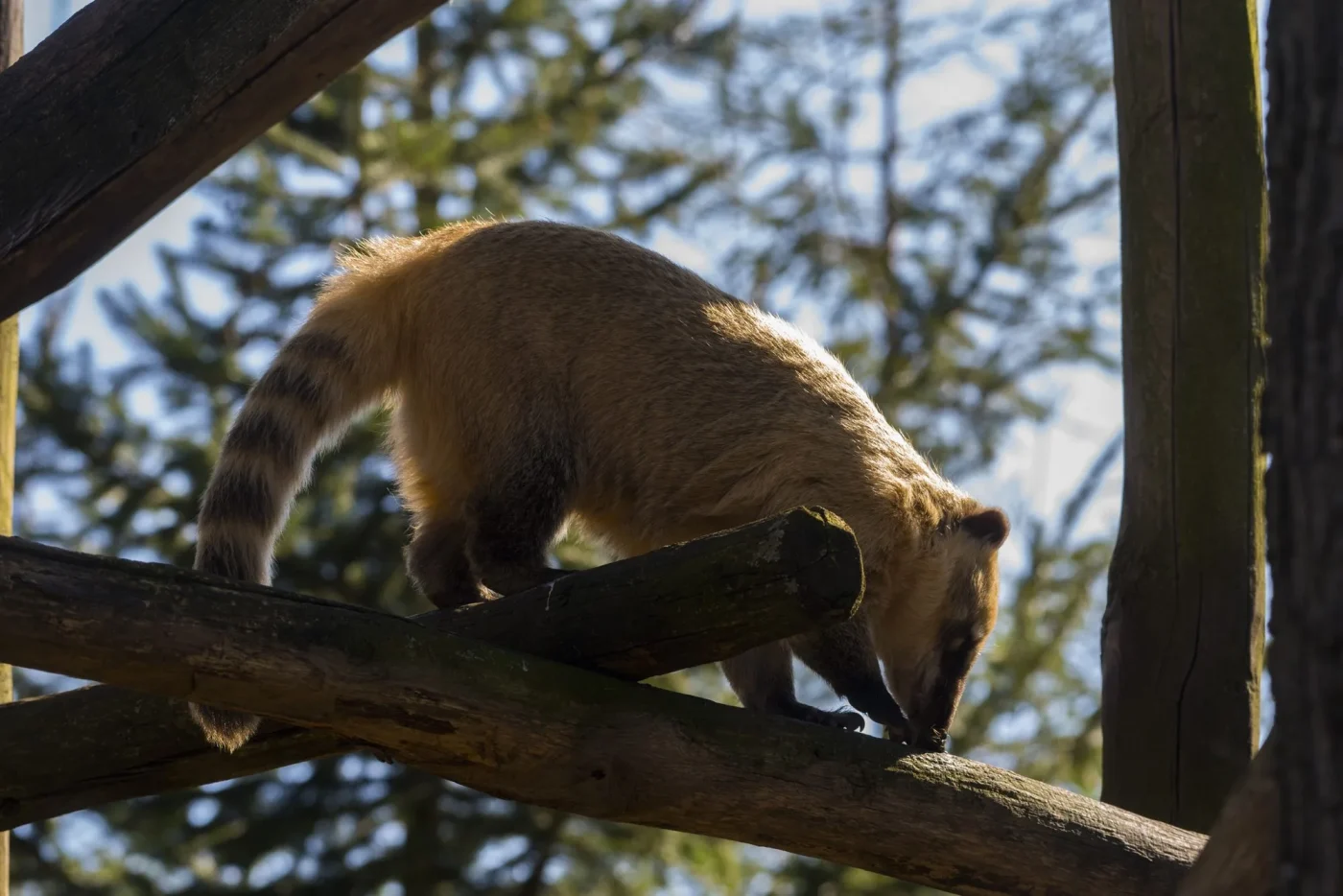
It owes its name to the rust-brown color of its fur as well as its long tail, ringed with yellow and used for balance. Its tail, measuring almost as long as its own body, can reach 32 to 69 cm depending on the individual. Males are generally larger and heavier than females. Its long tail and long non-retractable claws allow it to climb and move easily and smoothly in trees. It can rotate its ankle joint in order to descend a tree headfirst.

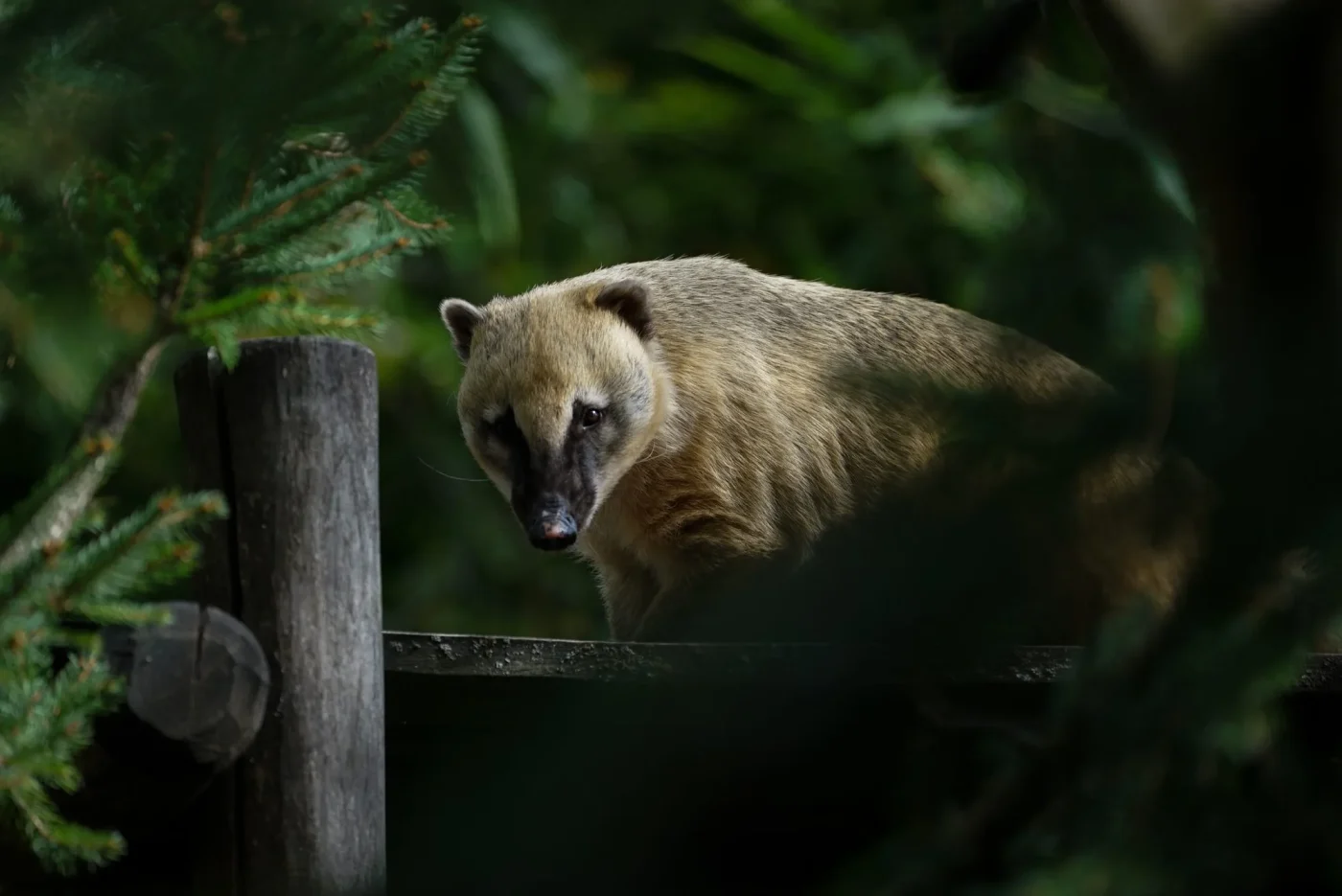
The word “coati” means “long nose” in the Guarani language. Indeed, its head ends in a long, pointed, mobile snout, allowing it to dig in the ground.

Weight

3.5 to 6 kg

Habitat

Forests and wooded areas

Diet

Omnivore (insects, crustaceans, eggs, mushrooms, berries, small mammals, reptiles)

Gestation

2 and a half months

Longevity

8 years in the wild, up to 15 years in captivity

Longevity

12-17 years

Location

South America from Colombia to northern Argentina
Frequently Asked Questions

Where does the red coati live?

The red coati lives in South America, from Colombia to the north of Argentina. It lives in 12 countries in the Americas: Argentina, Bolivia, Brazil, Venezuela, Guyana, French Guiana, Paraguay, Peru, Suriname, Uruguay, Colombia, and Ecuador.

This species can be found in dry bushy forests, tropical forests, grasslands, and in mountains up to 2,500 meters above sea level. Depending on the habitat, the size of the coati population in a region can vary greatly. A gallery forest, for example, is home to more coatis per km2 than a less dense forest at lower altitude.

What does it eat?

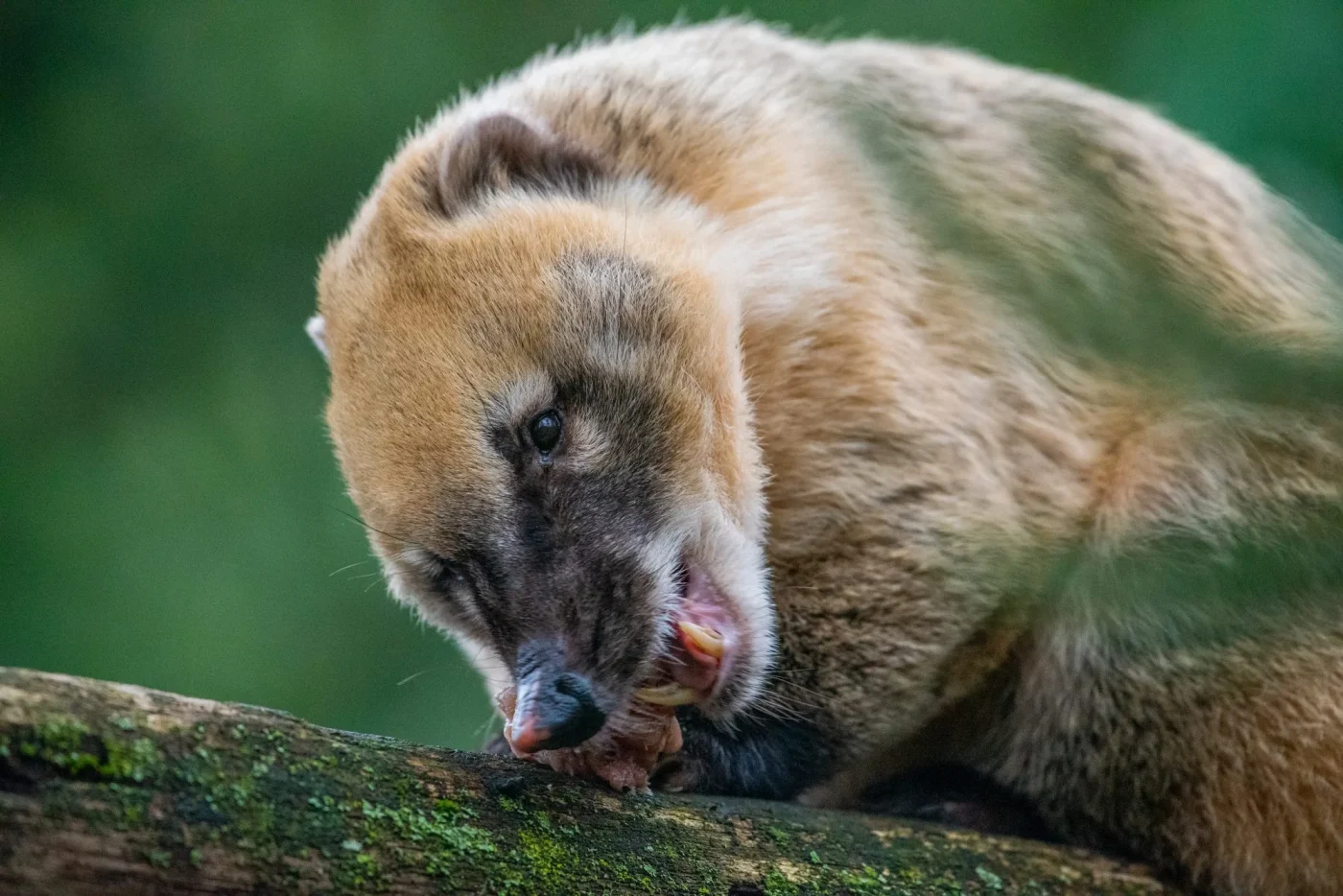
The coati is an omnivore and eats both plants and meat that it finds on the ground or in the trees. It is fond of fruits, eggs, insects, small mammals, lizards, and even carrion.

Reproduction strategy

Males join females during the breeding season, which coincides with the period when fruit availability is at its maximum. The male integrating into the group mates with all present females and then returns to his solitary life. Each female isolates herself and then constructs a rudimentary nest made of twigs, branches, or vines intertwined with leaves, on a branch.

Nest construction, whose structure resembles that of a bird, is quite a rare fact within the order of carnivores. Moreover, it has been observed that building these nests is not limited only to the breeding season. They are also used for resting during the day or sleeping at night.

The female gives birth to 3 to 7 young, about 74 to 77 days after mating. At birth, coatis have no fur, weigh about 78 grams, and have their eyes closed. It is after ten days that they open their eyes, after 20 they start to walk, and at nearly 30 days they are able to climb. Five to six weeks later, different females and their young gather together again to raise them collectively. They are weaned at 4 months and become sexually mature between 2 and 3 years old.

Behavior

It is a diurnal, semi-arboreal animal. In fact, the red coati finds much of its food on the ground but rests, breeds, and gives birth to its young in the trees. It has an extraordinary sense of balance, which is very useful for its lifestyle. In addition to being a good climber, the coati is also a good swimmer.

It also has a very good sense of smell as it can detect food up to 25m away.

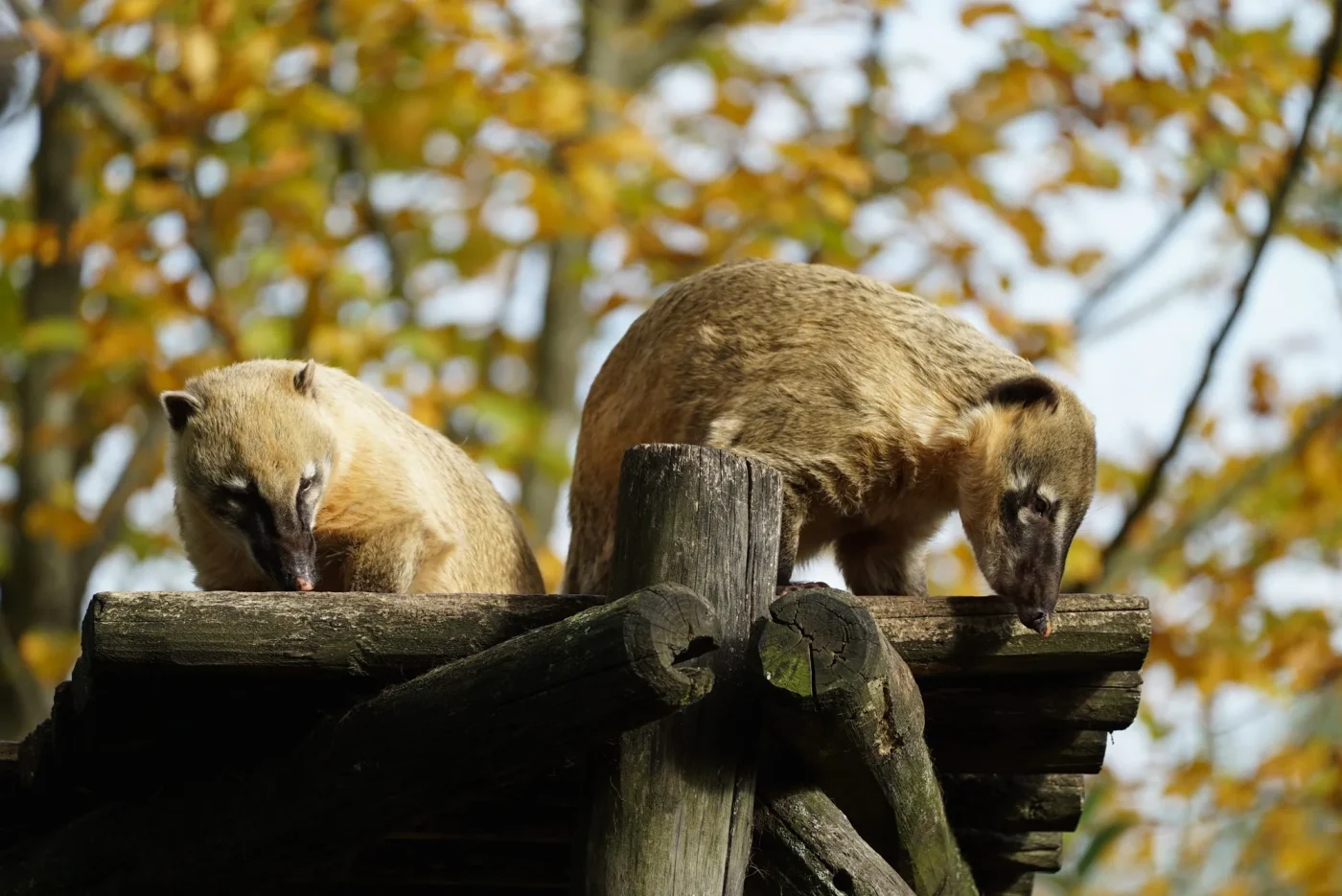
Female coatis live in groups that can reach more than 30 individuals, while males are generally solitary.

What are its predators?

The South American coatis have many predators such as the boa, the jaguar, the puma, the ocelot, and certain birds of prey.

What are its threats?

Coatis play an important ecological role as they regulate pest populations and spread the seeds of the fruits they consume. However, coatis are not always appreciated by local people. This is the result of the damage to crops and dwellings they cause in their search for food. Also, attacks (bites and scratches) from coatis are not uncommon. In some regions, they are even hunted for their meat or their fur.

Additionally, this species is considered invasive; it was introduced in France and, fortunately for our local wildlife, it did not manage to establish itself. On the other hand, it was also introduced in Chile and is thriving there, to the point of endangering some local bird species.

Still quite common and abundant in the wild, this species is not currently considered threatened with extinction, but nonetheless suffers locally from poaching as well as habitat destruction.

Other animals to discover