Ursus maritimus

Polar bear

Order: Carnivora / Family: Ursidae / Genus: Ursus

What is a polar bear?

Its Latin name, Ursus maritimus literally means maritime bear and it is often considered a marine mammal.

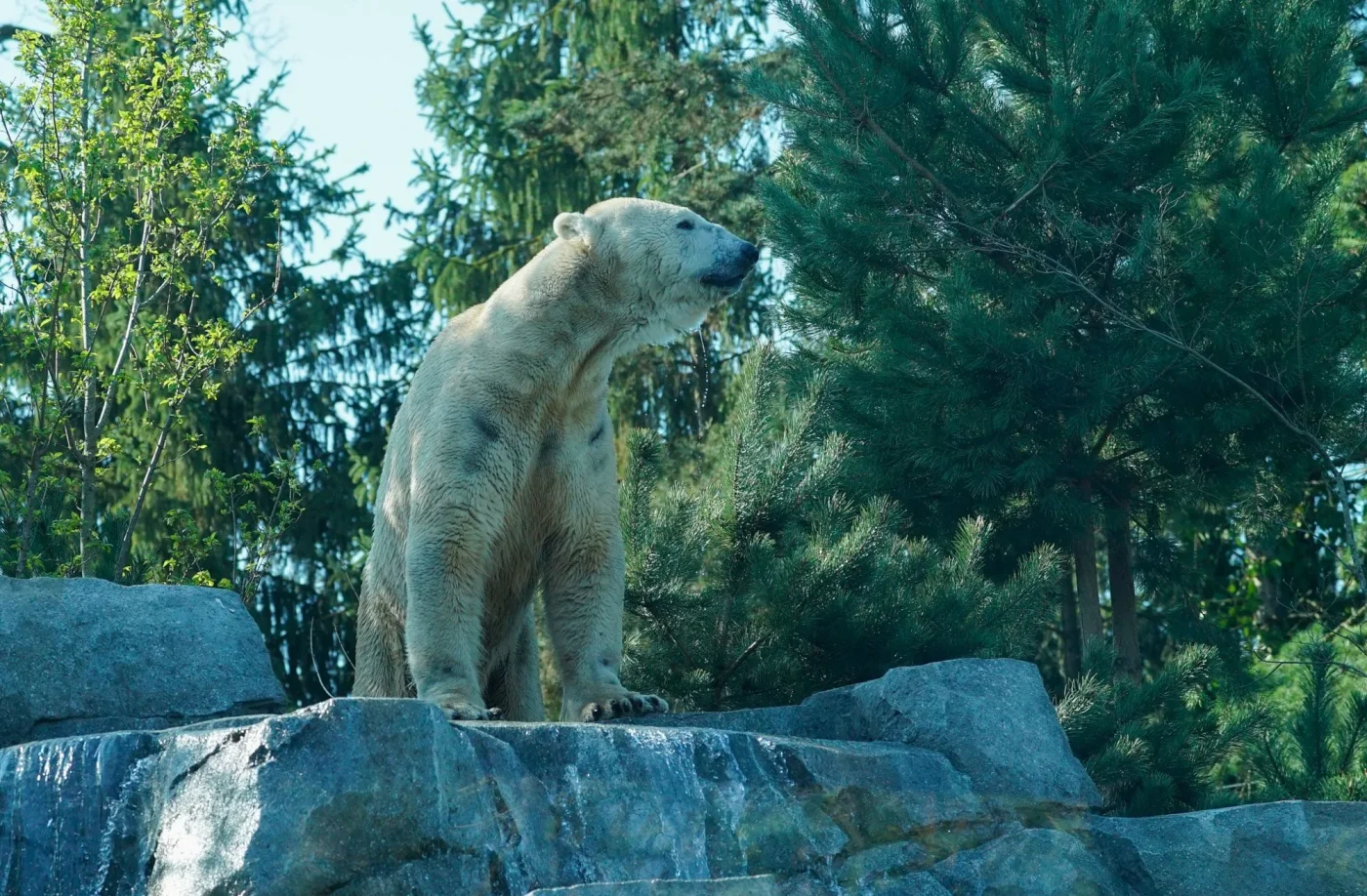
The body of the polar bear is stocky and ends with a short tail. The neck is long and topped with a relatively small head compared to the size of the animal. Females weigh between 150 and 300 kilograms and measure 1.80 to 2 meters in length from snout to the tip of the tail. Males are more imposing; they can measure up to 2.5 meters long and have an average weight of 300 to 600 kilograms. Some individuals can even reach 800 kilograms. The shoulder height can reach 1.6 meters. When it stands on its hind legs, it can be over 3 meters tall!

Evolution has given the polar bear many features that allow it to survive the extreme conditions of Arctic winters where temperatures can drop to -46°C. These adaptations make it the king of the Arctic!

The fur of the polar bear is made up of layers that keep it warm and prevent heat loss. This coat appears white to us, which is why it is also called the white bear. In reality, the hairs are not white, but transparent! It is the reflection of light in the hair that makes them appear white. Scientific hypotheses even indicate that this hair structure could direct the sun’s rays straight to the skin in order to store heat more efficiently. In summer, however, due to oxidation, the coat may become yellowish, even grayish or brownish.

Underneath this thick fur, the skin is completely black. This helps absorb the sun’s heat. In addition, it has a thick layer of fat over 11 centimeters thick. This fatty layer is an excellent insulator against the cold, especially in water.

Also, to avoid any heat loss, the tail is small and the rounded ears are very tiny.

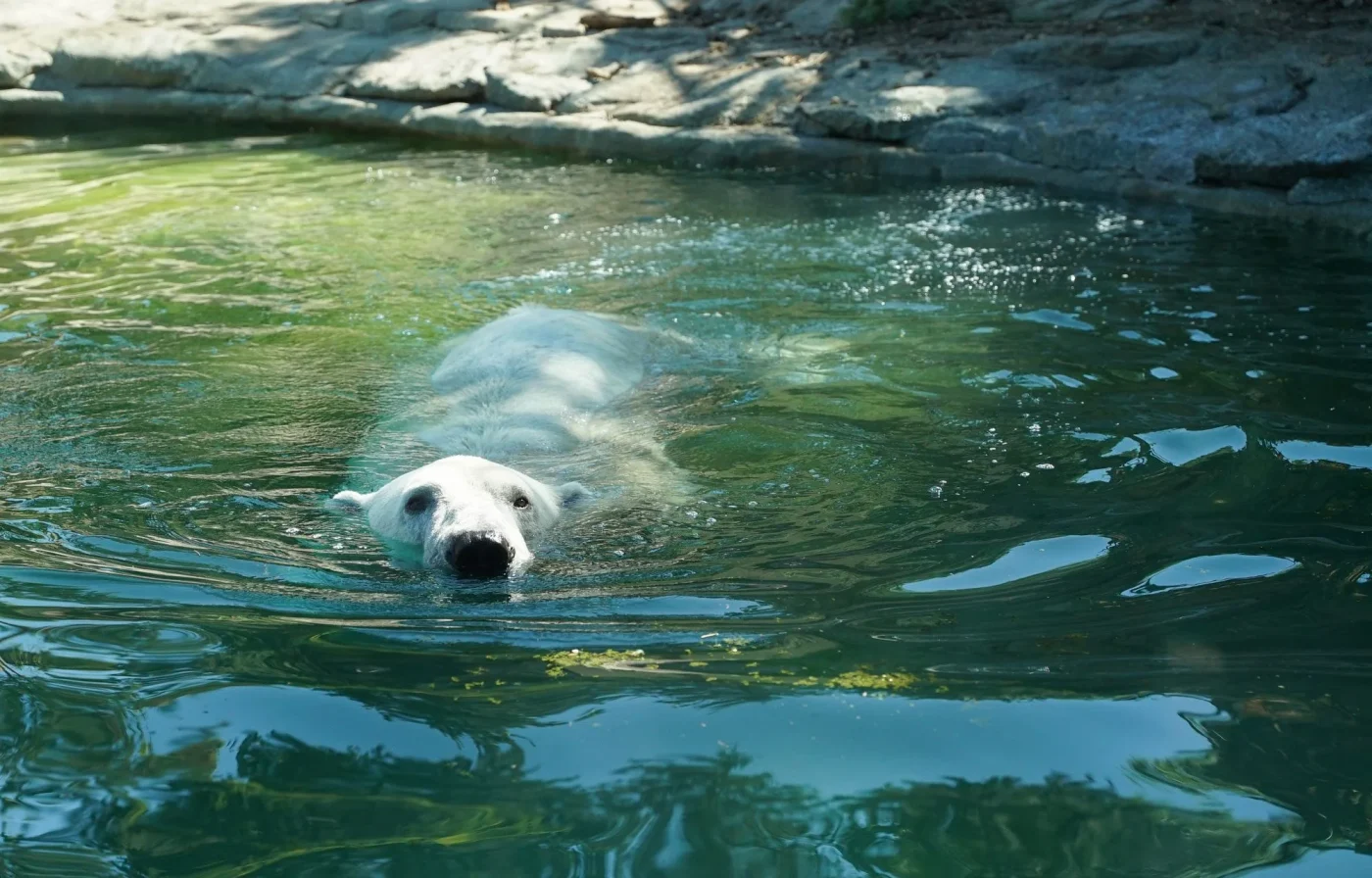
The paws are also adapted to this icy world since they measure up to 30 centimeters in diameter! This is very useful for distributing the weight of the body and thus avoiding sinking into the snow or breaking thin ice. They also use them for swimming; the front paws are used like paddles and the back paws like rudders. The pads are covered with anti-slip papillae, which prevent slipping on the ice.

Weight

♀ 150/300 kg - ♂ 350/800 kg

Habitat

Sea ice, arctic tundra

Diet

omnivore with a predominance of carnivore (seals, fish, whale carcasses, small mammals, plants, berries)

Gestation

195-265 days

Longevity

25-30 years

Longevity

12-17 years

Location

Alaska, Canada, Greenland, Norway, Russia
Frequently Asked Questions

Where does the polar bear live?

The geographic range of the polar bear is circumpolar. This means it is found all around the Arctic Circle. It frequents the sea ice of the Arctic Ocean as well as the coastal continental ice in Russia, Canada, Norway (Svalbard), Greenland, and the United States (Alaska).

In winter, polar bears are present at the southern edge of the Arctic sea ice and on continental ice. In summer, they try to stay on the ice floes; however, many drift and end up stranded on areas without ice. They then endure warm temperatures.

Six distinct populations are recognized: Wrangel Island and western Alaska, northern Alaska, the Canadian Arctic Archipelago, Greenland, the Svalbard-Franz Josef Land region, and central Siberia.

Behavior

Polar bears are not territorial; they follow the ice as it freezes and thaws in order to track their prey. They cover areas of several hundred square kilometers, but some individuals can undertake very long journeys. A female tracked by satellite once traveled over 4,000 kilometers.

Contrary to what we might think, the biggest problem for the polar bear is not keeping warm but actually cooling down! In fact, the risk of overheating is a serious concern; that’s why they walk slowly (about 5 to 6 km/h) and rarely run. However, a polar bear can run at nearly 70 km/h!

These animals sleep a lot, with sleep phases lasting 7 to 8 hours and days punctuated by naps. Naps often happen right after meals. Generally speaking, polar bears’ days consist of periods of hunting and eating as well as times for naps in order to save energy.

Winter naps take place in snow trenches dug out by the bear to stay sheltered from the wind. When bad weather lasts, it’s not uncommon to see motionless polar bears covered in snow, waiting for the storm to end.

Cleanliness is essential for the polar bear, since dirty or poorly maintained fur is a bad insulator. That’s why after every meal, it cleans itself by licking and rolling in the snow.

These bears are solitary and meet only on rare occasions, such as to mate or when an important food source, like a whale carcass, draws in several individuals. In this case, the largest individuals dominate the smaller ones and eat first. However, a female with her cubs can be more aggressive and stand up to males that are larger than her in order to protect and feed her cubs.

Polar bears are inactive most of the time (66.6%), either sleeping, lying down, or waiting. The rest of their time is spent moving (walking and swimming; 29.1%), hunting (1.2%), or eating (2.3%).

The polar bear has an extremely well-developed sense of smell. However, it does not have very good eyesight or hearing.

Reproduction strategy

During the breeding season, from April to June, males go in search of females by following the scents they leave behind as they move. The pair stays together for a few days before going their separate ways. The complete gestation period is about 200 days, however, the actual duration of embryonic development is only 55 days. This is due to delayed implantation. That is, a pause in embryonic development allowing the young to be born at a time suitable for their survival. Gestation really begins in the fall, if the female has enough fat reserves to ensure her survival and that of her young during the winter period.

So the female eats as much food as possible throughout the summer and all autumn.

Then, she digs a den on land covered with snow or in snowdrifts less than 8 km from the coast. Then she enters it and does not come out. Snowfalls then completely block the entrance. Birth takes place in December and January. Litters are made up of 1 to 3 cubs of about 600 grams, blind, toothless, and 30 cm long. The female and the cubs stay in the den all winter, during which time the female nurses the cubs with a very rich milk composed of 31% fat. The cub mortality rate is estimated at 10-30%. When they emerge in the spring, the young already weigh about 10-15 kg. They will be weaned only at around 30 months of age. They stay with their mother for 2 to 3 years to learn hunting techniques and how to survive in this extreme region. Sexual maturity is reached around 5 to 6 years old. In the wild, the lifespan of polar bears is estimated at between 25 and 30 years.

What does it eat?

Polar bears are carnivores that mainly hunt ringed and bearded seals. The polar bear has two techniques for catching seals. The first is relatively simple, as it uses its remarkable sense of smell to locate one of the seal’s many breathing holes, then waits for the seal to surface to breathe in order to catch it. However, the bear must be patient since the wait can last several days. The second technique involves stalking the seal on the pack ice. At this point, the bear quietly crawls towards its prey, then, once it is less than 6 meters away, it pounces quickly on the seal to kill it before it can reach the water. A big eater, it mainly eats the fat and can consume up to 45 kilograms in one meal. Spring is when the polar bear finds abundant food with the arrival of seal pups. This is the season when it builds up essential fat reserves for survival during the harsh seasons.

Curious, the polar bear does not hesitate to consume other foods such as eggs, small mammals, or even whale carcasses. However, except for whales, this food is not sufficiently caloric for them. Some individuals have even been observed hunting belugas to survive.

Anecdote

Hybrids between polar bears and brown bears have been observed in the wild. This would indicate that these two species are genetically closer to each other than previously thought.

What threatens it?

The polar bear is classified as vulnerable by the IUCN and is estimated to number about 26,000 individuals. Scientists estimate that if nothing is done, nearly all populations will have disappeared by the end of the century.

This is due to numerous threats they face such as climate change causing the melting of ice, commercial activities, conflicts with humans, pollution, diseases, or poor protection of breeding areas.

Since 1978, there has been an average loss of 13% in the thickness and area of Arctic ice each decade. This habitat loss is what mainly threatens polar bears. It makes it more difficult to hunt prey. Pollution also affects these top predators at the top of the food chain, who accumulate deadly pollutants in their bodies.

Life at the park

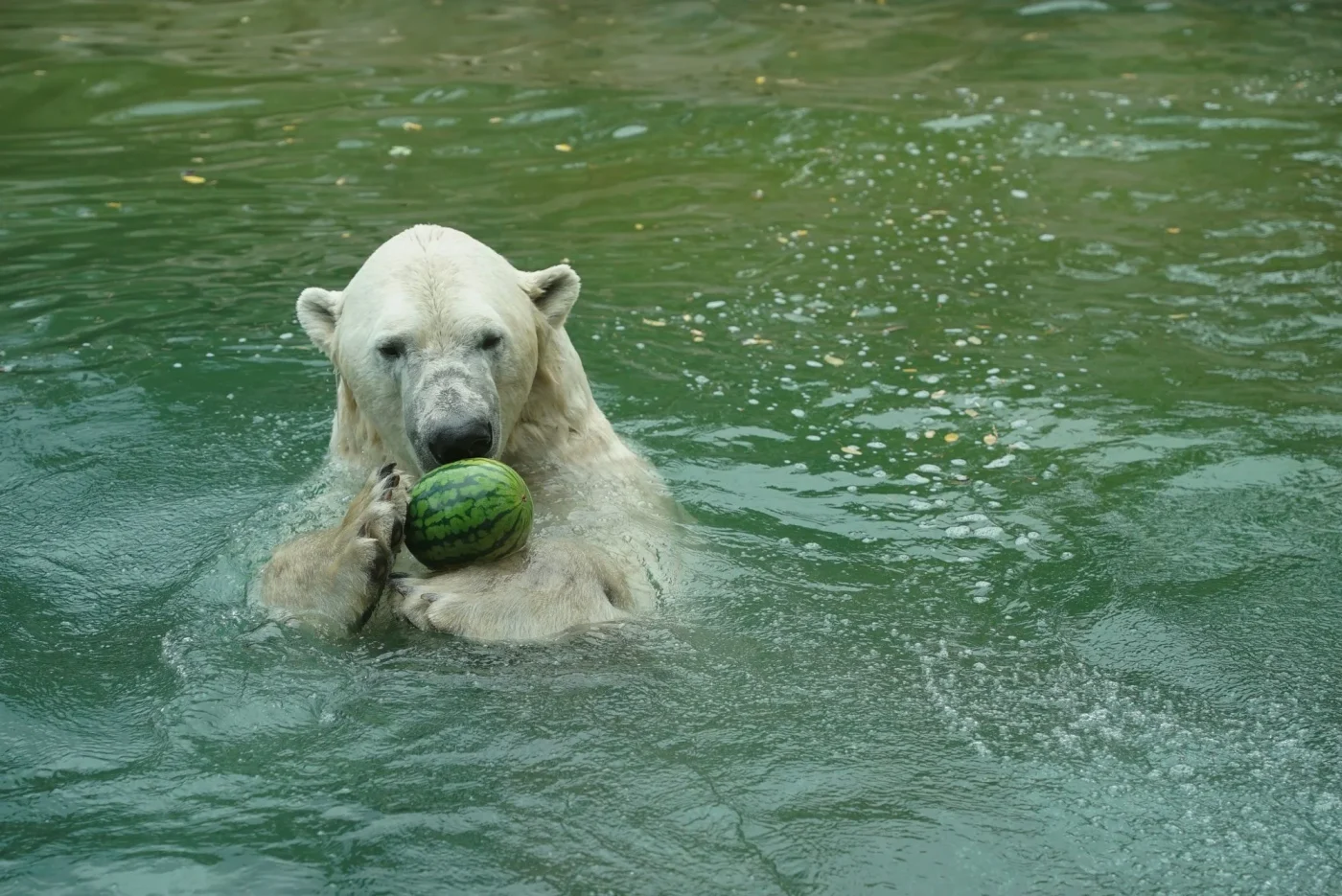
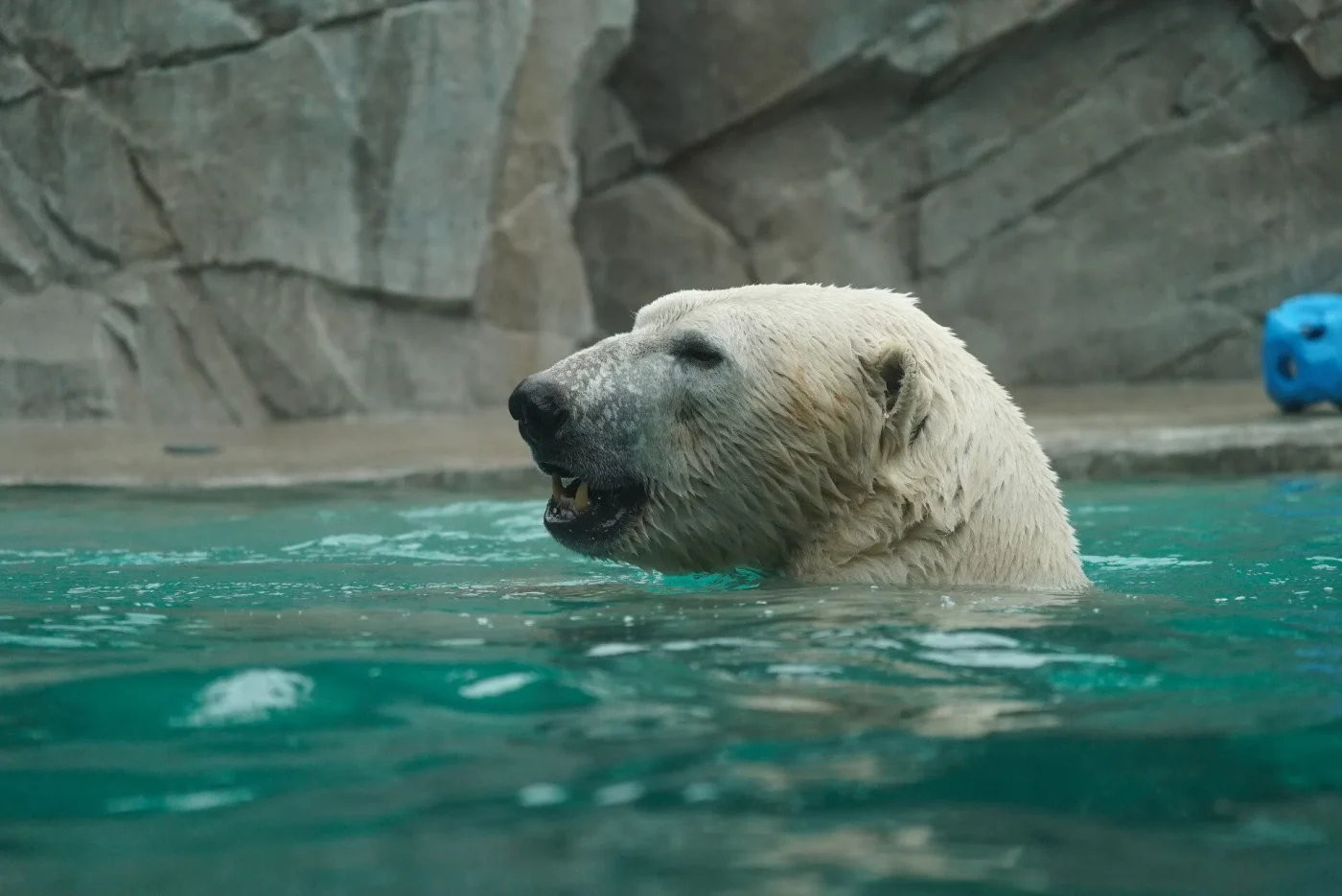
Here at the Amnéville Zoo you can observe two males here in Amnéville:

  • Henk, born 11/26/2005, weighs about 600 kg
  • Akiak, born 11/22/2014, weighs about 700 kg

Other animals to discover