Lemur catta

Ring-tailed lemur

Order: Primates / Family: Lemuridae / Genus: Lemur

What is a ring-tailed lemur?

The ring-tailed lemur is part of the order of primates and is often perceived as a monkey, but not all primates are monkeys. The order of primates is divided into two groups, which can be distinguished by several easily observable physical characteristics. The first group is the haplorhines or simians, which are monkeys and great apes (gorillas, macaques, spider monkeys, tamarins…) that have a nose and immobile ears on the sides of the head. The second group is the strepsirrhines or prosimians, which are lemurs and galagos that have a wet nose, called the rhinarium, mobile ears on top of the head, and also a dental comb.

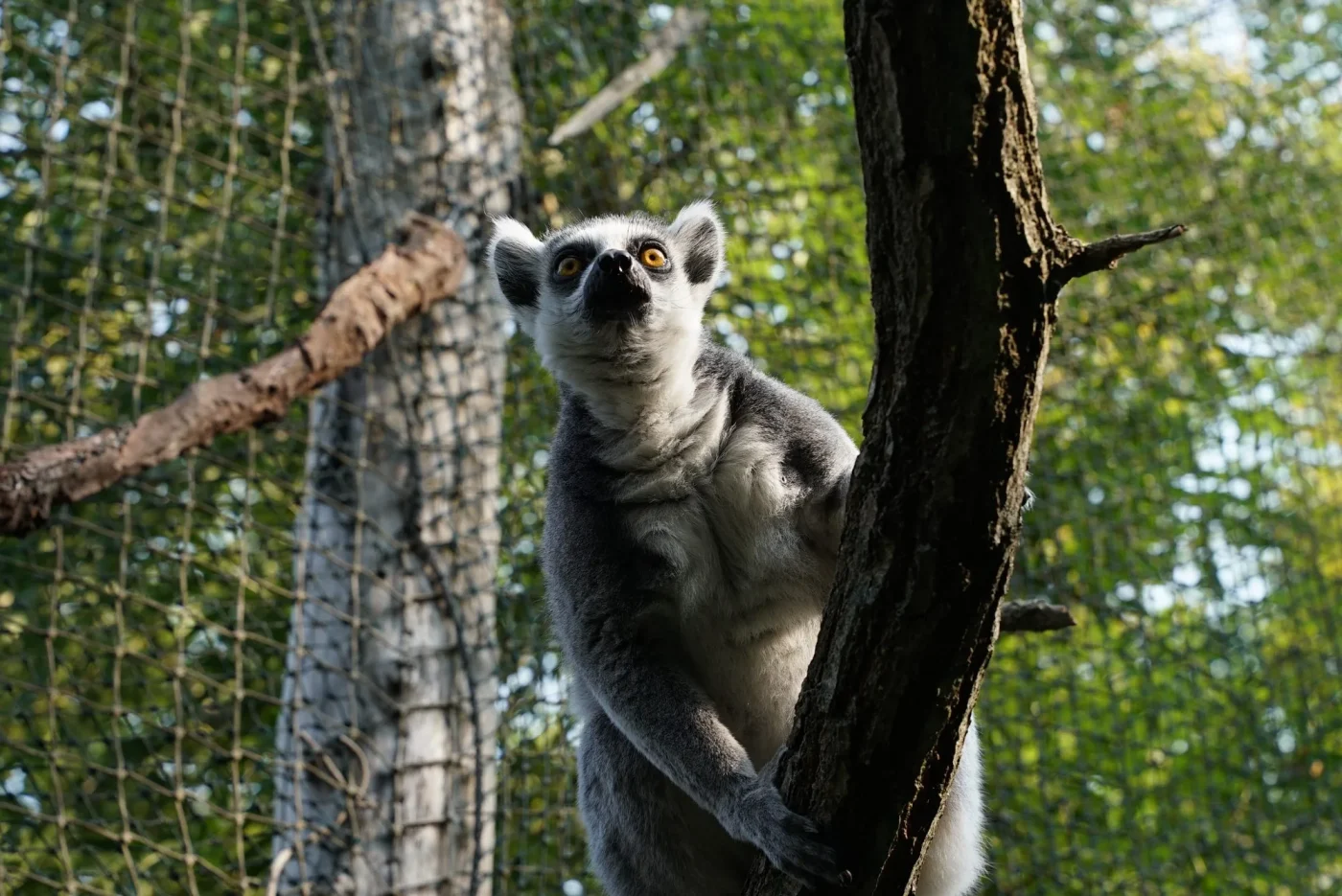
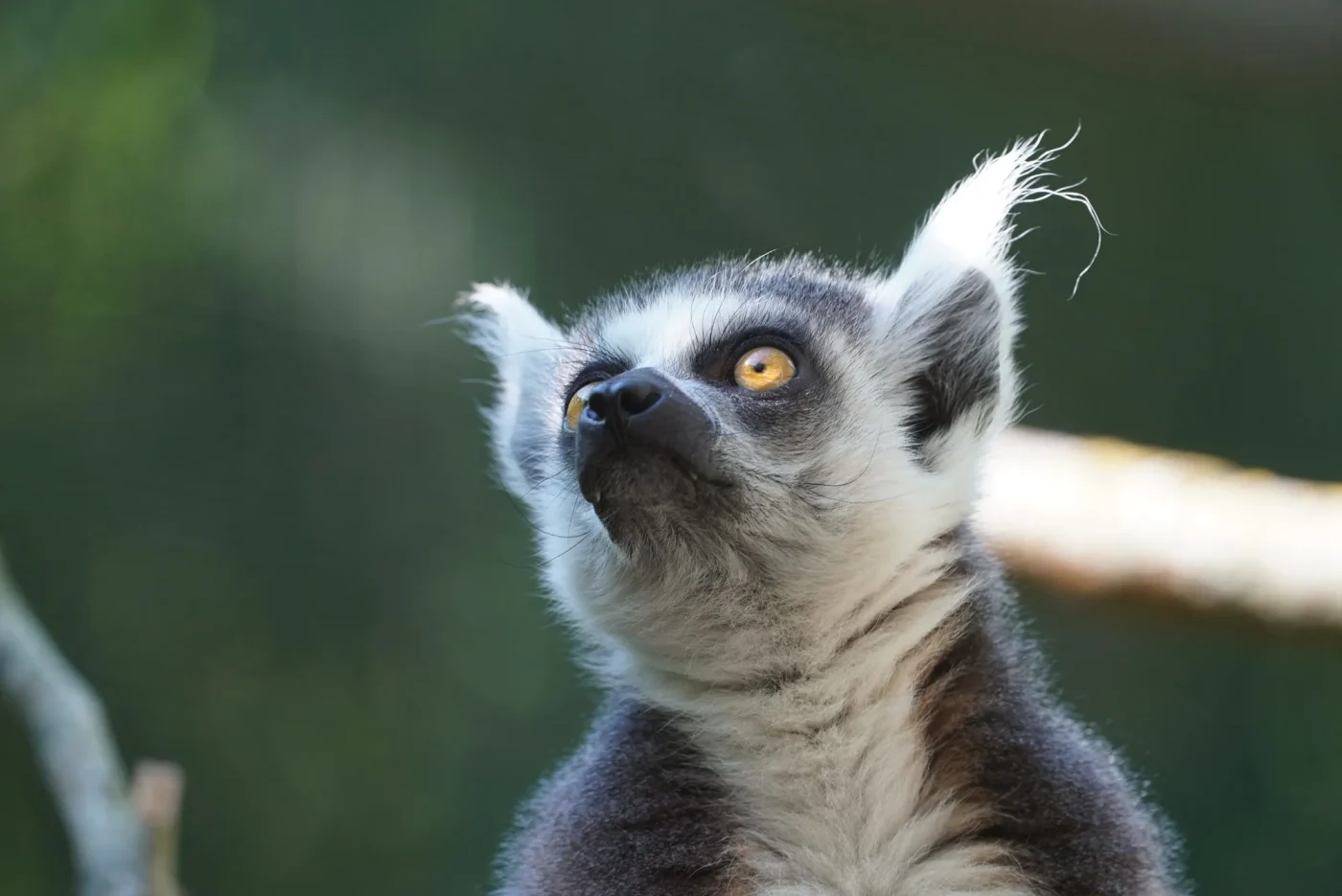
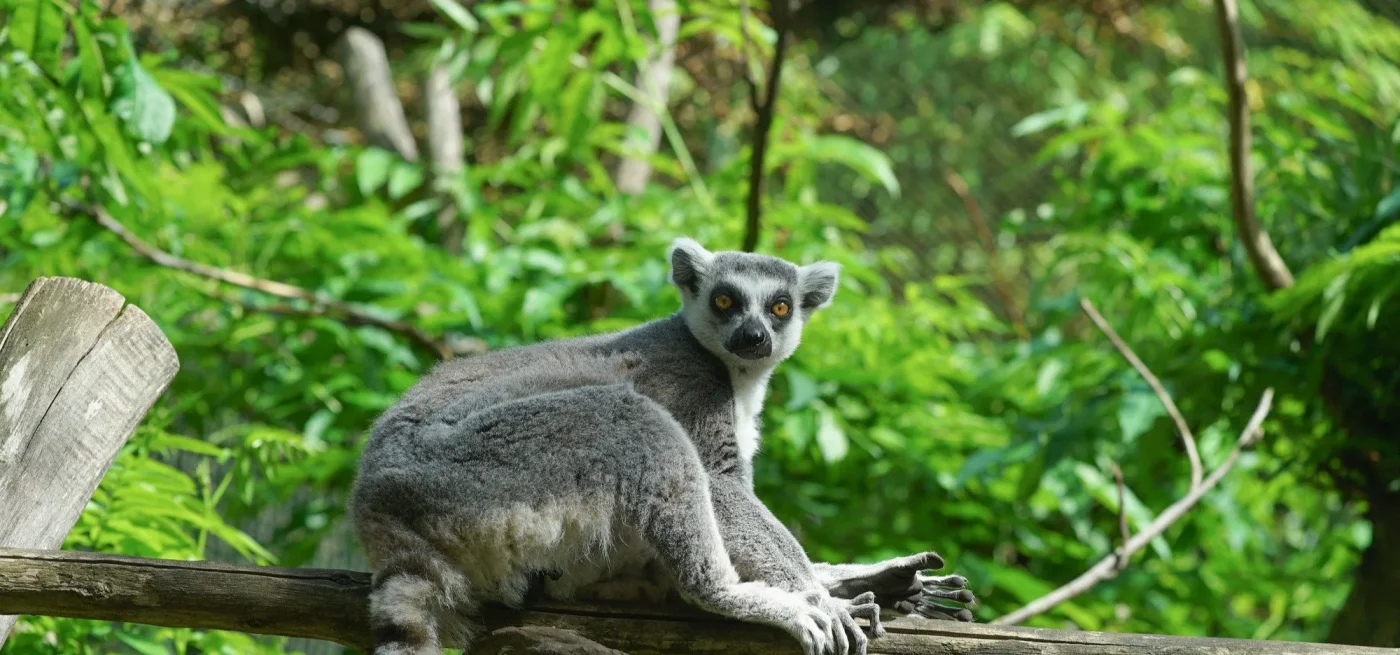
The ring-tailed lemur is probably the best known among all lemurs. Measuring 40 to 46 cm with an approximate weight of 2 kg, the ring-tailed lemur has a long tail, 56 – 63 cm, striped black and white. Very distinctive, it always carries its tail upright when moving. The tail is not used for gripping branches, but as a counterbalance to keep balance while moving and jumping from branch to branch. The color of the fur on its body up to the top of its skull varies from gray to brown, the underside, face and ears are white, its eyes are orange-yellow, and its nose is surrounded by black. The fingers have nails except for the second toe, which ends in a claw called the “grooming claw.”

Weight

2.2 kg

Habitat

Tropical forest, canopy, scrub forest

Diet

Frugivore

Gestation

130 - 144 days

Longevity

25 - 30 years

Longevity

12-17 years

Location

Endemic to Madagascar
Frequently Asked Questions

Where does the ring-tailed lemur live?

Like all lemur species, the ring-tailed lemur is found exclusively in Madagascar; this is what is called an endemic species. It is a primate that easily adapts to a large number of habitats such as tropical forests, gallery forests, but also drier and bushier forests. It can survive temperatures ranging from –12 to nearly 48°C. This lemur can be found in the south and southwest of Madagascar.

Behavior

The ring-tailed lemur is diurnal and lives in mixed groups of 15-20 individuals. It moves just as well in trees as it does on the ground. In fact, it is the most terrestrial of all lemurs, spending more than 40% of its time on the ground. As with hyenas, it is the female ring-tailed lemur who dominates over the male. The females spend their entire lives in the same group, whereas the males change groups every 2 to 5 years.

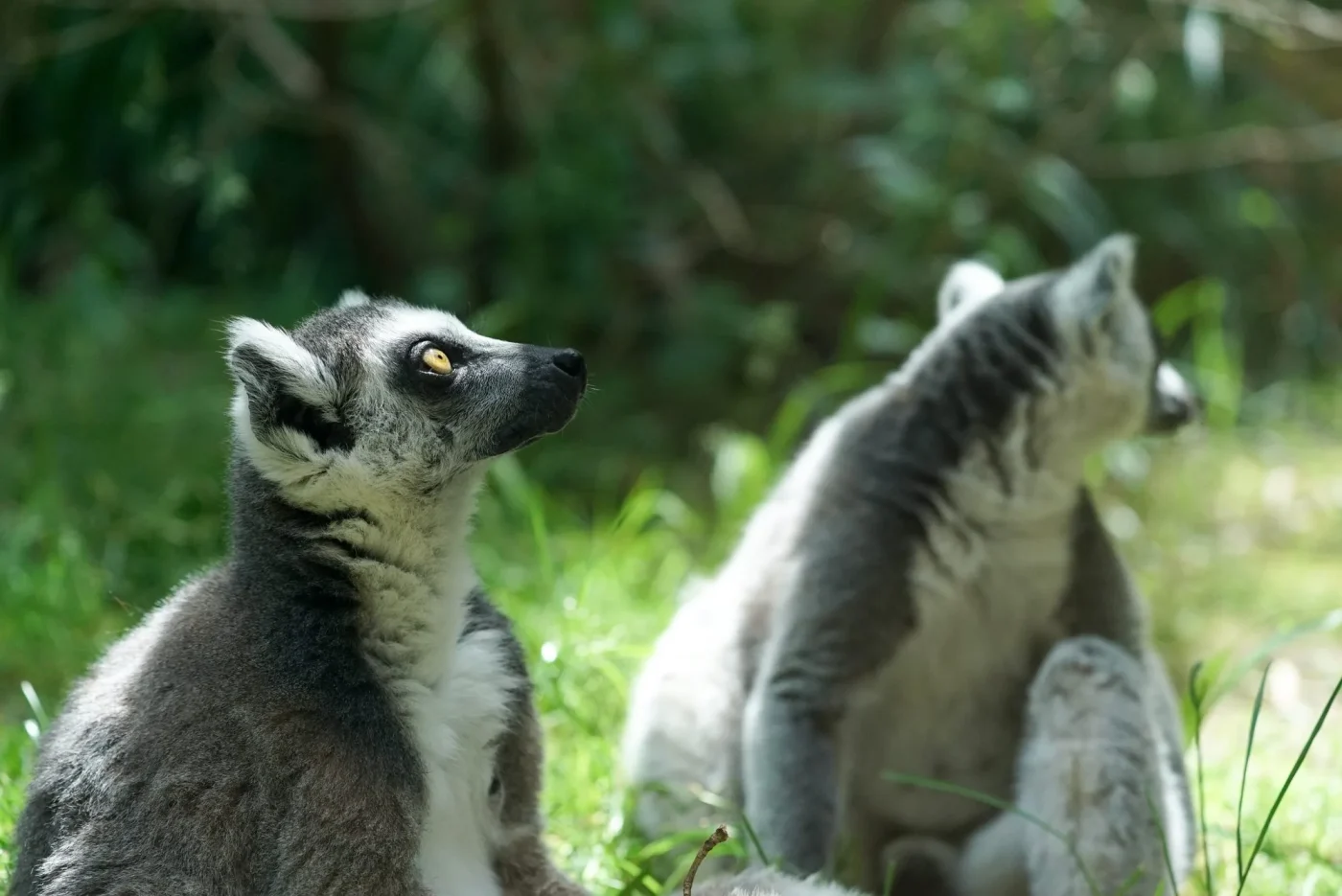
Active during the day, they spend their day searching for food and move about as a group, covering no more than 1 km per day. It is therefore not uncommon to see them sunbathing. In fact, their scent glands need stimulation from the sun’s rays.

These glands are located at the armpits and the wrists (antebrachial) and allow them to mark their territory and enhance communication among individuals. The antebrachial glands of males are moreover more developed and resemble small spurs to scratch trees for better marking.

During the breeding season, the males use the secretions from these glands to engage in a scent battle, soaking their tails with strong odors, which they then wave at their opponent to drive him away.

In addition to olfactory communication, the ring-tailed lemur also uses a number of postures and facial expressions as well as vocalizations such as alarm calls when a predator approaches. Social bonds within the group are also reinforced by grooming sessions. On the upper jaw are 6 elongated teeth forming a dental comb, very useful for grooming its fur and that of its peers.

Reproduction strategy

The breeding season begins in April, when the females mate with several males. The latter engage in scent combats to determine who wins the right to mate with a female. After a gestation of 130 to 144 days, births usually occur between August and September. Females give birth to one or two offspring at a time, who remain clinging to their mother’s belly during the first two weeks. They are weaned from 8 weeks and reach maturity at about 20 months for females and 29 months for males.

Males rarely invest in the care and upbringing of the young. Females, on the other hand, help each other carry, feed, groom, or babysit their young.

It has been observed that in young females, the mortality rate of offspring during their first year of life can reach nearly 50%. This rate is lower in older females who have already gained experience from previous pregnancies.

What does he eat?

The ring-tailed lemur is an opportunistic omnivore. It feeds on fruits, leaves, flowers, stems, sap, invertebrates, and also birds and other small vertebrates. The most appreciated fruits are those of the tamarind, a fruit tree that is particularly present in Madagascar.

These lemurs can be preyed upon by fossas, civets, snakes, raptors, as well as other lemur species such as brown lemurs.

Conservation

The ring-tailed lemur is classified as endangered by the IUCN.

The main causes of the disappearance of the ring-tailed lemur are the reduction and transformation of its habitat. Forests are destroyed to create grazing land or crops but also due to the growing demand for wood. In addition, Madagascar being a very poor country, they are hunted for their meat as well as to be sold as pets.

It is estimated that nearly 50% of the population has disappeared over the past 36 years. Today it is highly fragmented.

Yet the ring-tailed lemur helps preserve these ecosystems by dispersing seeds through its droppings.

Other animals to discover