What is a zebra?
The zebra is an equine, like the horse, which explains their strong morphological resemblance. The main characteristic of the zebra is its black and white striped coat. In fact, contrary to popular belief, the zebra is actually black with white stripes. Indeed, at first, the fetus’ coat is completely dark. The light stripes only appear later in embryonic development.
There are 3 species of zebra on Earth: the Grevy’s zebra (Equus grevyi), the mountain zebra (Equus zebra), and the plains zebra (Equus quagga). This classification is based on morphological differences, such as size and stripe patterns, as well as genetics. The plains zebra is the smallest of the three species, while Grevy’s zebra is the largest.
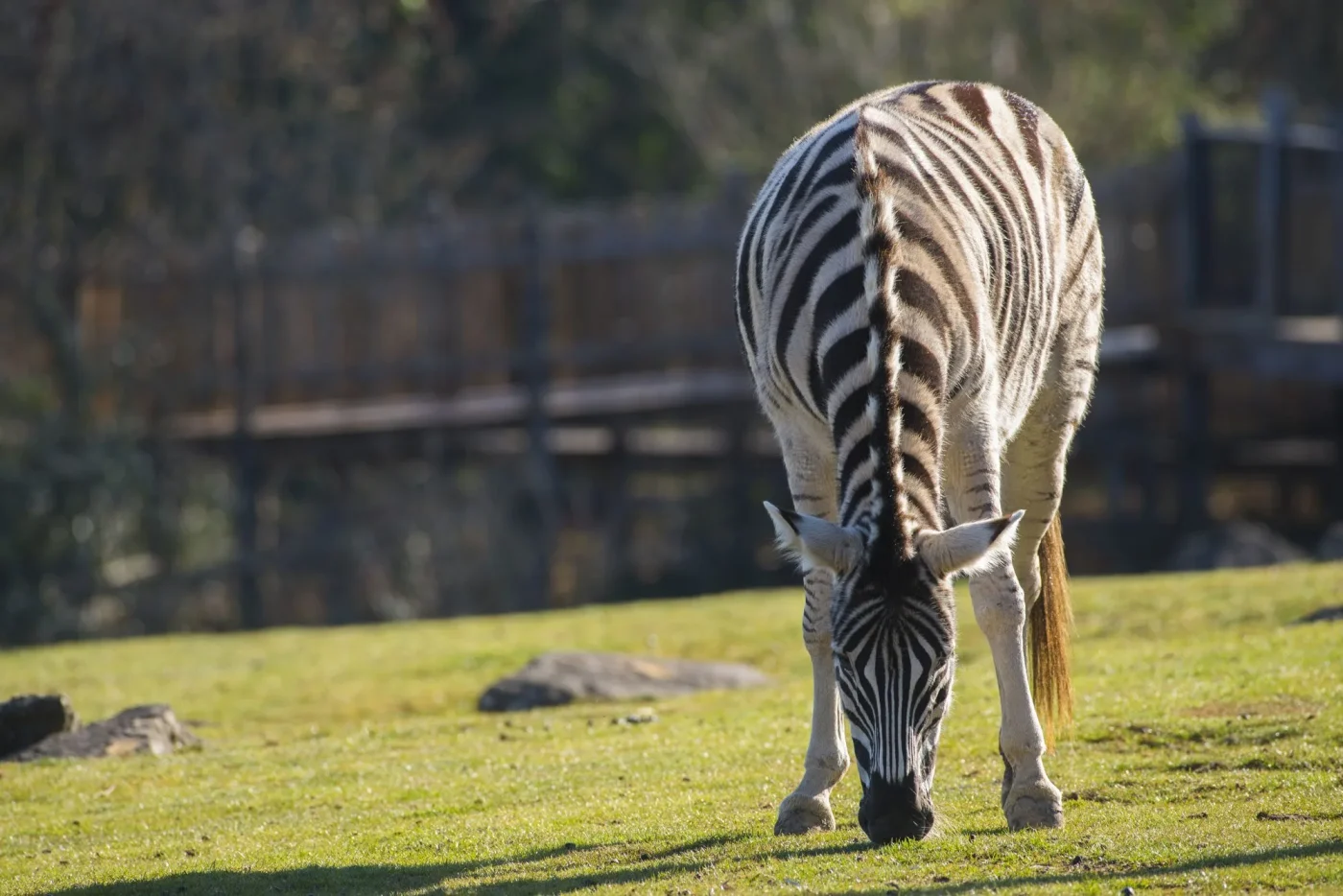
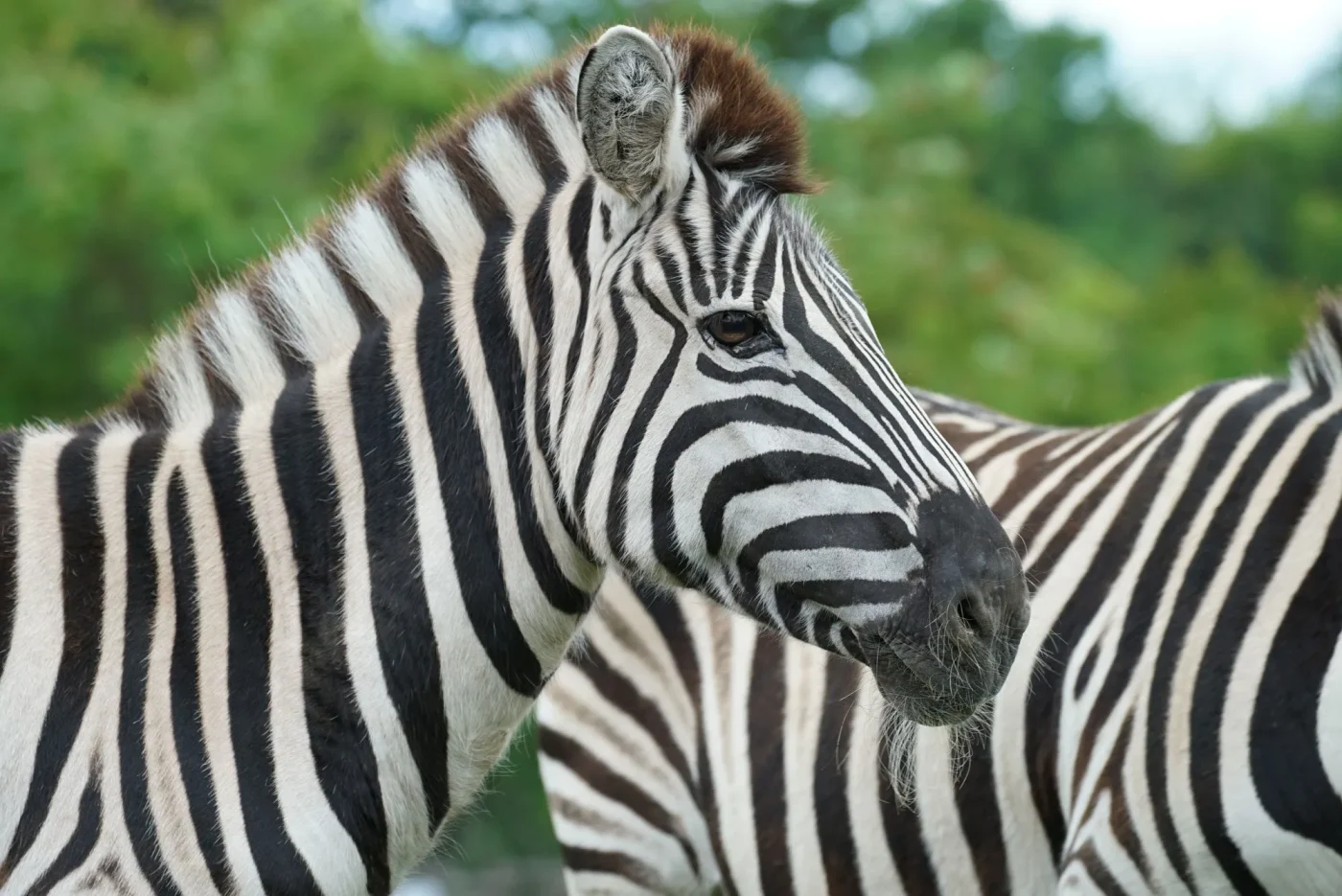
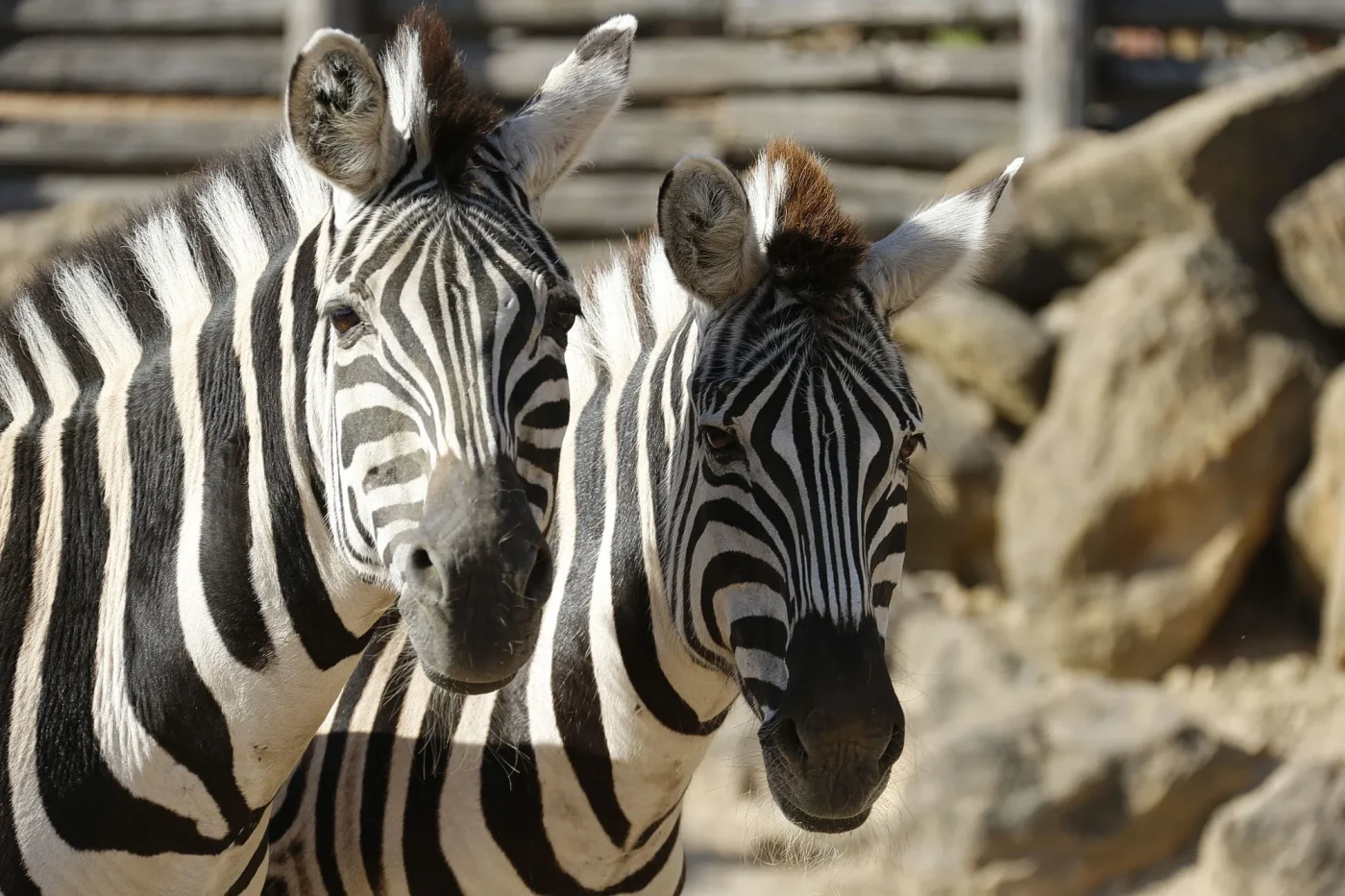
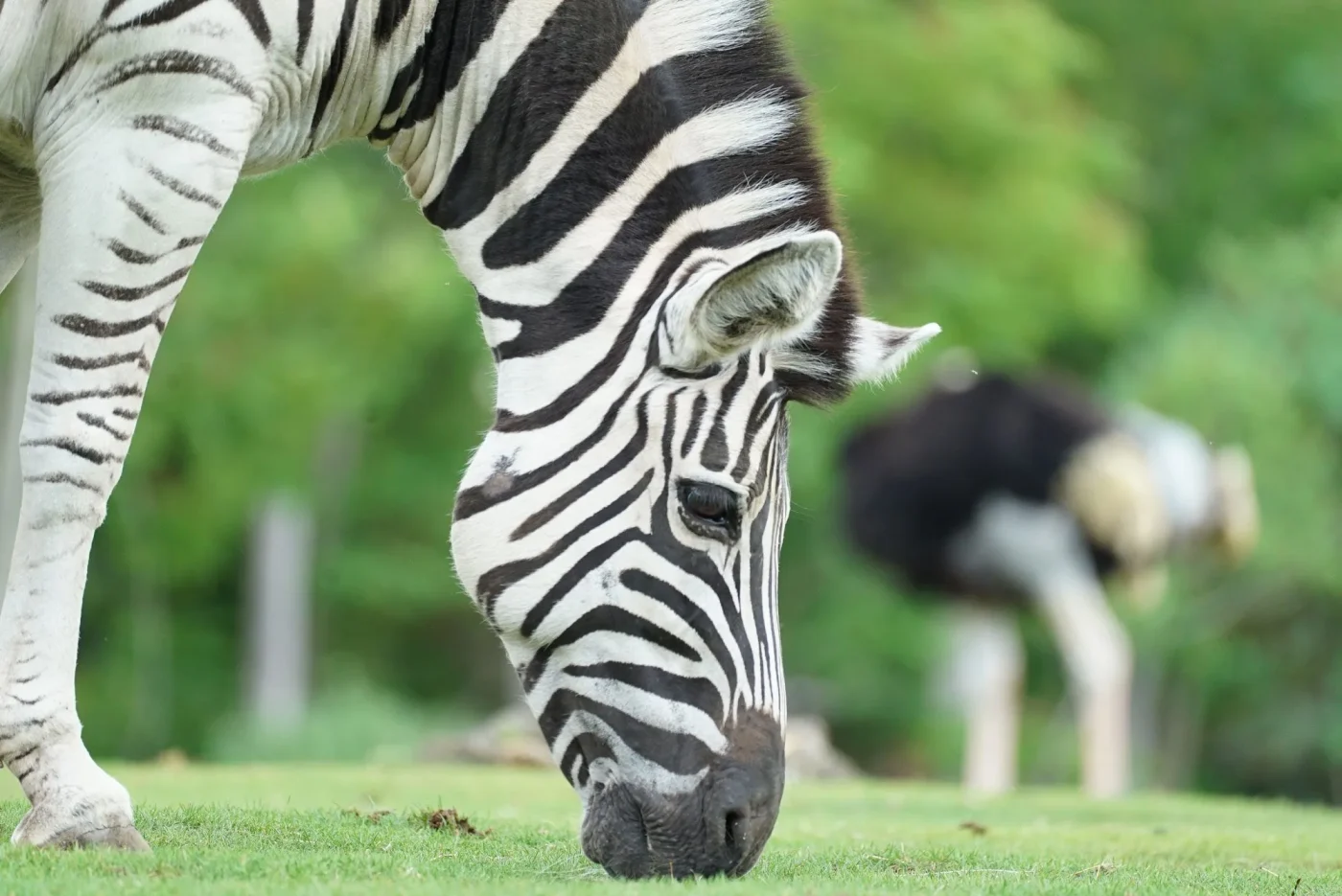
The plains zebra has the widest stripes of the three species. They are horizontal on the rump and legs but vertical on the rest of the body. The stripes meet at the belly. The stripes on the head are both vertical and horizontal. Depending on the subspecies and individuals, it is possible to see brownish ‘shadows’ in the white areas. Each individual has its own black and white pattern, which allows them to be recognized just like our fingerprints.
Plains zebras measure between 2.17 and 2.46 meters long, with a height at the withers of 1.1 to 1.45 meters. Their tail measures between 47 and 56 centimeters. There is no real sexual dimorphism in this species; however, males tend to be slightly more robust and have a thicker neck on average.
The young have a ruffled brownish coat striped with yellowish white.
According to various theories, the zebra’s stripes have a number of functions:
- A disruptive coloration:
- The stripes create an optical illusion that makes the zebra appear closer than it really is. As a result, predators pounce too early and miss their target.
- At night, the black and white colors blend into gray, which allows for better camouflage.
- The mass of striped patterns makes it harder to single out an individual within the group. This delay gives zebras an advantage during escape.
- A social advantage: the unique patterns allow individuals to recognize each other, those with more stripes receive more grooming and attention from peers.
- Thermoregulation:
- Air moves at different speeds over black (which absorbs sunlight) than over white (which reflects sunlight). This creates thermal circulation that cools the zebra.
- The black and white pattern would protect against tsetse flies that prefer solid color surfaces.