
Order: Carnivora / Family: Felidae / Genus: Caracal

♀ 6 - 12 kg - ♂ 13 - 20 kg
Savanna, semi-desert region
Carnivore
70 - 80 days
12 years in the wild - 20 years in captivity
12-17 years

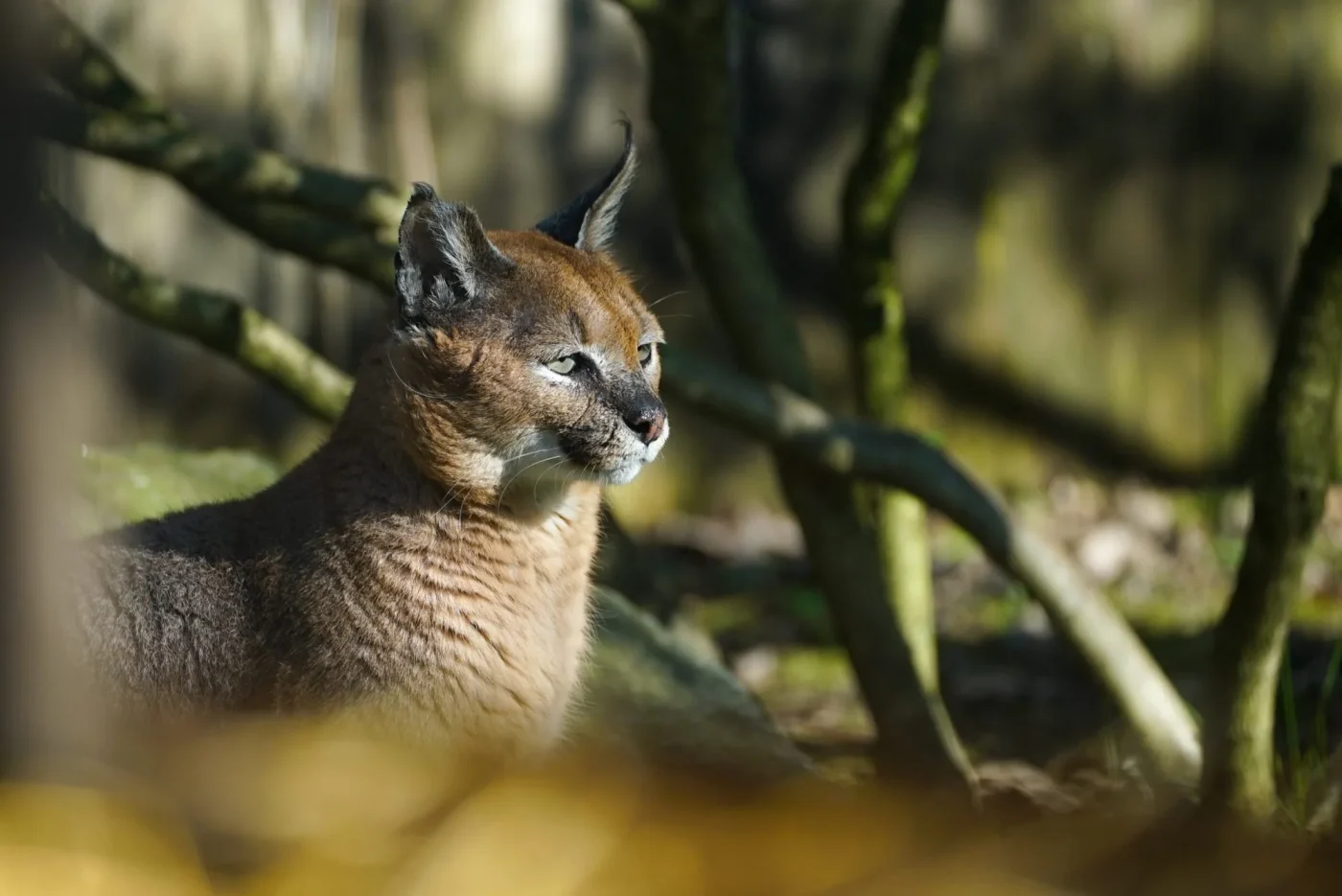
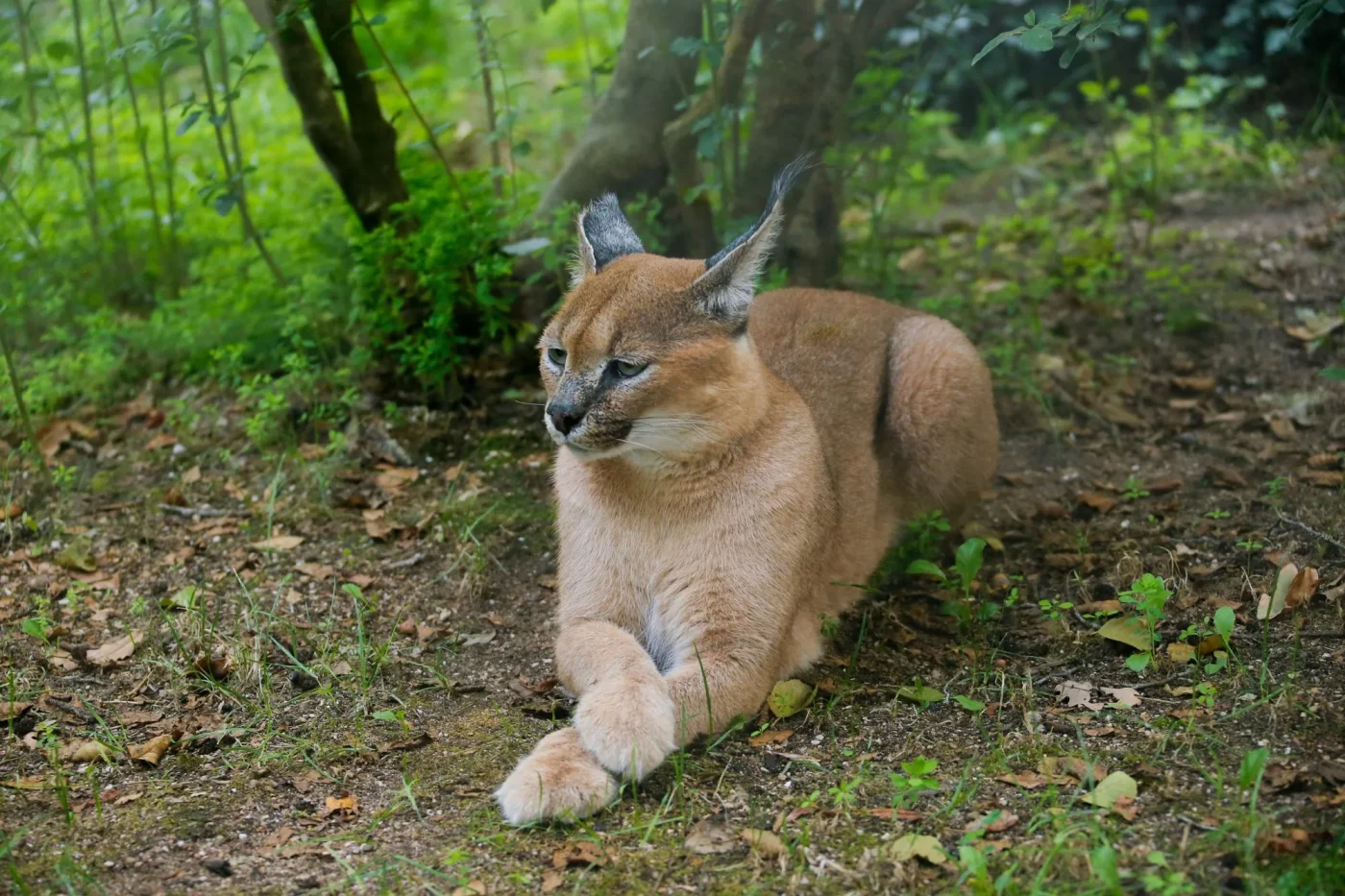
The geographic distribution of the caracal, a fascinating animal, spreads across the African continent, the Asian continent, as well as the Middle East. In Africa, this wild cat can be found from Senegal to Somalia and from Algeria to South Africa. In Asia, it ranges from Turkey to India and up to Kazakhstan in the north.
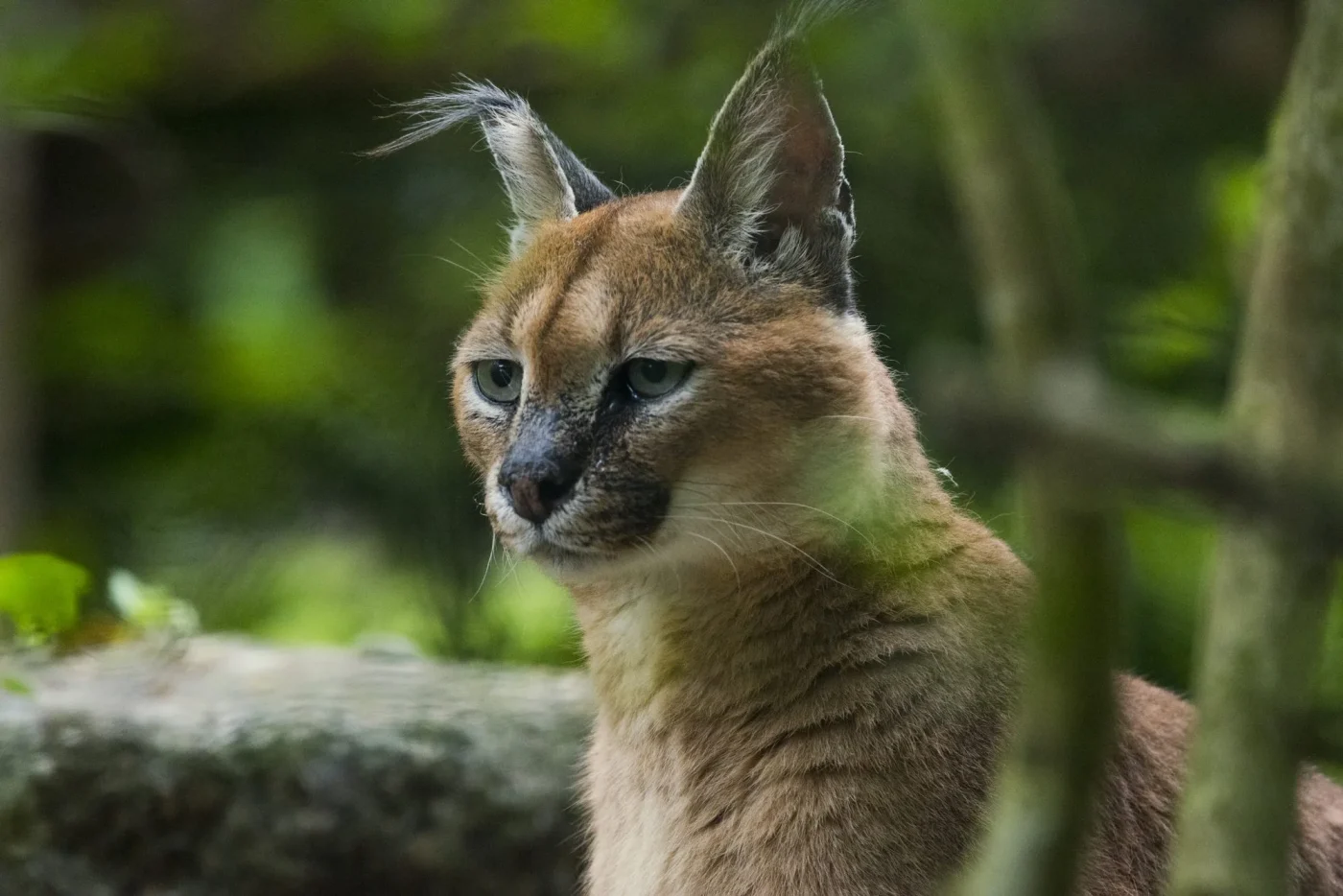
The caracal, which belongs to the Felidae family, is fond of many environments such as semi-desert areas, savannah, bushy habitats, dry forests, mountainous habitats, and grasslands. Only desert regions like the Sahara and tropical forests are avoided. This feline, with its large ears, is one of the breeds of wild cats, and it coexists with other animals like the puma and the lynx. These different animal species showcase the diversity of Africa’s wildlife.
The caracal is a strict carnivore that primarily hunts at night. Opportunistic, it has a wide range of prey and hunts whatever presents itself while expending as little energy as possible. A very good hunter, it can hunt small prey, such as rodents, hyraxes, hares, reptiles, or larger prey, like small gazelles weighing 50 kilograms, three times bigger than itself. The small prey are killed with a bite to the neck, while the larger ones are suffocated with a bite to the throat.
Equipped with long hind legs, the caracal is an excellent jumper that can propel itself up to 3 meters high. Its agile and quick paw strike allows it to capture several birds at once. And when it hunts ground prey, one or two leaps are enough for the caracal to catch them. Large prey are consumed over several days and are left on the ground, simply covered with a bit of earth.
It is not uncommon for it to attack livestock.
The predators of the caracal are lions, hyenas, and leopards.
The caracal is solitary and territorial; both females and males mark and defend their territory. The size of the home range depends on the availability of food, water, climate, and sex. Females generally have a smaller but exclusive territory, unlike males who have larger territories that may overlap.
It is mainly active at night, but it is not uncommon to see it active during the day. Mainly terrestrial, this feline is still very agile in the trees, where it regularly climbs to rest in safety.
Its long hind legs make it an exceptional athlete, capable of jumping more than 2 meters high.
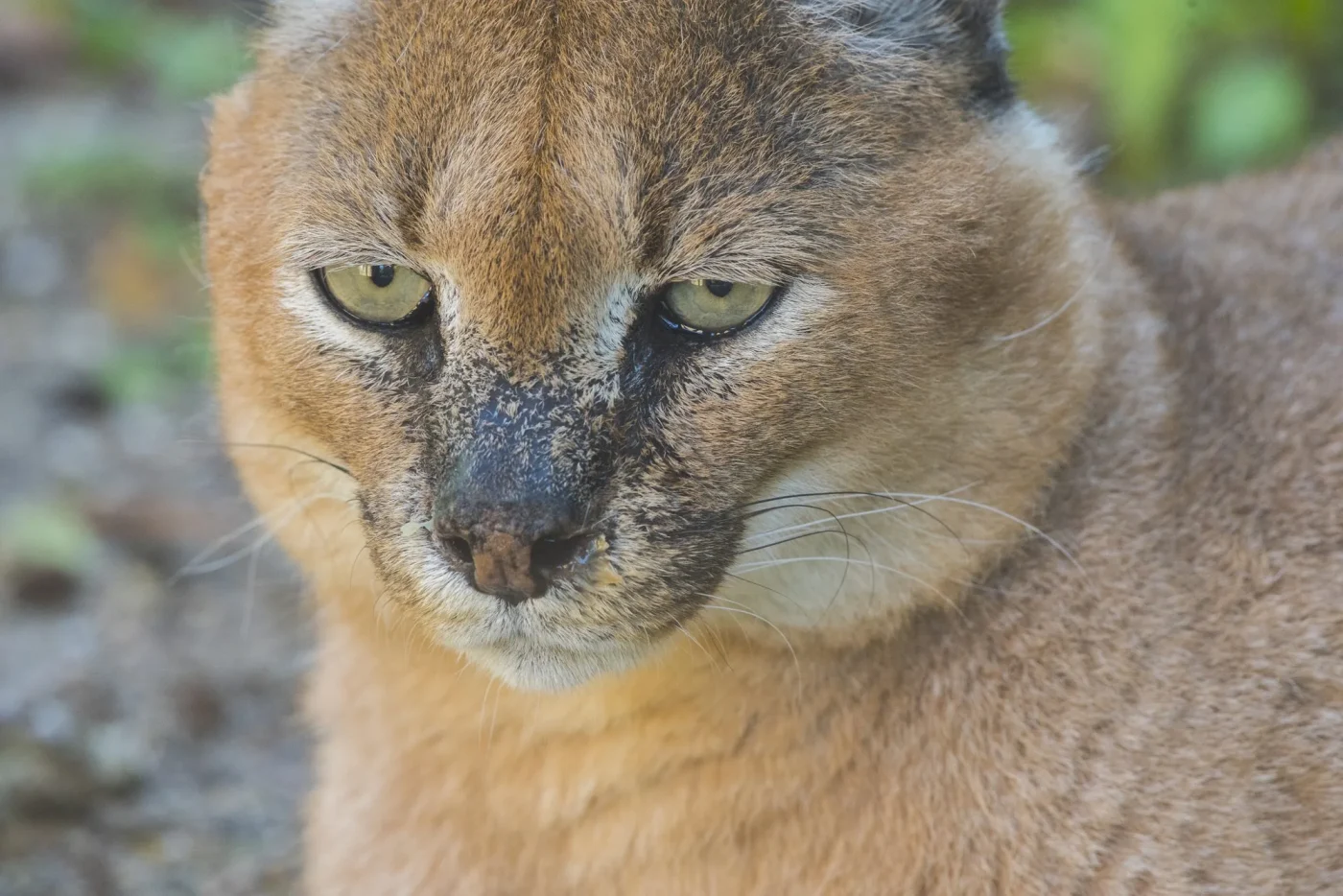
Like all felines, it has very well-developed sight, hearing, and sense of smell. It is even believed that the caracal can spot and hunt prey using only its hearing.
There is no specific breeding season; females can go into heat at any time of the year. Nevertheless, a peak of births is observed between October and February.
The female in heat attracts males by using her urine, which she deposits here and there. The hormonal changes and readiness for breeding are then detected by the males through the vomeronasal organ when they sniff the urine.
If several males are present, it is either the winner of the confrontations or the one the female chooses who gets to breed. The pair stays together for 3 to 4 days and mates many times. However, a female almost always mates with several males during each breeding period.
The gestation period is 68 to 81 days. The female gives birth, in a cave, an abandoned burrow or the hollow of a tree, to a litter made up of 1 to 6 young. The kittens only go out with their mother after 1 month. That is also when they begin to taste meat. However, they are only truly weaned by around 4 months and become independent around 6 months. Sexual maturity comes as early as 7 or 10 months, but the first breeding events only occur at around 1 or 1.5 years when the caracal weighs at least 7 to 9 kilograms.
The female spends a lot of energy on the survival of her young, which is why she only breeds once a year.
Lifespan appears to be 12 years in the wild and can rise to more than 20 years in captivity.
Currently, the IUCN does not classify the caracal as a threatened species. However, the destruction of its habitat for crops and cattle farming impacts certain populations. Some individuals are also victims of hunting, trapping, and poisoning. This is the result of the conflict that has arisen between the caracal and humans over livestock.
Finally, like the cheetah, estimates state that about a hundred caracals are taken every year from the wild to be illegally sold as pets in Gulf countries.