Sagittarius serpentarius

Secretary bird

Order: Accipitriformes / Family: Sagittariidae / Genus: Sagittarius

Description

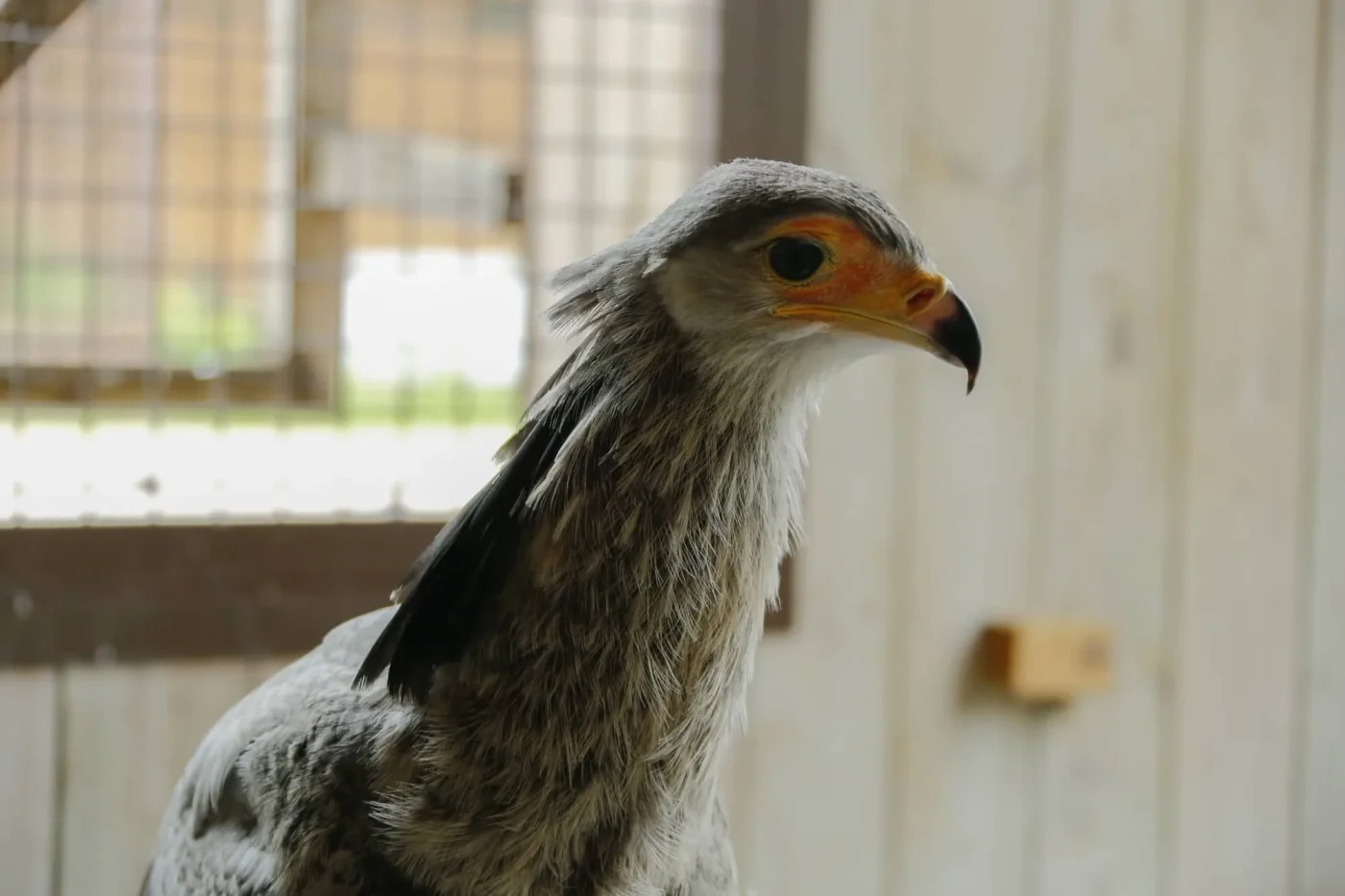
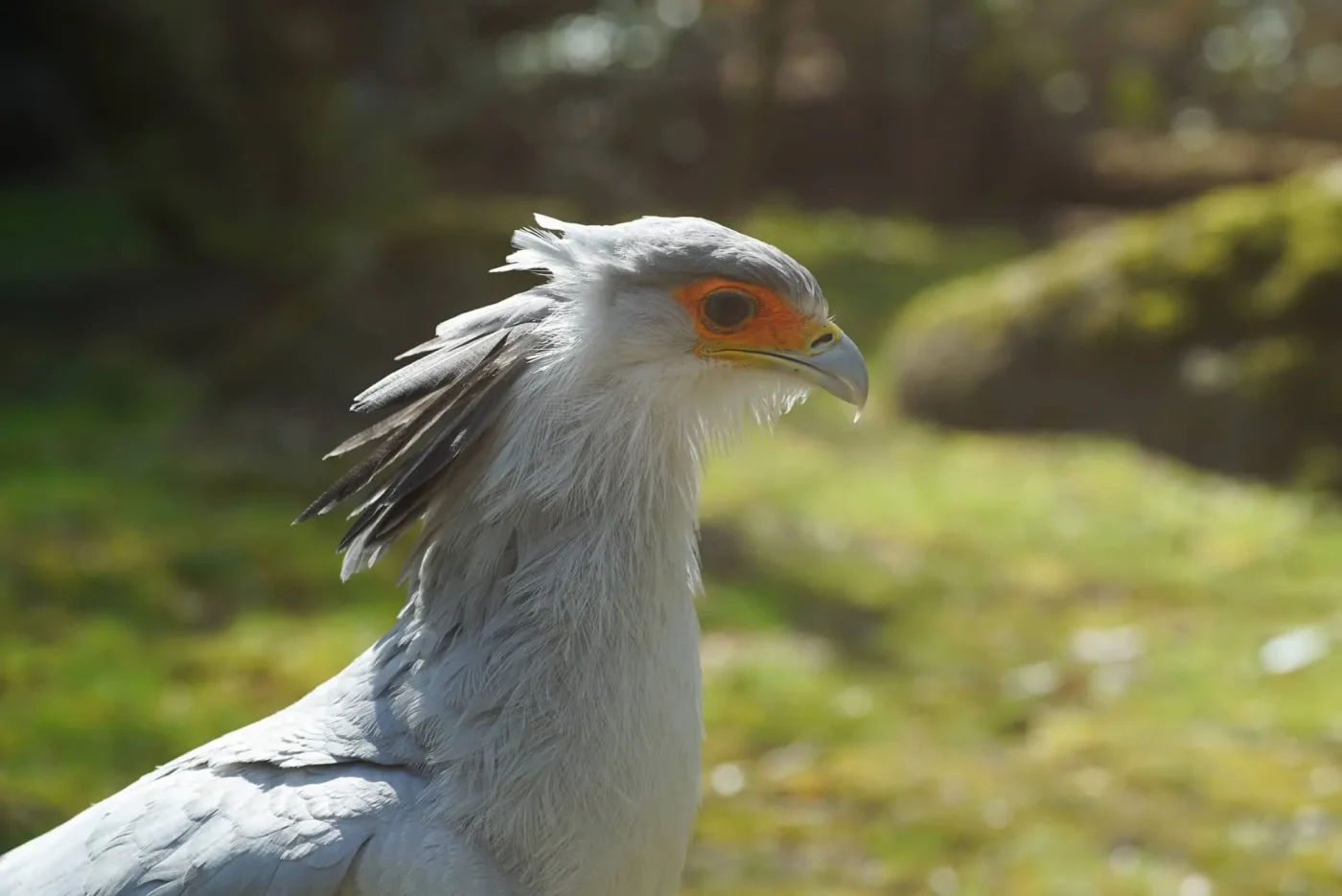
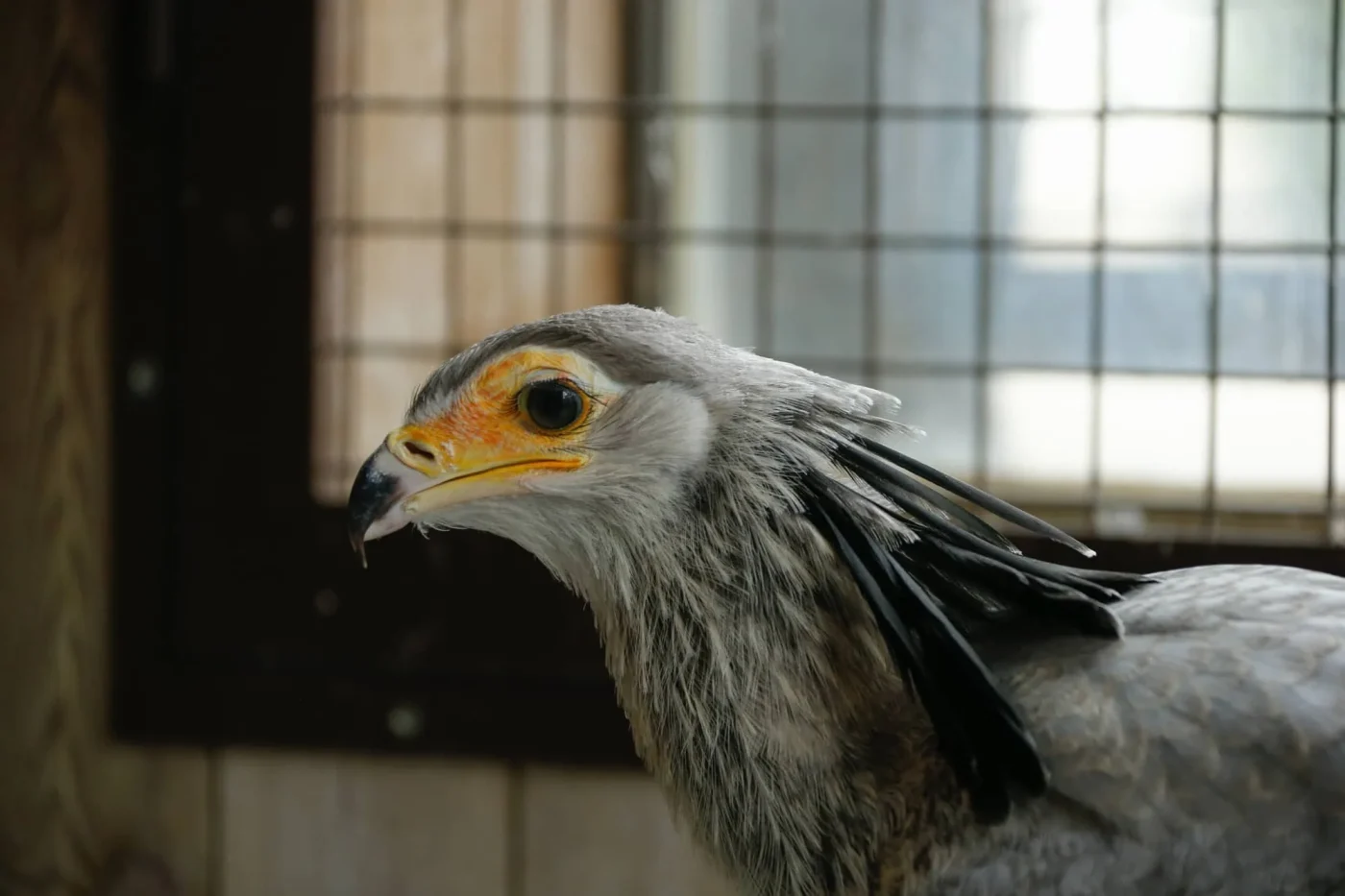
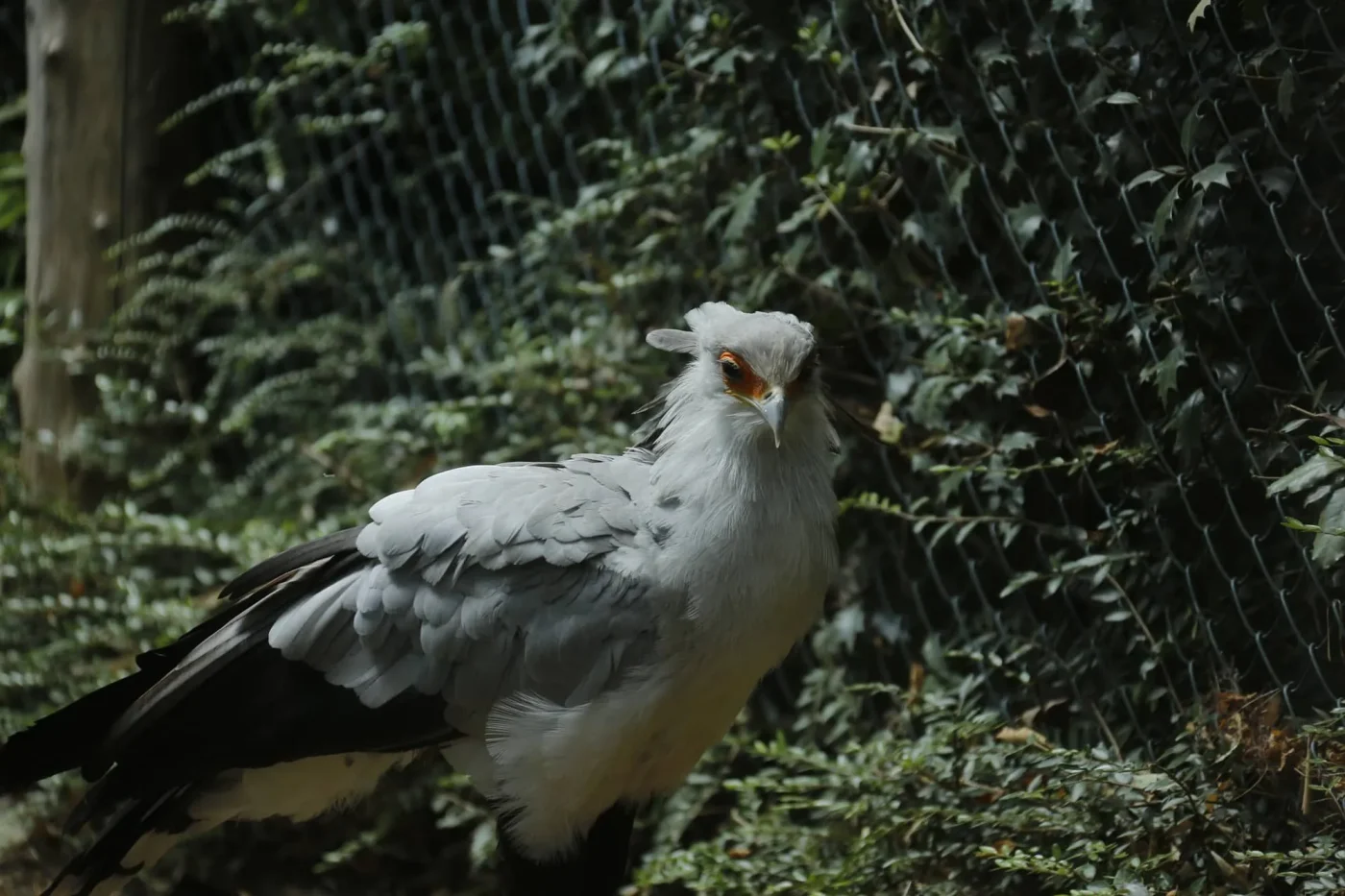
The secretary bird is an atypical raptor which measures between 0.9 and 1.2 meters and weighs between 2.3 and 4.3 kg, with a wingspan of 1.2 to 1.3 meters. It has a raptor body with long tarsi, the lower parts of the legs, which can measure up to 34 cm long. These are covered with thick pinkish scales that protect against snake bites. The legs end with long and powerful talons. The body plumage is gray and the tibias, the upper parts of the legs, are covered with black feathers. The flight feathers are also black. It has a small head on top of a long neck. The bare face is orange-red and ends with a gray, hooked beak. Long gray feathers with black tips form a crest behind the head. The tail feathers are gray with black stripes and the two central rectrices are longer than the others.

Both sexes are identical except for a tail, crest, and larger size in males than in females.

Juveniles are identifiable thanks to the yellow color of the face and the smaller crest.

Weight

2.3 - 4.3 kg

Habitat

Savanna and Plain

Diet

Carnivore

Gestation

40 days

Longevity

15 years

Longevity

12-17 years

Location

Sub-Saharan Africa: Senegal, Somalia, South Africa, Sudan, Kenya, Congo…
Frequently Asked Questions

Where does the secretary bird live?

The geographic range of the secretarybird or Sagittarius messenger extends throughout sub-Saharan Africa except for dense forests. It can be found in many habitats: savannas, grasslands, semi-desert areas, as well as sparse forests. In general, it favors areas where the grass does not exceed one meter in height, in order to observe the surroundings. These birds are also present around cultivated fields. It lives from sea level up to 3,000 meters in altitude.

Reproductive strategy

The secretary bird is a monogamous bird that can breed throughout the year. During the entire courtship period, the pair strengthens their bond through nuptial displays. In flight, they perform circles at different altitudes and the male performs dives toward the female. On the ground, they perform a dance with their wings extended backward.

The pair builds a nest located between 3 and 7 meters high, usually at the top of an acacia tree. The nest is made of various materials (branches, grass, hair, etc.) and reaches more than 2 meters in diameter and 50 cm in depth. The nest is reused from one year to the next until it becomes too heavy for the tree.

Following mating, which most often takes place on the ground, the female lays 1 to 3 white eggs marbled with brown. Both the male and female incubate the eggs for 42-46 days. The female takes on this task more frequently than the male, who then brings food to the nest. At birth, the chicks are covered with white down that turns gray at about two weeks old. The parents feed the chicks by regurgitation during the first 40 days of their lives. At 6 weeks old, the chicks receive dead prey from their parents. Around 2 months, the young leave the nest and begin to follow the parents during hunts. Adult plumage appears between 60 and 100 days. The young may be tolerated by the parents until the next breeding period.

What does it eat?

The secretarybird is an opportunistic carnivore that hunts exclusively on the ground. Hunts are carried out alone or in pairs. However, when a food source is abundant, several individuals can gather in the same place.

It feeds on a wide variety of prey: insects, spiders, mice, hares, mongooses, birds, snakes, lizards, turtles, crabs, amphibians… The snakes it hunts are often venomous species, such as cobras or vipers. To flush out prey, it strikes the ground to make them flee. The hunting method varies according to the size of the prey. For larger prey, it uses its powerful legs to strike them violently. For smaller prey, it uses its beak. Once the prey is motionless, it swallows it directly or holds it with its foot to tear it apart with its beak. Prey are swallowed whole, and the parts that will not be digested are regurgitated in the form of a pellet.

It is not uncommon to see them hunting in recently burned areas to find food more easily.

Behavior

The secretarybird mainly lives as a pair or in family groups of 5 individuals, although some individuals are solitary. These birds are diurnal and return to the nest at nightfall. They are sedentary birds, but some populations move according to rainfall and food resources. These are mainly ground-dwelling birds that can walk daily between 20 and 30 kilometers. Nevertheless, they are birds that fly well and generally at high altitudes. It is an excellent glider that uses thermal currents. When taking off, secretarybirds need to gain momentum by running for several meters.

What are its predators?

Secretary birds are only preyed upon when they are still in the nest. Eggs and chicks can be eaten by crows, ground hornbills or owls.

What is it threatened by?

The secretary bird is threatened by urbanization and the expansion of agriculture. Human activities such as livestock farming disturb the species and harm its reproduction. Hunting, egg poaching, and poisoning also threaten the secretary bird.
The species has been officially protected since 1968, by a Class A status of the African Convention of Nature and Natural Resources. However, it is listed as “endangered” by the International Union for Conservation of Nature (IUCN).

Additional information

  • Hunting technique: it stops and strikes the ground to flush out its prey.
  • It will often hunt in recently burned areas because they provide easier access to prey.
  • To take off, it must first run a little while spreading its wings.
  • Even though it prefers to stay on the ground, it is a very good glider and takes advantage of thermal updrafts, which allow it to reach considerable heights.

Other animals to discover