Arctictis binturong

Binturong

Order: Carnivora / Family: Viverriae / Genus: Arctitis

What is a binturong?

The binturong weighs between 9 and 24 kg with a body length of 60 to 90 cm. The female is slightly larger than the male.

Its tail measures about 90 cm. It is prehensile, meaning it can use it to hang onto branches. It then uses it as a fifth limb. It is one of two members of the order Carnivora to possess this characteristic, along with the kinkajou.

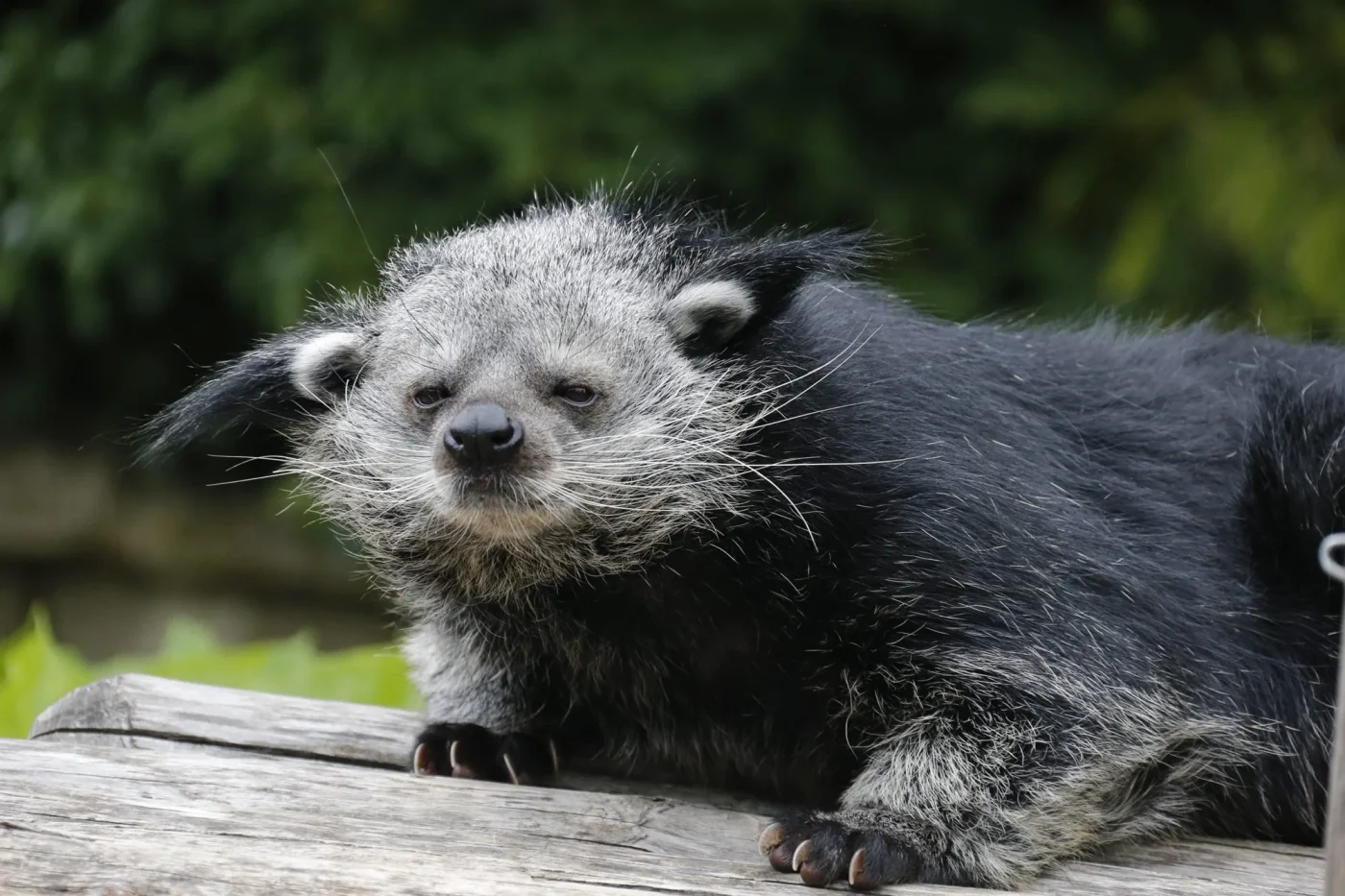
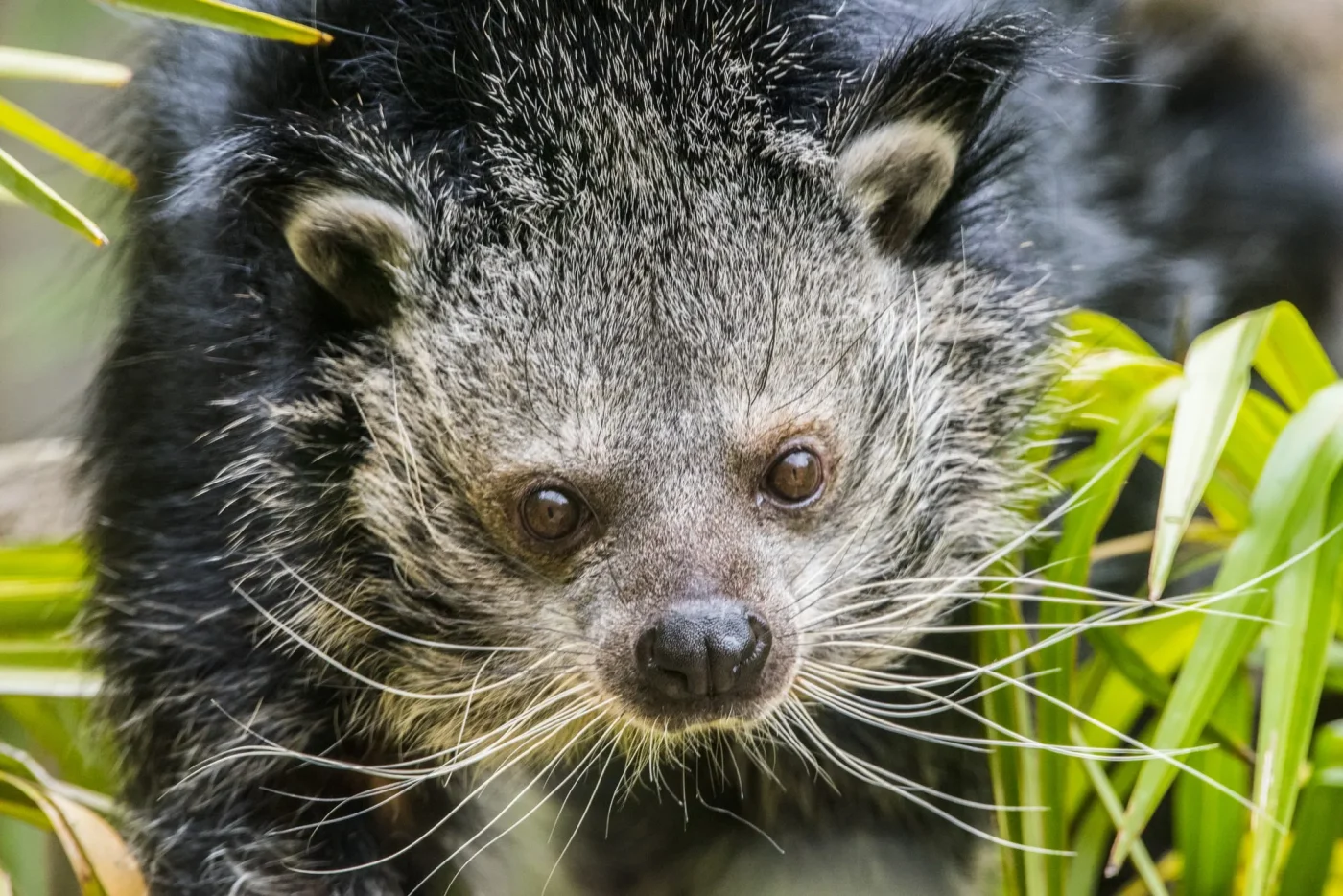
Its fur varies from dark gray to light gray with shades of brown depending on the location. It has a broad range with several subspecies.

The maximum life expectancy is 18 years in the wild and about 25 years in captivity.

Weight

9 - 24 kg

Habitat

Dense forest canopy

Diet

Omnivore

Gestation

90 - 100 days

Longevity

18 - 20 years

Longevity

12-17 years

Location

South and Southeast Asia.
Frequently Asked Questions

Where does the binturong live?

The binturong is native to the forests of Southeast Asia. Its range is wide. It can be seen in Myanmar, Vietnam, Cambodia, India, Laos, Indonesia, Malaysia, and the Philippines.

Reproduction strategy

There is no fixed breeding season for the binturong. When the female goes into heat, she emits vocalizations to attract the males. Outside this period, the male tends to avoid the female. She gives birth to 1 to 6 young, which are born blind after a gestation period of 92 days. They open their eyes after 15 days.

What does it eat?

It is a carnivore in terms of classification, however, its diet is omnivorous. It feeds on fruit for 80% of its diet, thus contributing to the dispersal of seeds through its excrement. Its digestive system does not allow it to digest the seeds, so they are passed intact in its droppings. It is an opportunistic omnivore that supplements its diet with insects, birds, small mammals, or even carrion. It is capable of entering the water and swimming to retrieve food.

The binturong has many predators such as the dhole, clouded leopard, tiger, and Temminck’s cat.

Lifestyle

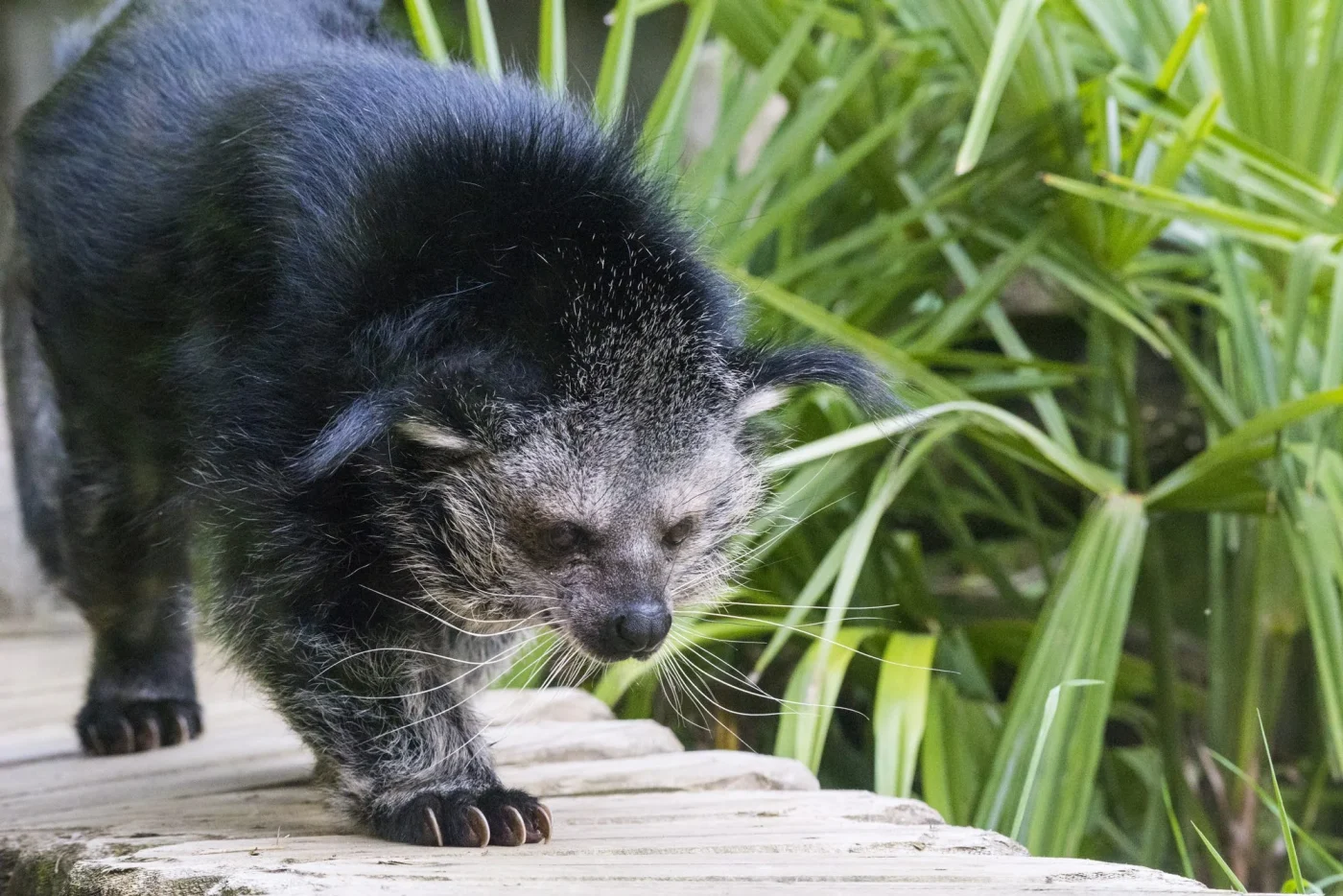
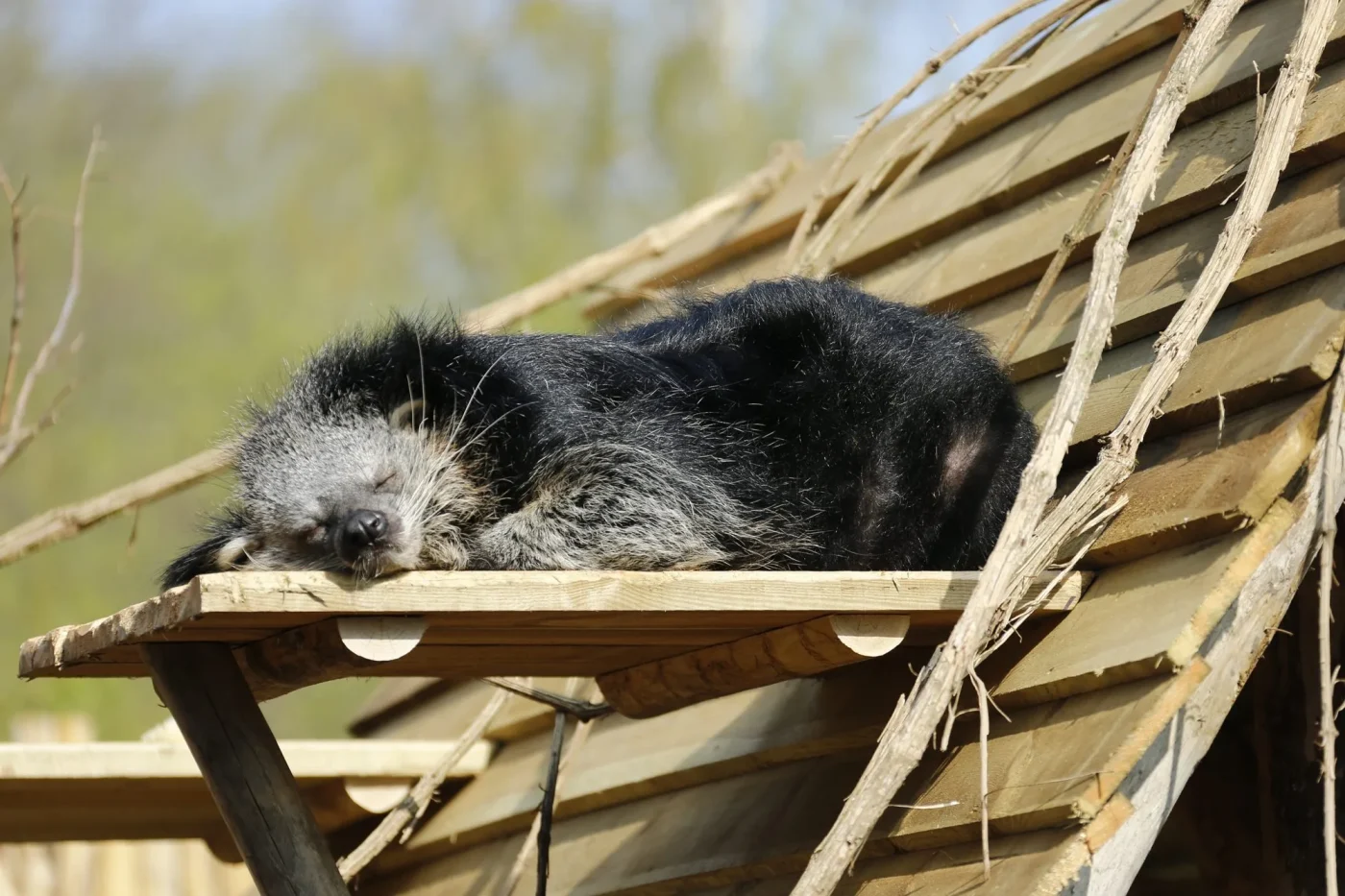
The binturong is a species with arboreal tendencies, although it can descend to the ground. It mainly lives in the canopy to find its food. To rest, it prefers to move down to an intermediate level. Its long claws give it ease in climbing and moving in the trees. Its lifestyle remains unclear due to a lack of studies. It is mainly nocturnal, but in some locations, numerous daytime sightings have occurred.

What is it threatened by?

The species is classified as “vulnerable” by the International Union for Conservation of Nature and is considered threatened. It is the subject of a European breeding program.

Like many species from the forests of Southeast Asia

Other animals to discover