Tyto alba

Barn owl

Order: Strigiformes / Family: Tytonidae / Genus: Tyto

Description

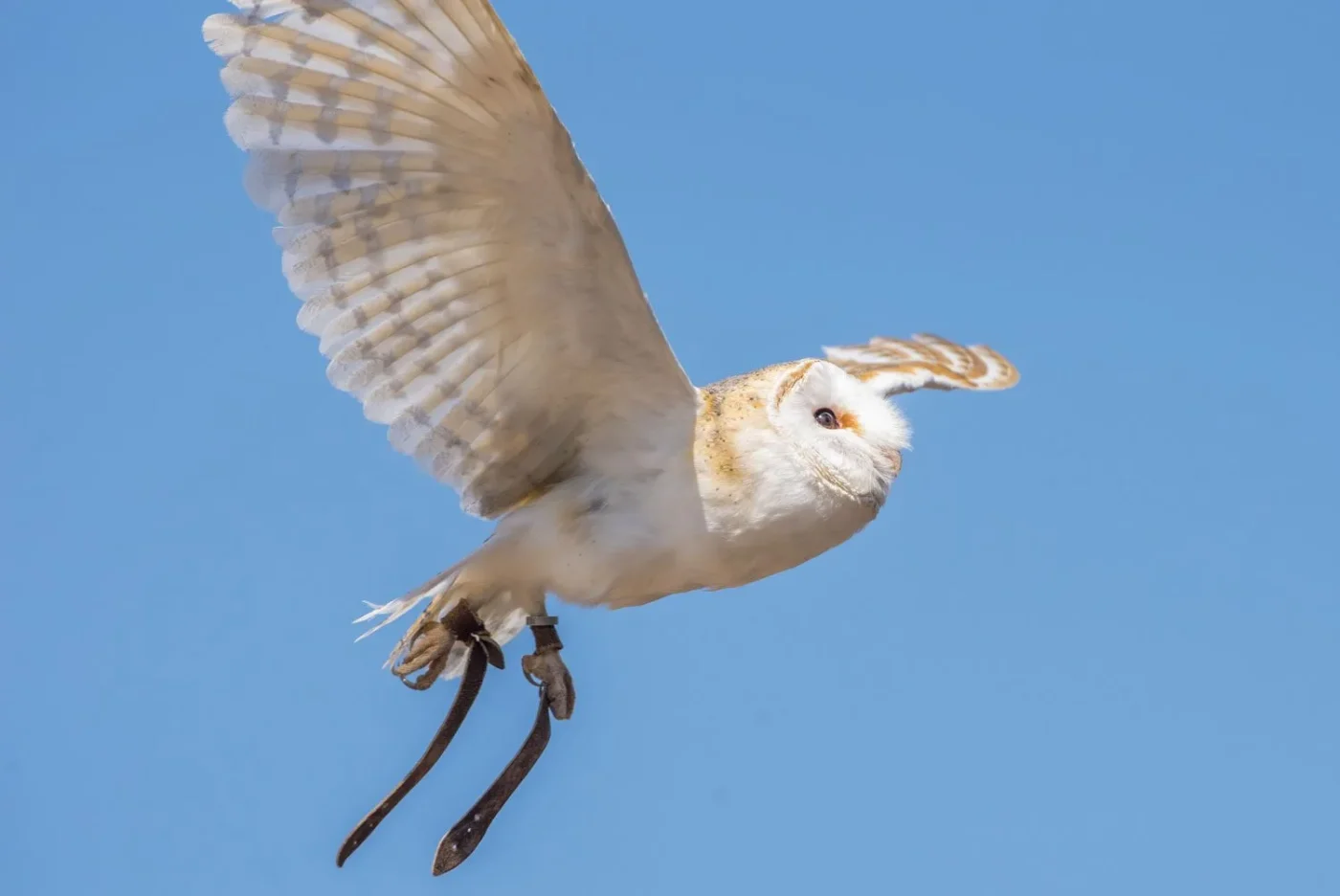
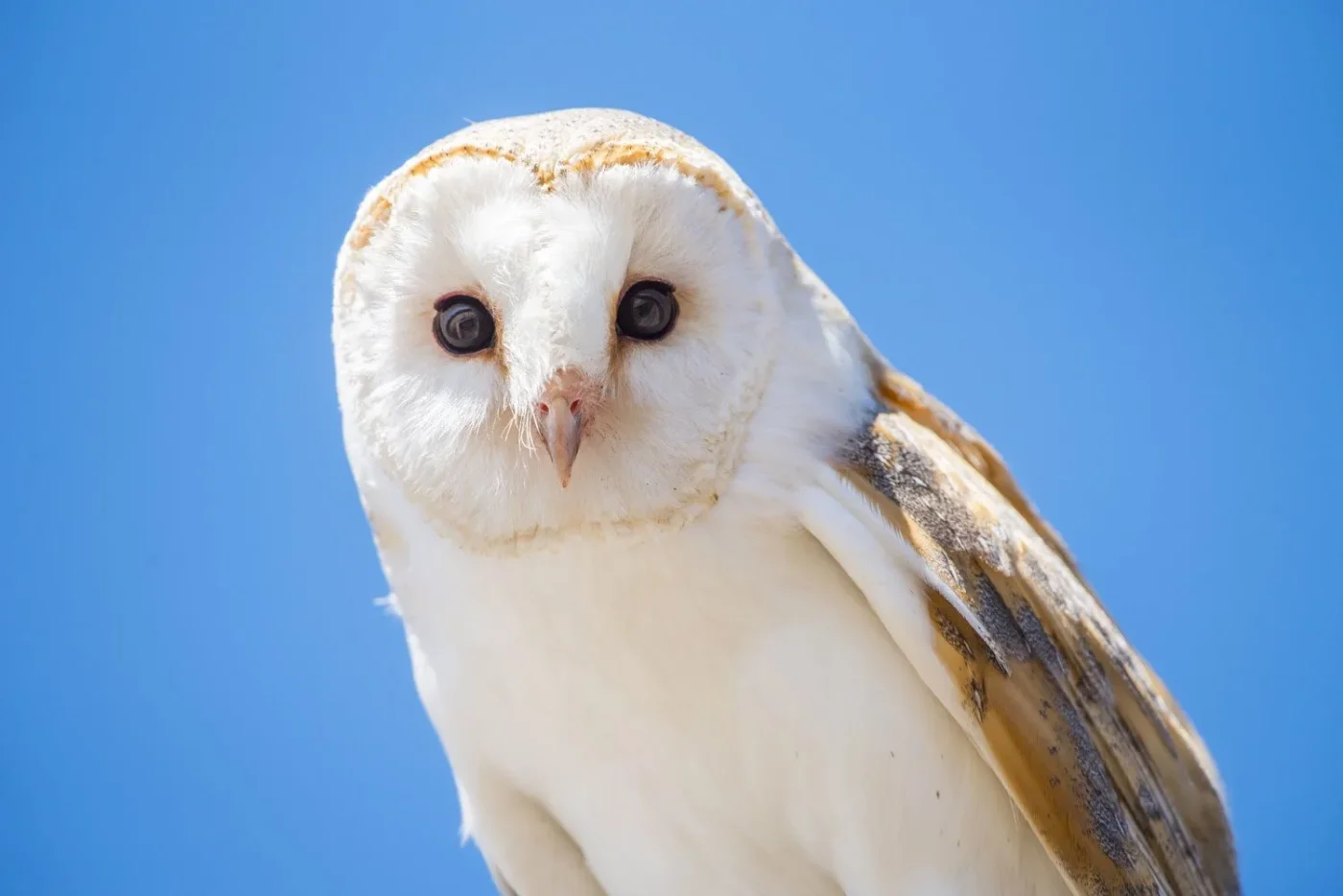
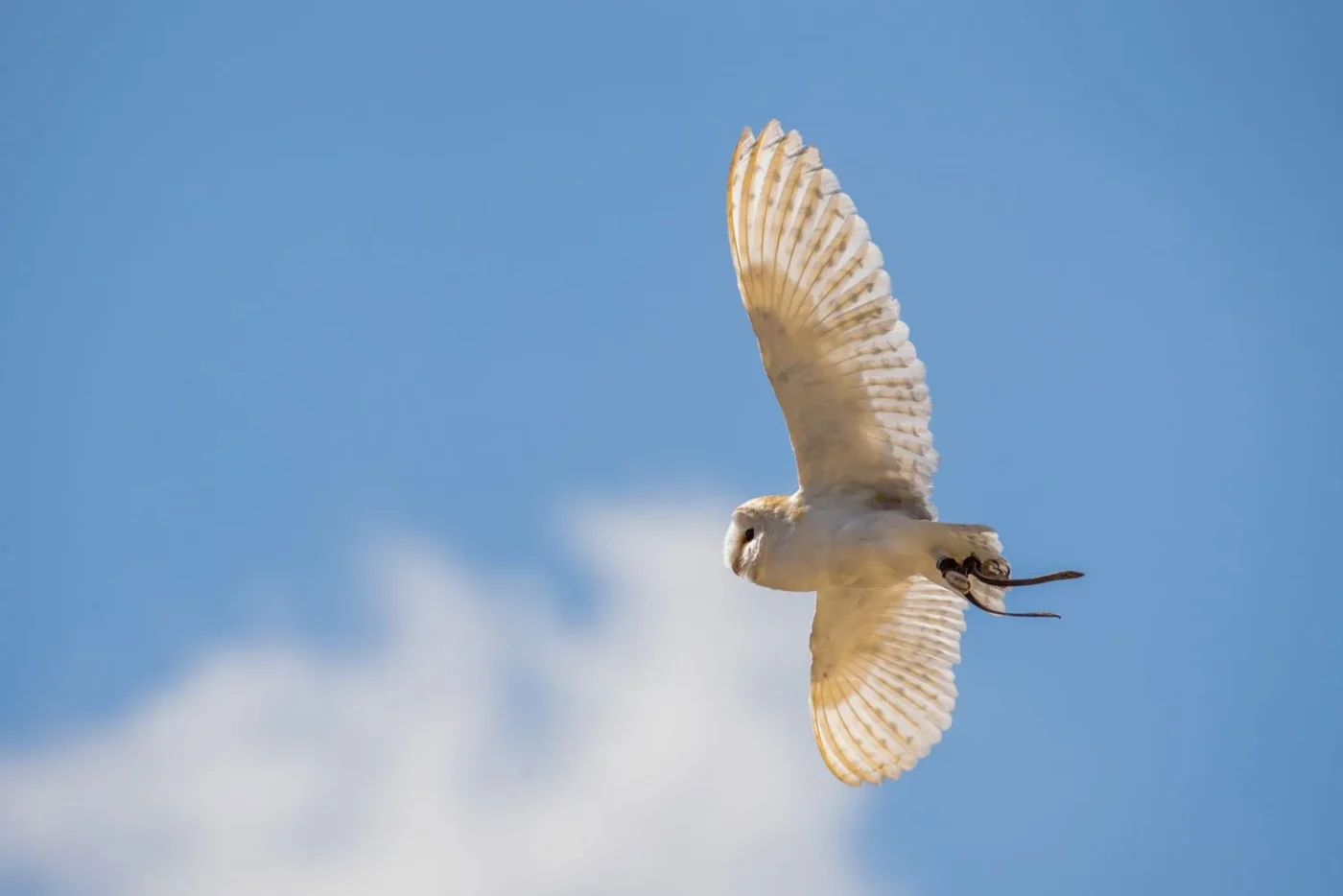
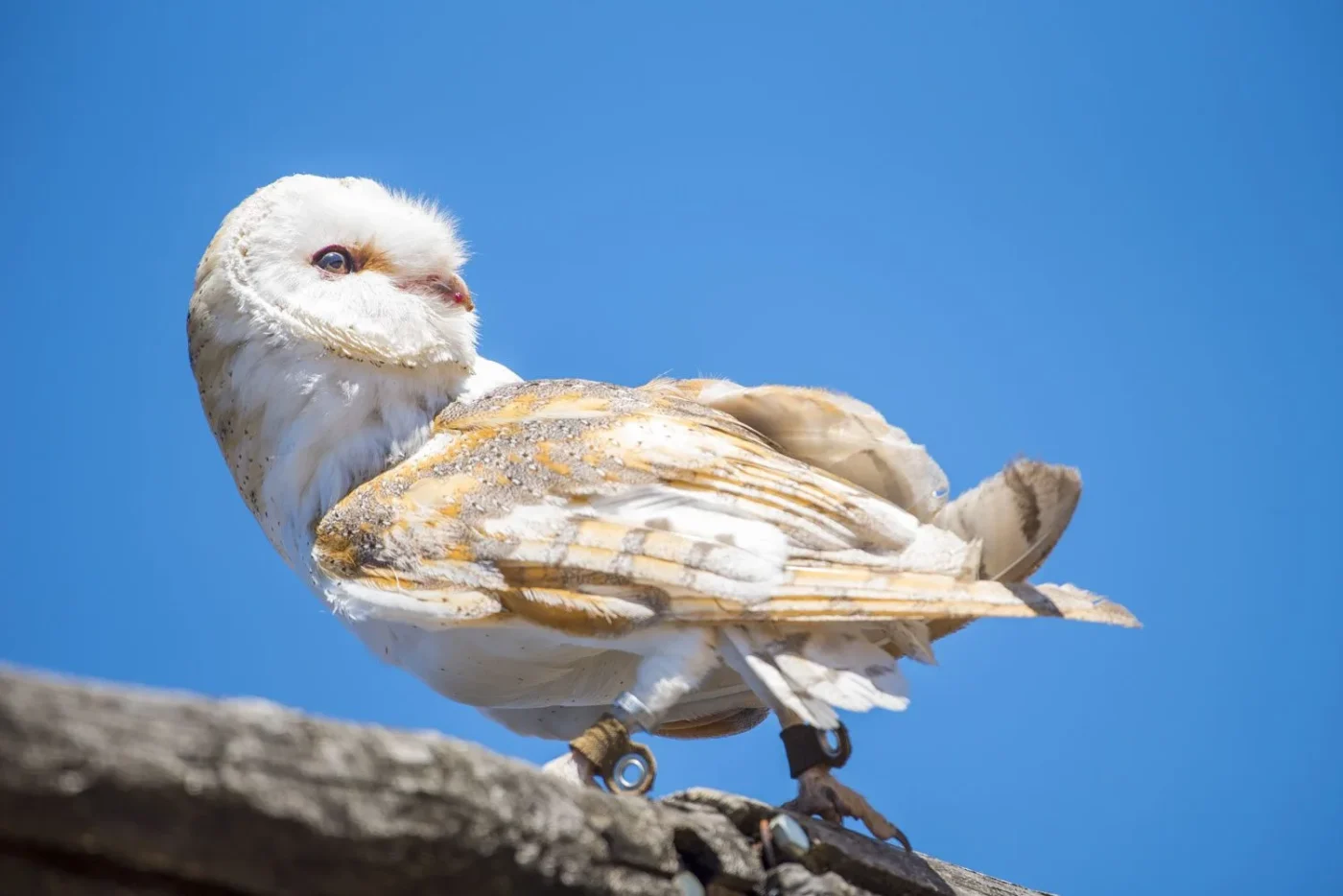
The barn owl, or the church owl, is an owl that can easily be distinguished from other nocturnal birds of prey. It is easily recognized by its facial disc, which is heart-shaped and light-colored. It has dark eyes as well as a light-colored beak ranging from yellow to pale pink. The upper body varies from gray to reddish-brown speckled with white and black. The underparts show colors ranging from white to rufous and may also be speckled with white or black. Finally, the tail and flight feathers display black bands. The undersides of the wings are completely white. The legs are entirely feathered. Sexual dimorphism is not very marked in this species, since the only difference between the sexes is that males have slightly lighter and less spotted plumage.

The chicks have thick, completely white down.

Currently, there are 10 subspecies worldwide. These subspecies differ more by genetic differences than by morphological ones: Tyto alba alba, Tyto alba guttata, Tyto alba ernesti, Tyto alba erlangeri, Tyto alba schmitzi, Tyto alba gracilirostris, Tyto alba detorta, Tyto alba poensis, Tyto alba thomensis, Tyto alba hypermetra.

Weight

290 to 340 g (males) / 310 to 370 g (females)

Habitat

Grasslands, steppes, savannah

Diet

Carnivore

Gestation

29 - 34 days

Longevity

13 years

Longevity

12-17 years

Location

Present on all continents except Antarctica
Frequently Asked Questions

Where does the barn owl live?

The barn owl is a nocturnal raptor found on all continents except Antarctica. They are found in Europe, from the British Isles in the west to Ukraine in the east, and further south to the Arabian Peninsula. It is also present in Asia, from India to Southeast Asia and even in Oceania. It also inhabits the entire African continent, except for the Sahara Desert and rainforests. It is present throughout the Americas, from southern Canada to southern Argentina.

Within its wide range, it occupies many open environments such as grasslands, marshes, moors, steppes, savannas, or more or less closed environments like orchards, hedgerows, or even plantations of trees… It also favors agricultural environments.

They have even been introduced to some Pacific islands in order to control rodents.

Lifestyle

The barn owl is generally nocturnal; it is very rare and exceptional to see it in broad daylight.

It is sedentary and settles in shelters where it spends its day without risk of being disturbed. These shelters can be rock cavities or holes in tree trunks. However, it prefers human structures such as attics, barns, sheds, church bell towers… This has earned it its other name: church barn owl.

By nature very discreet, it often goes unnoticed until the moment it vocalizes in the silence of the night.

Behavior

The vocalizations of the barn owl resemble fairly high-pitched chuckles characteristic of the species. These vocalizations are made at dusk and more rarely in the middle of the night.

The long, broad wings allow for a light and short flight. Very agile in the air, it is able to change direction quickly thanks to sharp turns. It can also perform a stationary flight if necessary.

The flight feathers have special barbs that enable very silent flying, which is highly effective for night hunting. In fact, it hunts at night thanks to its highly developed hearing and keen eyesight.

What does it eat?

Exclusively carnivorous, the barn owl mainly feeds on small mammals such as voles and shrews. It also eats, in smaller quantity, small birds, bats, amphibians, and even insects such as cockchafers.

It is able to determine which prey its meals are made of thanks to regurgitated pellets. These small balls are made up of everything gastric juices cannot digest: bones, fur, feathers, and are found at the base of the roost or inside the roost…

This owl hunts using its highly developed senses! Its vision is very effective, especially in low light. Its hearing allows it to precisely detect the location of prey. This is made possible by asymmetric hearing. The ears, located on each side of the head, are not aligned vertically. This allows the owl to very precisely locate where the sound is coming from.

It can hunt in different ways, since it can stay motionless in ambush on a branch waiting for the right moment, or it can fly low to the ground searching for prey. As soon as prey is spotted, it dives at it talons first and grabs it with a quick strike. Immediately after catching it, the owl kills it by delivering a beak blow to the back of the skull. It then swallows its prey whole.

Reproduction strategy

The barn owl is generally monogamous; however, it is not uncommon to see a male mating with several females. The courtship displays that take place in the spring are accompanied by numerous vocalizations.

The barn owl nests in cavities. Its nest is placed in a cavity that may be the daytime roost of one of the parents. Nowadays, it is not unusual to see these birds of prey nesting in man-made structures such as barns, attics, or church bell towers.

Quite rudimentary, no material is brought into the cavity and the eggs are laid directly on the ground. It is also not uncommon to see a second laying period in the year, which then occurs in summer.

Generally, the female lays between 2 and 7 eggs, on average 5, all white and oval in shape at two-day intervals. Incubation lasts between 29 and 34 days and is performed only by the female. The male is responsible for bringing food to the female. After hatching, the chicks remain in the nest under the protection of the mother for 15 days. It is only when they are about 50 to 70 days old that the chicks leave the nest. Subsequently, they only become independent around 5 weeks later.

Sexual maturity is reached at the age of 2 years.

Juvenile mortality is very high as 75% of them die before the age of 1 year. Most individuals die between 2 and 3 years old, although some as old as 21 have been observed.

Conservation

Currently classified as “Least concern” due to its wide geographic distribution, its status is actually complicated to define depending on the subspecies and populations.

In fact, due to its nocturnal lifestyle, it is rather difficult to collect data on its status.

The barn owl is, however, affected by many threats and populations are declining.

The threats are multiple:

The use of pesticides. Renovation of agricultural and rural buildings leads to a decrease in the number of potential nesting sites and therefore strongly impacts the species. In addition, road collisions greatly affect the population since these nocturnal birds are attracted by the headlights at night, which causes disorientation and ends in collisions with vehicles.

It is therefore important to encourage nesting by leaving roosting areas in rural structures or by installing nest boxes.

In France, the barn owl is protected and it is forbidden to collect the carcass of a protected animal by law without proper authorization.

In France, the barn owl is an animal associated with legends. Its silhouette and calls led people to associate it with ghosts. Because of this, it was nicknamed the White Lady and was nailed to barn doors to ward off disease, curses, and storms.

Other animals to discover