Saguinus imperator

Emperor tamarin

Order: Primates / Family: Callitrichidae / Genus: Saquinus

What is a tamarin?

The emperor tamarin is part of the callitricidae family, which includes all tamarin and marmoset species.

All these species have things in common: first of all, unlike other primates, they have claws instead of nails on all fingers except the big toe. Also, they have only two molars, instead of three, on each side of the jaw.

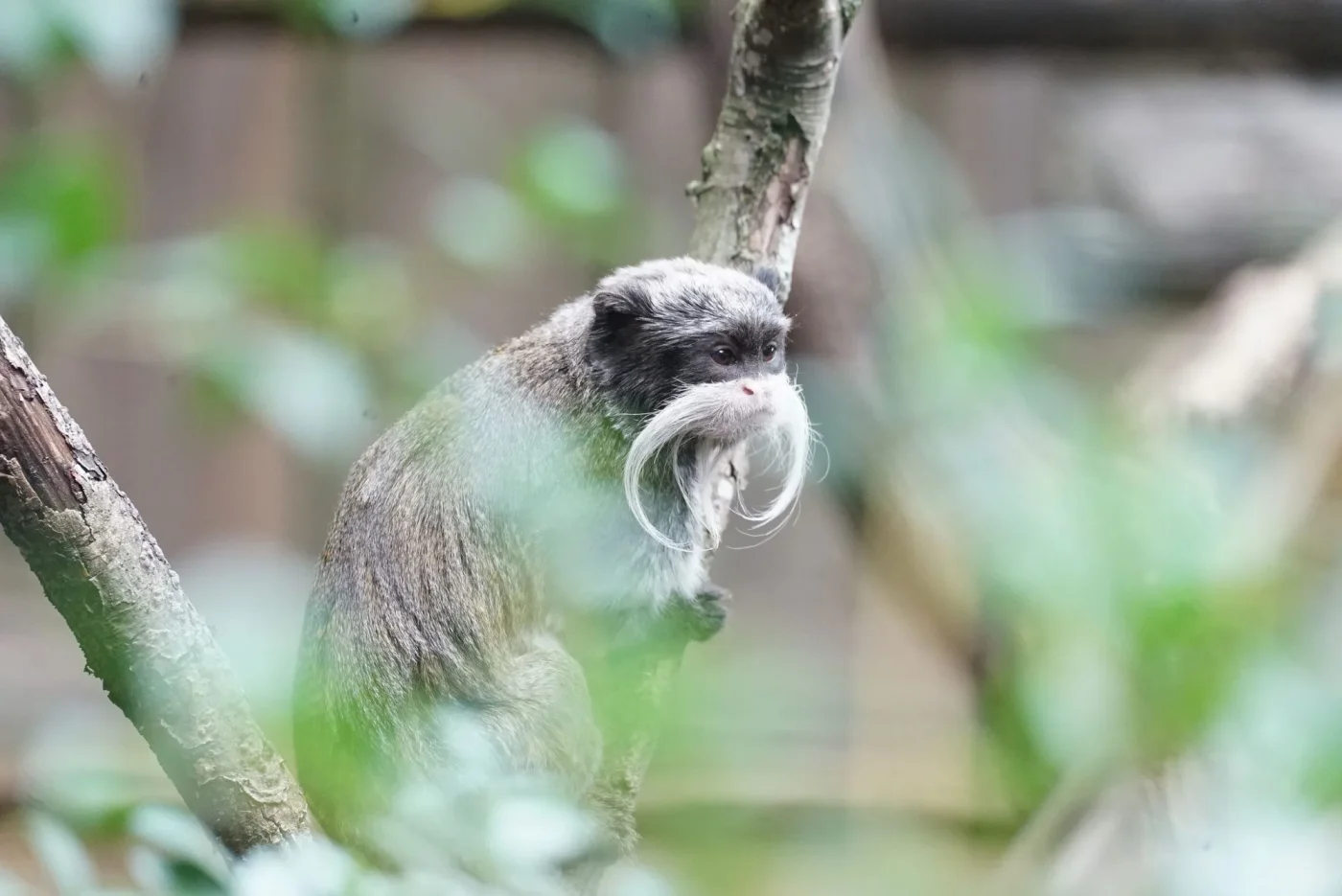
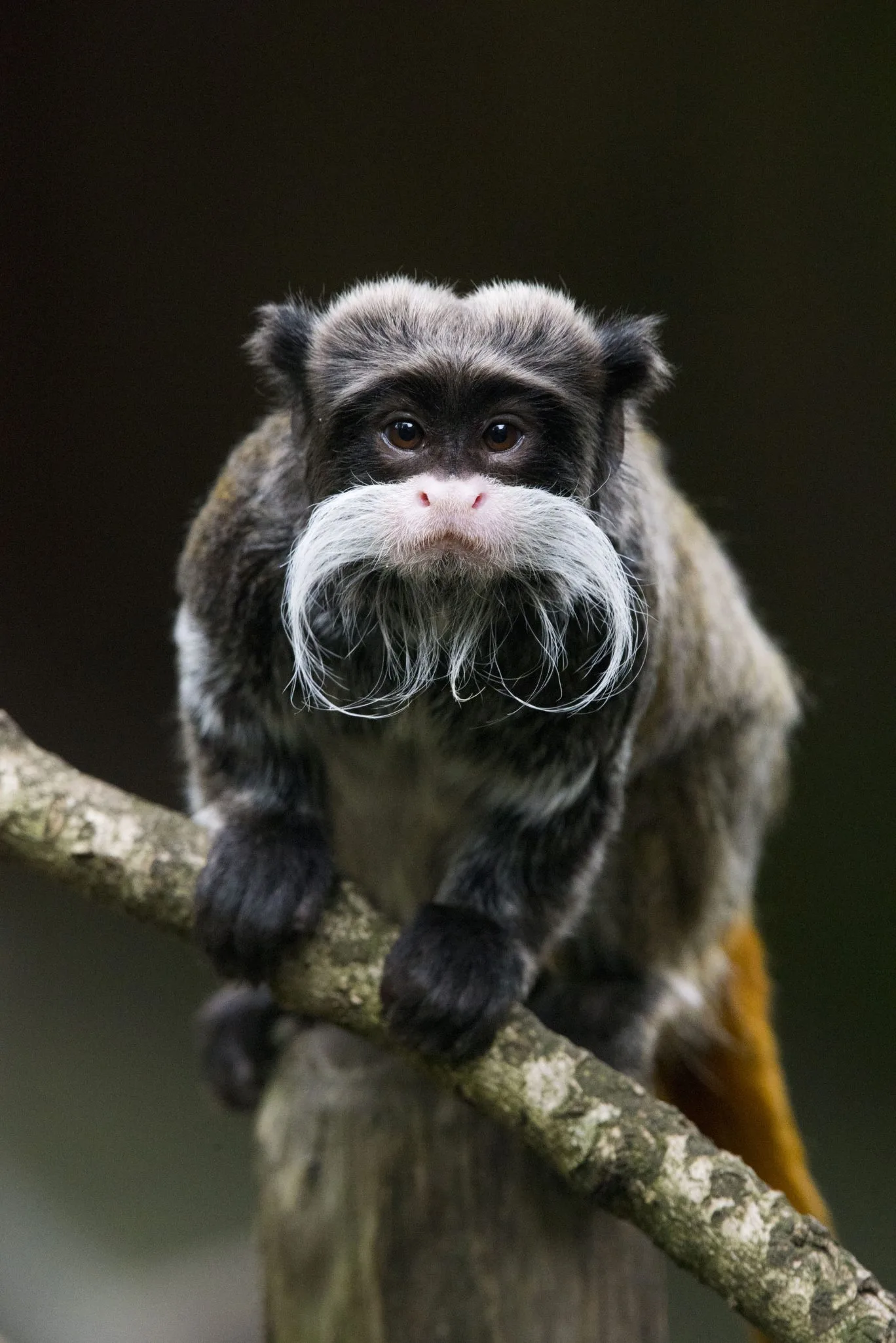
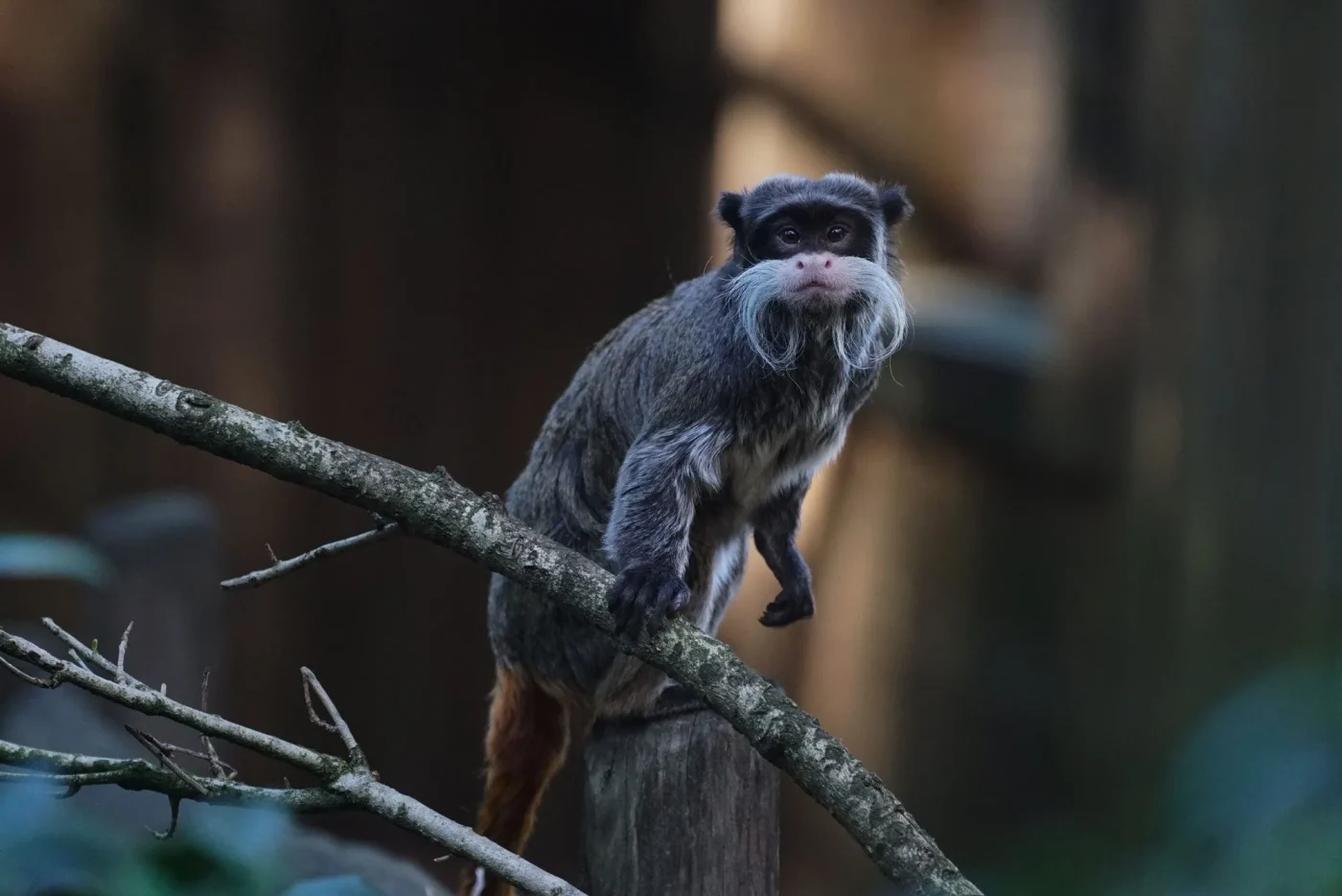
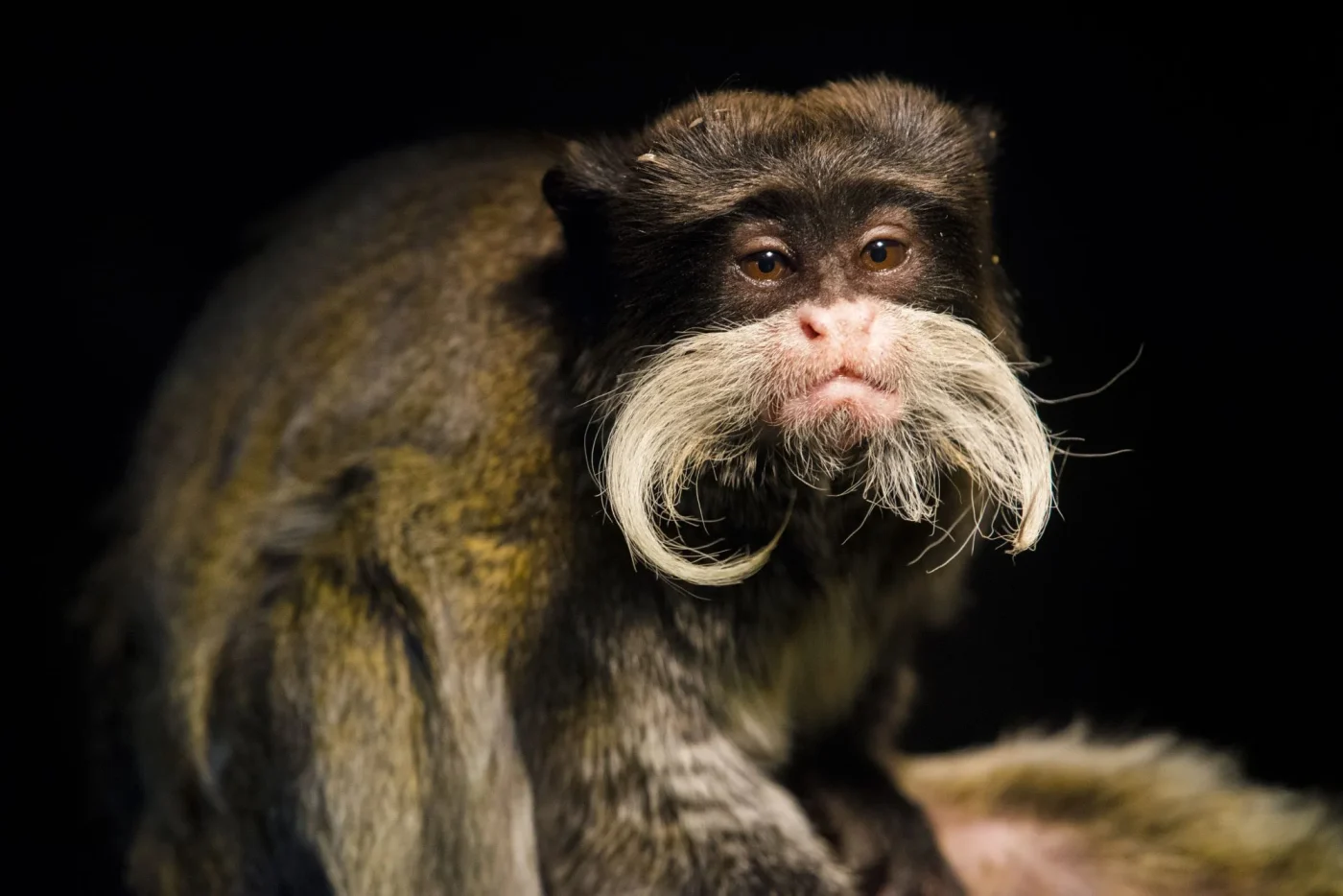
The emperor tamarin is surely the easiest tamarin species to recognize. This small monkey measures between 23 and 26 cm and weighs between 400 and 550 grams. Its fur is dark on its head and brown-gray on the body, with a reddish rump and tail. The latter can reach a length of 35 to 42 cm. Finally, it has a long, impressive white mustache that falls down each side of its face. The Swiss zoologist Goeldi named it after the mustache of the German emperor Wilhelm II. The two subspecies of emperor tamarins are also differentiated by the size of the mustache, one of them being finer and shorter.

Unlike other South American mammal species, its tail is not prehensile. This means that it cannot grasp branches with it. Nevertheless, it is very useful, serving as a counterweight to help it keep its balance while it leaps from branch to branch.

Weight

450 - 550 grams

Habitat

Tropical forest

Diet

Omnivore

Gestation

140 - 145 days

Longevity

10 - 15 years

Longevity

12-17 years

Location

Northwest Brazil, southeast Peru and northwest Bolivia
Frequently Asked Questions

Where does the tamarin live?

The range of the emperor tamarin spans three countries; it is found in northwestern Brazil, southeastern Peru, and northwestern Bolivia. It lives in the Amazonian tropical forests where it occupies the lower and middle canopy.

Breeding strategy

Only the dominant female reproduces. She then mates with several males in the group. After 140 – 145 days of gestation, she gives birth to 1 or 2 young. Several males, usually two, assist the female at the time of birth, taking charge of the young and grooming them. The young are particularly vulnerable at birth, weighing only 35 g, and are carried by their parents during the first 6 to 7 weeks. The female regularly lets other group members care for the young so she can rest after feeding them. Other members of the group also participate in the upbringing of the young. They are weaned after two to three months and reach sexual maturity between 16 and 20 months. The lifespan is 10 to 15 years.

What does it eat?

The emperor tamarin’s diet consists of fruits, flowers, small vertebrates, insects, and sap. Depending on the season, the proportion of these different resources will not be the same. During the rainy season (from November to May), it spends 95% of its time eating fruits. During the dry season, it dedicates only 41% to this, versus 52% of its time spent consuming nectar.

Its light weight and flat palms allow it to have good grip at the tops of trees and reach the ends of branches. In this way, it can catch food that is harder to access for larger species. Unlike other species of small monkeys, they do not have teeth adapted for digging grooves in tree trunks. Only with its claws can it scratch the trunk and extract sap. Frequently, it is content to just lick the sap that flows naturally from the trunk or after another species has passed by.

Behavior

Arboreal and diurnal, the emperor tamarin lives in mixed groups of 2 to 15 individuals led by a dominant female. Usually, the oldest female controls the group. She is the only one to reproduce, mating with several males in the group, and gives birth to twins. The whole group helps raise the young.

It is not uncommon to see the emperor tamarin associating with the Spix’s saddle-back tamarin (Saguinus fuscicollis) to share their territory. Each species occupies different levels within the canopy, with the emperor tamarin spending most of its time more than 10 meters above the ground, while the saddle-back tamarin is only found in lower strata, at 10 meters or less. To recognize each other, each species can distinguish between the call of a member of its own species and that of a stranger. This allows them to coordinate their movements without seeing each other. It has been observed that the emperor tamarin can maintain this relationship with multiple tamarin species. This allows both species to find food more efficiently and to increase vigilance to better protect themselves against predators.

Conservation

The emperor tamarin is not currently considered a threatened species. Its populations are still abundant throughout its entire geographic range.

However, the most remote parts of its habitat are beginning to be impacted by the presence of humans who destroy forests for wood, agriculture, or the construction of roads and dwellings. This species is also potentially subject to the animal trade.

Other animals to discover