Top 5 Zoos in France
Home to nearly 2,000 animals from around 360 species across five continents, the Zoo d’Amnéville has one of France’s most diverse animal collections. Its 18 hectares of forest in the Moselle region are divided into 10 themed areas. With so much to see, where should you start? Here are 10 animals you won’t want to miss, chosen for their beauty, rarity, role in international conservation programs, and ability to delight the whole family.
For each animal, you’ll find the essentials: where to find it in the zoo, its conservation status on the IUCN Red List, what makes its habitat at Zoo d’Amnéville special, and a tip to help you get the best view. For a complete list of species, visit our Our Animals page.
How did we choose these 10 animals?
We chose these animals based on four criteria: how memorable they are for visitors, especially families with children; their conservation status on the IUCN Red List; the quality of their habitats at Zoo d’Amnéville; and the zoo’s hands-on work to protect them. The zoo has been a member of EAZA (European Association of Zoos and Aquaria) since October 2022, reflecting high standards of animal welfare and participation in European breeding programs for endangered species (EEP).
Before your visit, check the day’s schedule of activities and feedings so you can plan around some of the zoo’s most memorable moments.
| Rank | Animal | Zoo area | IUCN status | Family appeal |
|---|---|---|---|---|
| 1 | Western lowland gorilla | Gorilla’ Camp | Critically endangered (CR) | Exceptional |
| 2 | Sumatran orangutan | Orangutan House | Critically endangered (CR) | Exceptional |
| 3 | African giraffe | Giraffe House | Vulnerable (VU) | Exceptional |
| 4 | African wild dog | African Zone | Endangered (EN) | Very high |
| 5 | African elephant | African Zone | Vulnerable (VU) | Exceptional |
| 6 | Jaguar | Amazone Jungle | Vulnerable (VU) | Very high |
| 7 | Snow leopard | Big Cat Territory | Vulnerable (VU) | Very high |
| 8 | Humboldt penguin | Peruvia Bay | Vulnerable (VU) | Very high |
| 9 | Cotton-top tamarin | Amazone Jungle | Critically endangered (CR) | High |
| 10 | Southern white rhinoceros | African Zone | Near threatened (NT) | High |
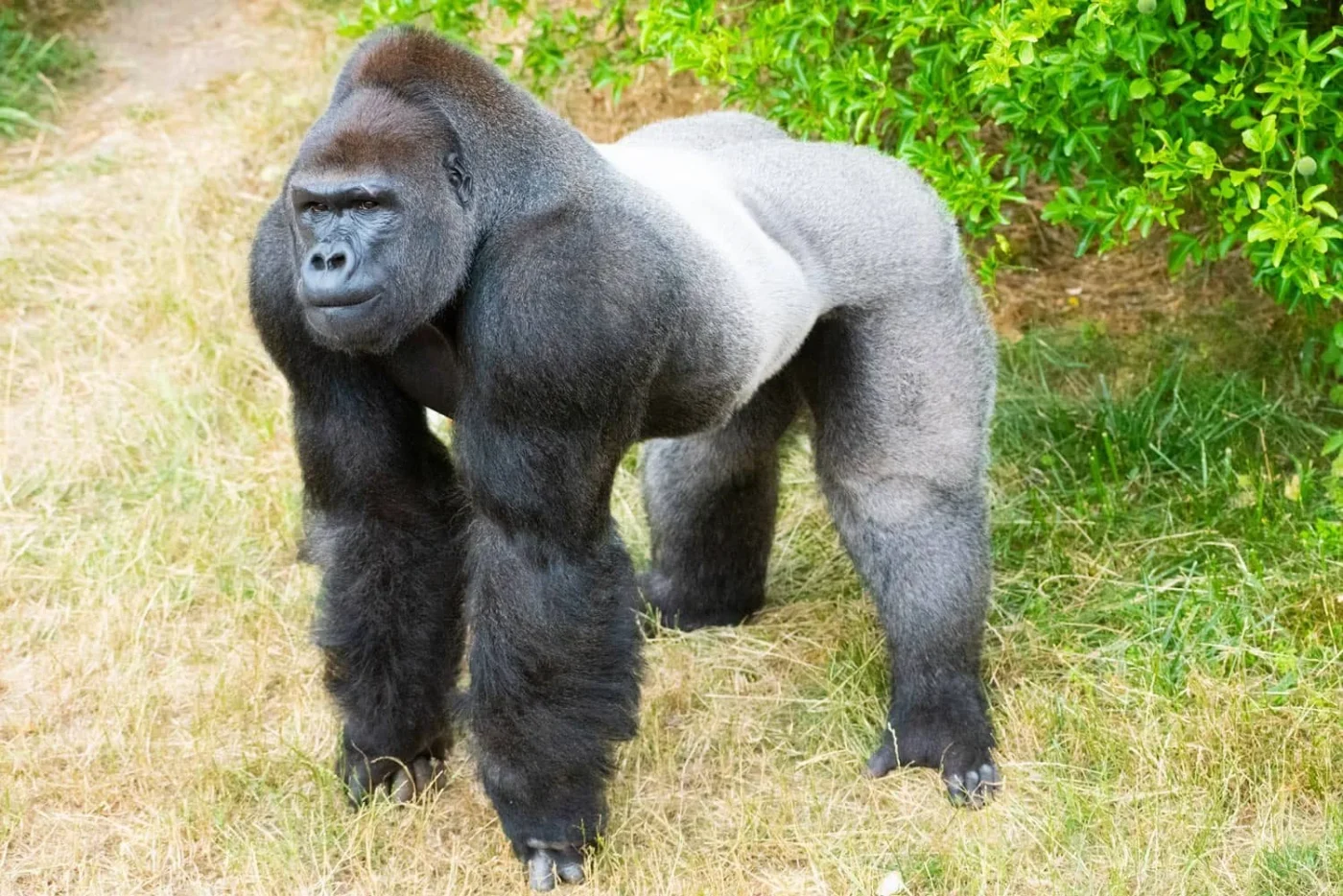
The western lowland gorilla: wisdom personified
Scientific name: Gorilla gorilla gorilla
Zoo area: Gorilla’ Camp
IUCN status: Critically endangered (CR). Source: iucnredlist.org
The gorilla is the world’s largest primate. An adult male can weigh up to 440 pounds and develops the silver back that marks his maturity. A peaceful herbivore, he lives in a close-knit group led by a dominant male. That almost human gaze leaves a lasting impression on visitors of all ages.

At Zoo d’Amnéville, the Gorilla’ Camp is one of the largest gorilla habitats in the world. Spanning more than 107,000 square feet, it features three spacious indoor areas, three outdoor enclosures, and nine sleeping dens. The group has seven gorillas, each with a distinct personality: Lengaï, Meru, Upala, Monza, Akiki, N’goro, and Awali. Learn more about the species on the zoo’s Gorilla page.
The western lowland gorilla has been listed as critically endangered on the IUCN Red List since 2016. Poaching, deforestation, and disease threaten wild populations in Central Africa. Zoo d’Amnéville participates in the European breeding program (EEP) for the species. To learn more about the zoo’s conservation work, visit What is conservation?
Visitor tip: Gorilla feeding time is a highlight of the day. A wildlife educator will be there to explain how gorillas live. Book at the admissions desk or visit the Gorilla Feeding page for details. Avoid staring the dominant male in the eyes: in the gorilla world, a prolonged stare is a challenge.
The Sumatran orangutan: the person of the forest
Scientific name: Pongo abelii
Zoo area: Orangutan House
IUCN status: Critically Endangered (CR)
In Malay, “orangutan” literally means “person of the forest.” This red-haired great ape lives in the tropical forests of northern Sumatra, Indonesia. Solitary by nature, it spends nearly its entire life in the trees and builds a nest of leaves to sleep in each night. Its resemblance to humans, slow and thoughtful movements, and expressive face captivate kids and adults alike.

The Orangutan House at Zoo d’Amnéville is one of the largest habitats for this species in Europe, with 6,000 m² divided among four indoor habitats and two large outdoor habitats. You’ll also find gibbons, cloud rats, and siamangs there. Floor-to-ceiling windows let children in strollers see the animals at eye level, without needing to be picked up. Learn more about the species on the zoo’s orangutan page.
Forest clearing for palm oil plantations and logging in Sumatra has reduced the wild Sumatran orangutan population to about 13,000 individuals, according to the IUCN Red List. The species has been listed as Critically Endangered since 2017. The zoo has supported conservation programs in Indonesia for several years. To learn more, explore our conservation work in the field.
Visitor tip: Orangutans are most active in the morning, during their first feeding. They often climb high into their habitat, so bring binoculars or a zoom lens to spot them on their perches. Their indoor habitat is covered, making it a great stop on a rainy day.
The African giraffe: the world’s tallest animal
Scientific name: Giraffa camelopardalis
Zoo area: Giraffe House and African savanna
IUCN status: Vulnerable (VU)
Standing up to 18 feet tall, adult male giraffes are the tallest land animals in the world. Their distinctive walk, remarkably long necks, and large orange-brown patches against a cream-colored coat make them instantly recognizable. For kids seeing one in person for the first time, their size is always a surprise.

At Zoo d’Amnéville, the Giraffe House is part of a spacious African savanna shared with zebras, lechwe antelope, ostriches, and crowned cranes. This recreated savanna lets you watch several species interact, just as they would in the wild. Viewing windows at different heights make it easy for everyone to see, even from a stroller.
The giraffe was classified as vulnerable on the IUCN Red List in 2016, after its population declined by 40% over 30 years. The IUCN estimated that about 117,000 giraffes remained in 2021. Habitat loss, poaching, and human-wildlife conflict are the main threats. WWF France is among the organizations working to protect giraffes in sub-Saharan Africa.
Visitor tip: Come early in the morning to see the giraffes at their most active. For an even closer look, watch them return to their indoor quarters around 4 p.m. They may come right up to the barriers during feeding time.
The African wild dog: the savanna’s most successful hunter
Scientific name: Lycaon pictus
Zoo area: African Zone
IUCN status: Endangered (EN)
Also known as the painted dog, the African wild dog is Africa’s largest wild canine. Its brown, yellow, and white coat has a pattern as unique as a fingerprint, and its large, round ears make it easy to recognize. With a hunting success rate of over 80%, it’s one of the savanna’s most effective predators—far more successful than the lion.
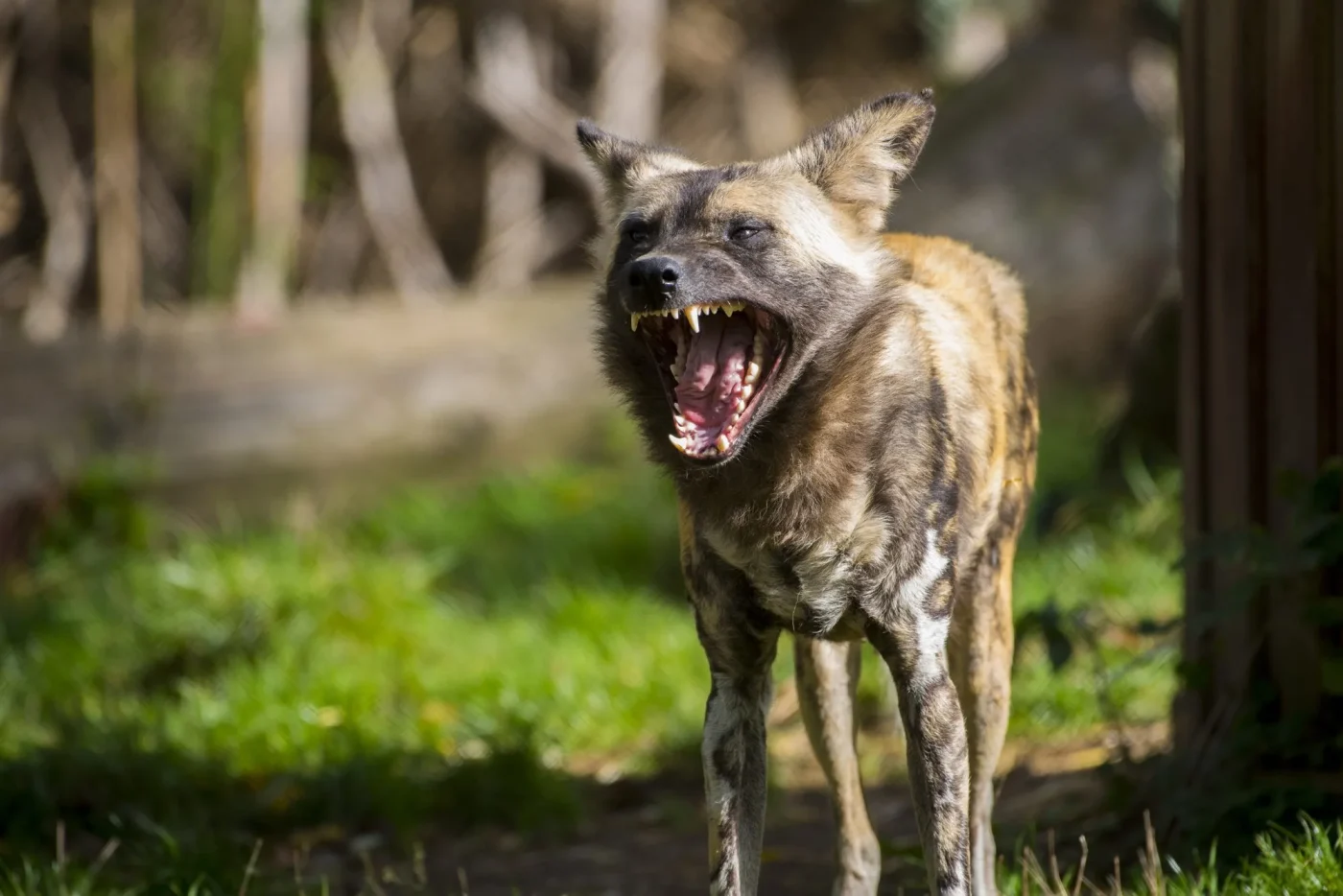
African wild dogs are very rare in European zoos. At Zoo d’Amnéville, a pack lives in the African area alongside porcupines and meerkats—a rare opportunity to see them up close. Watch their complex social interactions, from greeting rituals and play to the pack’s social hierarchy.
With an estimated 6,600 remaining in the wild (IUCN, 2020)—a 70% decline over 50 years—the African wild dog is one of Africa’s most threatened carnivores. Its main threats are diseases spread by domestic dogs, habitat fragmentation, and conflict with livestock farmers. Zoo d’Amnéville participates in the species’ European EEP breeding program.
Visitor tip: African wild dogs are most active early in the morning and late in the afternoon. At midday, they may be resting in the shade. Visit this area at those times to see the pack on the move. The Vivarium is right next door and makes a great next stop.
The African Elephant: A Gentle Giant
Scientific name: Loxodonta africana
Zoo area: African area
IUCN status: Endangered (EN) for forest elephants; Vulnerable (VU) for savanna elephants
The elephant is the world’s largest land animal: an adult male can weigh up to 6 tons and stand 11.5 feet tall at the shoulder. With their remarkable intelligence, incredible memories, and rich social lives, elephants fascinate researchers and visitors alike. For a child seeing one in person for the first time, it is often the highlight they talk about when they get home.
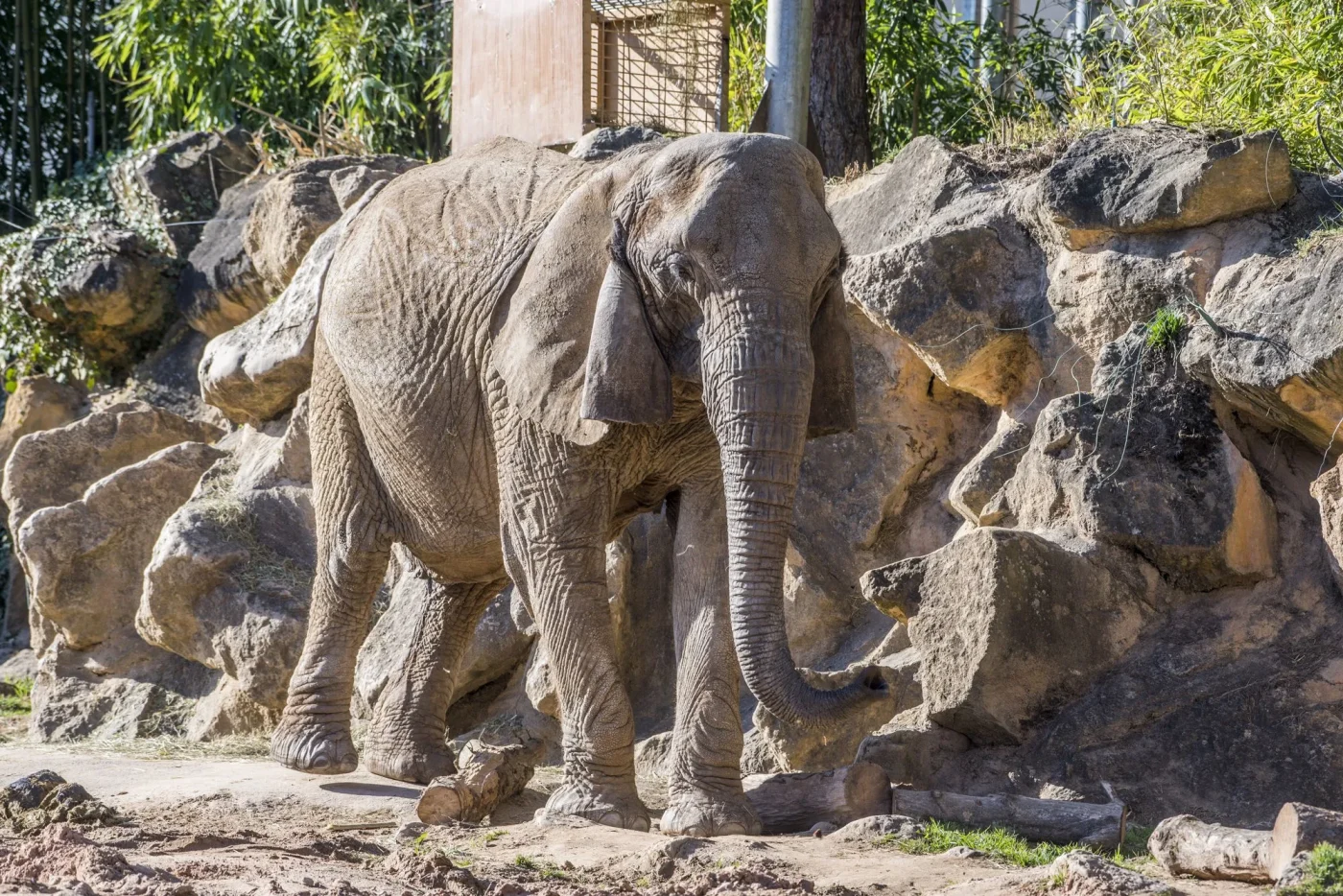
Zoo d’Amnéville is home to African elephants in its African area. Their spacious outdoor enclosure gives them room to roam, and visitors can watch them from the zoo’s pathways.
According to the IUCN Red List (2021), African savanna elephants are endangered, while African forest elephants are critically endangered. Their combined population is estimated at around 415,000, but ivory poaching and habitat loss continue to threaten their survival. The WWF is deeply committed to protecting elephants in Africa.
Visitor tip: Elephant feeding sessions are a special treat. Check the day’s schedule when you arrive. From the elevated viewing areas, you can see the entire enclosure and watch the elephants interact.
The jaguar: king of the Amazon jungle
Scientific name: Panthera onca
Zoo area: Amazone Jungle
IUCN status: Vulnerable (VU)
The jaguar is the largest wild cat in the Americas and the third largest in the world, after the lion and tiger. Powerful and agile, it is the only big cat capable of killing its prey with a single bite that pierces the skull. Its spotted coat (black rosettes on golden fur) helps it blend into the dense vegetation of the Amazon rainforest. Its striking golden-green eyes are unforgettable.

At Zoo d’Amnéville, you can find the jaguar in Amazone Jungle, a tropical escape that’s also home to small monkeys, lowland tapirs, and flamingos. This immersive habitat recreates the atmosphere of a rainforest. Visit the zoo’s Jaguar page to learn more about the species.
Listed as vulnerable on the IUCN Red List, the jaguar has lost more than half of its historic range. Deforestation in the Amazon, hunting, and conflicts with ranchers threaten the remaining populations. Organizations such as WWF France support wildlife corridors that reconnect fragmented populations.
Visitor tip: Jaguars are most active early in the morning and late in the afternoon. At midday, they may be hidden in tall vegetation. Take your time and look for them from different vantage points around the habitat.
The snow leopard: the ghost of the Himalayas
Scientific name: Panthera uncia
Zoo area: Big Cat Territory
IUCN status: Vulnerable (VU)
The snow leopard is one of the most mysterious big cats—and one of the hardest to spot in the wild. Its pale gray coat is patterned with large black rosettes, its long, bushy tail can wrap around its body for warmth, and its oversized paws are made for walking on snow. Together, they make it a truly beautiful animal. Snow leopards live in the mountains of Central Asia at elevations of 9,800 to 16,400 feet.
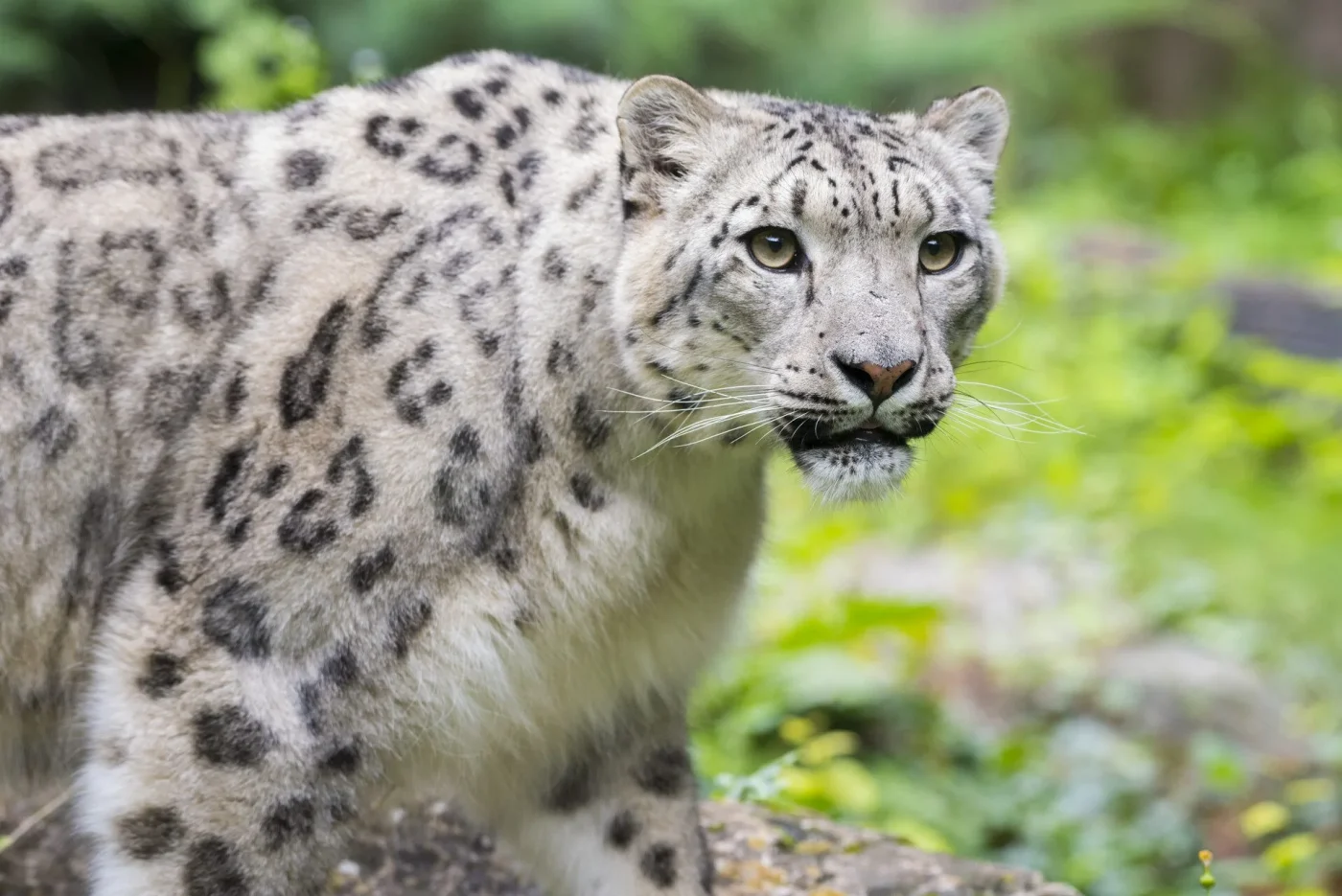
At Zoo d’Amnéville, you’ll find the snow leopard in Big Cat Territory, the first area you’ll encounter when you enter the park. It’s also home to lions, Amur leopards, cougars, tigers, and caracals. With so many big cats to see one after another, this area is a favorite with families.
The wild snow leopard population is estimated at 4,000 to 6,500 individuals, according to the IUCN Red List (2017). Its main threats are poaching for its fur, conflicts with herders when it attacks livestock, and the decline of its natural prey due to climate change. The Snow Leopard Trust is a leading organization working to protect the species.
Visitor tip: Snow leopards are most active around dawn and dusk. In the middle of the day, ours may be resting out of sight or staying perfectly still. Come back around 4:30 p.m. for a different view. Its silent movements and watchful gaze are mesmerizing.
The Humboldt Penguin: Swimmer of the Andes
Scientific name: Spheniscus humboldti
Area of the zoo: Peruvia Bay
IUCN status: Vulnerable (VU)
The Humboldt penguin is one of the few penguins that live outside the Antarctic region. You’ll find it along the coasts of Peru and Chile, where the cold Humboldt Current flows. An excellent swimmer, it can reach speeds of 19 mph underwater and dive up to 490 feet deep to catch prey. On land, its waddling walk and lively social interactions make it an instant hit with kids.

At Zoo d’Amnéville, the Peruvia Bay area offers a unique experience: an underwater viewing gallery where you can watch penguins swim, twist, and dive just inches away. It’s one of the zoo’s most spectacular sights and a favorite with kids of all ages. You’d be hard-pressed to get this view in the wild.
The Humboldt penguin is listed as vulnerable on the IUCN Red List. El Niño events periodically warm the Humboldt Current, reducing the penguins’ food supply and directly affecting their ability to breed. Overfishing and pollution pose additional threats.
Visitor tip: Stop by the underwater gallery anytime: the penguins are always swimming, so there’s plenty to see. Stand by the lower viewing windows to watch them zip past. Kids love seeing them dive in from the surface.
The cotton-top tamarin: a conservation ambassador
Scientific name: Saguinus oedipus
Zoo area: Amazone Jungle
IUCN status: Critically Endangered (CR)
With its striking white crest reminiscent of Mozart’s hairstyle, the cotton-top tamarin is one of the world’s most endangered primates. Weighing just 300 to 500 grams, it’s barely heavier than a smartphone. Lively, curious, and highly social, it lives in close-knit family groups and communicates through a wide range of high-pitched calls. Despite its small size, it’s hard to miss: its acrobatic leaps through the greenery catch your eye right away.

Zoo d’Amnéville is home to cotton-top tamarins in the Amazone Jungle area. Their leafy habitat evokes the tropical dry forests where they live in the wild. The zoo also supports the Fundación Proyecto Tití in Colombia, which has worked for nearly 20 years to protect the species and restore its natural habitat.
Cotton-top tamarins are found only in the tropical dry forests of northwestern Colombia. Fewer than 6,000 are estimated to remain (IUCN, 2021). The main threat is the loss of their habitat to agriculture and urban development. You can help protect them by sponsoring an animal at Zoo d’Amnéville.
Visitor tip: Stand quietly near the habitat and wait. Tamarins are curious and often approach patient visitors on their own. They’re especially active during morning feeding time, making them a delight to watch with young kids.
The southern white rhino: back from the brink of extinction
Scientific name: Ceratotherium simum simum
Zoo area: African Zone
IUCN status: Near Threatened (NT)
The southern white rhinoceros is the largest of the five rhino species and one of the world’s largest land mammals after the elephant. An adult can weigh up to 5,300 pounds and stand 6 feet tall at the shoulder. Its massive build, wrinkled gray skin, and distinctive pair of horns make an unforgettable impression. Seeing one just a few feet away during a feeding never fails to amaze visitors.

At Zoo d’Amnéville, you can see the southern white rhinoceros in the African area, alongside other large herbivores from the continent. You can watch it from the park’s pathways, right at ground level.
The southern white rhinoceros is one of conservation’s greatest success stories. From fewer than 50 individuals recorded in the late 19th century, its population has grown to around 16,000 thanks to decades of coordinated protection efforts (IUCN, 2020). But intensive poaching for its horn remains a constant threat. To learn more about rhino conservation, visit WWF France’s rhino page.
Visitor tip: The rhino is often active during morning feedings. Its thick, wrinkled skin, calm nature, and impressive size make it a great subject for photos. Take your time by the habitat: its leisurely pace is a welcome change after the park’s busier areas.
More amazing animals at Zoo d’Amnéville
Zoo d’Amnéville is home to many other animals worth discovering. Here are a few that make a perfect addition to your top 10 must-sees:
| Species | Zoo area | Why see them |
|---|---|---|
| Arctic wolf | North American Territory | See the pack together and discover their fascinating social behavior |
| African lion | Big Cat Territory | King of the savanna, with an unforgettable roar |
| Polar bear | North American Territory | The world’s largest land predator and an exceptional swimmer |
| Amur leopard | Big Cat Territory | One of the world’s rarest big cats (critically endangered) |
| Red panda | Amazone Jungle | An irresistibly charming animal kids love |
| Gibbon / siamang | Orangutan House | Calls that carry for miles and impressive acrobatics |
| Giant anteater | Amazone Jungle | Rarely seen in zoos, with a tongue that can reach 24 inches |
| Carpathian lynx | Animals of Our Forests | An elusive, majestic European wild cat |
| Magellanic penguin | Peruvia Bay | See it alongside the Humboldt penguin in the underwater viewing gallery |
| Lowland tapir | Amazone Jungle | A prehistoric-looking mammal rarely seen in zoos |
Find the full list of animals at the zoo on our Our Animals page.
Tips for spotting all these animals
Plan a route that makes sense
Zoo d’Amnéville has ten themed zones that are easy to explore. To see all ten must-see animals without backtracking, follow this suggested route from the main entrance:
| Stop | Area | Animals you won’t want to miss | Suggested time |
|---|---|---|---|
| 1 | Big Cat Territory | Snow leopard, lion, Amur leopard | 45 min |
| 2 | Gorilla’ Camp and African Zone | Gorilla, African wild dog, elephant, white rhino | 1 hr 30 min |
| 3 | Giraffe House and African Plain | Giraffe, zebra, lechwe, ostrich | 30 min |
| 4 | Orangutan House | Orangutan, siamang, gibbon, cloud rat | 45 min |
| 5 | Amazone Jungle and Peruvia Bay | Jaguar, cotton-top tamarin, Humboldt penguin | 45 min |
| 6 | North American Territory | Arctic wolf, polar bear | 30 min |
The best times to visit each species
| Time of day | Most active animals | Tip |
|---|---|---|
| 9:30–11:30 a.m. | Gorillas, giraffes, elephants, African wild dogs | See the large African mammals first, right when the zoo opens |
| 11:30 a.m.–2:00 p.m. | Penguins, reptiles, indoor areas | A great time for the underwater viewing gallery and vivarium |
| 2:00–5:00 p.m. | Orangutans, big cats, wolves | Second period of activity: afternoon feedings |
Bookable feedings and animal experiences
Zoo d’Amnéville offers animal experiences where you can watch feedings in a small group with a science educator. The gorilla feeding is especially memorable: you’ll learn to tell the gorillas apart, understand the troop’s hierarchy, and interpret how they communicate.
Zoo d’Amnéville and conservation: a real commitment
When you visit Zoo d’Amnéville, you help protect wildlife. As a member of EAZA since October 2022, the zoo participates in numerous EEP programs (EAZA Ex-situ Programs) that manage populations of endangered species in European zoos. These programs coordinate animal transfers between member zoos to maintain genetically viable populations.
The zoo also supports conservation efforts in the wild:
- The Fundación Proyecto Tití in Colombia, which protects cotton-top tamarins
- Orangutan conservation programs in Indonesia
- Efforts to protect chimpanzees in the Congo
If you’d like to do more than visit, you can sponsor an animal to help care for your favorites and support the conservation programs that protect them. To learn more about these efforts, explore what conservation means and our work in the field.
FAQ: Your questions about the animals at Zoo d’Amnéville
Can you see all these animals in one day?
Yes, if you plan your route using the zoo map above. Aim to arrive when the zoo opens (between 9:30 and 10 a.m., depending on the season), check the daily schedule for feeding times, and plan around your must-sees. With a full day and a little planning, you can see most of the ten species featured here.
Are there species you rarely see at other zoos in France?
Yes. The African wild dog is found at very few European zoos, and the pack at Zoo d’Amnéville is one of the largest in Europe under human care. The cotton-top tamarin is also rare outside its native Colombia. And the underwater viewing gallery for Humboldt penguins is a feature you won’t find at many French zoos.
Are the animals well cared for at Zoo d’Amnéville?
Zoo d’Amnéville has been a member of EAZA since October 2022, meeting strict standards for animal welfare, conservation, and ethics. Habitats have been built and continually improved to meet each species’ behavioral needs. The 10,000-square-meter Gorilla’ Camp is one example.
Which animals are most popular with kids?
Families tell us that kids are especially captivated by the gorillas (because they look so much like us), the giraffes (because they’re so tall), the penguins (because of their underwater acrobatics), and the orangutans (because of their expressions). For children under 3, the animals at the mini farm can offer a gentle first introduction before exploring the larger habitats.
Can visitors interact directly with the animals?
The zoo offers animal experiences supervised by keepers, including small-group feedings. These activities can be booked on-site. However, visitors cannot touch the wild animals in the habitats, in keeping with EAZA animal welfare standards.
Practical information to plan your visit
Check prices and opening hours and activities before you go. Admission is free for children under 3, and parking is free. Coming from Metz, Nancy, Strasbourg, or Luxembourg? See our Getting Here page. For places to stay nearby, see our Accommodations page.
Conclusion: Unmatched Animal Diversity in the Grand Est
With ten must-see species and dozens more, the Zoo d’Amnéville offers one of France’s most varied and moving wildlife experiences. From the almost human gaze of a gorilla in the 2.5-acre Gorilla’ Camp to a Humboldt penguin soaring underwater in an immersive gallery, every area of the zoo has its own unforgettable moments.
Beyond the excitement, every visit supports conservation programs that help these species survive the loss of their natural habitats. That’s what makes the Zoo d’Amnéville much more than a day out: it’s a leading center for global biodiversity in the heart of the Grand Est.