Panthera leo

African lion

Order: Carnivora / Family: Felidae / Genus: Panthera

Description

n

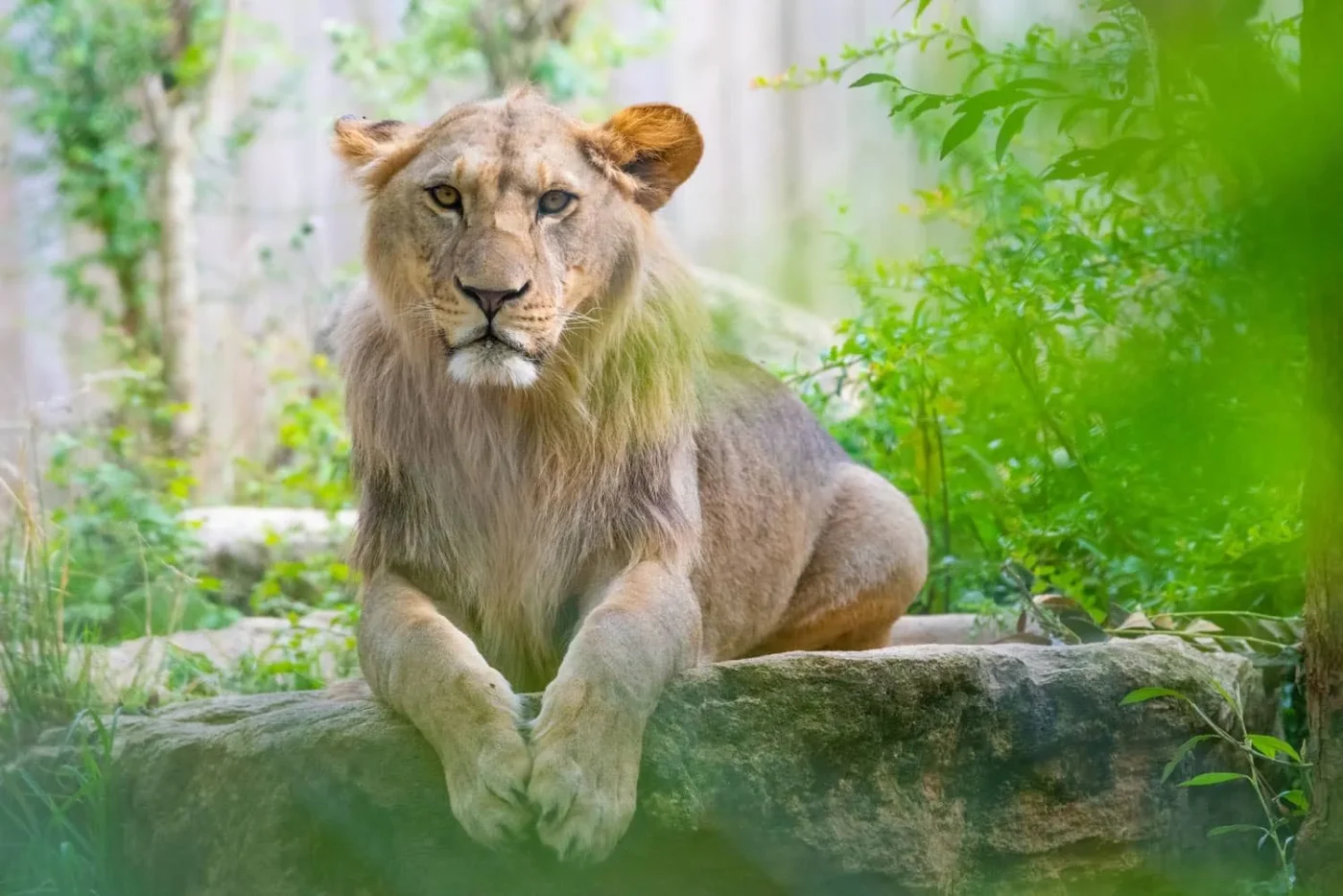
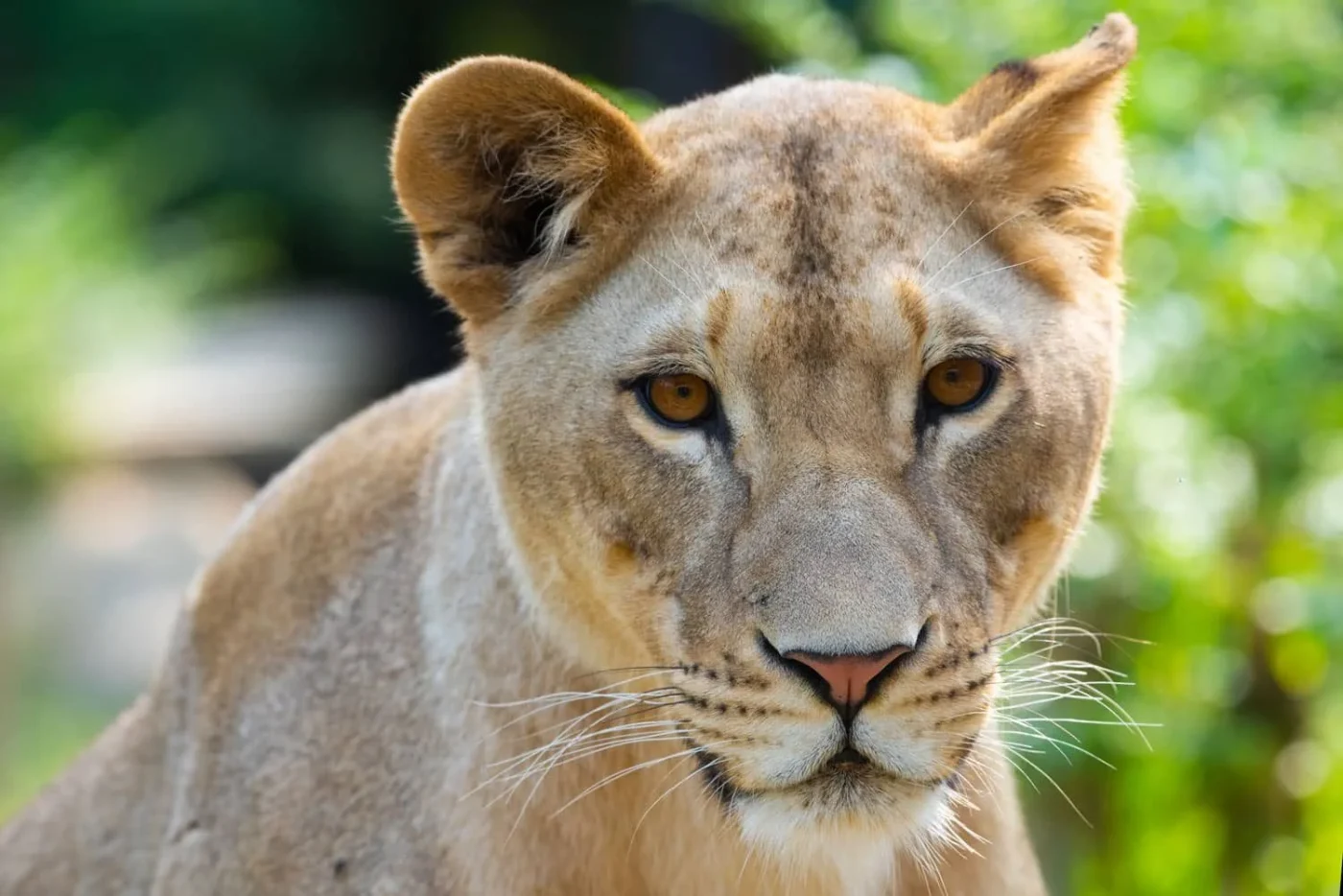
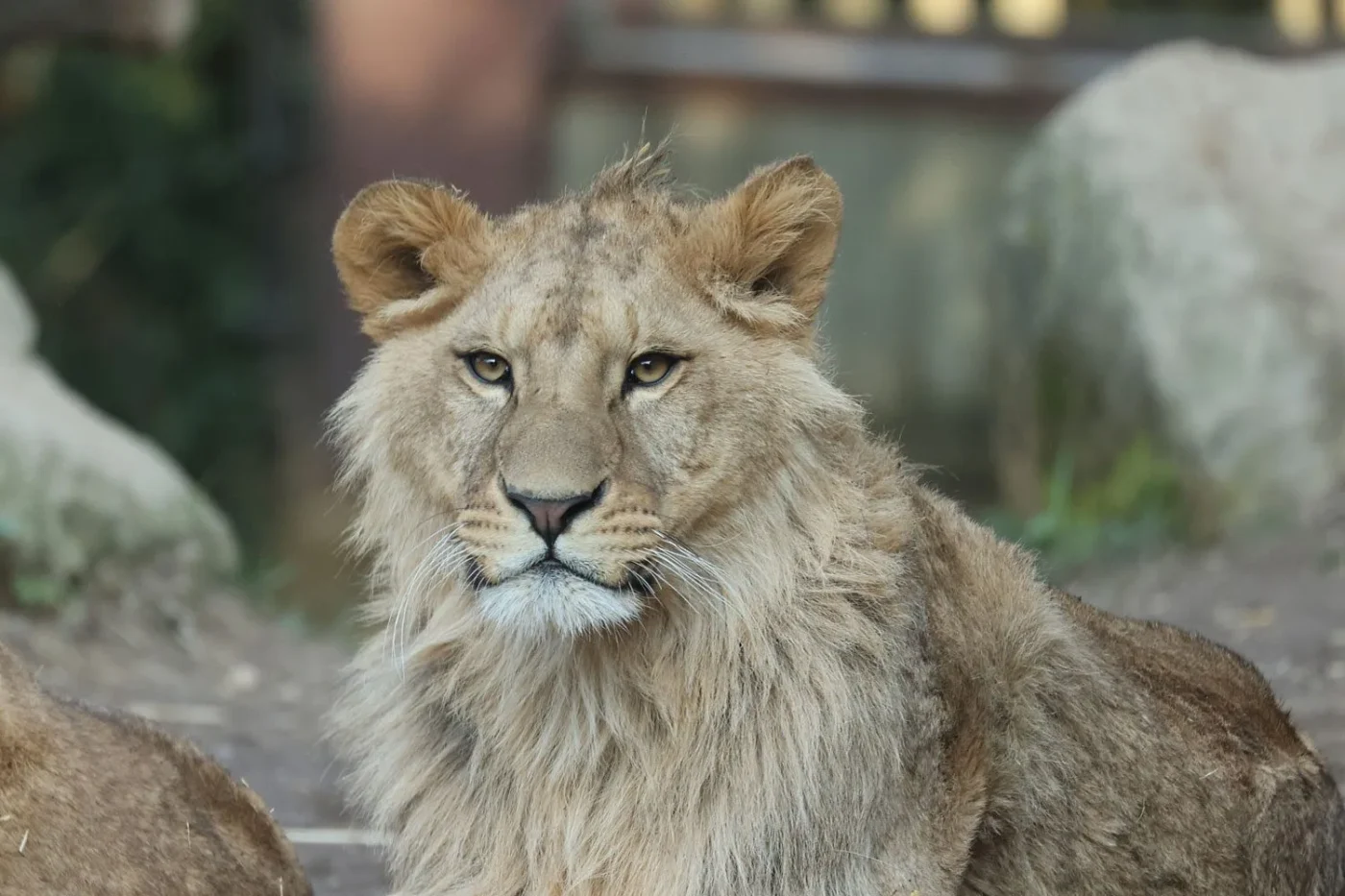
Lions are the largest carnivores in Africa, and strong sexual dimorphism allows males to be distinguished from females. Indeed, male lions are the only felines in the world to have a mane. These dark hairs develop at puberty and extend from the head to the forelimbs. In fact, it is this feature that allows the lion to be quickly differentiated from a lioness since only males have one. The purpose of this secondary sexual characteristic appears to be protection against bites and scratches from their fellow lions. However, the mane seems to be a handicap for camouflage while hunting. Lions can weigh between 220 and 240 kg, with a length of 2.5 to 2.7 meters and a height of 120 to 130 cm at the shoulder. Females, on the other hand, are less bulky, weighing only between 170 and 200 kg, with a length of 1.1 to 1.9 meters and a height of 115 cm at the shoulder. The mouth has 7-centimeter-long fangs and a bite force of more than 300 kilograms. Lions have retractable claws 6 cm long.

n

Lion cubs have a unique coat; it is grayish and has spots on the head, legs, and back. This provides effective camouflage against predators like hyenas, for example. These spots gradually fade starting at 3 months old.

n

Asian lions have a less developed mane but a thicker coat.

Weight

180-230 kg

Habitat

Savannah, desert area

Diet

Carnivore

Gestation

110 days

Longevity

10 - 15 years

Longevity

12-17 years

Location

Africa and Asia
Frequently Asked Questions

Where does the African lion live?

Until about 11,000 years ago, the geographic range of lions extended across Africa, Eurasia, and North America. At the end of the last ice age, probably due to rising temperatures, lions disappeared from the European and North American continents. Since then, they have only been present in Africa and Asia. They now occupy only 8% of their historical geographic range.

According to certain studies based on morphological differences (size, color, etc.), there are believed to be 24 lion subspecies worldwide. However, recent scientific studies based on mitochondrial DNA analyses suggest that there are only 2 subspecies: Panthera leo persica in Asia and Panthera leo leo in Africa.
Nevertheless, these genetic studies may even challenge this classification, as there may be only 1.1% genetic difference between these two subspecies.
Today, lions are found in sub-Saharan Africa, from Senegal to Somalia and as far as South Africa, where they inhabit savannas and grasslands as well as wooded, mountainous, and semi-desert regions. In fact, one population lives in the Bale Mountains of Ethiopia at more than 4,200 meters altitude. They are also present in northwestern India within the Gir Forest National Park, where they inhabit scrubland and forest.

Behavior

They are the only cats to have developed a social way of life. The groups are composed of one or more males, all related females, and their young. These groups can have up to 30 individuals. Lionesses, being less bulky and more agile, have a higher hunting success rate, which is why they take on this task. Males are responsible for marking the territory and protecting the group. Several markers are used: visual markers, thanks to scratches on the ground and trunks, olfactory markers, thanks to excrement and secretions, and finally sound markers thanks to roars that can be heard for several kilometers around.

n

Males form coalitions to more easily take the lead of a group of females, which can count up to 8-9 males. Violent and often deadly battles occur among them, hence the importance of the mane to shield blows. Once the fight is over, the females decide whether to stay with the victorious males or leave with the defeated. The duration of a coalition’s mandate is 2 years.

n

These animals have very good sight, allowing them to spot prey or a competitor up to 2 kilometers away. As a result, they have good night vision.

What does it eat?

Lions are strictly carnivorous and feed on a wide range of prey, from insects when food is scarce to large herbivores such as the zebra.
Males can eat 7 kilograms of meat per meal and females up to 4.5 kilograms.
Depending on the geographical area, prey will be more or less abundant. When prey is scarce, groups of lions specialize in hunting species usually ignored because they are harder to catch. In Congo, for example, frequent attacks on giraffes have been observed, as well as attacks along certain rivers on young elephants or hippopotamuses.

Lions are powerful animals that can run at speeds of around 70-75 km/h. However, they can only maintain this speed for a short distance of about 150 to 200 meters. As a result, they must develop formidable hunting techniques: they stalk their prey in groups. They start by getting as close as possible to the prey, crawling slowly on the ground. Then, with a quick leap, they seize the prey.

During chases with small prey, lions try to reach their prey’s legs to trip them up. For bigger catches, they jump on their backs. At this time, the males, stronger than the females, join the hunt.

Breeding strategy

The duration of a coalition’s tenure is 2 years, which is also the time required for a female to raise a litter and come into heat again. Consequently, by killing all unweaned cubs at the time of the group’s takeover, the males ensure the possibility of raising at least one litter. There is no seasonality in reproduction; the lioness is receptive every 2 to 3 weeks, and when she accepts mating, there follow 50 matings per day for 4 days. Within a group, the females’ heats are synchronized to facilitate the raising of the young in nurseries. At sexual maturity, females remain in their birth group while males are driven out. The males thus chased away are therefore in search of females.

Life of the park

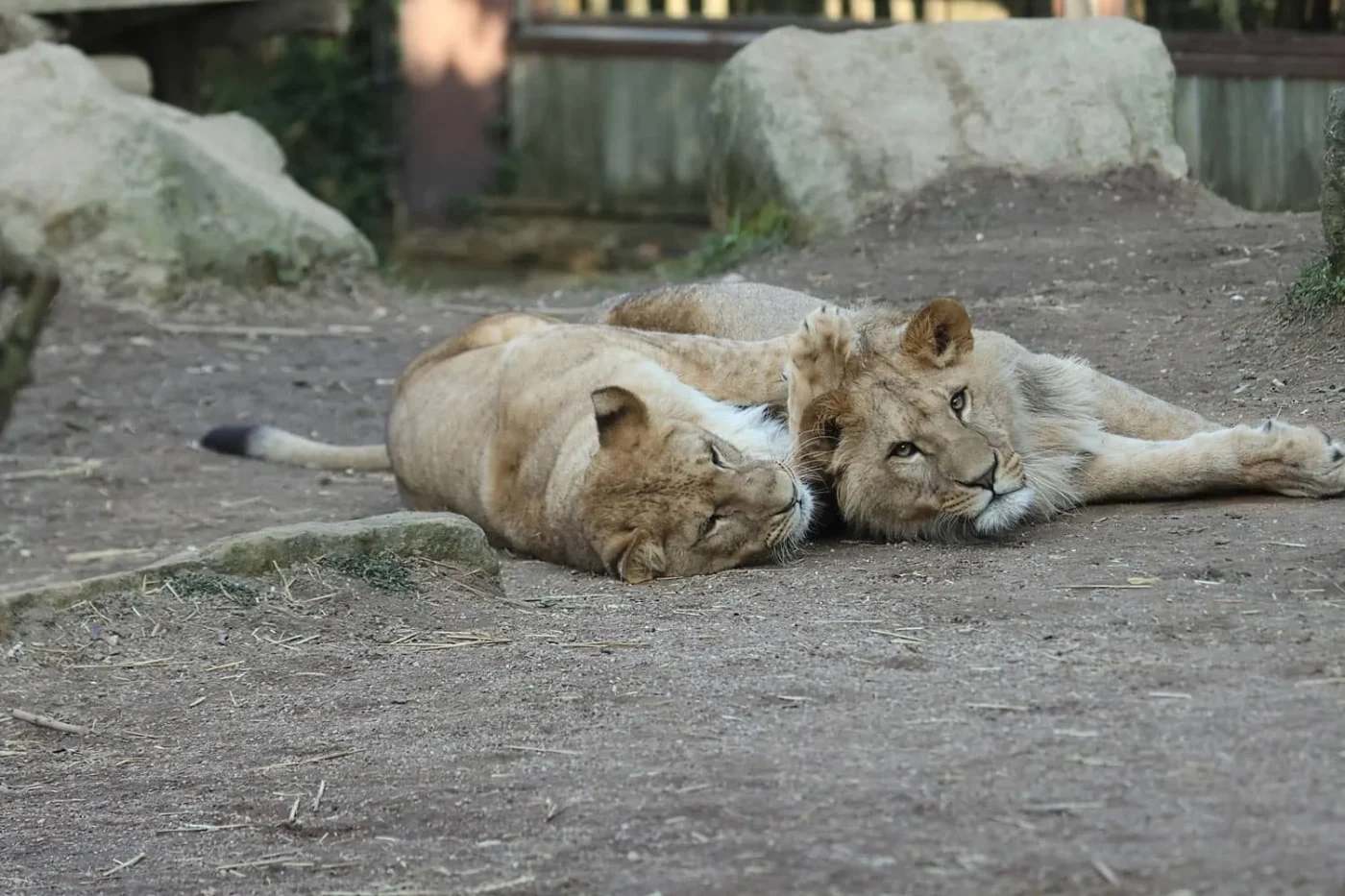
Here in Amnéville it is possible to observe two groups of lions, Isis and her cubs Akshan and Senga, born on August 22, 2021, as well as a pair of white lions, Bouba and Malindi. This is not a particular subspecies of lion but a genetic characteristic. These individuals have a lower level of melanin, the pigment that colors skin cells, fur, and eyes. This is called leucism and not albinism, which is a genetic condition with no melanin production at all.

Conservation

In Africa, they were estimated at more than 200,000 individuals last century. While there were still 100,000 in the 1980s. There are thought to be only 20,000 left currently (According to the IUCN and CITES, the estimated number of lions in the wild is between 23,000 and 39,000). There has therefore been a decline of more than 60% of the population in 40 years.
The causes of this dramatic decrease are multiple despite the protected zones granted to lions:

n

  • Hunting practiced in Asia and Africa
  • The ritual killing ceremony to prove one’s manhood
  • The reduction, fragmentation and destruction of the habitat for mineral extraction, agriculture
  • The scarcity of prey
  • The Human – lion conflict due to livestock attacks
  • Infectious diseases due to proximity with domestic animals such as cats, dogs and livestock (feline Herpes virus, canine distemper, bovine tuberculosis, feline coronaviruses…)

The population of Asiatic lions was estimated at only about twenty at the beginning of the 1900s in the Gir forest National Park. This number increased to 312 individuals in the 1990s and to 485 in the 2010s. Thanks to tremendous efforts, nowadays the population is estimated at 674 individuals. A reintroduction program for the Asiatic lion has been initiated to try to save this iconic feline. The reintroductions are taking place in the Palpur-Kuno Wildlife Sanctuary in India.
Unfortunately, the discovery of a highly contagious strain of canine distemper caused the death of about ten individuals. As a result, the entire population and surrounding domestic animals were vaccinated in order to avoid the worst for the Asiatic lion.

n

Discover other species of the African continent: rhinoceros

Other animals to discover