Gorilla gorilla gorilla

Gorilla

Order: Primates / Family: Hominidae / Genus: Gorilla

What is a gorilla?

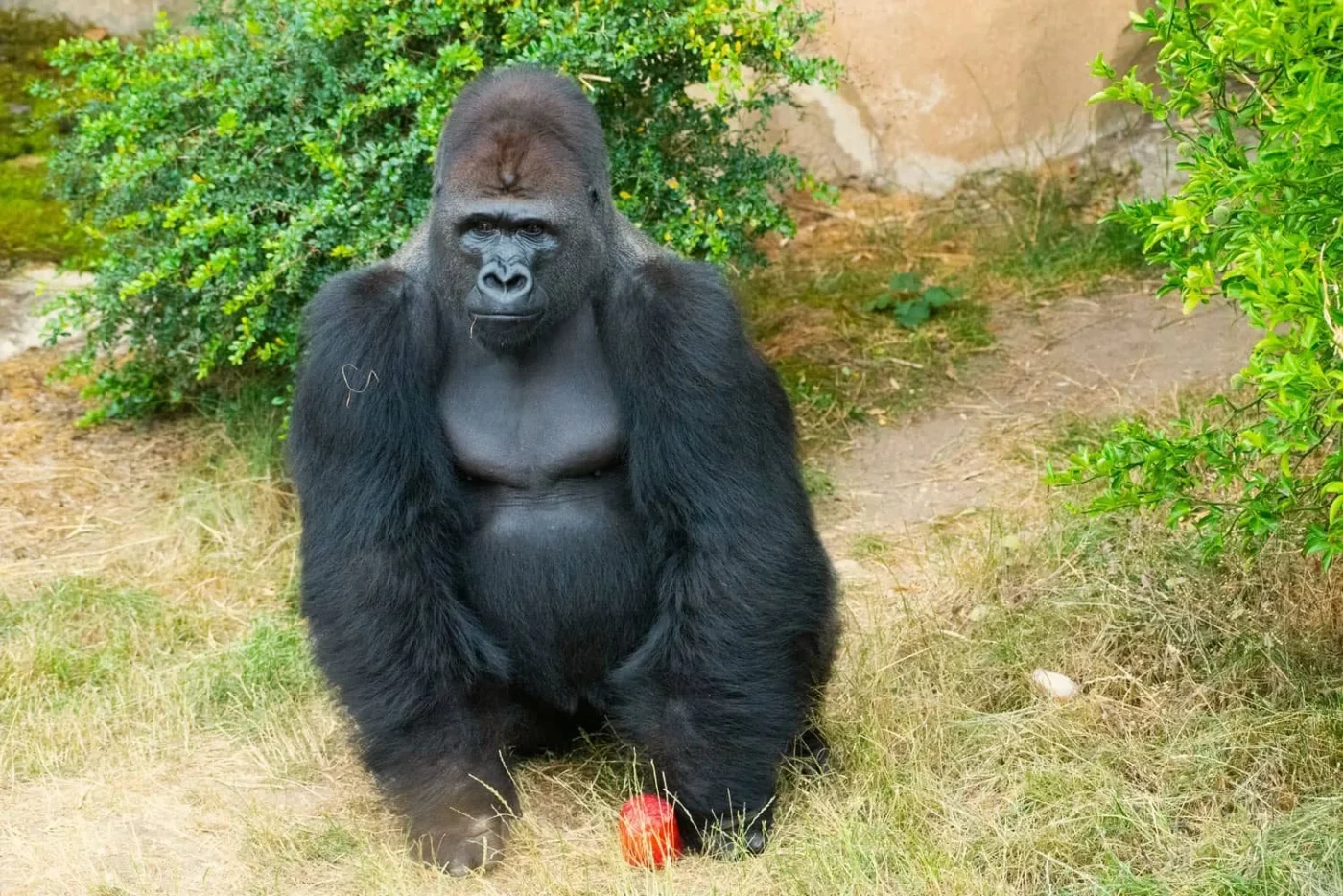
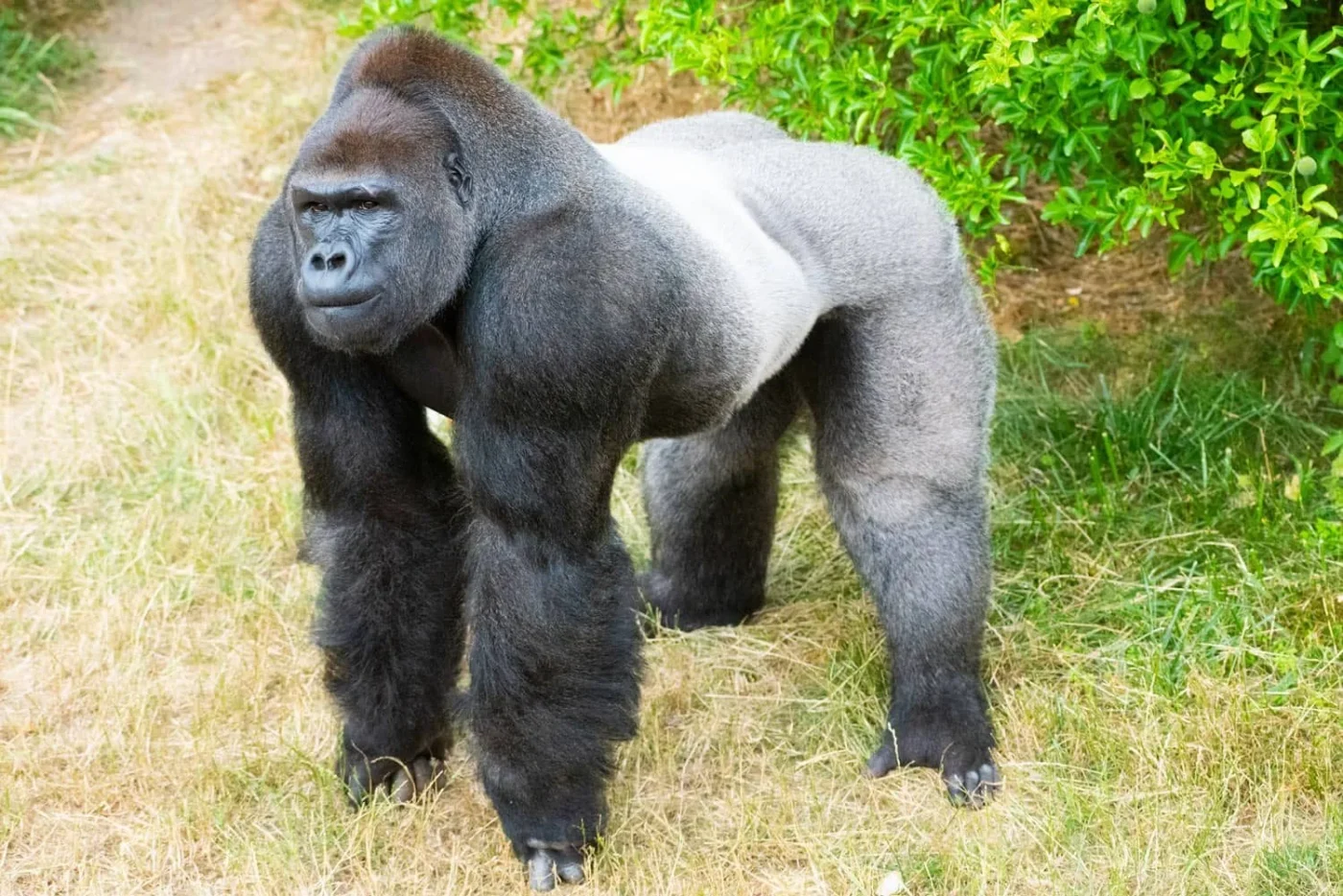
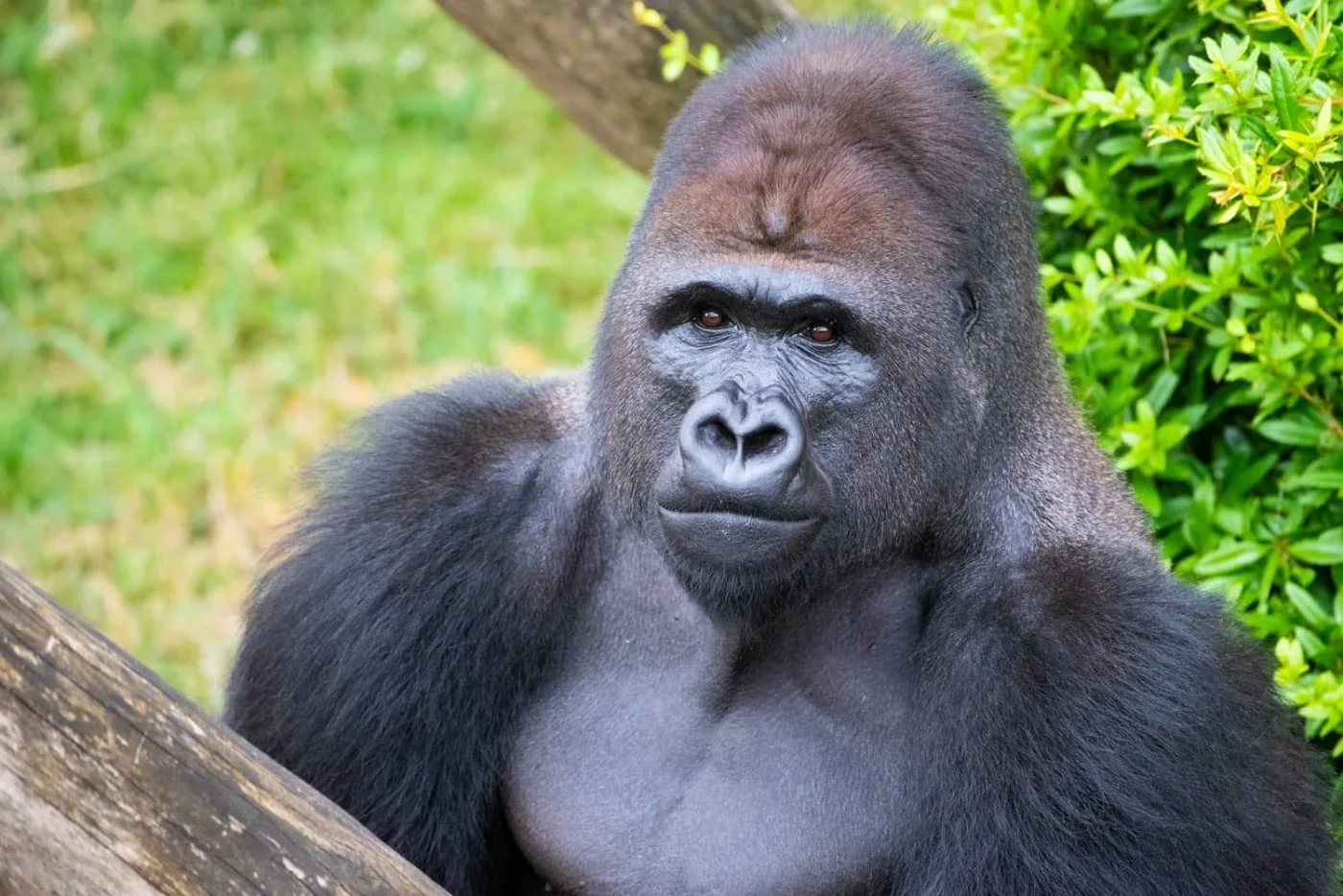
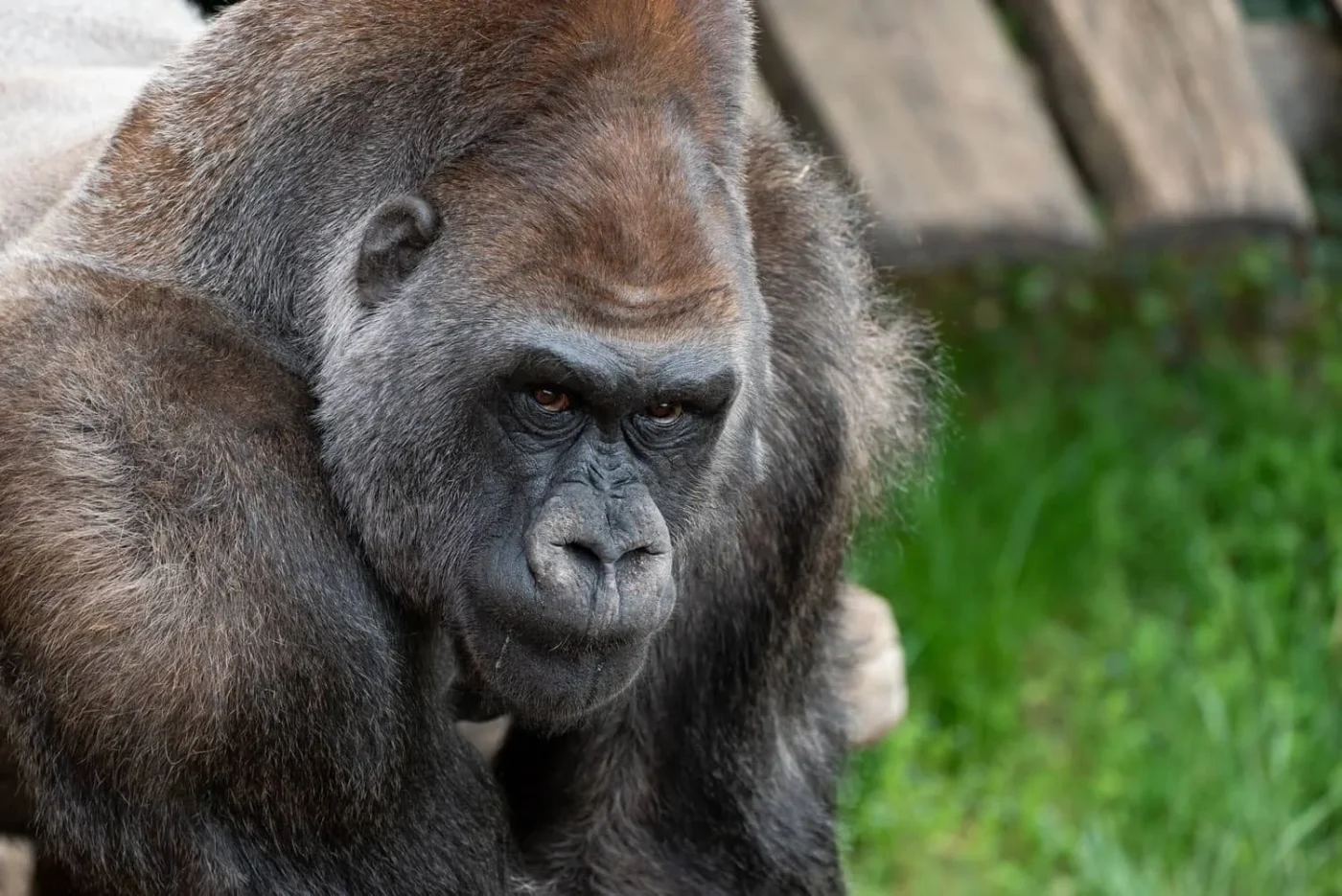
Gorillas are the largest primates on the planet. As part of the ape group, they do not have a tail and have a large cranial volume. Their fur is black, and their hairless face reveals prominent brow ridges and a black nose. This results in a strong sexual dimorphism. In males, there is first a significant increase in muscle mass, easily reaching 200 kg, unlike females who remain around 100 kg. This is followed by the development of the sagittal crest and the canines. Finally, the black hair on the back gradually becomes silver due to hormones when sexual maturity is reached. A silverback is therefore an adult male, but not necessarily a dominant male.

Weight

♀ 120 kg - ♂ 180 - 250 kg

Habitat

Equatorial forest

Diet

Herbivore

Gestation

256 days

Longevity

40 years

Longevity

12-17 years

Location

Equatorial forests of Africa
Frequently Asked Questions

Where does the gorilla live?

The western gorilla species (Gorilla gorilla) is divided into 2 subspecies: the western lowland gorilla (Gorilla gorilla gorilla) and the Cross River gorilla (Gorilla gorilla diehli). These two subspecies do not coexist; their geographical range is distinct and separated by the Sanaga River in Cameroon. The western lowland gorilla inhabits the equatorial forests of Africa, as well as the plains and mountains of the region. They are found in Cameroon, Congo, Equatorial Guinea, Gabon, and the Central African Republic. Some gorilla populations can be found at altitudes of up to 1,900 meters in the mountains.

The mountain gorilla species (Gorilla beringei beringei) is found in the mountains of Central Africa, especially in the Virunga National Park, which is rich in biodiversity and serves as a crucial habitat for gorilla conservation. These gorillas, considered an iconic species, face many threats, particularly habitat loss and poaching. Conservation initiatives are in place to protect these magnificent animals, called the “kings of the forests,” who are part of a group of endangered species.

Reproductive strategy

After about 9 months of gestation, the female gorilla gives birth to an infant gorilla that weighs no more than 2 kg. The growth of young gorillas is about twice as fast as in humans. After 3 months, the little one is able to move and to cling to its mother by itself. Still, it remains dependent on her until the age of 3 to 4 years. During that time, it is educated by the whole group. Females reach maturity at the age of 8 years. They can then leave the natal group to join another male or stay in their birth group. Males have to wait about 15 years to reach sexual maturity; they are then rejected from the natal group.

What does he eat?

Western lowland gorillas are herbivores. They mainly eat plant stems, leaves, berries, ferns, and bark. Fruits only represent a small percentage of their menu. They never consume all the food resources to allow for regrowth. In this way, they can stay in the same place for some time. Some populations can feed on aquatic plants.

Gorillas also feed on termites and ants.

Young gorillas are sometimes preyed upon by birds of prey or large carnivores, such as leopards.

Behavior

These are diurnal animals that live in harems of 5 to 20 individuals. Their home range usually extends over 10 to 25 km². A harem is made up of a dominant male, called a silverback, several females, and their young. They are discreet and shy animals with relatively gentle habits. They do not have their own territory and move about continuously in search of food. Every night, they build a nest on the ground to rest. Only the dominant male mates with the females.

However, to avoid conflicts, the father systematically drives out his sons at puberty. At this point, the young males change, and secondary sexual characteristics appear.

These young males may join a group of bachelor males or live alone before becoming attractive to females. In conflicts where the dominant position is challenged, the dominant male first tries to impress the intruder by shouting and beating his chest with flat hands, not clenched fists, in order to make his rib cage resonate. The goal is to appear as burly as possible. He may also charge without ever touching him, all while showing his strength. In rare cases, the fight can escalate and become violent. The males then charge at each other, trying to injure the opponent with their long canines.

Once the confrontation is over, the defeated male withdraws, and it is generally the winner who takes control of the group of females. However, the females remain free to choose which male to leave with, the winner or the loser.

When a new male takes over the place of the dominant male in a harem, he usually kills the offspring already present in the group so that the females become available for reproduction again. In this way, the new dominant male ensures the transmission of his genes.

Like other great apes, the gorilla has the ability to use tools. It is therefore not uncommon to observe a gorilla using a twig to grab inaccessible food or to see an individual use a branch to probe the depth of a river. Indeed, since gorillas cannot swim, they must find places where they can wade in order to cross bodies of water.


Threats and conservation

The population of Western lowland gorillas is estimated between 300,000 and 400,000 individuals. Their population declined by 19% between 2005 and 2013. Around 2 to 3% of the population disappears each year. The main threats are poaching and deforestation. Forests are destroyed for the creation of plantations (notably oil palm), the sale of precious wood, or the creation of Coltan mines (a mineral found in electronic products). Poaching, in turn, is made easier by the construction of roads in the forest.

Life at the park

The Amnéville zoo hosts 6 gorillas, all males. One group of 4 individuals: Lengaï (04/19/2003), Meru (02/04/2004), Upala (05/27/2008) and Monza (09/02/2007). Another group of 2: N’goro (08/25/2006) and Akiki (04/04/2007).

A simple but effective act

To help conserve this species, you can drop off your old cell phones in a box located in the gorilla gallery. That way the coltan and other recyclable materials they contain can be recovered and reused.

Other animals to discover