Pongo abelii

Orangutan

Order: Primates / Family: Hominidae / Genus: Pongo

What is an orangutan?

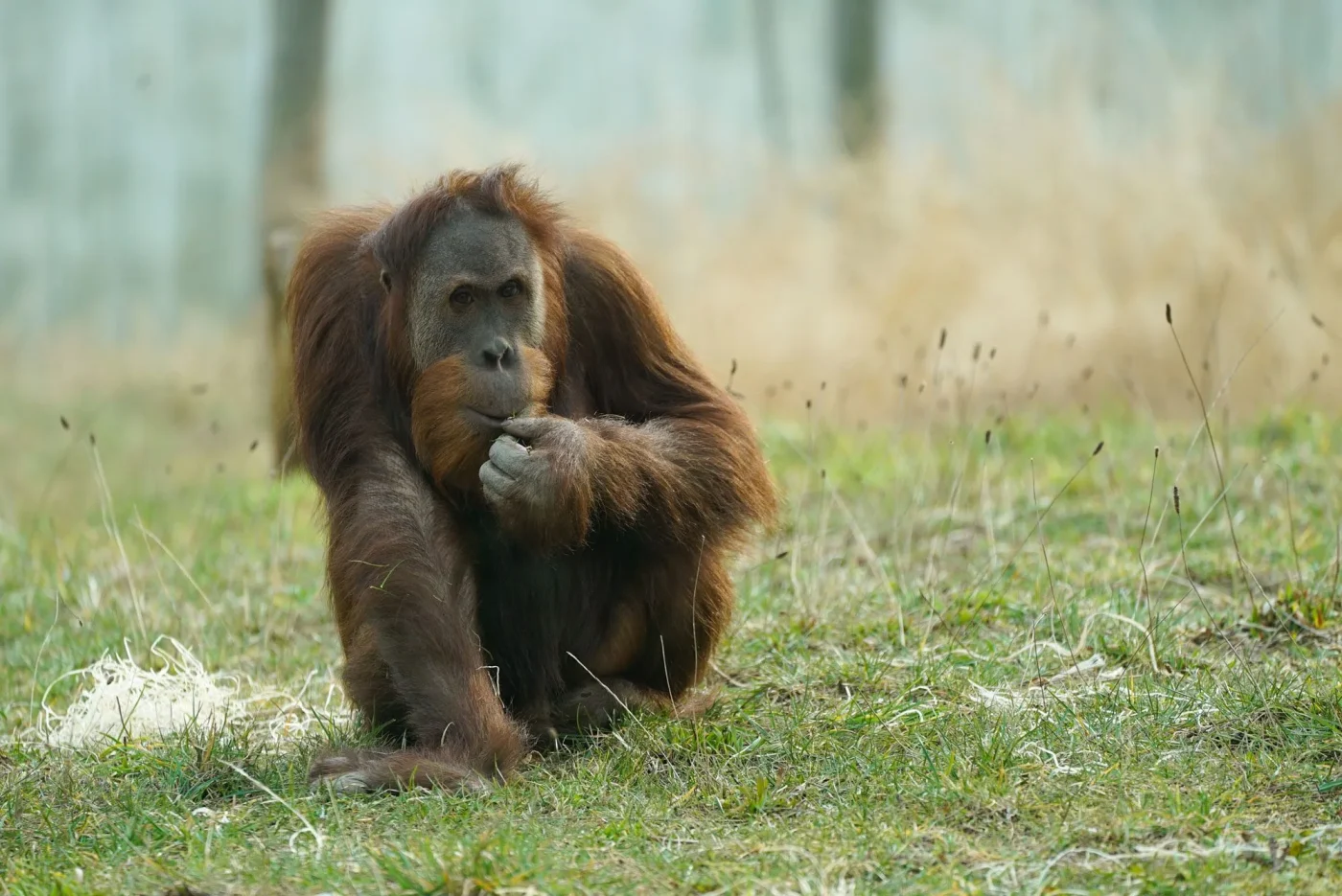
The orangutan is the largest arboreal primate in the world. Its body is entirely covered with long reddish-brown hair; in fact, it is the only great ape to be completely reddish. Like all great apes, it has no tail but a coccyx, and its cranial volume is significant. It has long, flexible limbs and its feet have an opposable big toe. There is sexual dimorphism in this species: the male, which measures between 1.10 and 1.40 meters and weighs between 90 and 120 kilograms, is more robust than the female, which measures between 0.80 and 1.10 meters and weighs between 40 and 50 kilograms. Also, the male has a fatty growth on his head which creates a facial disk, as well as a laryngeal pouch that allows calls to resonate over distances of more than 1 km. Finally, the male has long, well-developed canines.

There are three orangutan species on Earth, all endemic to Indonesia:

  • Sumatran orangutan (Pongo abelii) in Sumatra
  • Bornean orangutan (Pongo pygmaeus) in Borneo
  • Tapanuli orangutan (Pongo tapanuliensis) in Sumatra discovered in 2017!

Weight

Females: 40-50 kg / Males: 90-120 kg

Habitat

Equatorial forest

Diet

Omnivore (mainly frugivore)

Gestation

9 months

Longevity

50 years

Longevity

12-17 years

Location

Tropical forests in the north of the island of Sumatra in Indonesia
Frequently Asked Questions

Where does the orangutan live?

The Sumatran orangutans, one of the island’s emblematic species, live in the rainforests of northern Sumatra in Indonesia. By the way, orangutan means “man of the woods” in Malay, which reflects their closeness to nature.

They frequent areas of primary forests, including mangroves, swamps and along rivers. Even though some individuals have already been observed at nearly 1,500 meters above sea level, these apes are generally found between 200 and 400 meters, where their favorite fruit trees grow. Unfortunately, these orangutans face serious dangers, including the destruction of their habitat due to oil palms and logging, which threatens their survival and that of other species sharing their environment, such as the different subspecies of pongo, like pongo pygmaeus and pongo abelii.

Reproductive strategy

Reproduction tends to occur during the rainy season from December to April, when fruit is abundant. Females raising unweaned young do not reproduce; only those without young or with weaned young are available for reproduction.

Young males tend to harass females in order to mate with them. To reduce this harassment, females may group together to face the bothersome male. They may also seek help from the adult male who owns the territory where they live so that he chases the intruder away.

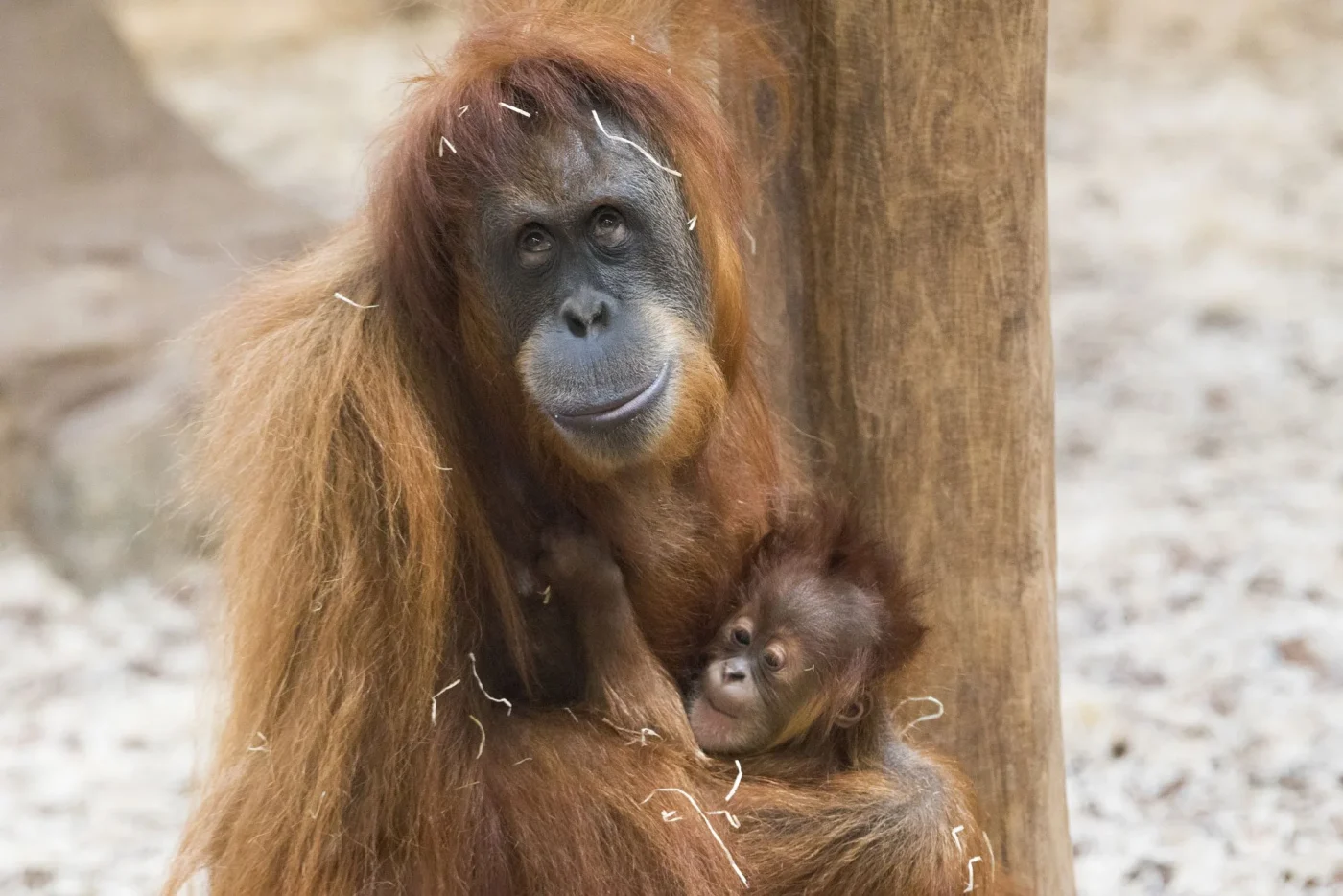
The gestation period lasts about 9 months and the female usually gives birth to only one baby at a time; cases of twins being born are very rare.

After giving birth, the mother nurses her baby until the age of 4, and can only reproduce again once the young is weaned. In these primates, social, dietary, and nest-learning education is very long, and the young one becomes independent only around 8 or 9 years old. During this period of education, it stays with its mother to observe, copy, and assimilate skills. The male provides no care for the young. Once independent, the young female or male leaves its mother to search for a territory.

Females reach sexual maturity at about 12 years old, while males do so only around 19 years old.

Life expectancy is between 44 and 58 years.

What does it eat?

Orangutans are omnivores and move daily in search of food consisting of 60% fruit, 25% leaves, 10% flowers and bark, and 5% insects and eggs.

These animals play a vital role in seed dispersal and maintaining plant diversity within the rainforest.

The predators of the orangutan are the clouded leopard, Sumatran tigers, and humans.

Behavior

They can live alone or gather in a small group composed of one male and a few females, or only females. The territory of a male, which can measure up to 2,500 ha, encompasses up to three female territories, from 500 to 850 ha, with whom he reproduces.

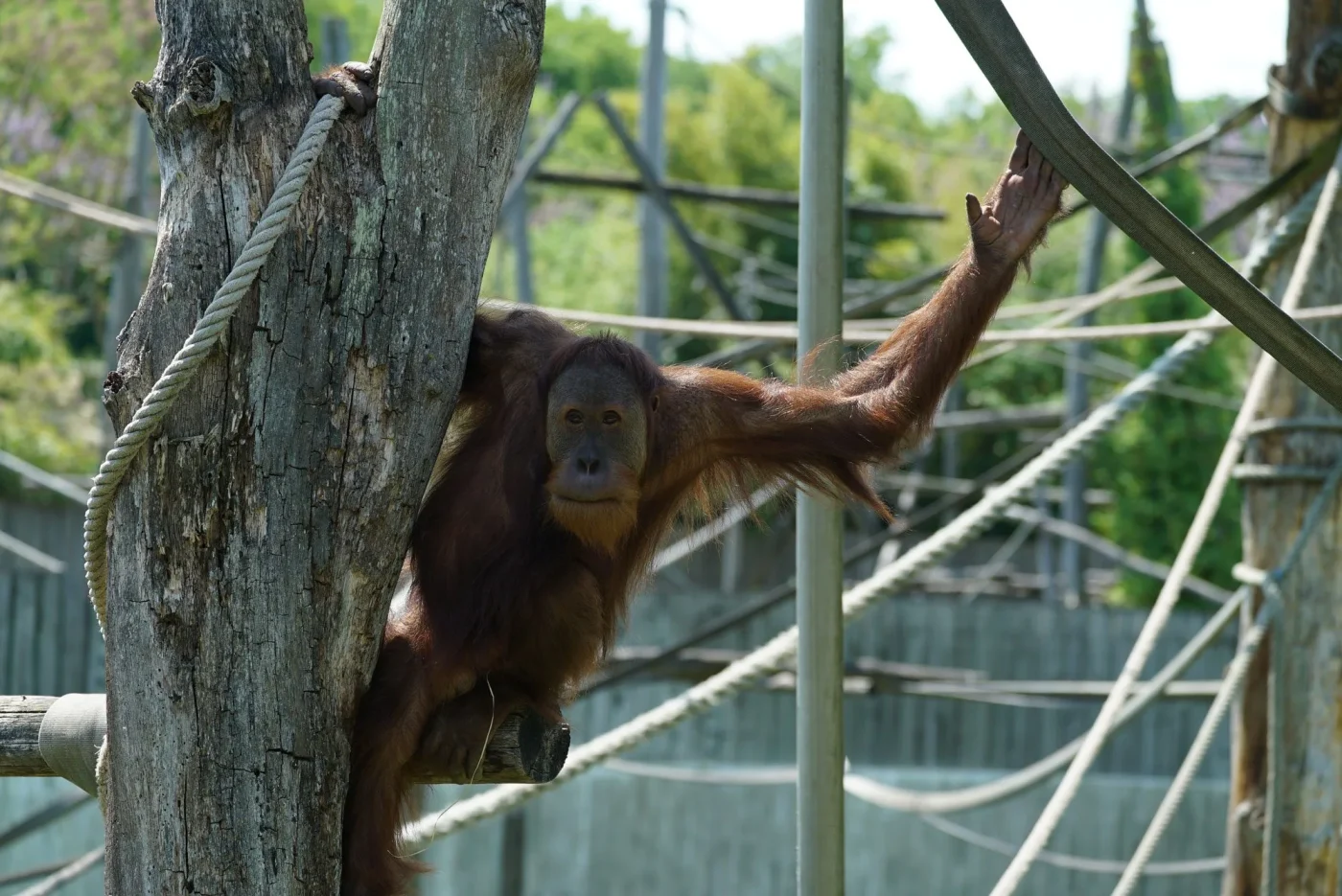
The orangutan is active during the day and is an almost exclusively arboreal primate; in the wild, it very rarely comes down to the ground. Nevertheless, some large males can be observed on the ground due to their imposing weight, which can prevent them from moving through small trees.

Movement in the canopy is done through swinging motions called brachiation, made possible by the incredible flexibility they display as well as a very large wingspan. Every evening, to sleep, it builds a new nest at a height from branches and foliage.

Even though grooming is a major interaction among primates, it remains quite rare among orangutans. Even mother-infant grooming has only been observed in zoos.

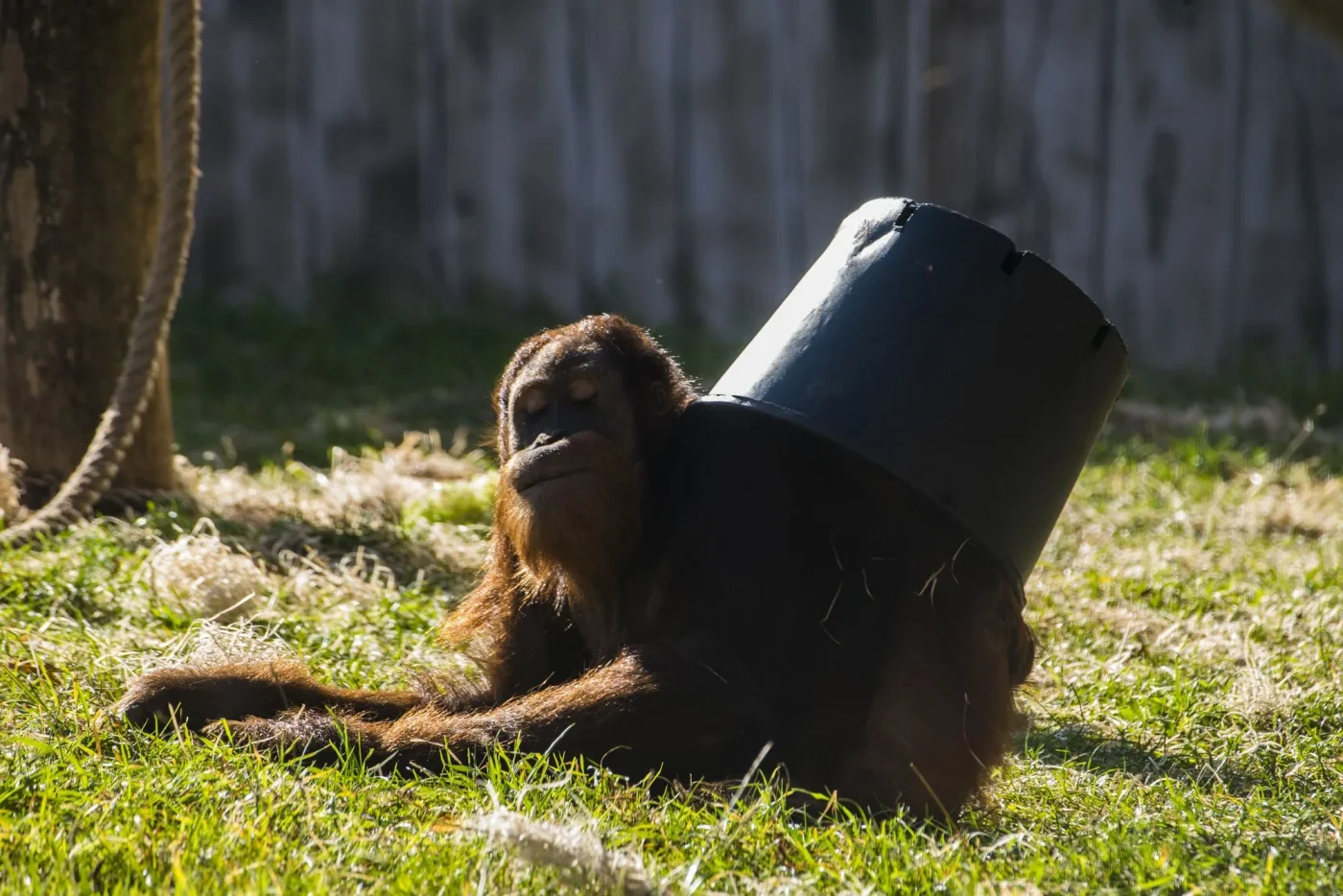
It has been shown that juveniles, like adults, can play. Many playful interactions have been recorded, such as biting, chasing, and even postures and facial expressions.

Thanks to their very flexible lips, orangutans have the largest number of facial expressions among all great apes.

They are capable of producing a large variety of vocalizations such as grunts, squeaks, or screams, and can also communicate with other sounds produced by the lips or by teeth grinding, for example.

Males perform “long calls” that can be heard up to 1 kilometer away. These vocalizations are used to mark territory to drive away intruders or to attract females. It is the laryngeal sac that allows these powerful calls to be made. The male may accompany these calls with the sound of shaken branches.

The use of tools is very common among orangutans. They use stones or pieces of wood to retrieve things inaccessible with their fingers, such as insects, for example.

What is it threatened by?

The Sumatran orangutan is classified as critically endangered by the IUCN. The latest estimates put the population at around 14,000 individuals in Sumatra.

The orangutan’s habitat has disappeared by more than 80% over the past two decades. This is the result of both illegal and legal logging. This deforestation for wood, agriculture—including oil palm—and minerals is the main threat facing this great ape.

Unfortunately, added to this are poaching for meat and animal trafficking. Females are killed so the babies can be taken and sold in the illegal pet trade. It appears this trafficking has caused a 30 to 50% decline in orangutan populations in the last 10 years.

The latest population estimates are about 13,500 Sumatran orangutans, 55,000 Bornean orangutans, and only 800 Tapanuli orangutans.

Fortunately, many conservation actions have been implemented for the protection of the orangutan. Conservation areas have been established, public awareness programs are underway, and reforestation projects are taking place…

The orangutan’s protected status makes it an umbrella species.

Anecdotes

When a long, terrible cry echoes through the jungles of Borneo or Sumatra, the locals say it is the orangutan mourning his human wife who has escaped from their nest… Many legends surround this large, solitary russet ape with secretive habits.

According to the Malays, the orangutan can speak but chooses not to, so he won’t have to work!

And the traditional longhouses of the Dayak are often decorated with the skulls of old males with impressive canines…

Life at the park

At the Amnéville zoo you can observe 2 groups of orangutans:

  • A family group composed of Putri, an 18-year-old female, and Pulco, her baby born in January 2022.
  • A pair consisting of Kawan, the 21-year-old male, and Noa, the 40-year-old female.

Other animals to discover