What is a polar bear?
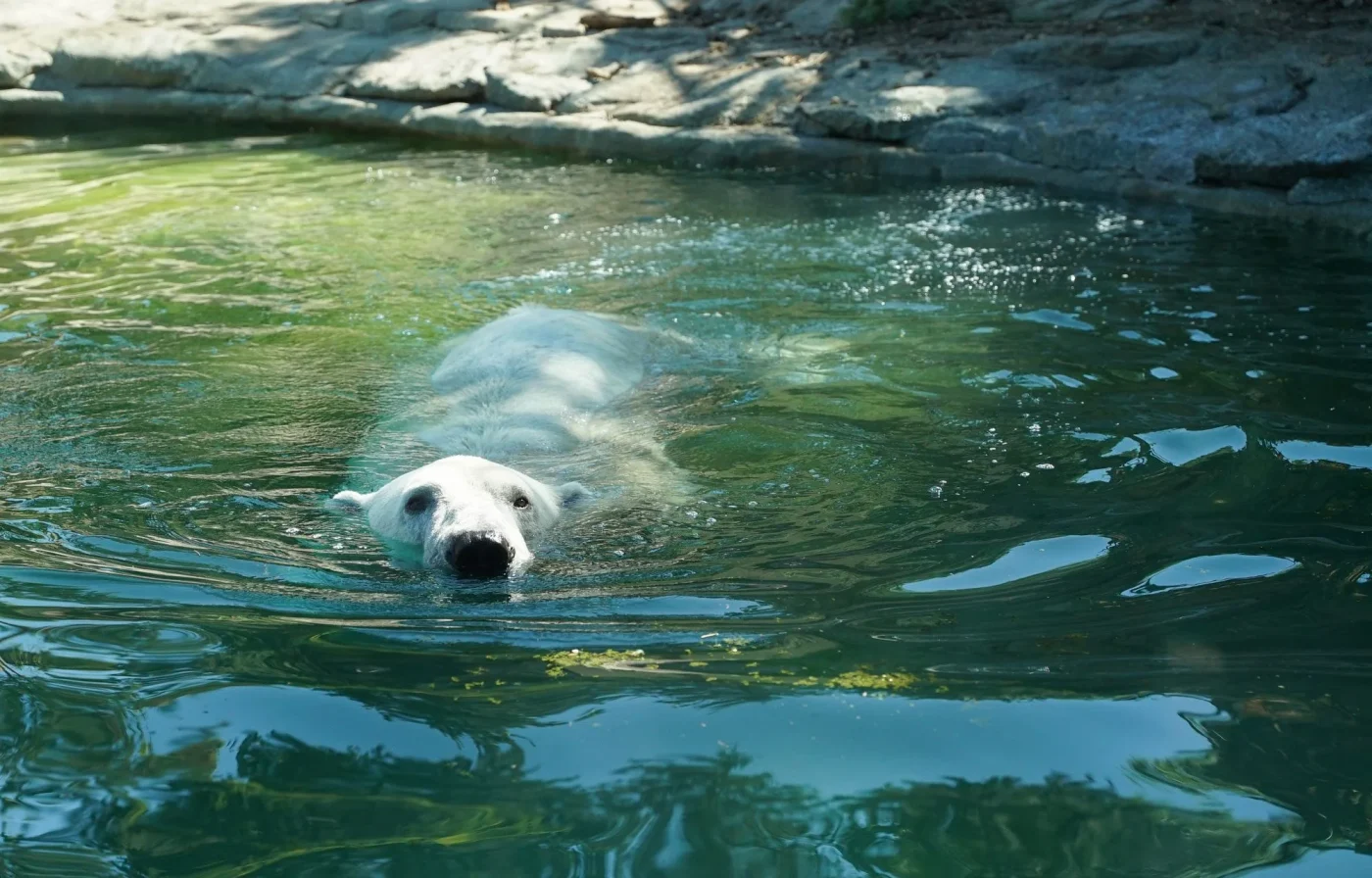
Its Latin name, Ursus maritimus literally means maritime bear and it is often considered a marine mammal.
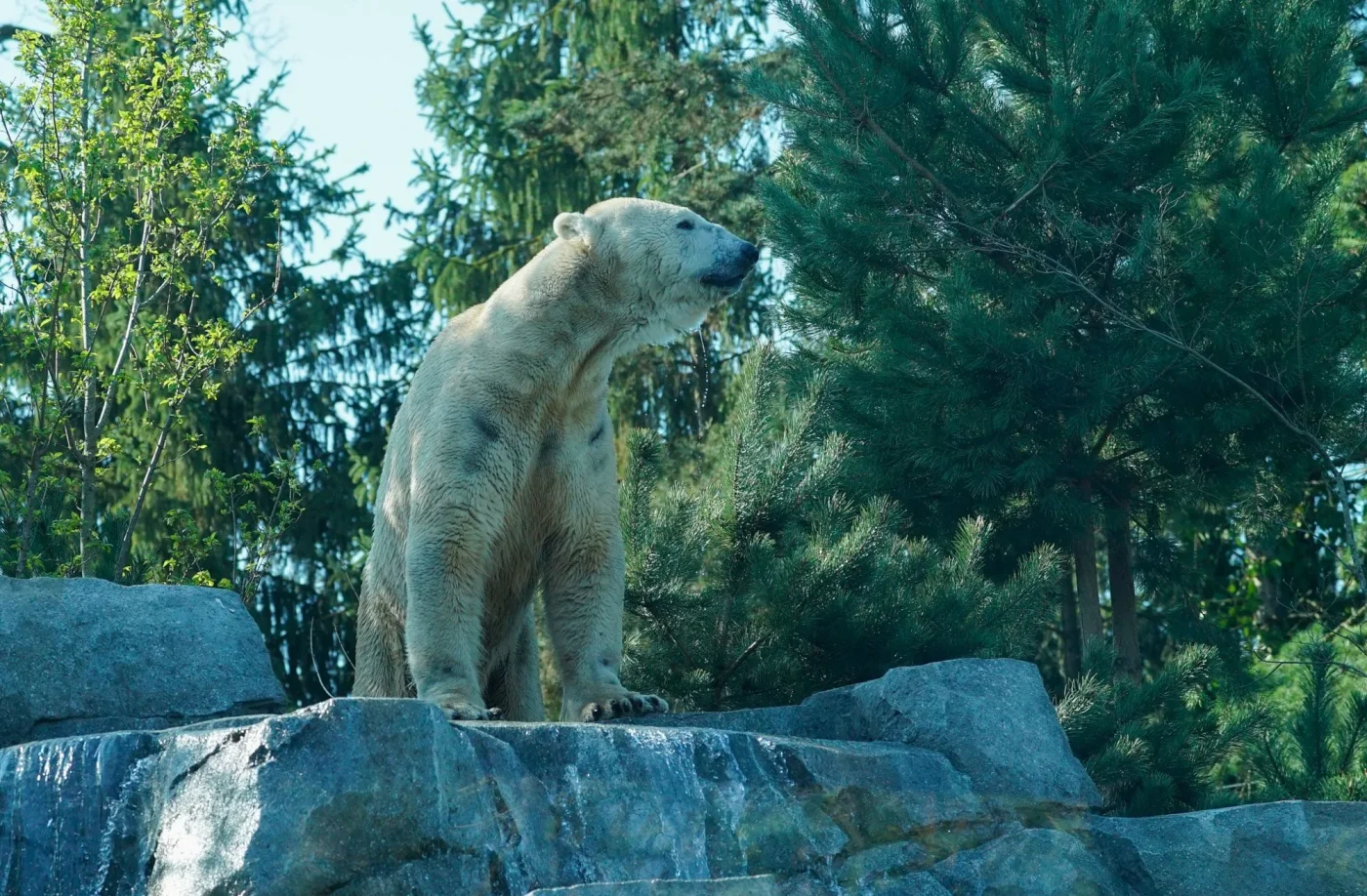
The body of the polar bear is stocky and ends with a short tail. The neck is long and topped with a relatively small head compared to the size of the animal. Females weigh between 150 and 300 kilograms and measure 1.80 to 2 meters in length from snout to the tip of the tail. Males are more imposing; they can measure up to 2.5 meters long and have an average weight of 300 to 600 kilograms. Some individuals can even reach 800 kilograms. The shoulder height can reach 1.6 meters. When it stands on its hind legs, it can be over 3 meters tall!
Evolution has given the polar bear many features that allow it to survive the extreme conditions of Arctic winters where temperatures can drop to -46°C. These adaptations make it the king of the Arctic!
The fur of the polar bear is made up of layers that keep it warm and prevent heat loss. This coat appears white to us, which is why it is also called the white bear. In reality, the hairs are not white, but transparent! It is the reflection of light in the hair that makes them appear white. Scientific hypotheses even indicate that this hair structure could direct the sun’s rays straight to the skin in order to store heat more efficiently. In summer, however, due to oxidation, the coat may become yellowish, even grayish or brownish.
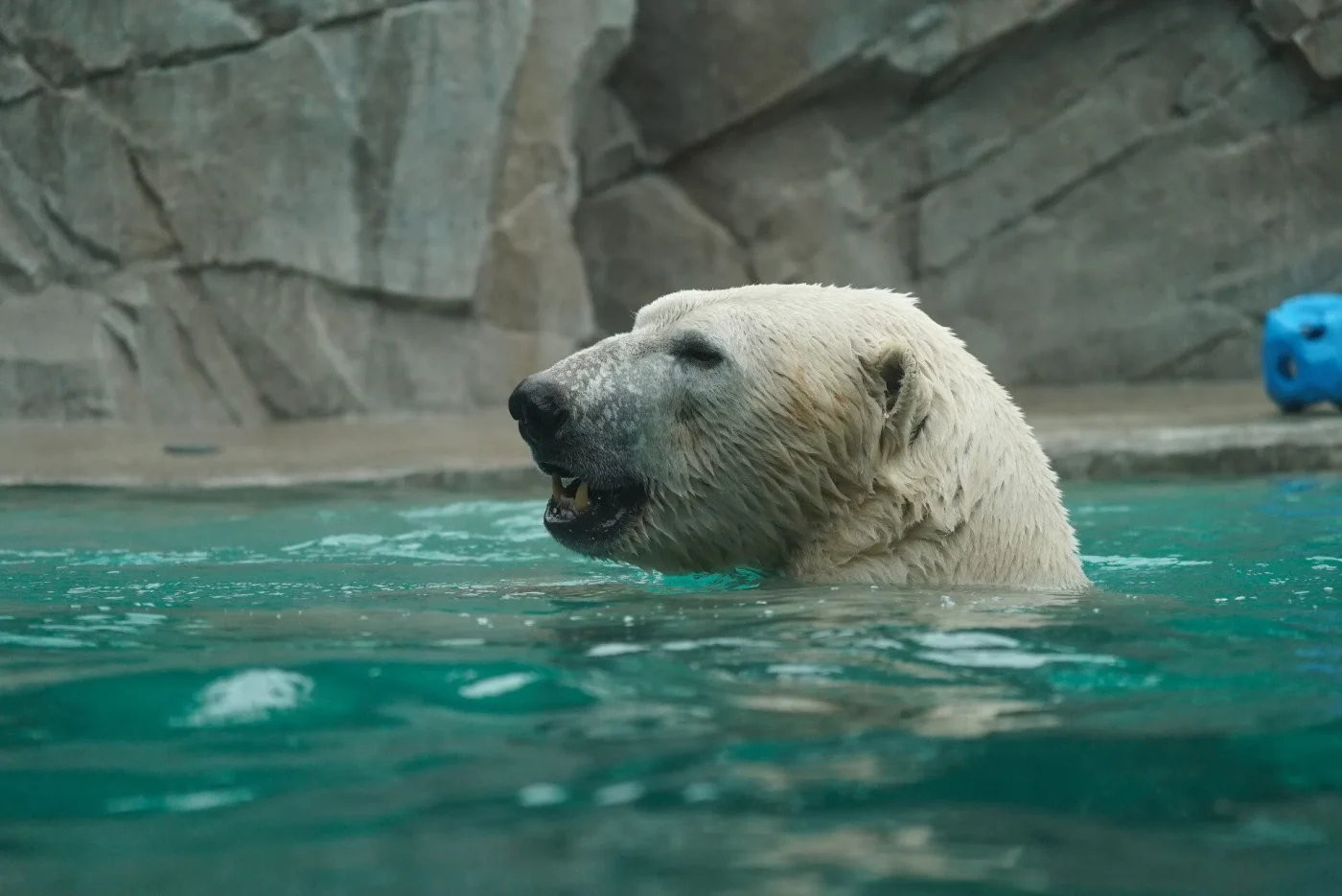
Underneath this thick fur, the skin is completely black. This helps absorb the sun’s heat. In addition, it has a thick layer of fat over 11 centimeters thick. This fatty layer is an excellent insulator against the cold, especially in water.
Also, to avoid any heat loss, the tail is small and the rounded ears are very tiny.
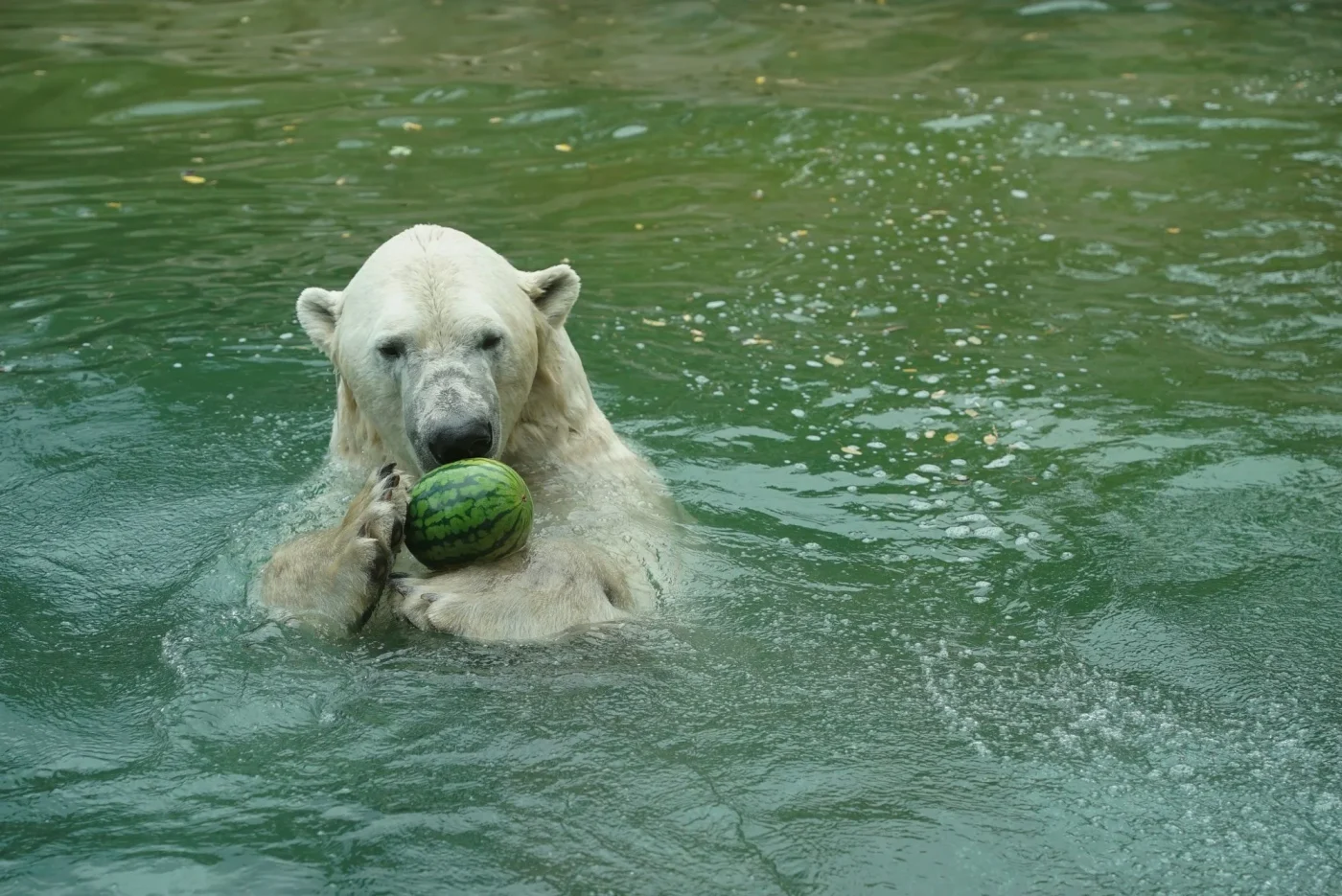
The paws are also adapted to this icy world since they measure up to 30 centimeters in diameter! This is very useful for distributing the weight of the body and thus avoiding sinking into the snow or breaking thin ice. They also use them for swimming; the front paws are used like paddles and the back paws like rudders. The pads are covered with anti-slip papillae, which prevent slipping on the ice.