What is a South American coati?
The South American coati, or otherwise called the common coati, is a mammal that is part of the Procyonidae family. This family also includes the raccoon and the kinkajou. There are 3 species of coatis: the South American coati (Nasua nasua), the white-nosed coati (Nasua narica), and the mountain coati (Nasua olivacea).
The South American coati has 12 subspecies, differing in colors, size, and geographical distribution.
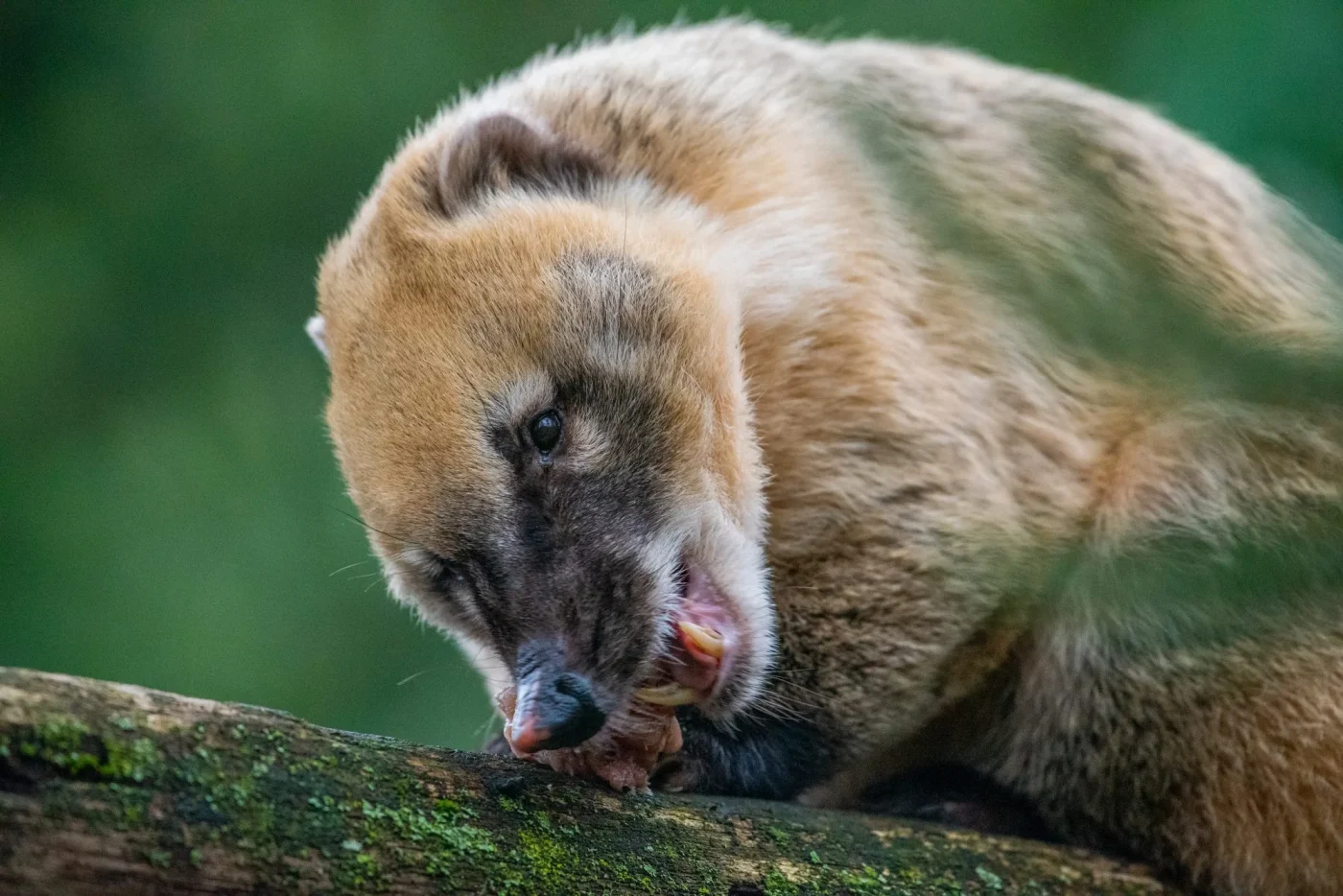
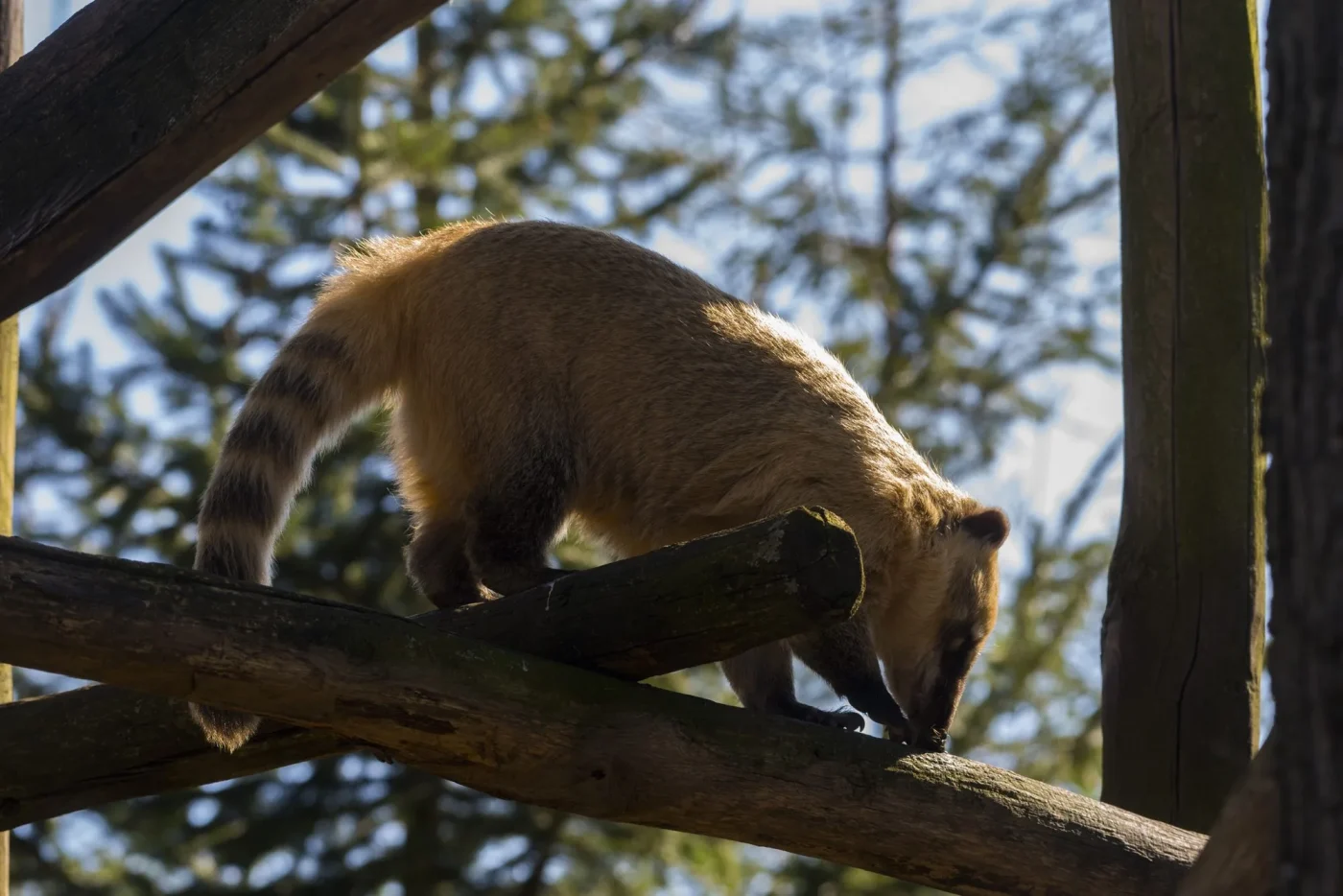
It owes its name to the rust-brown color of its fur as well as its long tail, ringed with yellow and used for balance. Its tail, measuring almost as long as its own body, can reach 32 to 69 cm depending on the individual. Males are generally larger and heavier than females. Its long tail and long non-retractable claws allow it to climb and move easily and smoothly in trees. It can rotate its ankle joint in order to descend a tree headfirst.
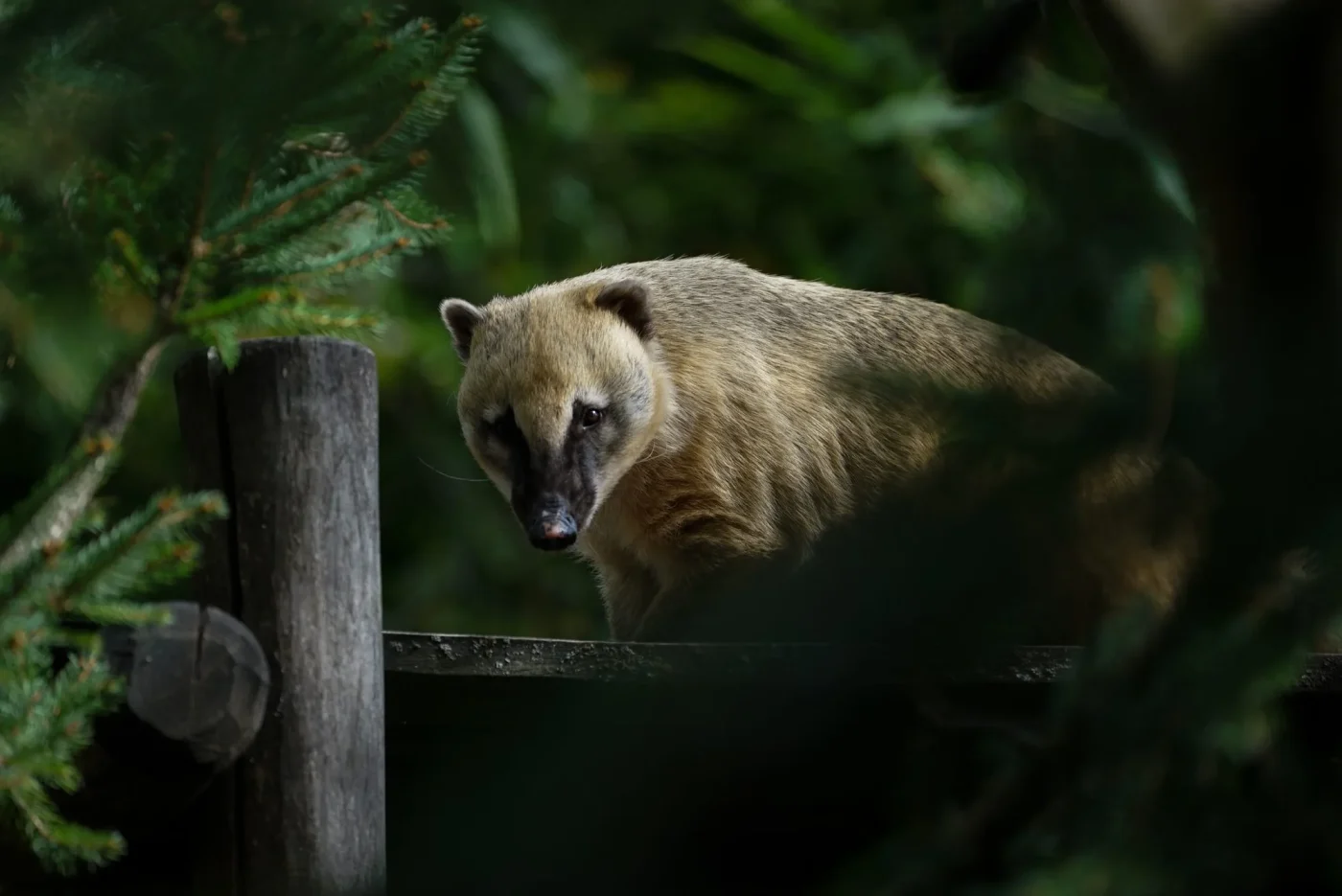
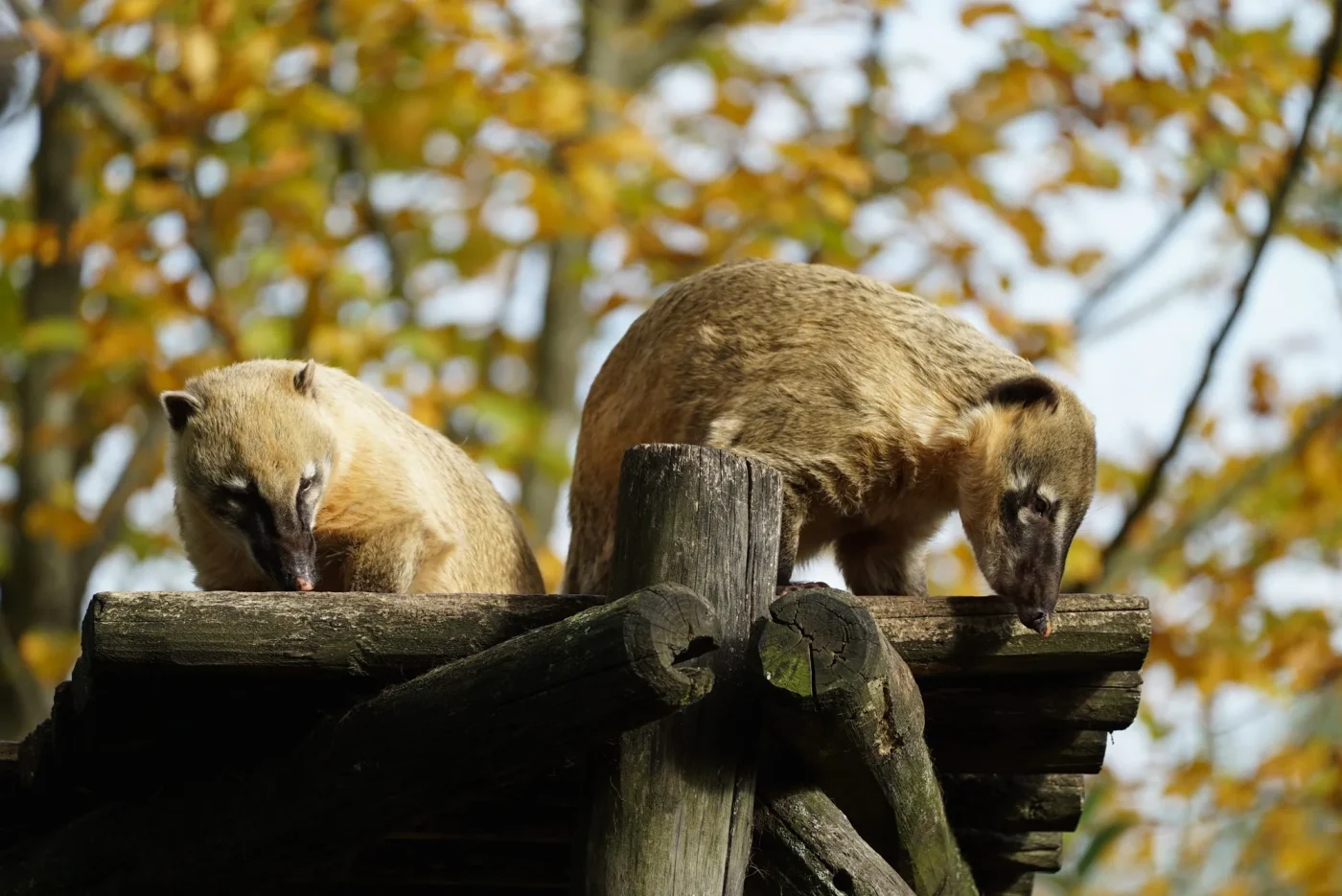
The word “coati” means “long nose” in the Guarani language. Indeed, its head ends in a long, pointed, mobile snout, allowing it to dig in the ground.