Milvus milvus

Red kite

Order: Accipitriformes / Family: Accipitridae / Genus: Milvus

What is a Red Kite?

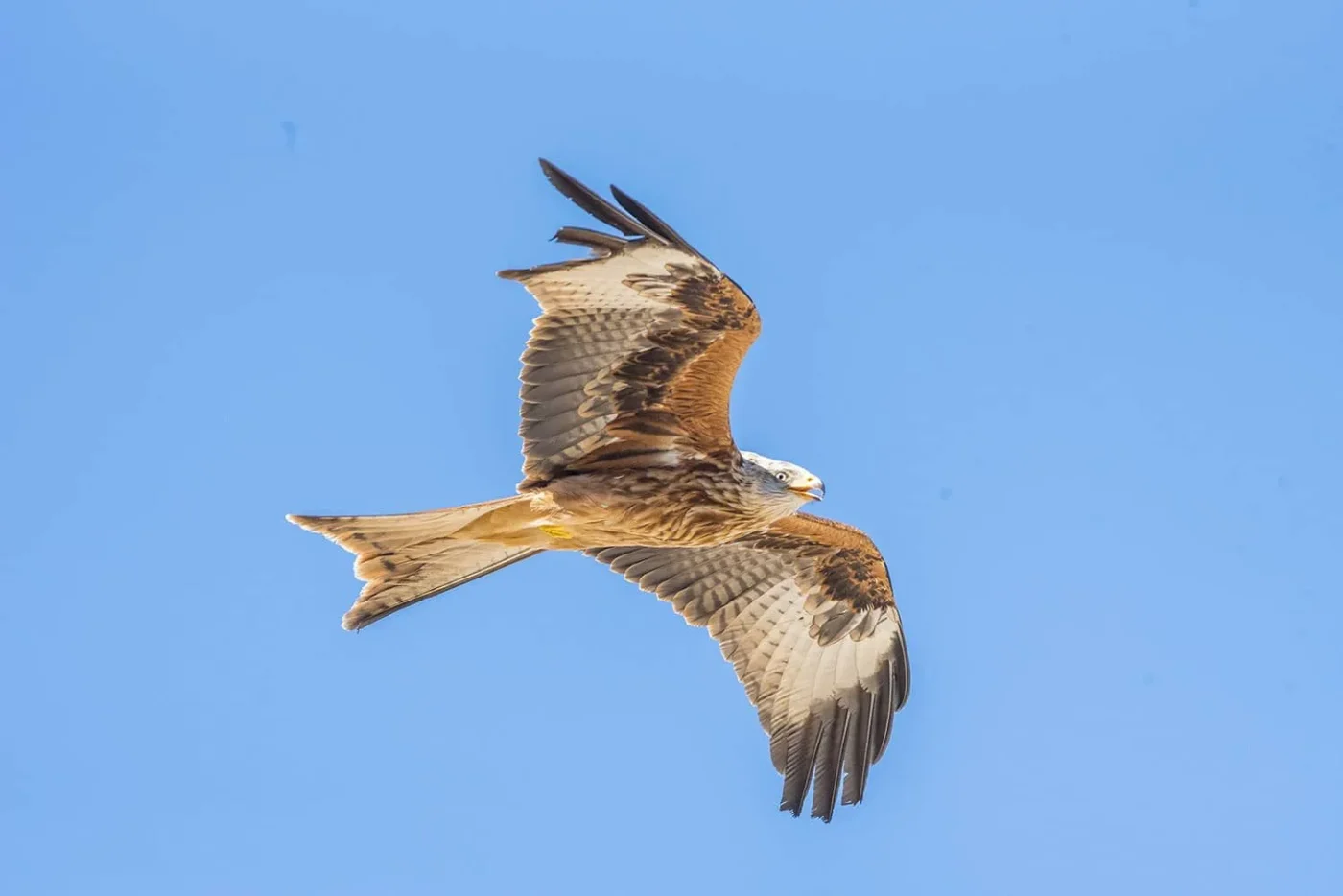
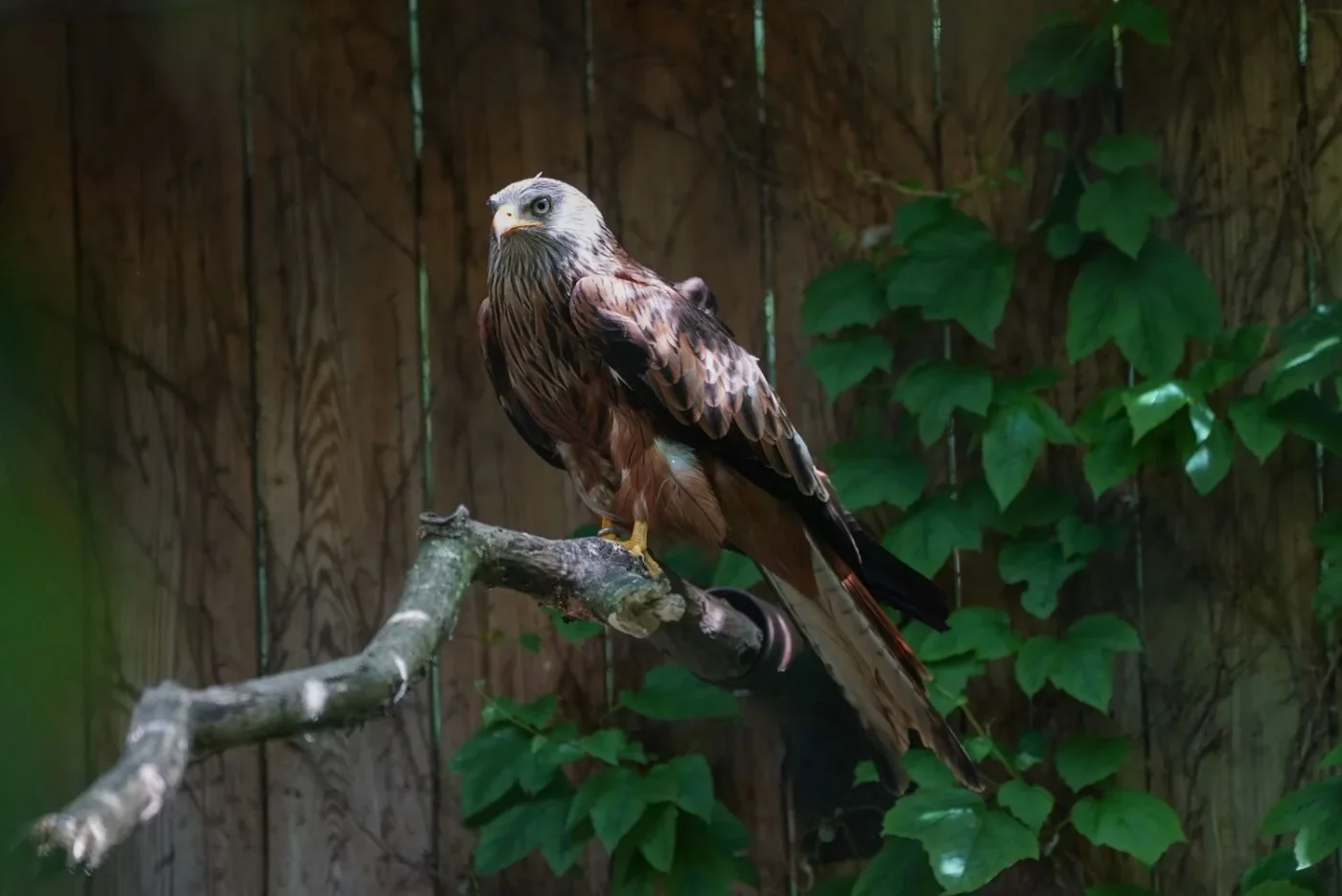
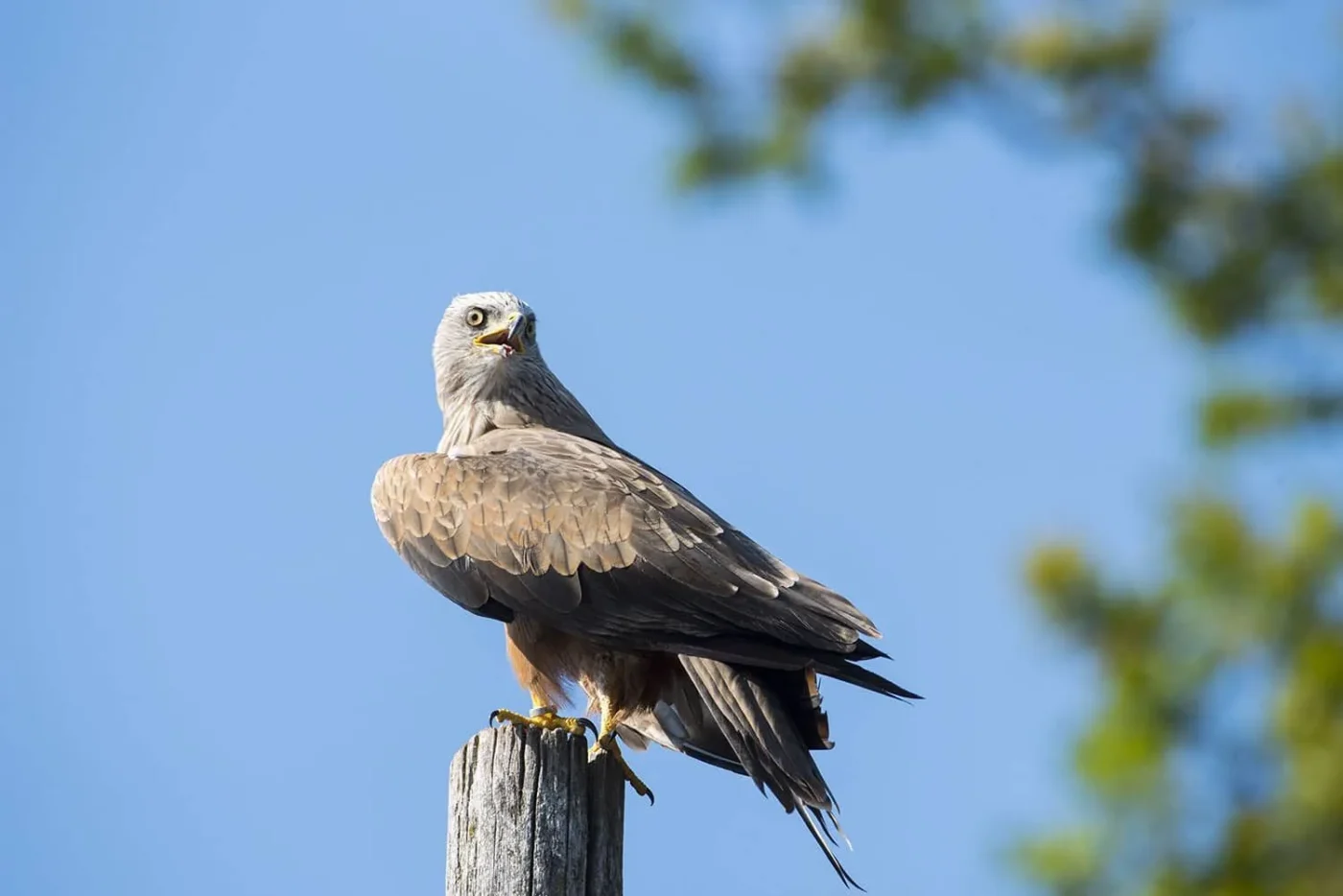
Red kites are easily recognizable, especially in flight. Their tail is relatively long and triangular in shape, and their wings have large white patches visible from underneath. Its body is brown and its head gray; its long, hooked yellow beak allows it to easily tear the flesh of the prey it consumes. There is a slight sexual dimorphism, with females being somewhat larger than males.

Weight

Males: 800-1200g, Females: 1000-1300g

Habitat

Forest, plain, prairie

Diet

Carnivore

Gestation

31-32 days

Longevity

Over 20 years

Longevity

12-17 years

Location

Europe and North Africa
Frequently Asked Questions

Where does the red kite live?

Most of the red kite populations can be seen in Europe but it is also found in North Africa. Germany, Sweden, Switzerland, Spain, and France host nearly 90% of their numbers. For hunting, it frequents open spaces such as prairies, pastures, and fields. However, for nesting, it prefers forest habitats.

What does he eat?

This species is opportunistic; it therefore mainly feeds on carcasses. It consumes carrion from domestic animals on farms or wild animals on the sides of roads. Furthermore, it practices kleptoparasitism by stealing prey from other birds. Yet, the kite remains a good hunter and is capable of catching small mammals, birds, and invertebrates, especially during the breeding season when it is important to feed the female and the chicks.

For hunting, the red kite flies at low altitude to easily spot any movement on the ground. As soon as it sees prey, it dives feet first to grab it.

It is also capable of catching small prey in mid-air during surprising acrobatics.

Behavior

This kite lives a solitary or paired life, but may gather for migration. It then gathers in roosts in large trees with several dozen or even hundreds of individuals. Kite populations migrate according to their geographic distribution. Those living in more southern regions are sedentary. Those present in northern regions migrate to warmer areas, but only travel short distances and generally remain on the same continent.

French populations of the red kite do not migrate.

Reproductive strategy

The red kite is monogamous, and when a pair forms it is for life, with the male and female staying together throughout the year.

They begin their courtship displays in March, performing dangerous acrobatics in flight. The two partners hook their talons together and let themselves drop toward the treetops while spinning. Sometimes, some pairs have difficulty letting go and die in the fall. Even established pairs display to strengthen the bond between them.

The pair then builds their nest between 10 to 15 meters high in the trees, sometimes using old crow or buzzard nests. In April, the female lays between 1 and 3 eggs, which she incubates almost alone. She is occasionally relieved by the male so she can stretch her wings or go feed. During the first 15 days after the eggs hatch, the male continues to bring food to the female and chicks. Studies have shown that the male’s hunting territory during the incubation period can vary from 5 to 500 km², depending on the availability of food resources.

Afterwards, the parents hunt together to meet the needs of their young. After 6 weeks, the chicks begin to practice flying and generally succeed after 7 to 9 weeks. They leave their parents’ territory only a few days or weeks later, taking advantage up until the last moment of their parents still bringing them food.

Sexual maturity is reached between 2 and 4 years old.

What are its predators?

The predators of the red kite are the northern goshawk, another raptor, the sparrowhawk, and the red fox.

When the female sees a threat, she signals it to her chicks, who then play dead. This allows them, for example, to fool the fox, who, thinking they are dead, plans to return later to eat them.

What threatens it?

The main threat to the red kite is the deliberate poisoning of occasional predators of game and livestock. Or accidental, via pesticides. The use of pesticides against “pests”, responsible for significant damage to crops, threatens kites and other raptors. Being at the top of the food chain, these predators accumulate toxins and die of poisoning in turn. In Scotland between 1989 and 2006, 40% of the birds that were autopsied died from poisoning.

Other threats include the destruction of natural habitats to make way for crops or power lines, leading to collisions or electrocutions.

Since 2018 and for 10 years, a national action plan has been implemented. This mobilization of various stakeholders helps to strengthen existing population cores and make their viability more sustainable. Numerous data on the migration, diet, and reproduction of this species are collected to improve protection and conservation measures.

Other animals to discover