Symphalangus syndactylus

Siamang

Order: Primates / Family: Hylobatidae / Genus: Symphalangus

What is a siamang?

The siamang is a large ape belonging to the gibbon family, the Hylobatidae. This group includes 20 different species, including the lar gibbon, Hylobates lar, which can be seen here at the Amnéville zoo.

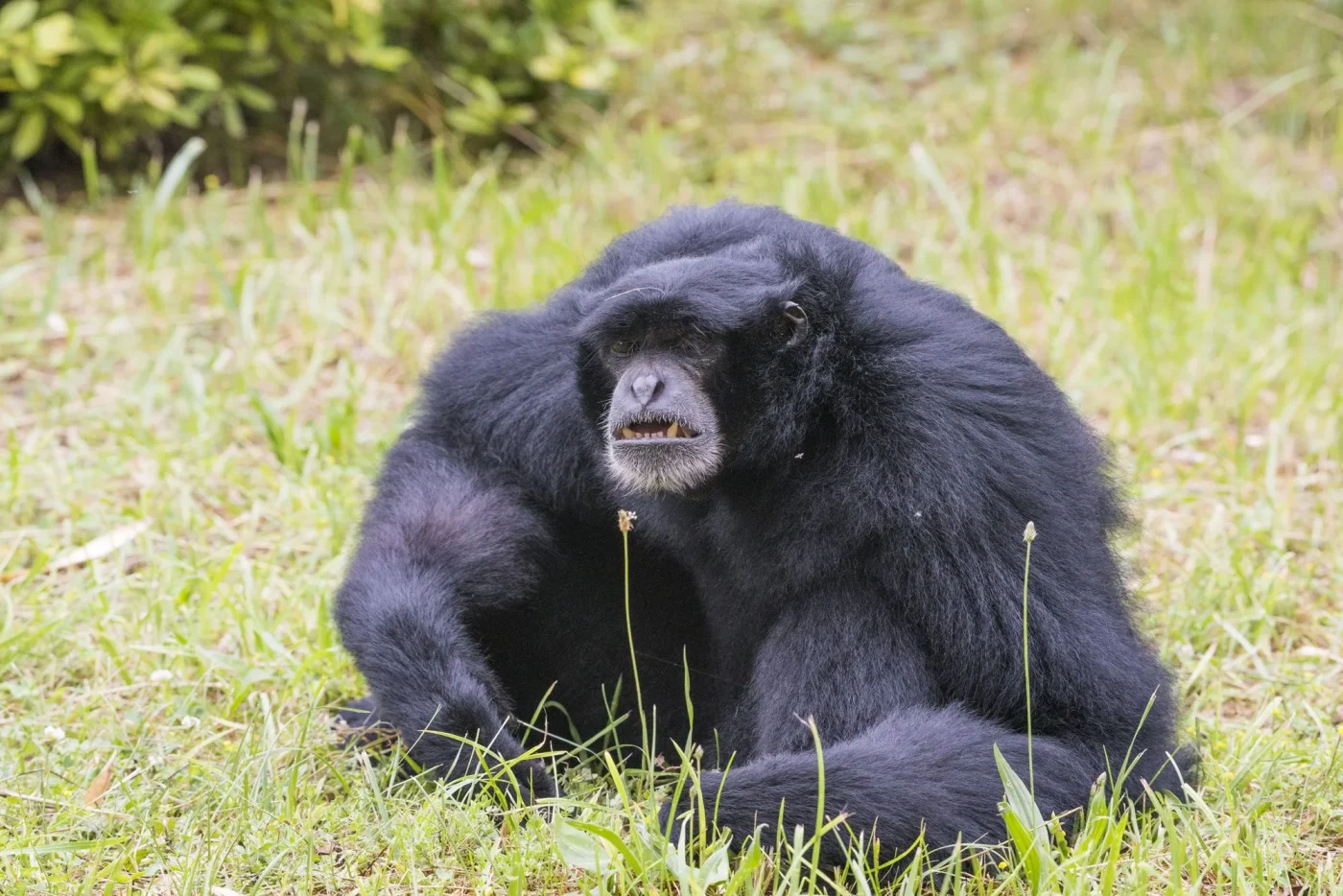
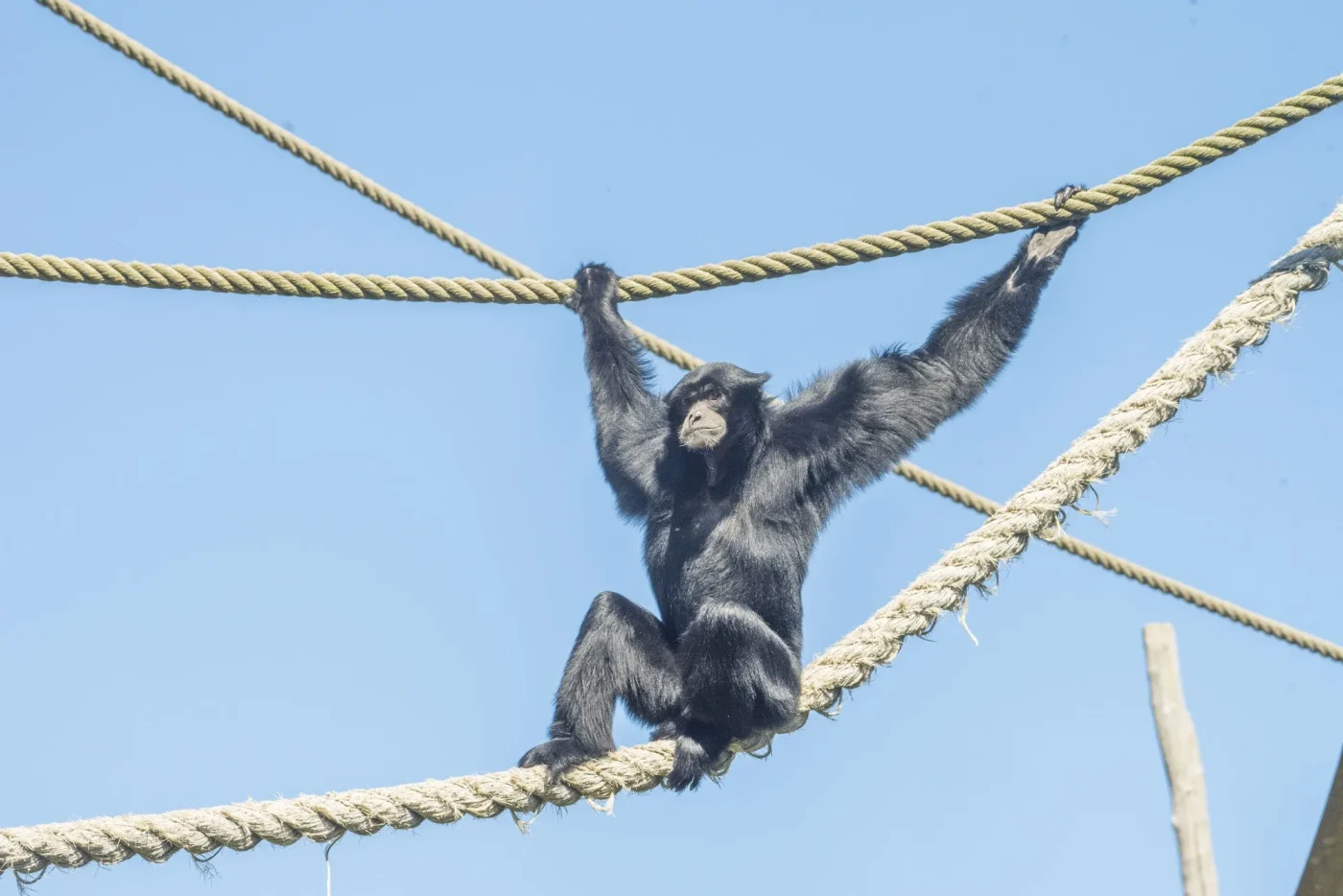
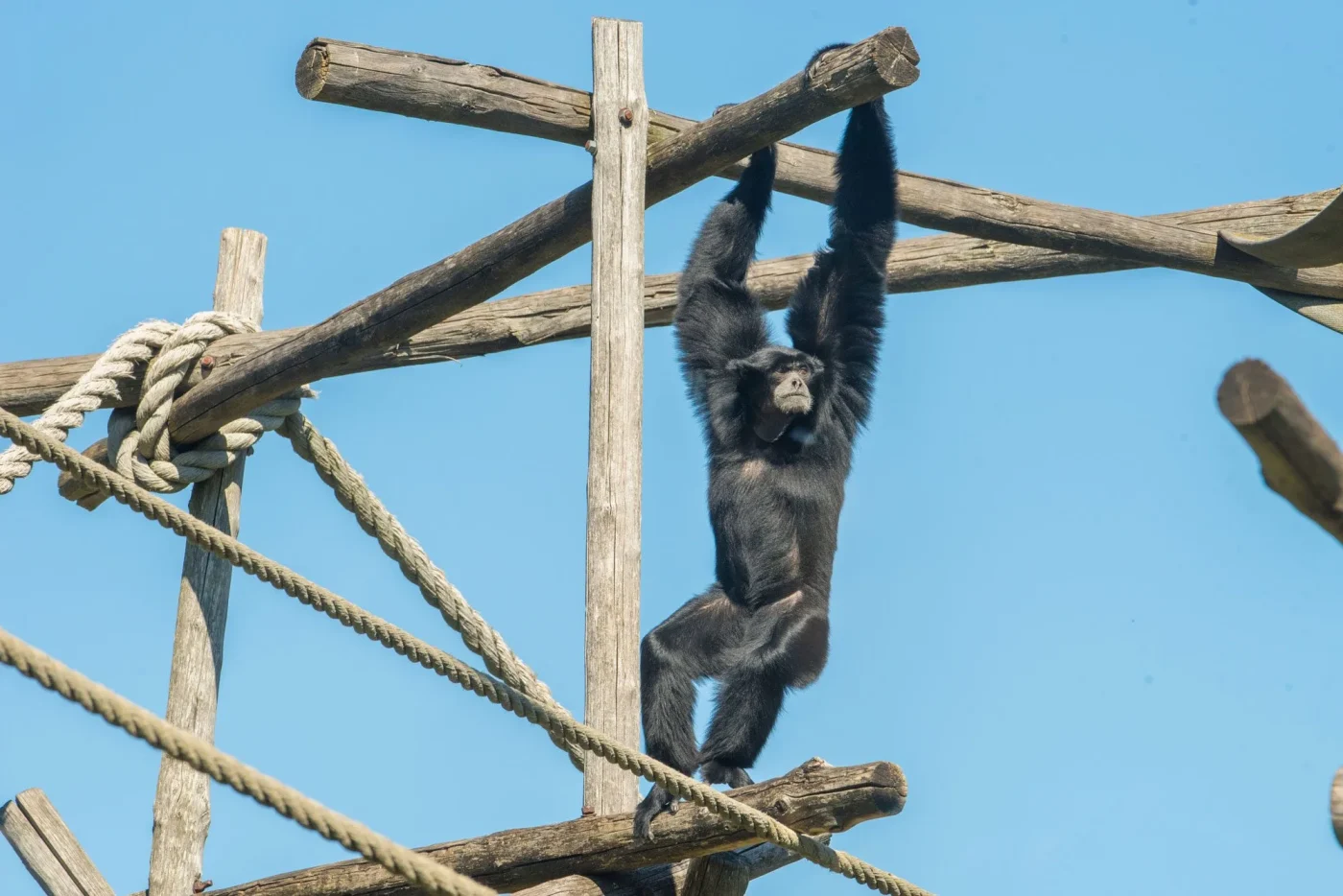
Measuring between 70 and 90 cm and weighing from 10 to 12 kg, it is the heaviest of the 20 gibbon species. Their fur is completely black, and both males and females have a laryngeal sac, a sort of pouch at the throat that expands to serve as a resonance chamber to amplify the sound of their calls. These calls are very powerful and can be heard up to more than 2 km away. The siamang is also morphologically adapted to move effortlessly through the trees. The fingers on its hands are long and hook-shaped, and its wrists can rotate in all directions. The very long forelimbs are more than twice the length of the body, while the hind legs are reduced. Finally, its rump is reduced with short lumbar vertebrae to minimize the weight that has to be lifted while moving.

Weight

10 to 15 kg

Habitat

Equatorial forest

Diet

Herbivore

Gestation

7 months

Longevity

25-30 years

Longevity

12-17 years

Location

Tropical forests of the Barisan mountains in Sumatra, Indonesia and south of the Perak River in Malaysia
Frequently Asked Questions

Where does the siamang live?

Siamangs live in the canopies of the tropical forests of the Barisan Mountains in Sumatra, Indonesia, and south of the Perak River in Malaysia. They are found mainly in primary and secondary forests up to 2,000m in altitude.

Reproduction strategy

After a gestation period of 7 months, the female generally gives birth to one baby, but in rare cases, they can be twins. The babies cling to their mother’s belly for the first 3 to 4 months and are weaned between 18 and 24 months, which allows the female to reproduce every 2 or 3 years. The male takes part in parental care by defending the young, grooming them, playing with them, and carrying them during movements. Older sisters or brothers may also help with raising the young. In her lifetime, a female can give birth to 10 offspring. The young reach sexual maturity at around 6 or 7 years old, at which point they will start looking for a life partner.

Behavior

Arboreal, they spend most of their time in the canopy, moving only with the strength of their arms, that is, by brachiation, from branch to branch. They are capable of jumping from one tree to another, making leaps of nearly 15 meters long. They are also able to hang with just one arm, effortlessly, to feed themselves with the other.

These great apes are monogamous, faithful for life, and generally do not take another partner if the first one dies. As soon as the sun rises, the pair marks their territory with vocalizations performed in duet. Extremely territorial, if an intruder crosses the boundary of the territory, both the female and the male participate in the confrontation. A chase begins in the canopy and can result in slaps and bites.

They live as a couple and also in family groups with several young of different ages.

One of the main social activities is grooming, which helps establish hierarchy. The most dominant receives more than they give. When the female is receptive, the male spends more time with her, especially during the breeding season.

What does it eat?

Siamangs spend between 8 and 10 hours a day searching for food. Depending on their geographic location, they mainly eat fruits or leaves and supplement their diet with insects, eggs, and small mammals.

Populations living in Malaysia prefer leaves and feed on about 43 to 48% leaves, which is much more than all other species of gibbons.

Lifestyle

It is assumed that the siamang may be preyed upon by birds of prey, snakes such as the reticulated python, or carnivores such as the panther.

What are its predators?

The siamang population is estimated at around 22,400 individuals; however, this species is classified as endangered due to the threats it faces. Only 4% of its range is protected, which leads to rapid deforestation for timber exploitation and agricultural expansion. Between 1985 and 2007, more than 40% of its habitat on the island of Sumatra was destroyed. Furthermore, many pairs are killed in order to recover their young, which are illegally sold on the pet market.

Other animals to discover