What is a tiger?
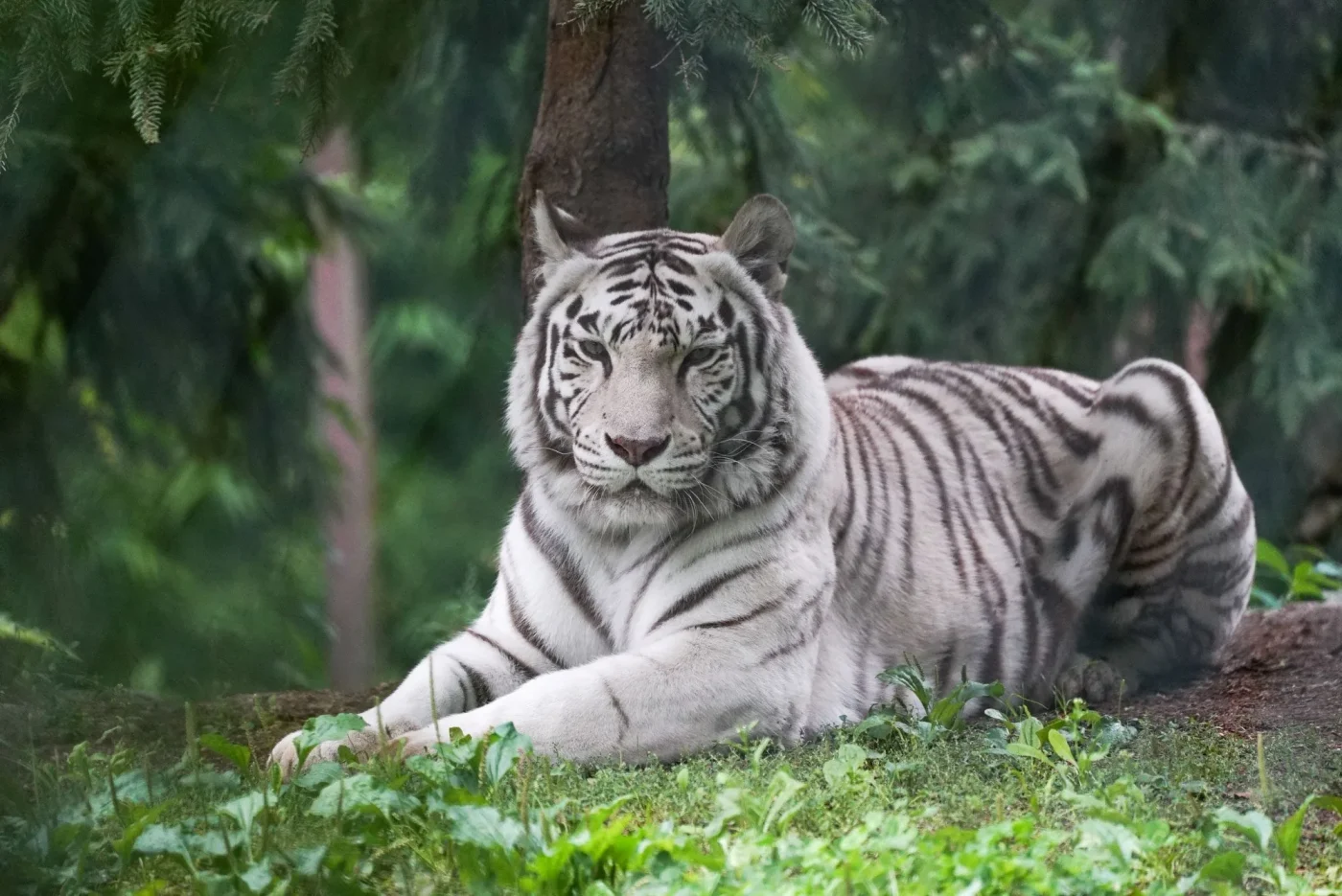
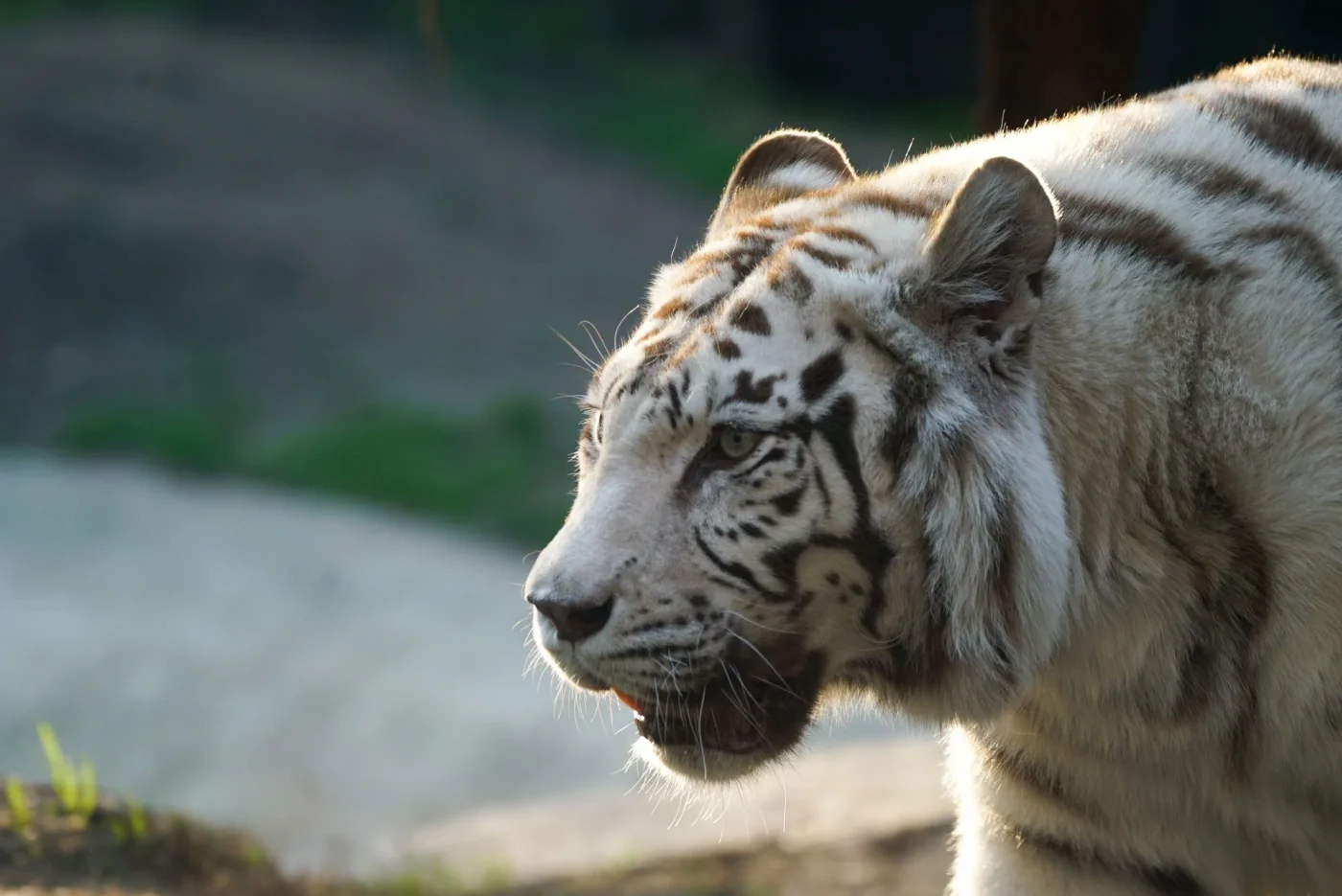
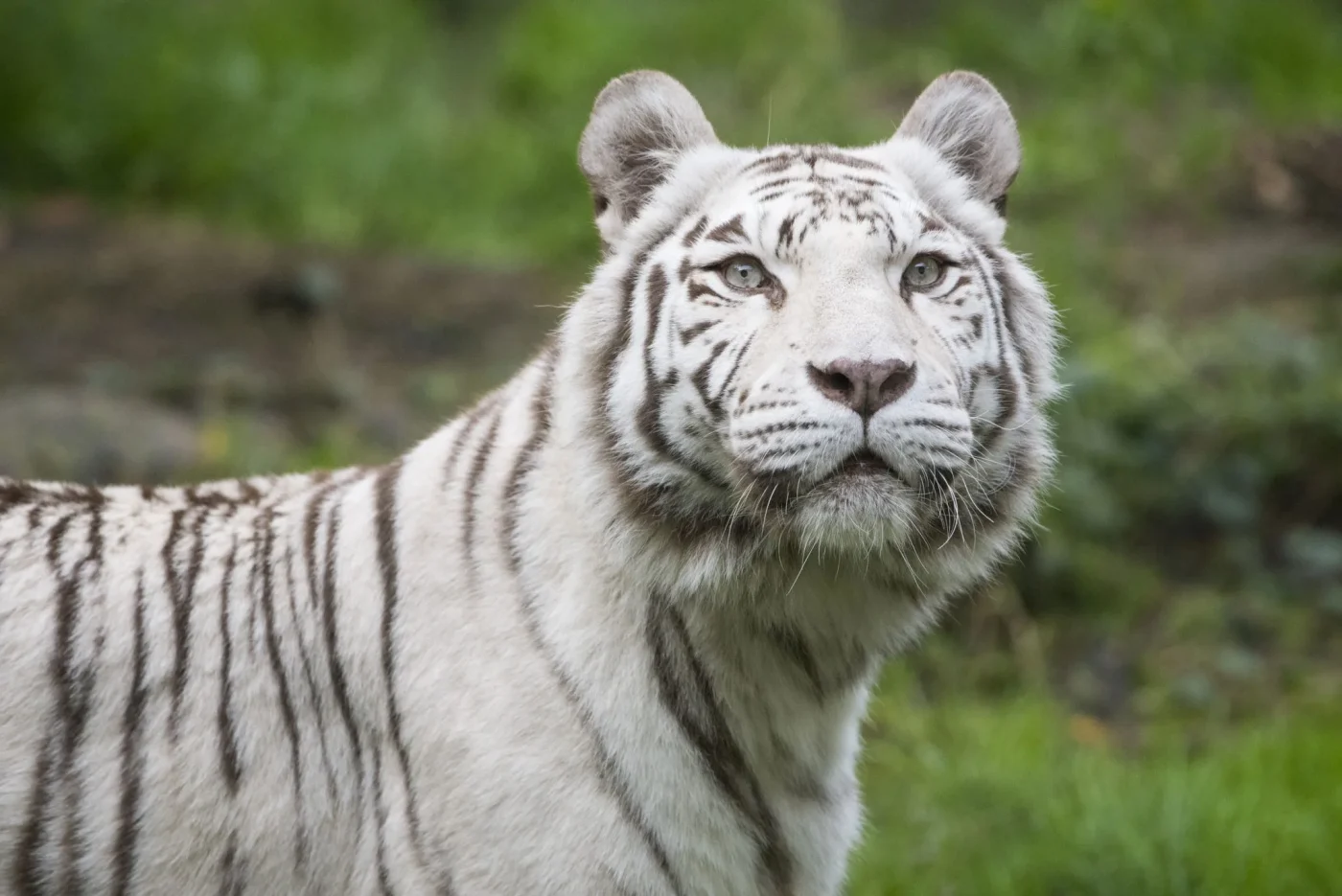
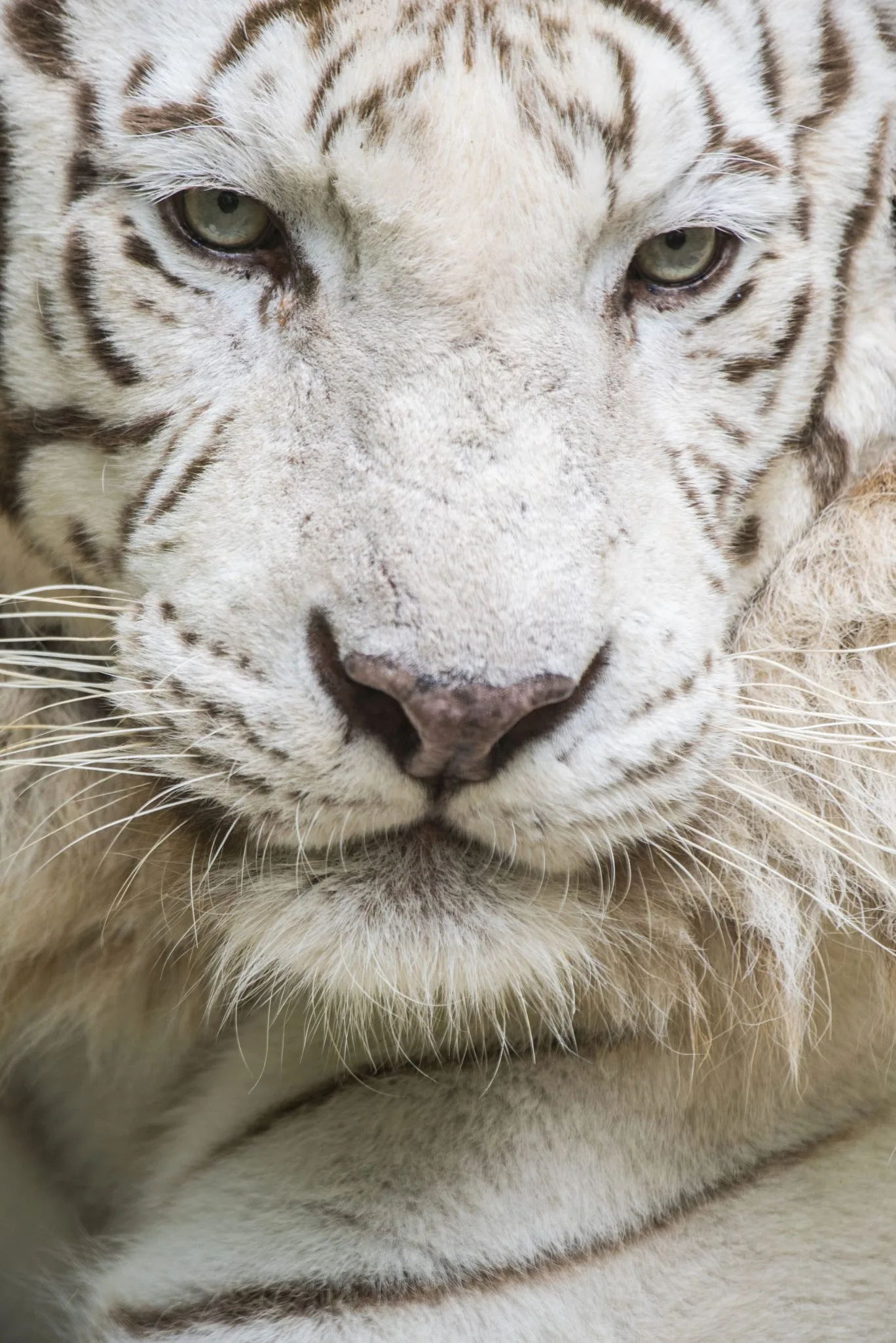
With an average length between 2.70 and 3.80 meters and an average weight of 150 to 300 kilograms, the tiger is considered the largest feline on the planet. However, some large lions can be bigger than some small tigers. In general, males are more robust than females. Also, the tiger is the only feline on Earth to have a striped coat. The coat is reddish on the top of the body and features vertical black stripes that extend from the nape of the neck to the tip of the tail. These stripes continue horizontally all the way to the ends of the legs. The underside of the body, as well as the throat and snout, are white. The face also shows black stripes. The tiger has a thick and short neck, broad shoulders, and muscular forelegs, which indicate great power. It also has canine teeth measuring between 7.5 and 10 cm long, the longest among all felines!
Contrary to what one might think, tigers are indeed perfectly able to camouflage themselves despite their orange color. In fact, very few animals on Earth are able to see the color red like we do. For most species, red is seen as a variation of green. Therefore, tigers appear green to most animals, including themselves. They are therefore perfectly equipped to camouflage themselves in vegetation.
Historically it was accepted that there were 9 subspecies of tiger on Earth, 6 still present and 3 extinct:
- P. t. altaica : the Siberian tiger or Amur tiger in Siberia and northeast China.
- P. t. amoyensis : the South China tiger, present only in captivity and certainly extinct in the wild.
- P. t. corbetti: the Indochinese tiger in Cambodia, China, Laos, Malaysia, Myanmar, Thailand, and Vietnam.
- P. t. jacksoni : the Malayan tiger in the Malay peninsula.
- P. t. sumatrae : the Sumatran tiger on the island of Sumatra.
- P. t. tigris : the Bengal tiger in India, Bangladesh, Nepal, Bhutan, and China.
- P. t. balica: the Bali tiger on the island of Bali (extinct).
- P.t. sondaica : the Javan tiger on the island of Java (extinct)
- P.t. virgata : the Caspian tiger in the west of the Asian continent (extinct)
These subspecies are different from each other. For example, the Siberian tiger is the largest of all since a male can measure up to 3.7 meters long and weigh more than 420 kilograms. By contrast, the Sumatran tiger is the smallest since a male only measures up to 2.4 meters long and weighs 136 kilograms.
However, recent studies based on morphology, ecology and molecular analysis have suggested the existence of only 2 subspecies of tiger on Earth:
- P.t. tigris : this subspecies includes virgata, altaica, amoyensis, corbetti, and jacksoni, found on the Asian continent and in Malaysia.
- P.t. sondaica: this subspecies includes balica and sumatrae, found on the islands of Java, Bali, and Sumatra
This disagreement in the number of tiger subspecies is due to small genetic samples. As a result, the taxonomy of this species is still being studied by the IUCN cat specialist group.