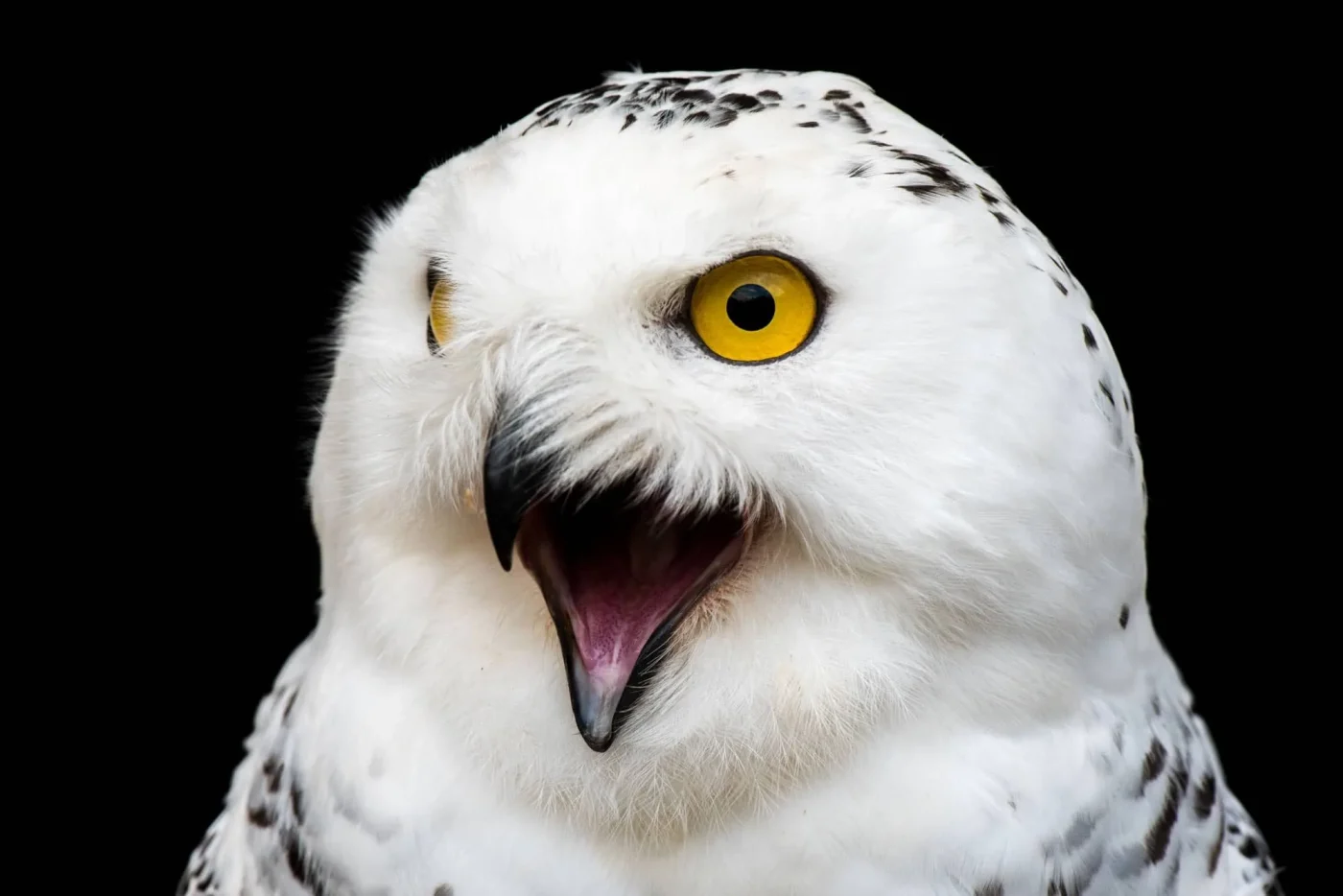
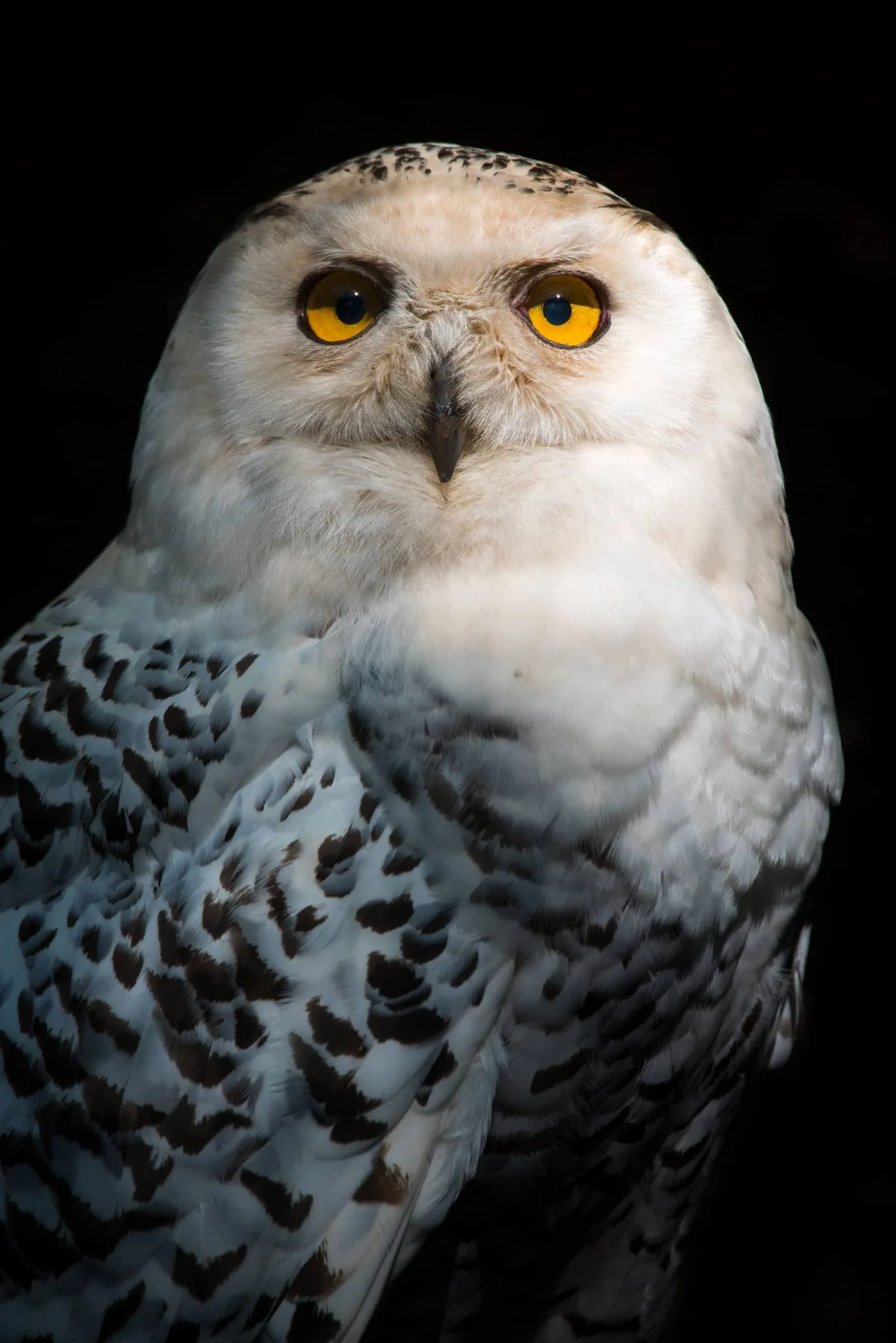
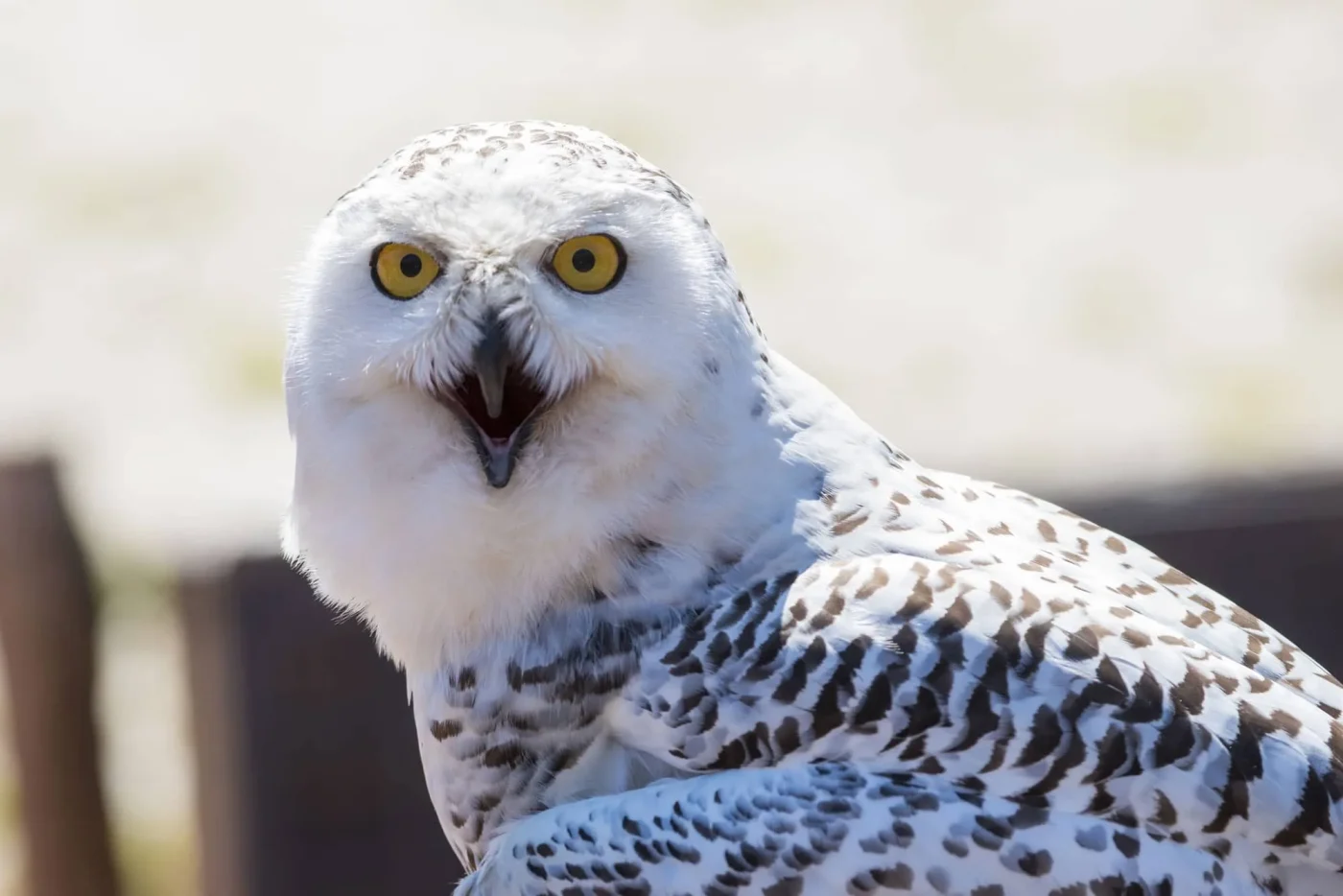
Sexual dimorphism in these birds is characterized by the female being larger, as is the case with many other raptors, as well as by a difference in plumage coloration. The male has predominantly white plumage, with very few spots on the rest of the body. In contrast, the female has white plumage that is heavily speckled and striped with black on the wings, tail, and belly.
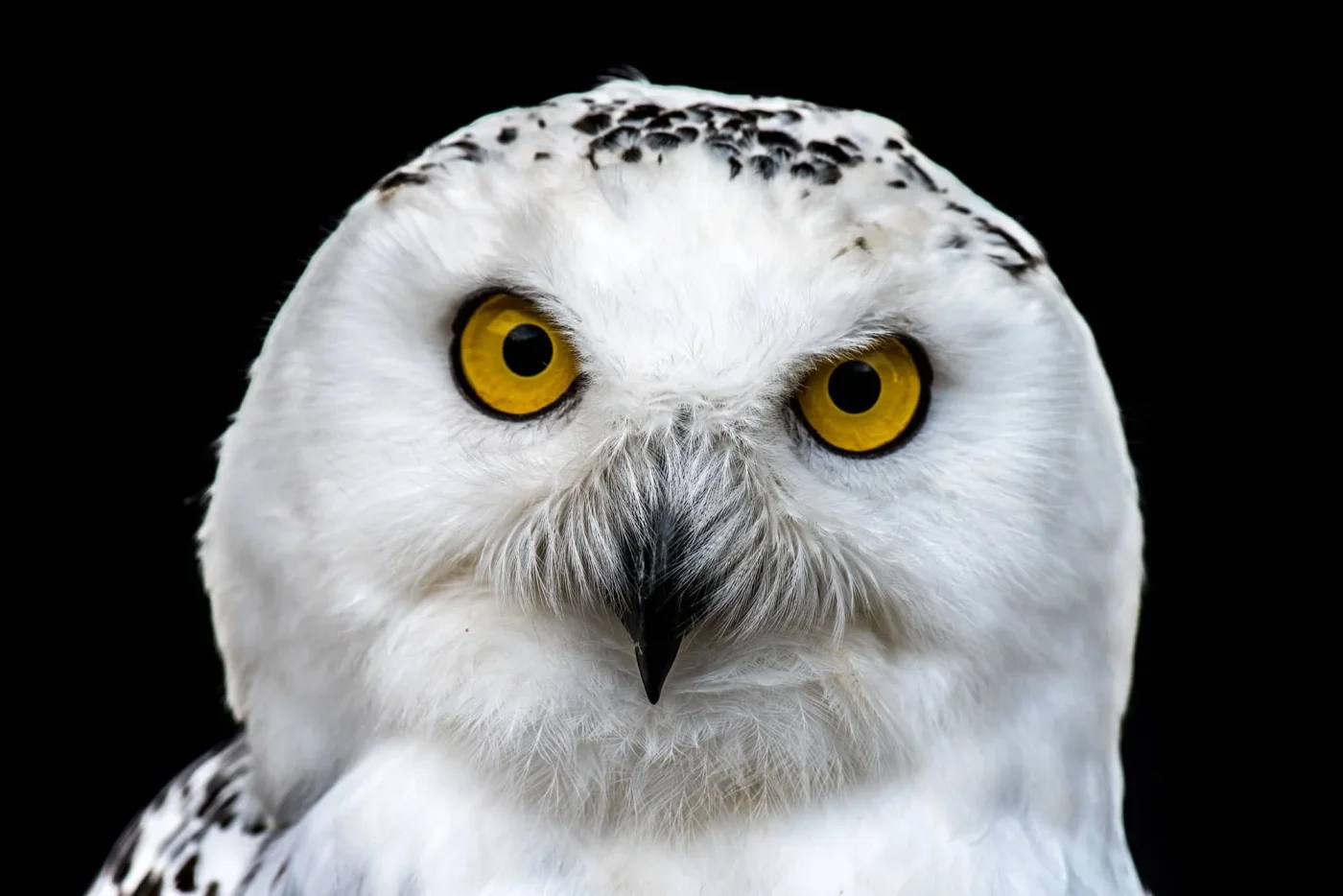
Like many nocturnal raptors, snowy owls have a facial disk made up of feathers, arranged to form a sort of parabola that helps amplify sounds and capture them better. The ear openings are not located at the same level within the skull. This offset arrangement allows them to more precisely locate where sounds are coming from and thus better locate their prey.
The eyes of the snowy owl are yellow, and do not move in their sockets. Therefore, to see around itself, this bird must turn its head to evaluate its surroundings. Its binocular vision also allows it to assess depth fields very well, in order to be able to capture its prey.
Like all nocturnal raptors, the snowy owl flies silently. This special trait is possible thanks to feathers that are fringed with comb-like filaments. This arrangement helps reduce noise during wingbeats.
To differentiate an owl from a barn owl, you need to check for the presence of small feathers on the top of the head, which are called ear tufts. Only owls have them, and they are completely absent in barn owls. In snowy owls, the ear tufts are present but they are small and folded back on the head, so they are barely visible. The snowy owl is therefore indeed an owl, and not a barn owl.