Balearica regulorum

Grey crowned crane

Order: Gruiformes / Family: Gruidae / Genus: Balearica

HABITAT

The grey crowned crane is a large wading bird that lives on the African continent, in the sub-Saharan region from the Congo down to South Africa.

Grey crowned cranes frequent rather wet environments, such as ponds, marshes, or floodplains. It is not uncommon to find them in farmlands and pastures. These birds also stay in shallow seasonal lakes called vleis. The habitats they choose have trees so they can perch in them.

Weight

3-4 kg

Habitat

Forest, wetlands, savannah

Diet

Omnivore (seeds, insects, lizards)

Gestation

30 days

Longevity

20-25 years

Longevity

12-17 years

Location

Sub-Saharan Africa
Frequently Asked Questions

Description

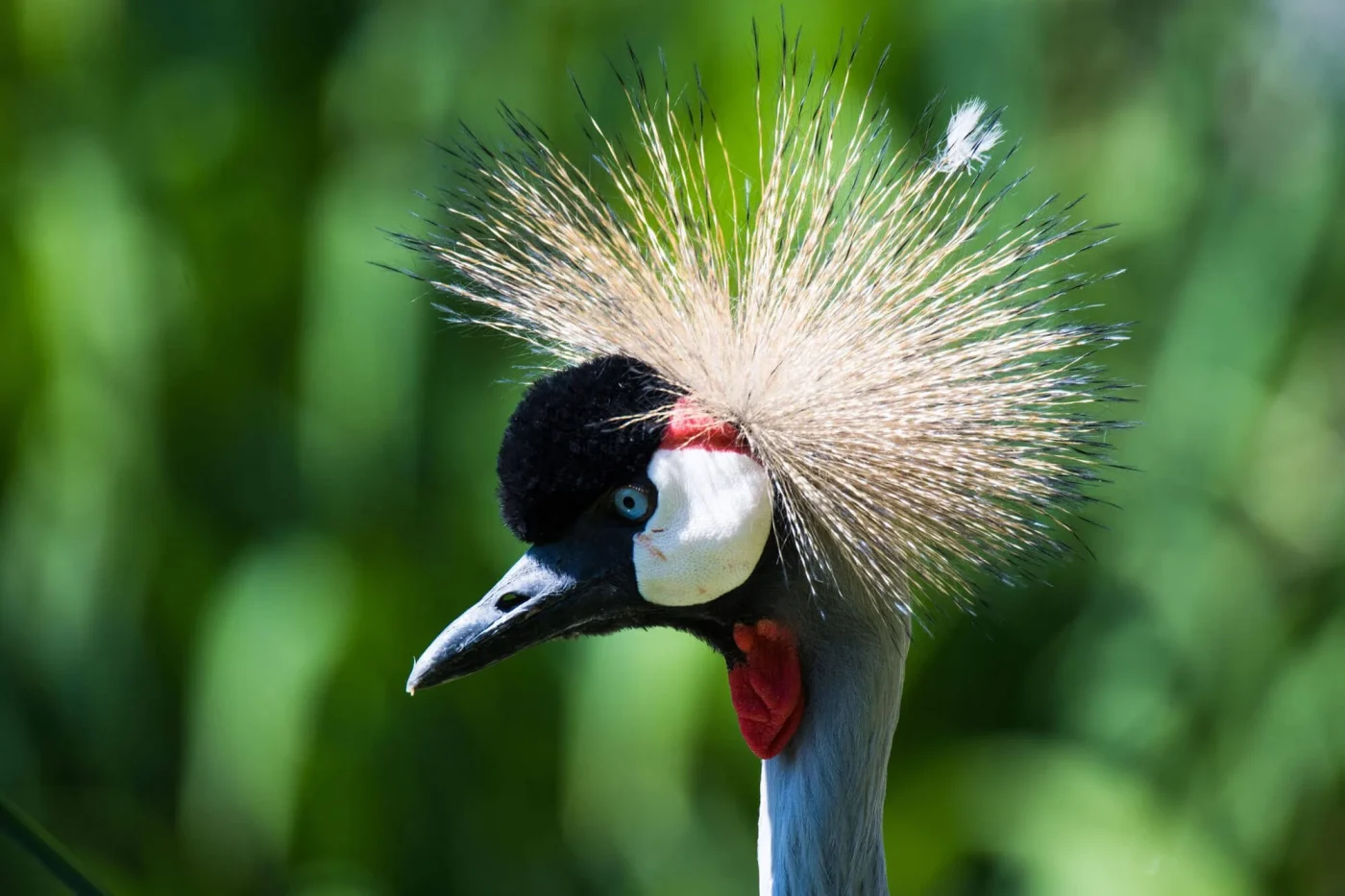
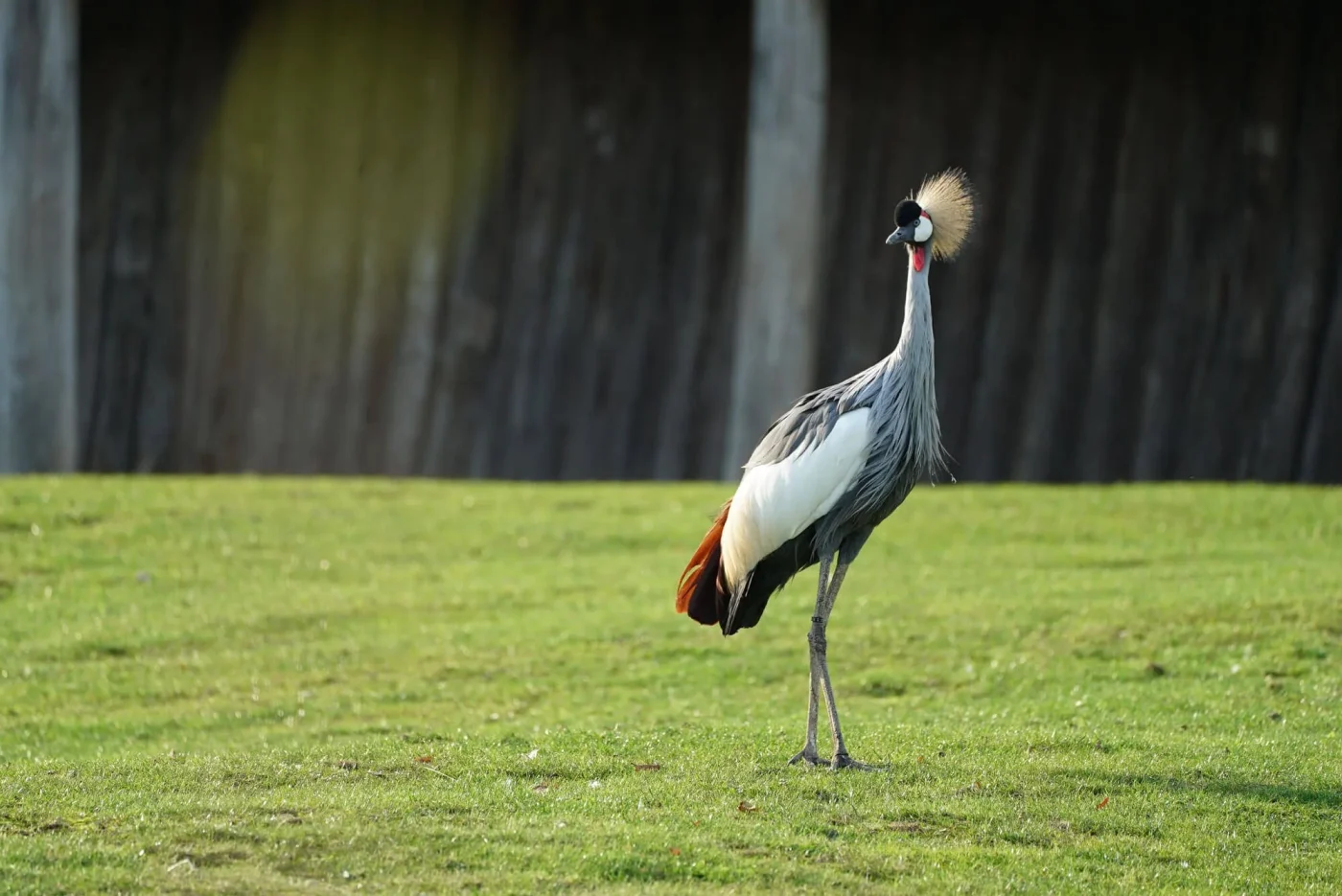
There is no sexual dimorphism in crowned cranes. Males and females have similar plumage. The head has a black forehead and crown, white cheeks, a red patch behind the eye, and a crown of golden feathers at the back of the skull. The light gray neck features a beautiful red wattle. The body is gray. The wings are white and have black primary feathers and brown secondary feathers. Juveniles have similar but duller colors than adults and acquire adult plumage around the age of 1 year.

The black legs have a long hind toe used for perching in trees. These birds can measure up to 110 cm with a wingspan of 180 to 200 cm and weigh between 3 and 4 kg.

Behavior

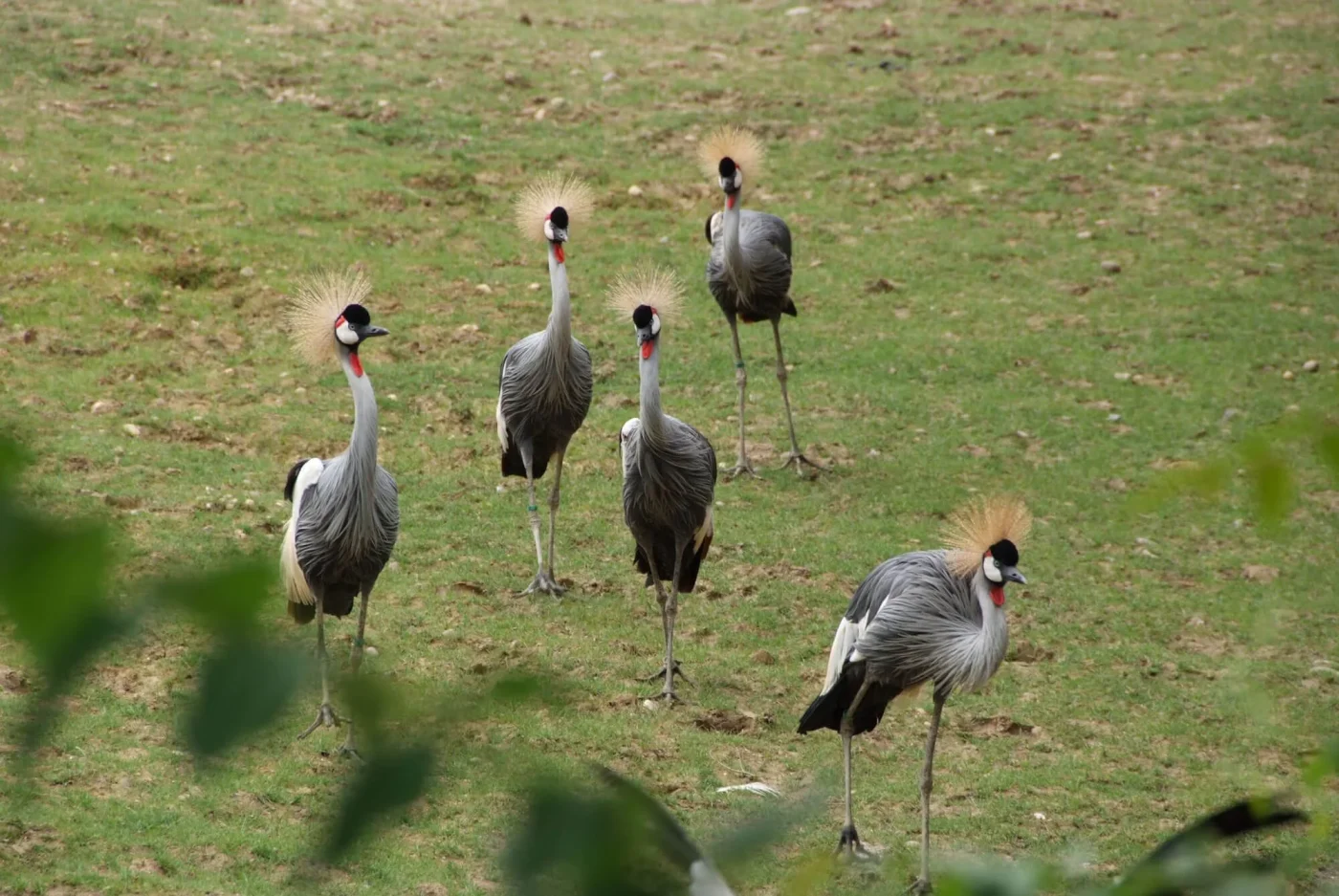
Royal cranes are monogamous birds and stay with the same partner for their entire life. They live as a couple within groups composed of about twenty individuals. Different groups can gather and form colonies of 200 individuals.

These birds do not migrate but move according to the availability of food and water resources. They are extremely territorial regarding nesting sites but are not territorial about feeding areas.

What does the crowned crane eat?

These are omnivorous birds, mainly feeding on seeds, young shoots, insects or other invertebrates, as well as amphibians and small reptiles. They take advantage of the presence of other disruptive animals to feed on insects. In fact, they follow livestock to take advantage of the insects that are disturbed.

Reproduction strategy

During reproduction, both individuals engage in a nuptial dance. They open their wings wide and start to dance by jumping into the air. Simultaneously, they emit powerful calls while inflating their red gular pouch. This call is a “waou” often repeated, which can sometimes sound like a meow. The nest is built on the ground in or near a shallow body of water. They appreciate tall grass areas to hide it and to be able to watch the surroundings while staying camouflaged. The breeding period varies according to the rainy season: in South Africa and surrounding areas, which are dry regions, breeding mainly occurs during the rainy periods from October to April, with peaks between December and February. In East Africa, a humid area, breeding can take place all year round.

The female lays between 2 and 4 eggs per clutch, and the eggs of crowned cranes are light blue in color.

The chicks leave the nest between 56 and 100 days after hatching and form groups of immatures. Sexual maturity generally occurs during the 3rd year of life.

These birds can live about twenty years in the wild, and about 25 years in captivity.

What is it threatened by?

The threats faced by the crowned cranes are the degradation and destruction of their habitats. This results from several things such as the draining of wetlands, the use of pesticides, overgrazing, the construction of dams…

Animal trafficking as well as hunting are not negligible dangers either. As their territory is reduced, they live increasingly closer to urbanized areas. Many therefore die from poisoning in order to protect crops.

Electrocutions and collisions with high-voltage power lines are also responsible for many deaths.

With a global population estimated between 17,000 and 22,000 mature individuals, the crowned crane is now classified as endangered by the IUCN.

Anecdote:

  • Before taking flight, a crane needs to take a running start.
  • Pairs are often bonded for life and are part of a group of about twenty individuals.
  • It is the national bird of Uganda.
  • It is used by farmers to reduce the quantity of insects in the fields.
  • The crowned crane is one of only two species of cranes able to perch in trees thanks to their long hind toes, the second species being the black crowned crane.

What are its predators?

The main predators of the grey crowned crane are domestic dogs. In order to reduce predation rates, these birds therefore perch in high places or, according to some studies, live alongside large cattle that intimidate predators.

Discover other species from the African continent: rhinoceros

Other animals to discover