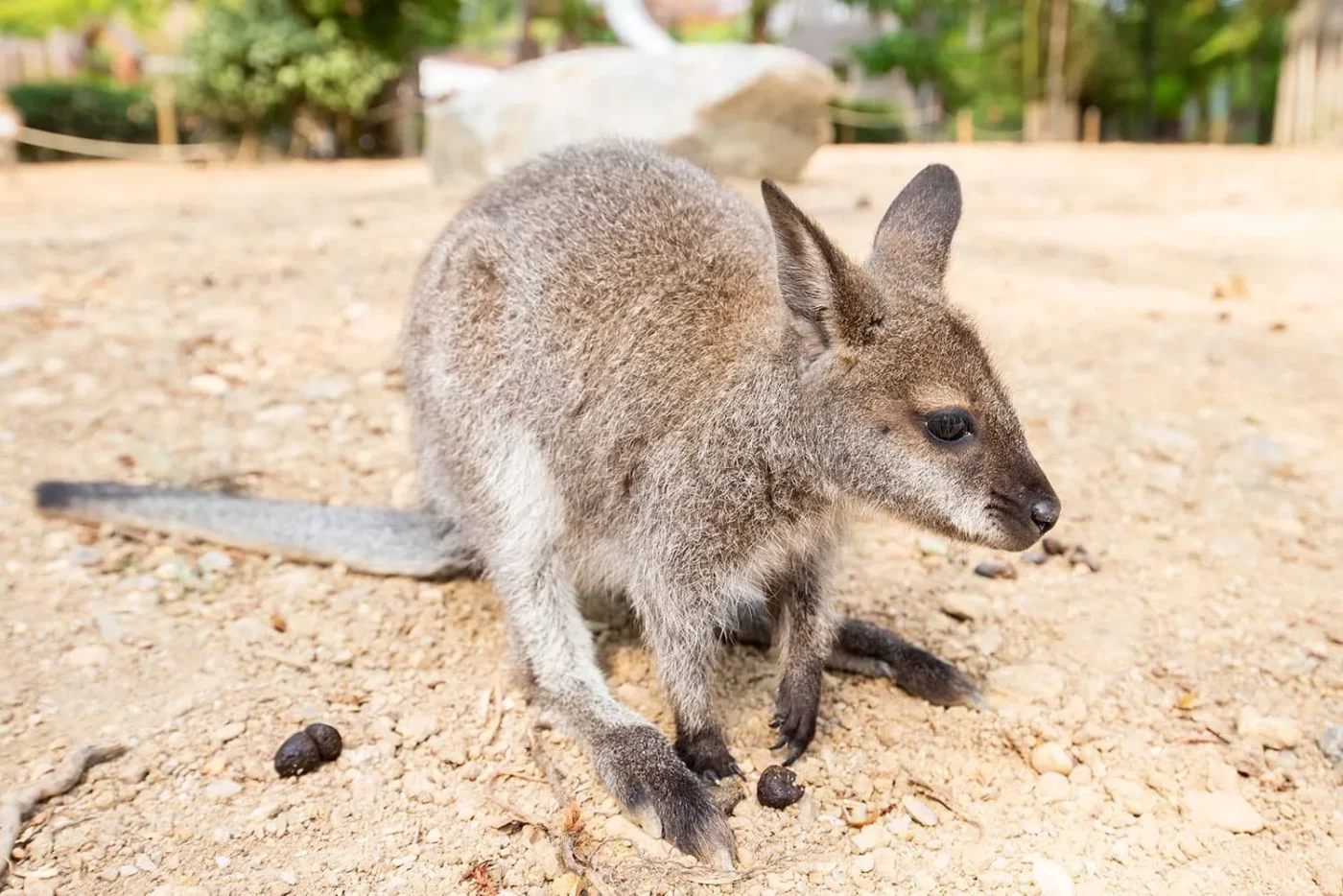
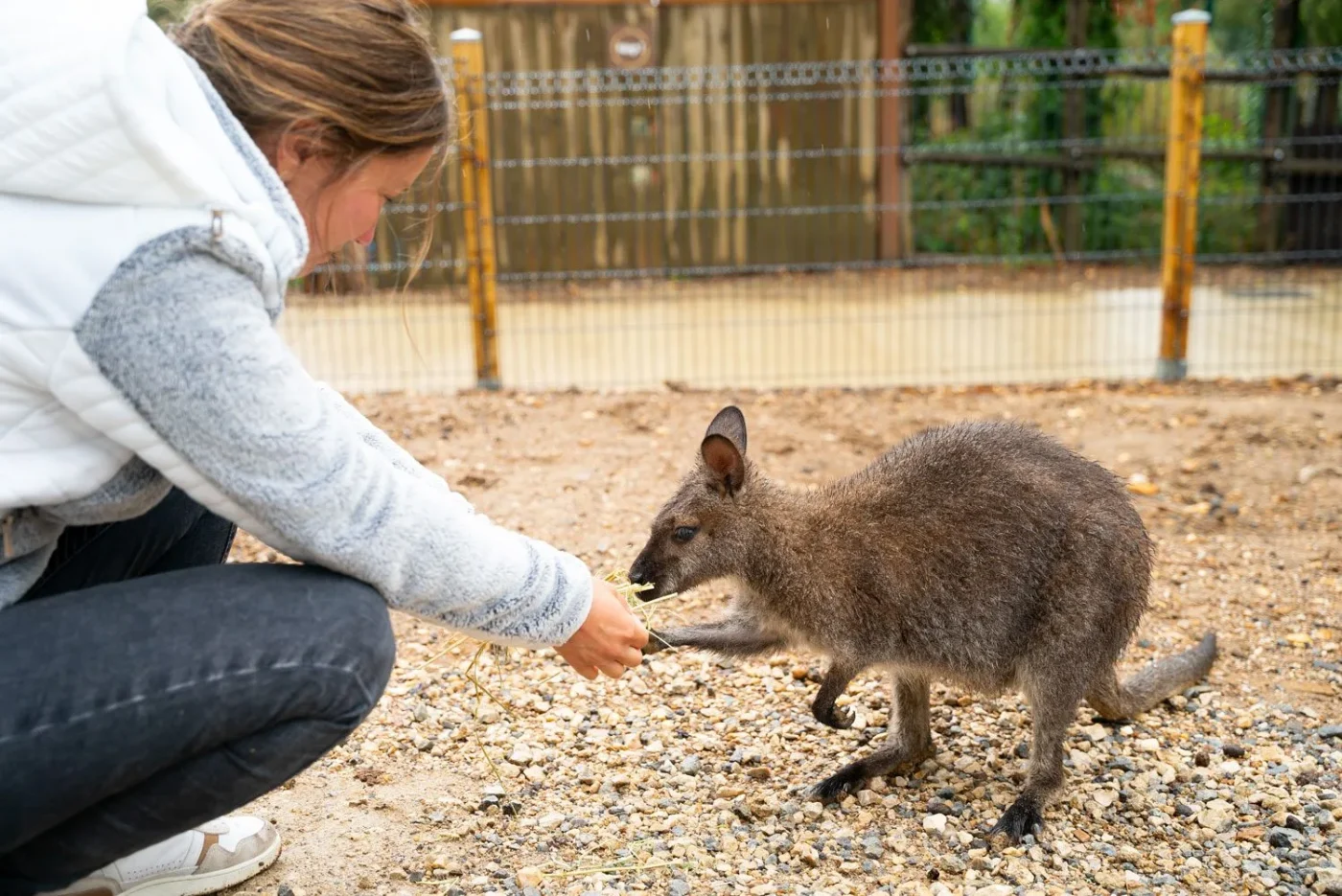
They are polygamous and territorial animals, and the territory of females overlaps with that of males, which the latter have conquered during fights. They are also excellent swimmers, who in some cases, can easily cross streams thanks to their hind legs. Their ears are constantly moving, and can turn 180 degrees to hear everything happening around them.
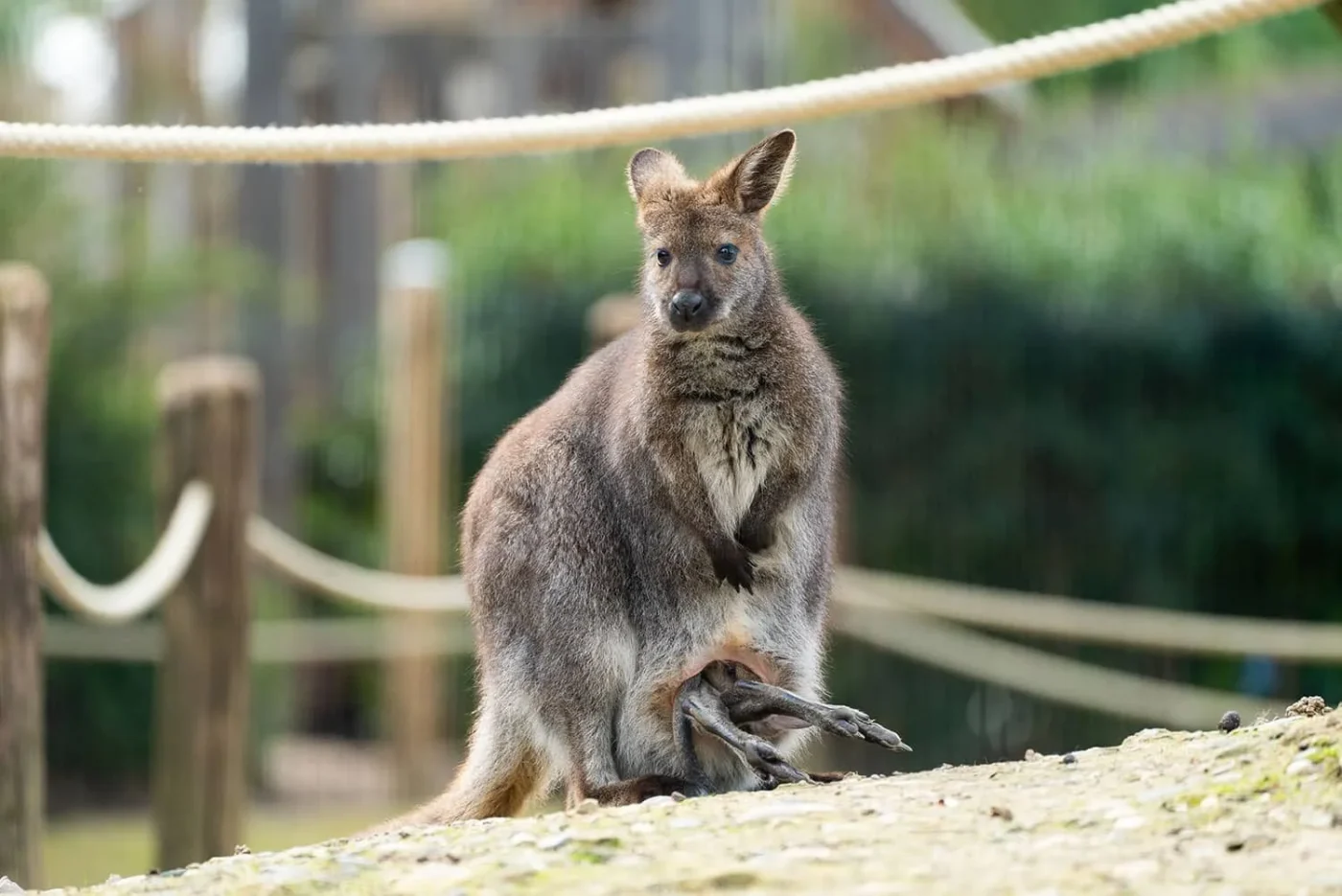
One of the characteristics of marsupials is their mode of reproduction. The placenta, which is an organ that develops during gestation, and which allows for the exchange of gases and nutrients between the mother and the fetus, is absent or very little developed in marsupials. These animals therefore have a very short gestation period, to avoid a lack of oxygen and nutrients. The young are therefore born at the embryonic stage, weighing less than a gram, measuring only 2 cm, and are born naked and blind. The little one climbs with its front legs onto the mother’s belly, who helps by licking the fur of her belly up to her pouch. Once arrived in the pouch, called the marsupium, the little one clings to one of the 4 teats, and will continue its development there for the next 10 months. The marsupial pouch is a real living incubator, allowing the young to stay at the right temperature (around 35 degrees), throughout its development phase.
Little by little, the young wallaby starts to gradually stick its head out of the pouch, to look at the world around it. From 5 months on, it finally starts leaving the pouch more and more often while still coming to nurse, until it becomes too big to go back inside. A Bennett’s wallaby female can both nurse one baby in her pouch and already be pregnant with a second one. The latter’s development is put “on hold” during the lactation of the first. The marsupial pouch is a real living incubator, and allows the young to stay at the right temperature (around 35 degrees), throughout its development phase.
Little by little, the young wallaby starts to gradually stick its head out of the pouch, to look at the world around it. From 5 months on, it finally starts leaving the pouch more and more often while still coming to nurse, until it becomes too big to go back inside. A Bennett’s wallaby female can both nurse a young in her pouch and already be pregnant with a second one. The latter’s development is put “on hold” during the lactation of the first young. Once the first is weaned, the second completes its development, and finally is born. It then takes its place in the pouch and completes its growth attached to a teat.