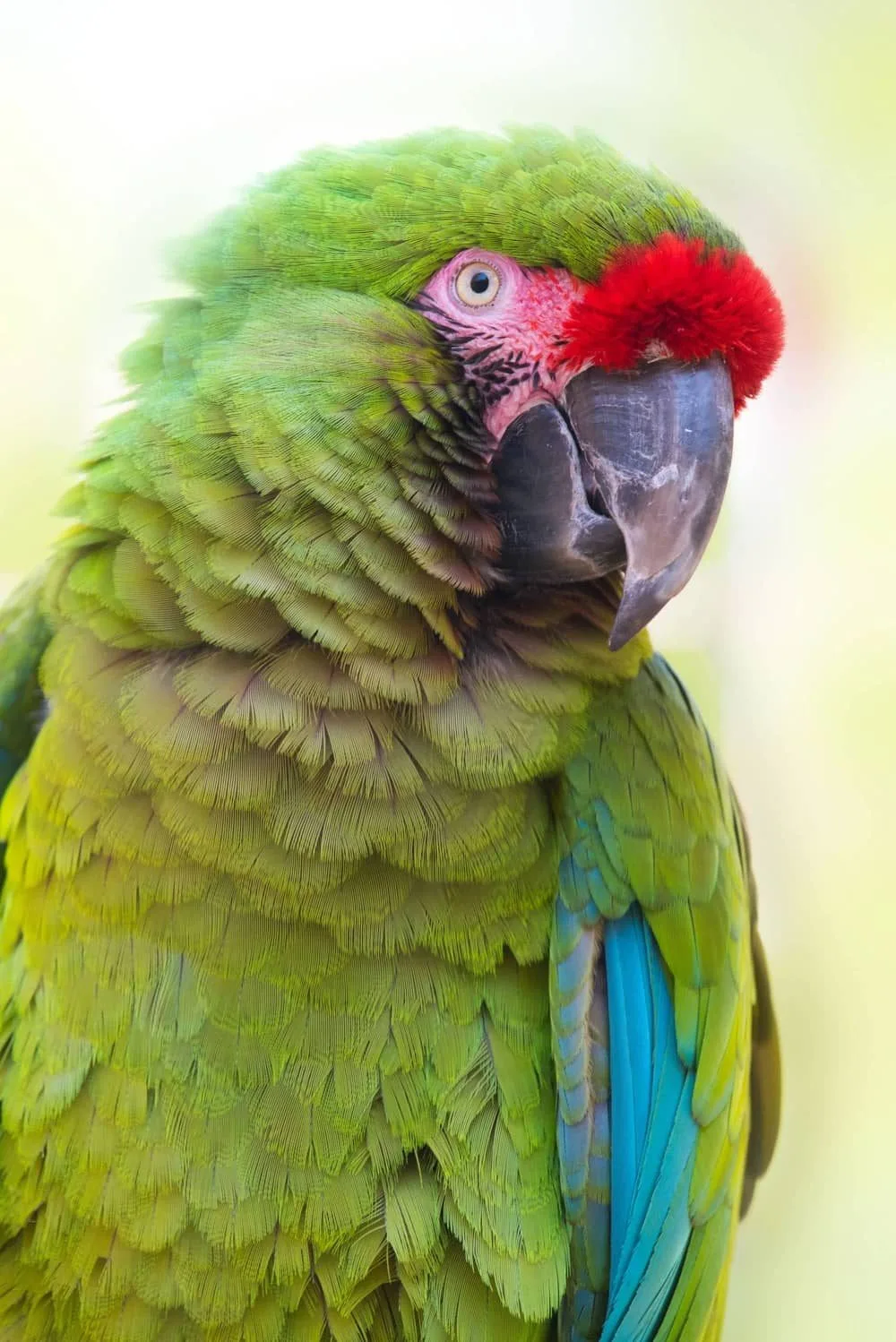
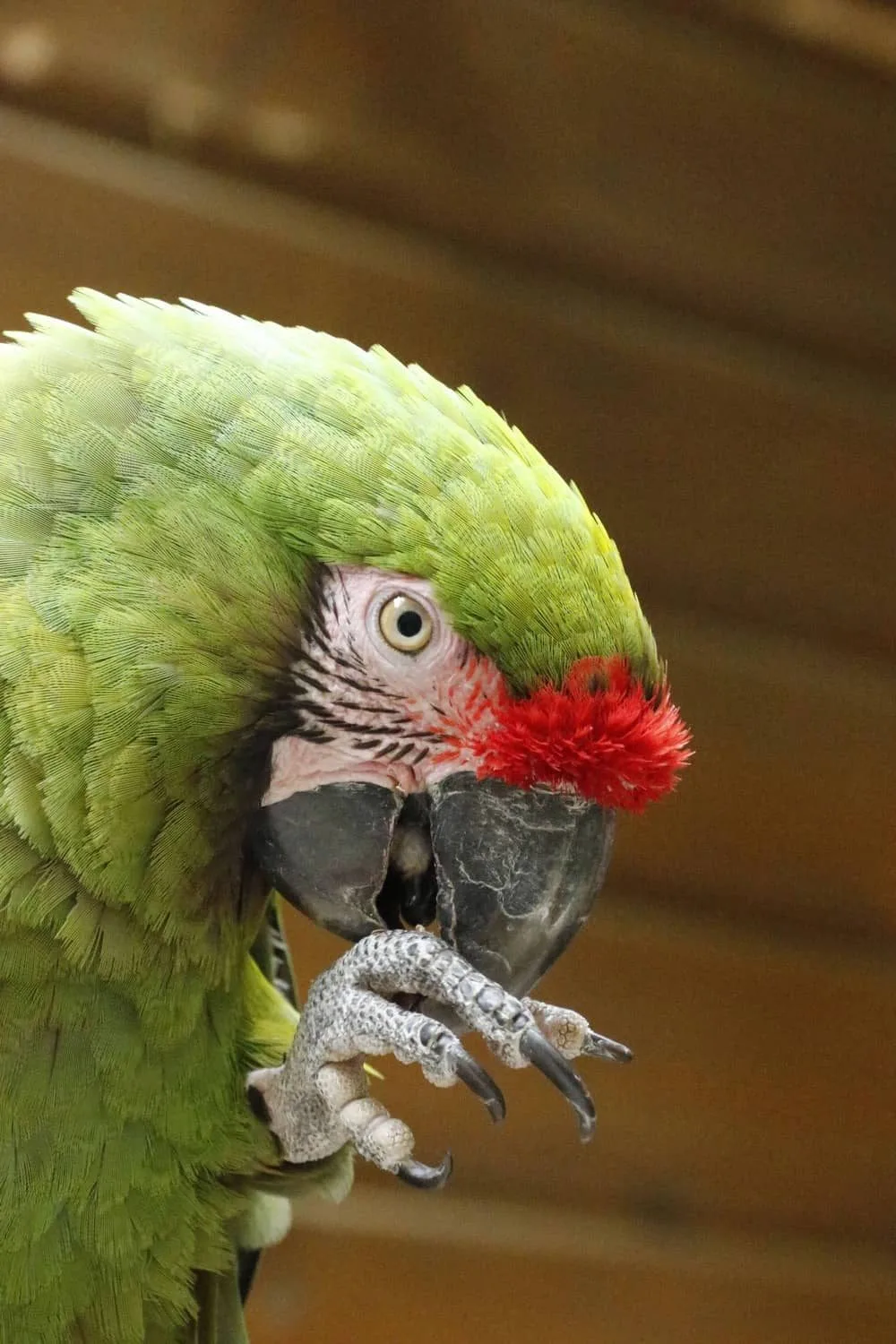
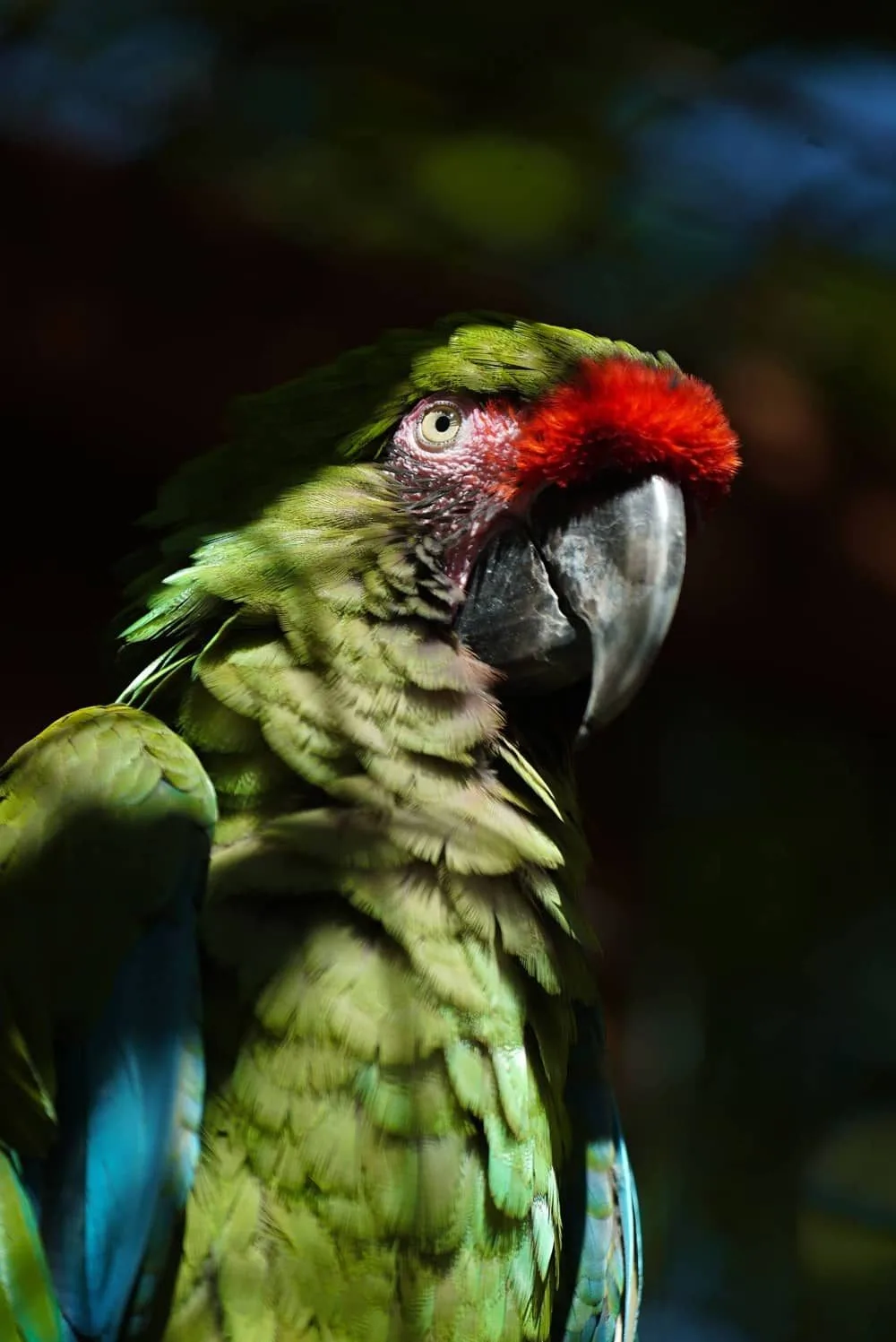
These birds create their nests in hollow tree cavities; when none are available, military macaws can nest in cavities in karst cliffs (structures resulting from the erosion of all soluble rocks). A requirement for nest construction is that it must have a height greater than 50 cm if it is located in a tree.
Military macaws are monogamous and form lifelong pairs, but they have also been observed in large communities of more than 50 individuals, with many other pairs. Like primates, the pairs spend a lot of time grooming each other. This not only strengthens their pair bonds but mainly helps to prevent the accumulation of parasites that could cause problems such as skin diseases.
They are seasonal breeders but are capable of breeding throughout the year depending on several factors such as: the availability of resources and cavities, the existing bond between both individuals, or their location. In fact, it has been noted that macaws living in different regions of Mexico have different breeding periods.
During the pre-fertilization period, males protect and feed the females. The female lays an average of 2 to 3 eggs in a single clutch. During the pre-hatching period, both sexes supply food and protect the eggs. The males continue to protect and feed the females while they incubate the eggs. Hatching time averages 26 days and the newborns weigh between 18 and 25 g. At birth, the chicks are dependent on both parents. Their fledging time averages 13 weeks and they leave the nest to become independent between 3 and 5 months. In the pre-weaning, fledging, and pre-independence periods, both sexes feed and protect the young. The age of sexual maturity in military macaws is the same for both sexes: 2 to 4 years. Military macaws generally inherit their parents’ territory.