Ara militaris

Military macaw

Order: Psittaciformes / Family: Psittacidae / Genus: Ara

Description

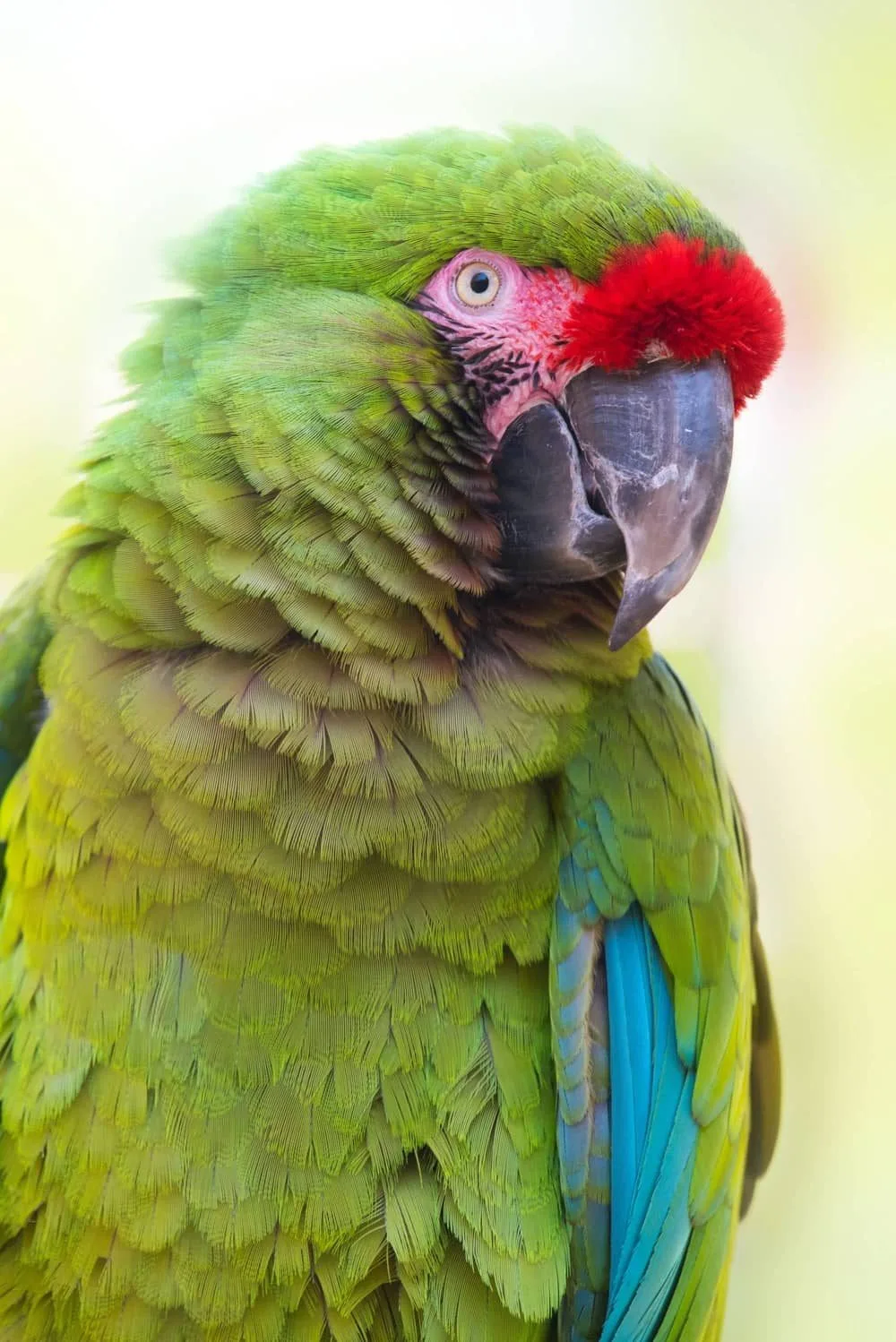
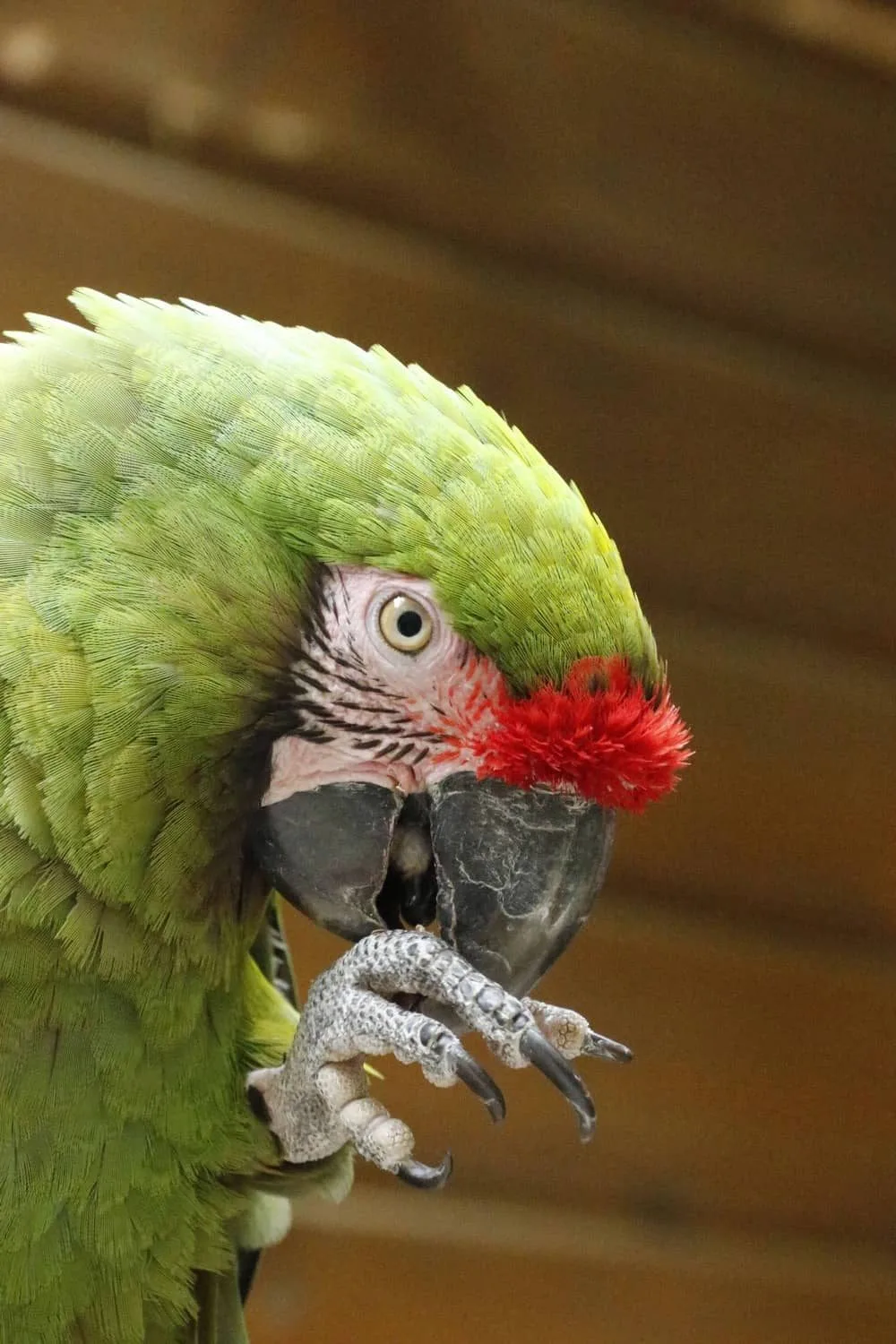
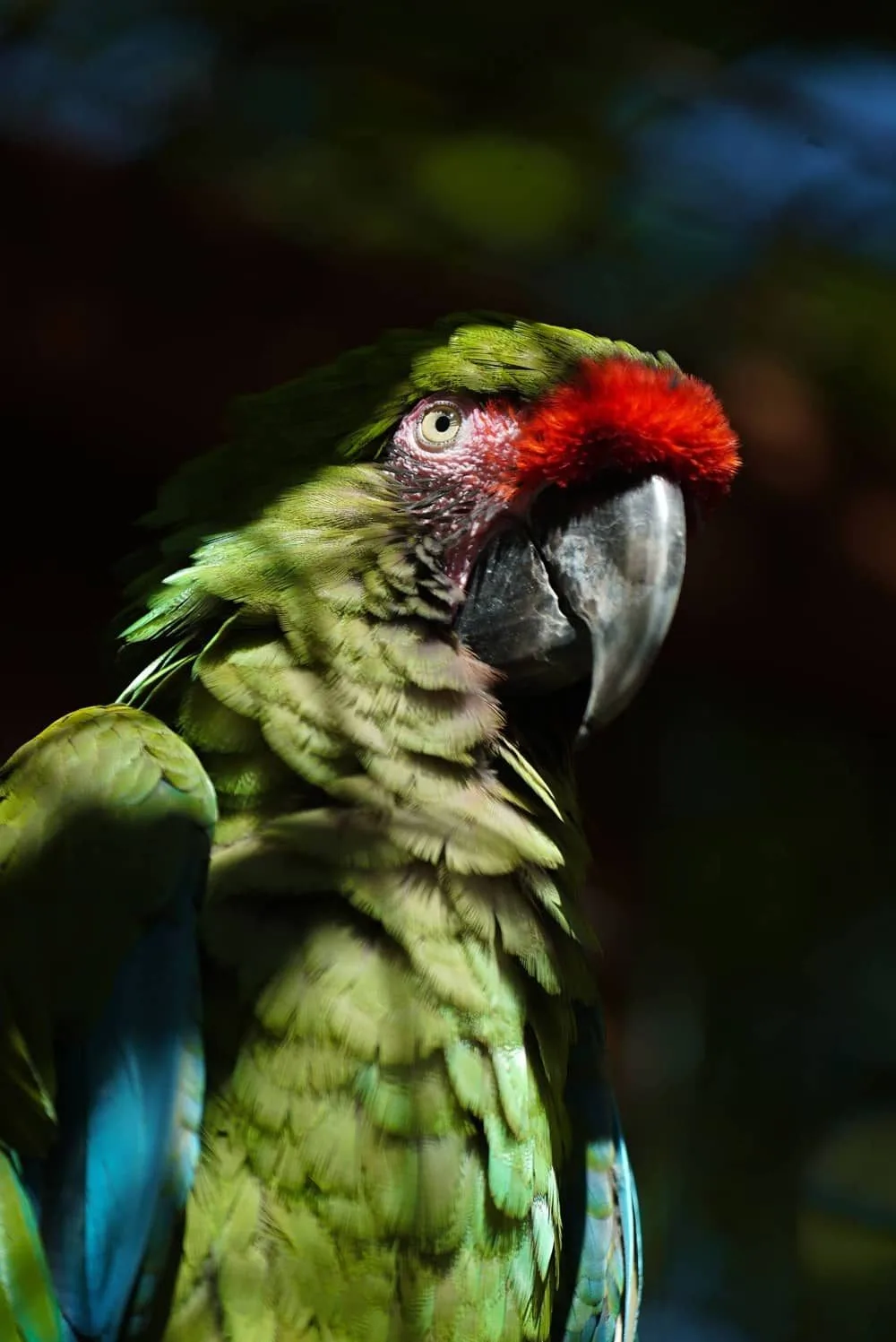
The military macaw is easily distinguished from other macaws by its green plumage on the body. The flight feathers are blue on top and yellow underneath. The tail feathers are red-blue on top and yellow underneath. Its forehead is red and it has an area of bare skin on the cheeks. It has a large black beak and yellow eyes.

Its weight varies between 800 grams and 1.2 kg for a length of 70 to 80 cm. Its wingspan is between 99 and 110 cm.

There is no difference between the male and the female; it is considered a monomorphic species.

Weight

800 g – 1.2 kg

Habitat

Tropical forest

Diet

Frugivore

Gestation

24-28 days

Longevity

50-60 years

Longevity

12-17 years

Location

Mexico, Bolivia and Colombia.
Frequently Asked Questions

Where does the military macaw live?

Unlike other macaws, the geographical distribution of Military Macaws is fragmented. This has led to the formation of three subspecies: one Bolivian, one Colombian, and one Mexican. Each subspecies shows some differences, especially in feather color. These birds inhabit dry forests, humid plains, as well as mountainous areas up to 3,600 meters in altitude. However, they generally live between 500 and 1500 meters in altitude. Nevertheless, they move a lot between forests and shaded areas. They do not migrate, but they move seasonally based on the abundance of food and the number of available nesting sites.

Reproductive strategy

These birds create their nests in hollow tree cavities; when none are available, military macaws can nest in cavities in karst cliffs (structures resulting from the erosion of all soluble rocks). A requirement for nest construction is that it must have a height greater than 50 cm if it is located in a tree.

Military macaws are monogamous and form lifelong pairs, but they have also been observed in large communities of more than 50 individuals, with many other pairs. Like primates, the pairs spend a lot of time grooming each other. This not only strengthens their pair bonds but mainly helps to prevent the accumulation of parasites that could cause problems such as skin diseases.

They are seasonal breeders but are capable of breeding throughout the year depending on several factors such as: the availability of resources and cavities, the existing bond between both individuals, or their location. In fact, it has been noted that macaws living in different regions of Mexico have different breeding periods.

During the pre-fertilization period, males protect and feed the females. The female lays an average of 2 to 3 eggs in a single clutch. During the pre-hatching period, both sexes supply food and protect the eggs. The males continue to protect and feed the females while they incubate the eggs. Hatching time averages 26 days and the newborns weigh between 18 and 25 g. At birth, the chicks are dependent on both parents. Their fledging time averages 13 weeks and they leave the nest to become independent between 3 and 5 months. In the pre-weaning, fledging, and pre-independence periods, both sexes feed and protect the young. The age of sexual maturity in military macaws is the same for both sexes: 2 to 4 years. Military macaws generally inherit their parents’ territory.


Behavior

These are diurnal and social birds that live in pairs within groups of 50 to 100 individuals. They make daily trips between resting places and feeding areas. Military macaws have a wide range of vocalizations that are learned through mimicry. Vision is a well-developed sense that allows them to both find food and spot predators.

To strengthen the pair bond, military macaws groom each other and practice regurgitation.

How long does it live?

In the wild, the lifespan of military macaws is estimated between 50 and 60 years, but currently no reliable source can confirm this information. In captivity, the oldest recorded military macaw lived to 54 years.

What does it eat?

When searching for food, pairs of military macaws fly side by side, their wings almost touching. They are granivores, which means they mainly eat seeds. Their diet varies according to the seasons, depending on abundance and availability, or the breeding period. They are also known to eat fruits, flowers, leaves, wood, and bark, which they find more easily in semi-deciduous forests rather than in deciduous forests, due to a greater number of fruit trees. They are diurnal and so are active during the day.

Threats

Like all parrots, it is a victim of illegal captures to be resold to individuals. In some regions, when nests are easily accessible, chicks are directly taken from them to be raised and then resold. The military macaw also has to face deforestation for wood, agriculture, and mining, causing fragmentation and loss of their habitat as well as diminishing resources.

What are its predators?

Military macaws have almost no predators since they nest in cavities or on cliff sides, which provide them with cover and protection from predators. However, collared forest-falcons, from the falcon family, have been observed as competitors for nesting sites and as predators of nests.

Anecdote

Macaws are birds that drive ecotourism. Many tourists, both local and international, visit well-known birdwatching sites in South America such as Colombia, Peru, Ecuador, or Venezuela.

Discover other animal species from the Americas: lowland tapir, emperor tamarin, cotton-top tamarin, South American sea lion, California sea lion, maned wolf, giant anteater, golden eagle, hyacinth macaw, raccoon, South American coati, puma, wolverine, jaguar, snowy owl, squirrel monkey, Humboldt penguin.

Other animals to discover