Leptailurus serval

Serval

Order: Carnivora / Family: Felidae / Genus: Leptailurus

What is a serval?

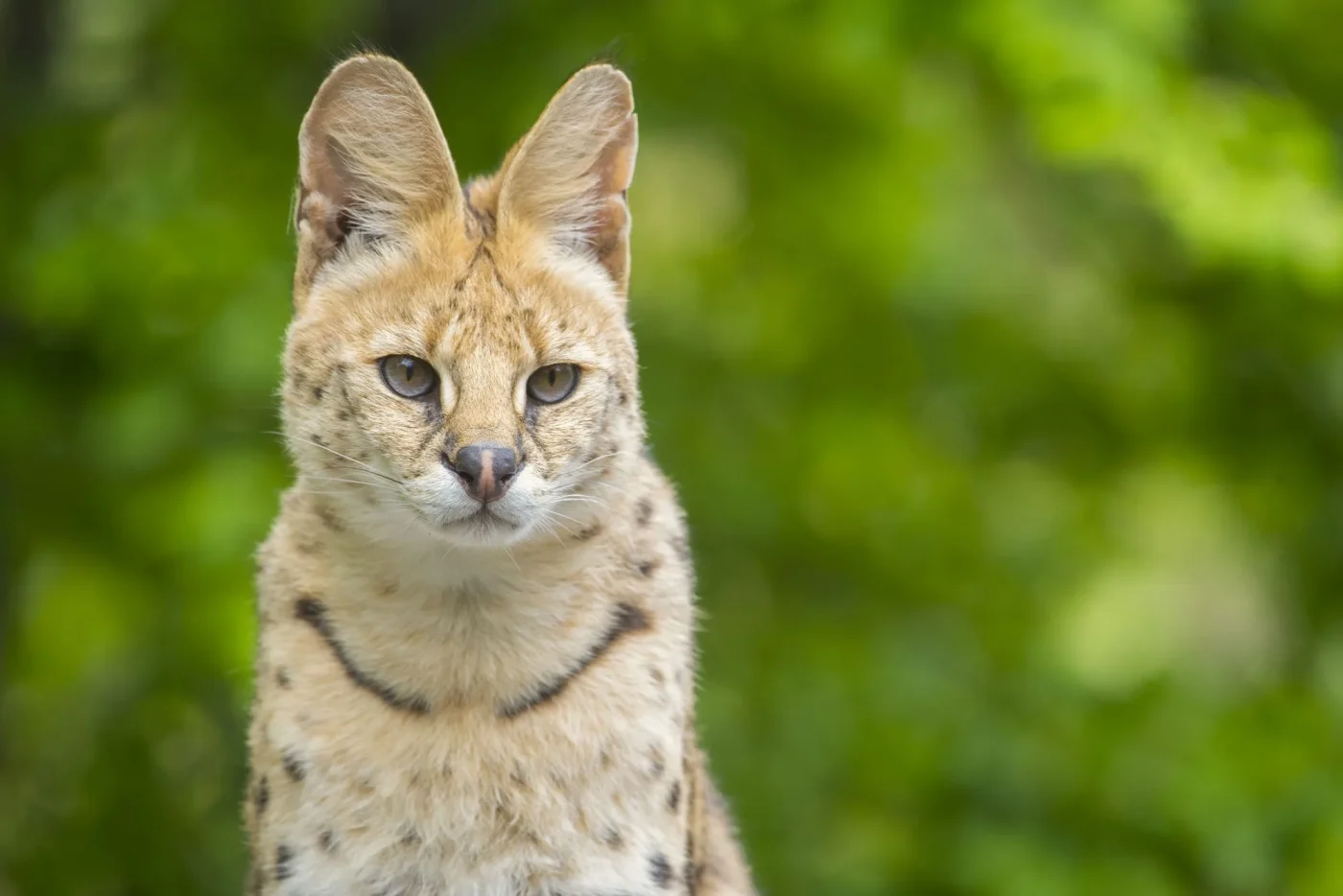
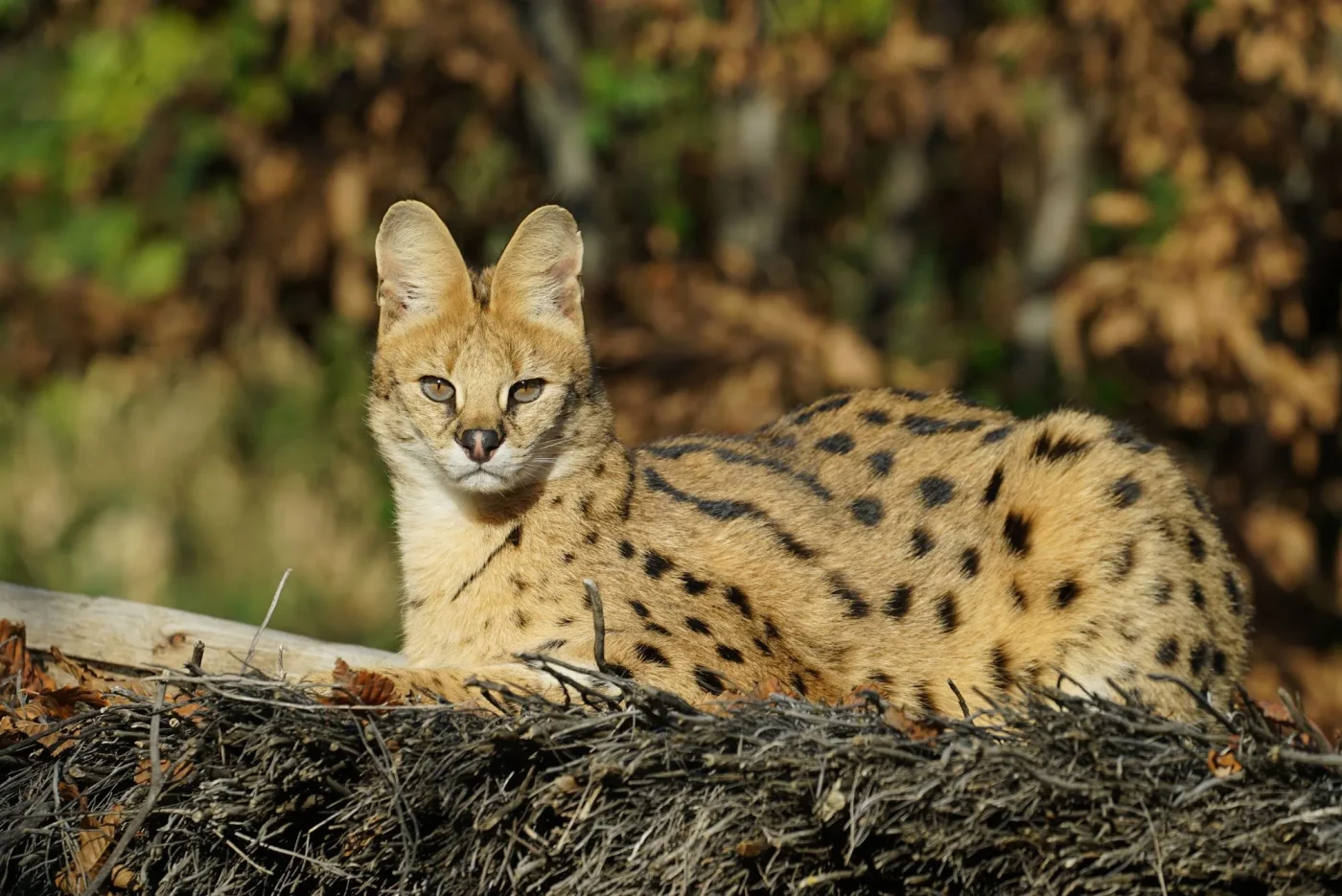
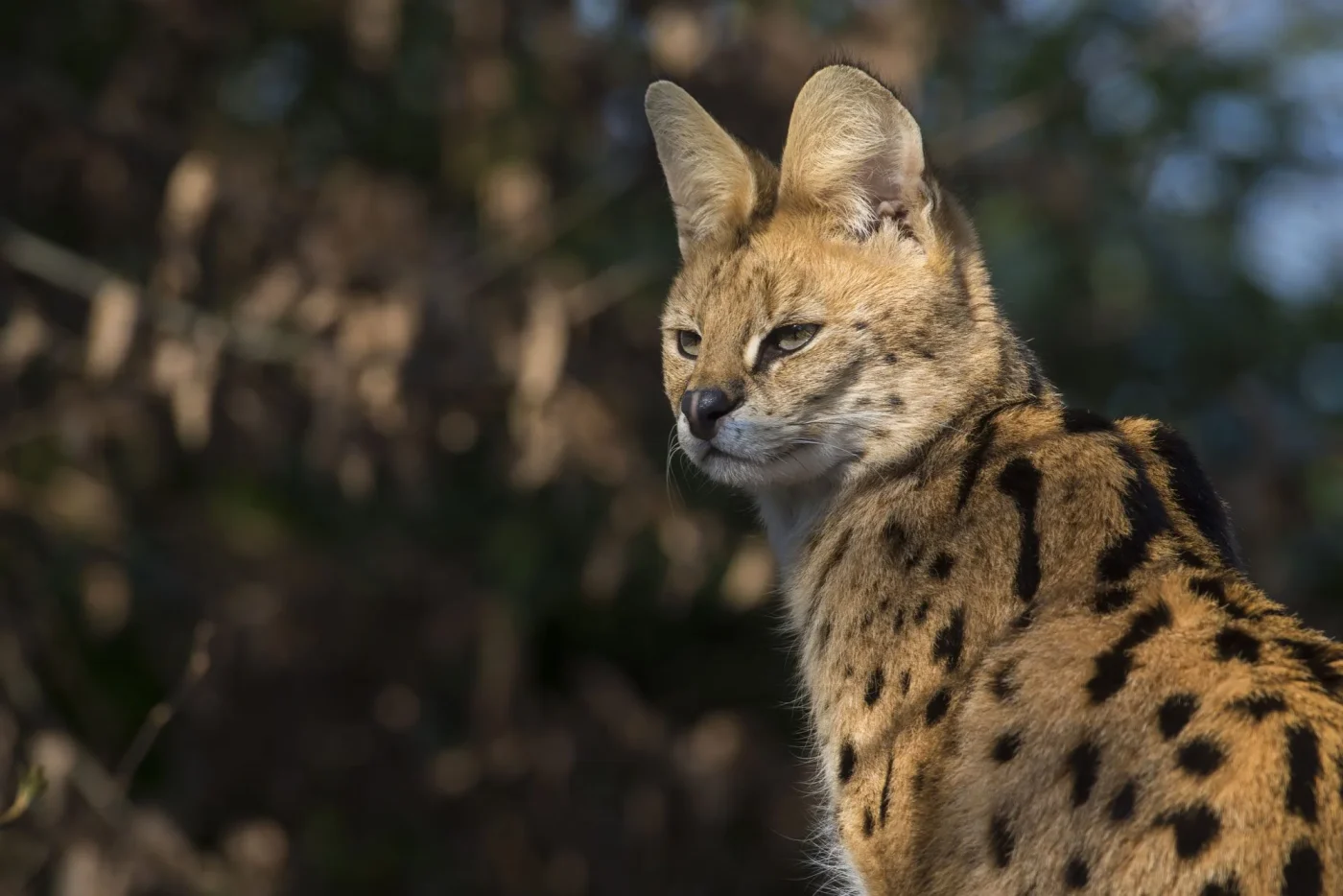
The coat of this slender and agile feline varies from pale yellow to yellow-brown and is covered with black spots that are more or less elongated. Depending on the individual, they form stripes around the neck, shoulders, and legs. The ventral part is lighter in color and free of spots. In some regions of East Africa, melanistic individuals with an entirely black coat are regularly seen. Moreover, a much rarer variant, with a coat covered in much smaller spots, has also been observed.

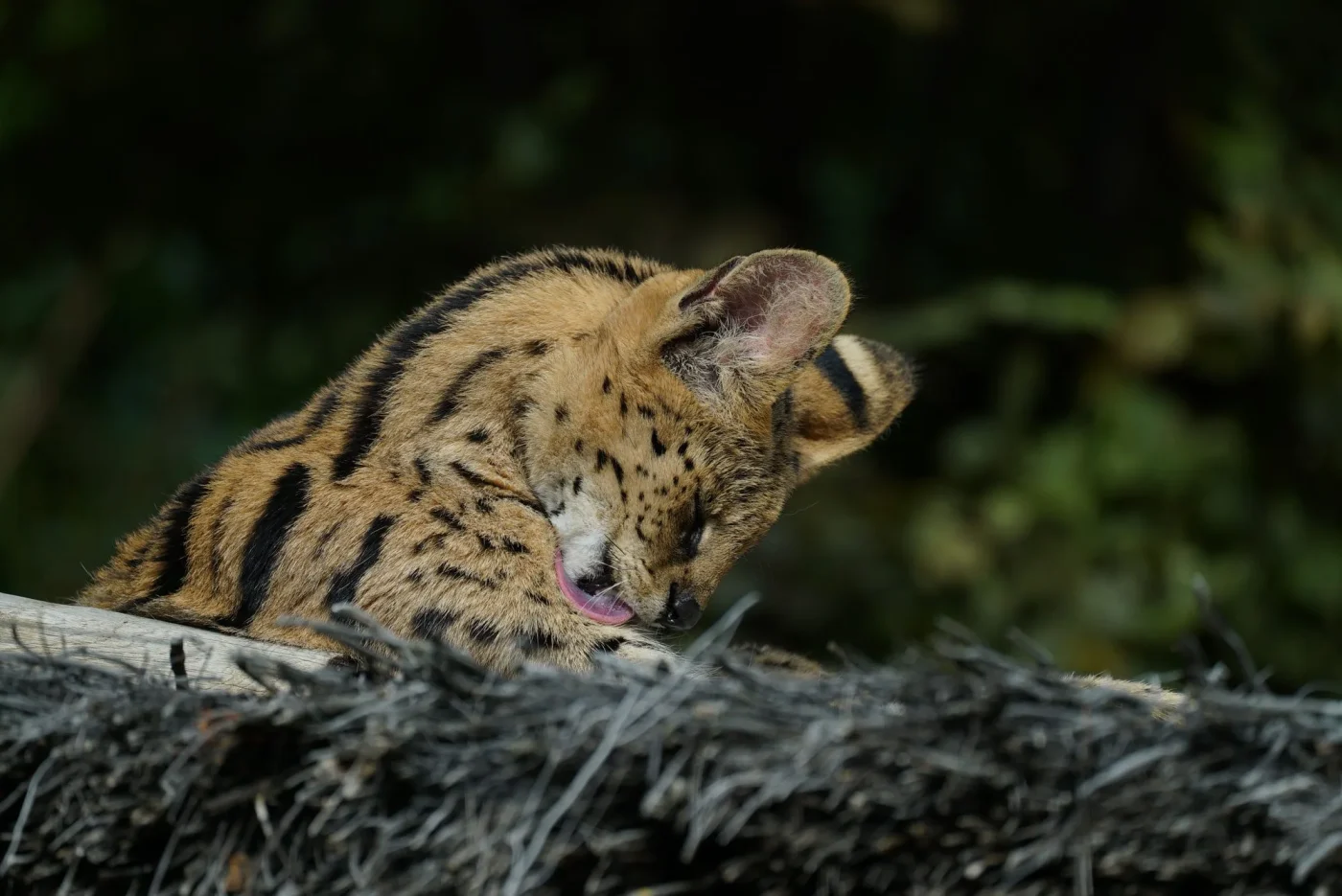
Its body measures from 60 to 100 cm with a rather short tail reaching 20 to 40 cm, and a shoulder height approaching 65 cm. Recognizable by its long legs and large ears, it is the feline with the largest ears relative to its size. For comparison, if a human had ears as large (proportionally), they would be the size of a plate. On the back, they are black with a white band in the center. These light bands would help the kittens not to lose sight of their mother in the dark. These ears give it a very developed sense of hearing and allow it to pinpoint the exact location of its prey. Its hind legs, which are longer than the front legs, and its elongated neck make it particularly effective at hunting in tall grasses.

Weight

7 – 18 kg

Habitat

Savannah, grassland

Diet

Carnivore

Gestation

65 - 75 days

Longevity

10 - 15 years

Longevity

12-17 years

Location

Sub-Saharan Africa
Frequently Asked Questions

Where does the Serval live?

The serval inhabits various types of environments, mainly those with tall grasses such as savannas, marshes, forests, and wet meadows. However, it is absent from tropical forests and desert environments. Its populations extend across almost all of sub-Saharan Africa, from Senegal to Ethiopia in the west and down to South Africa in the south. Furthermore, a small population persists on the Mediterranean coast in Morocco. It can be found at altitudes of over 3,000 meters.

What does it eat?

This feline is strictly carnivorous and feeds on small mammals as well as hares, birds, reptiles, fish, and insects. Depending on availability, rodents account for 80 to 90% of its diet. Its physical characteristics make it an excellent hunter with a success rate of nearly 48%. This rate is exceptionally high compared to that of most other felines, which is about 10%.

As soon as the prey is within range, it stands up on its hind legs to pounce and delivers a powerful blow with its paw to stun the prey. To capture high-up prey such as a bird, it can also jump vertically to catch it midair. Its jumps can reach up to 4 m long and 3 m high. In fact, it is the second fastest feline after the cheetah, as it can run at nearly 80 km/h.

If the prey is underground, it may dig to unearth it.

The serval may occasionally be preyed upon by hyenas, lions, or leopards.

Behavior

It is a solitary and territorial animal; males and females come together only for reproduction. Both of them mark the territory with different markers: olfactory (with urine and excrement), visual (with scratch marks), and chemical (by rubbing the glands on their cheeks on various objects). Mainly crepuscular and nocturnal, it is nevertheless capable of adapting to seasonal and environmental changes and can also hunt during the day.

Reproduction strategy

Servals are polygynous, with one male mating with several females, while females mate with only one male. A male’s territory overlaps with as many females’ territories as possible to increase his chances of breeding. After mating, the females care for their young alone, with litters ranging from 2 to 4 kittens. Births usually occur during the rainy season. The young are weaned at around 3 – 4 months and are almost independent by 6 to 8 months. In some cases, if tolerated by the mother, young servals continue to frequent the maternal territory until the end of their first year of life.

Conservation

The serval is not currently considered a threatened species on the IUCN Red List (International Union for Conservation of Nature); its populations are still abundant and widespread. Thanks to its ability to adapt to many habitats, it seems to tolerate certain variations in its environment related to human activity. Nevertheless, this is only possible if there are enough prey, vegetation cover, and available water. Capable of hunting up to nearly 4,000 rodents per year, its presence is sometimes seen as beneficial in agricultural areas. However, this feline is still impacted by the gradual destruction of its habitat for agriculture and livestock farming, which is causing more and more wetlands to disappear. It is also hunted for its skin and captured to supply the exotic pet market.

Other animals to discover