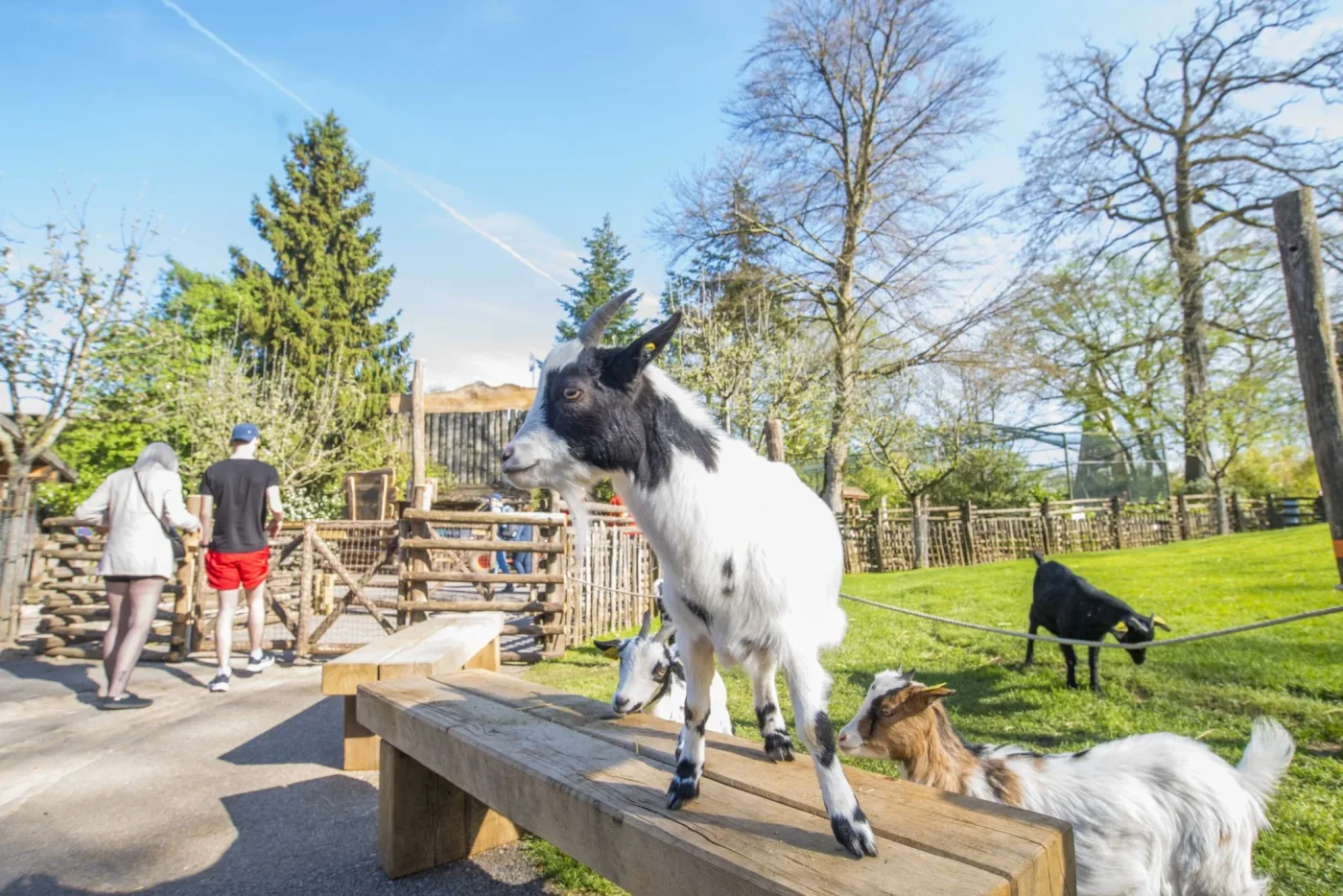
Capra aegagrus hircus

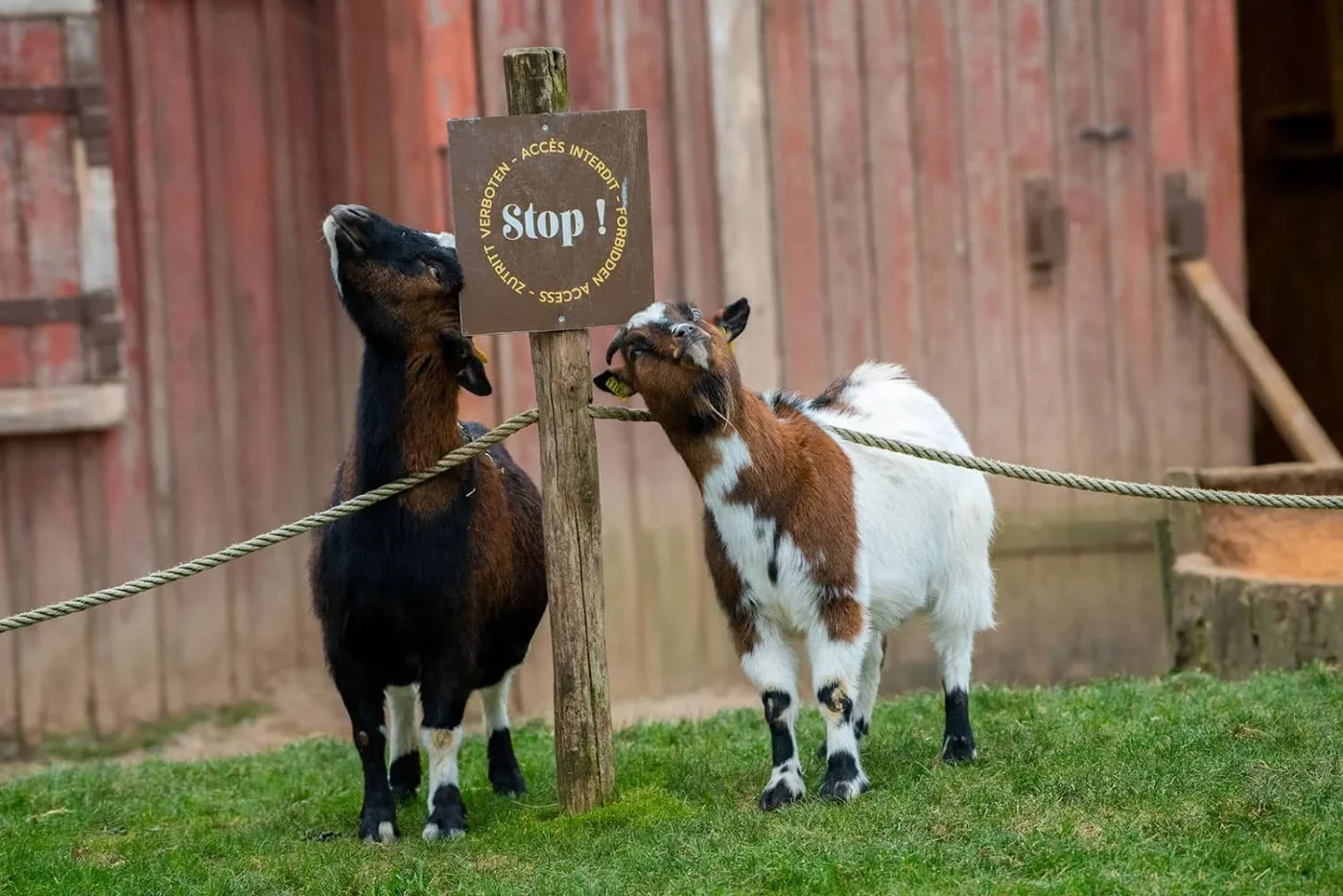
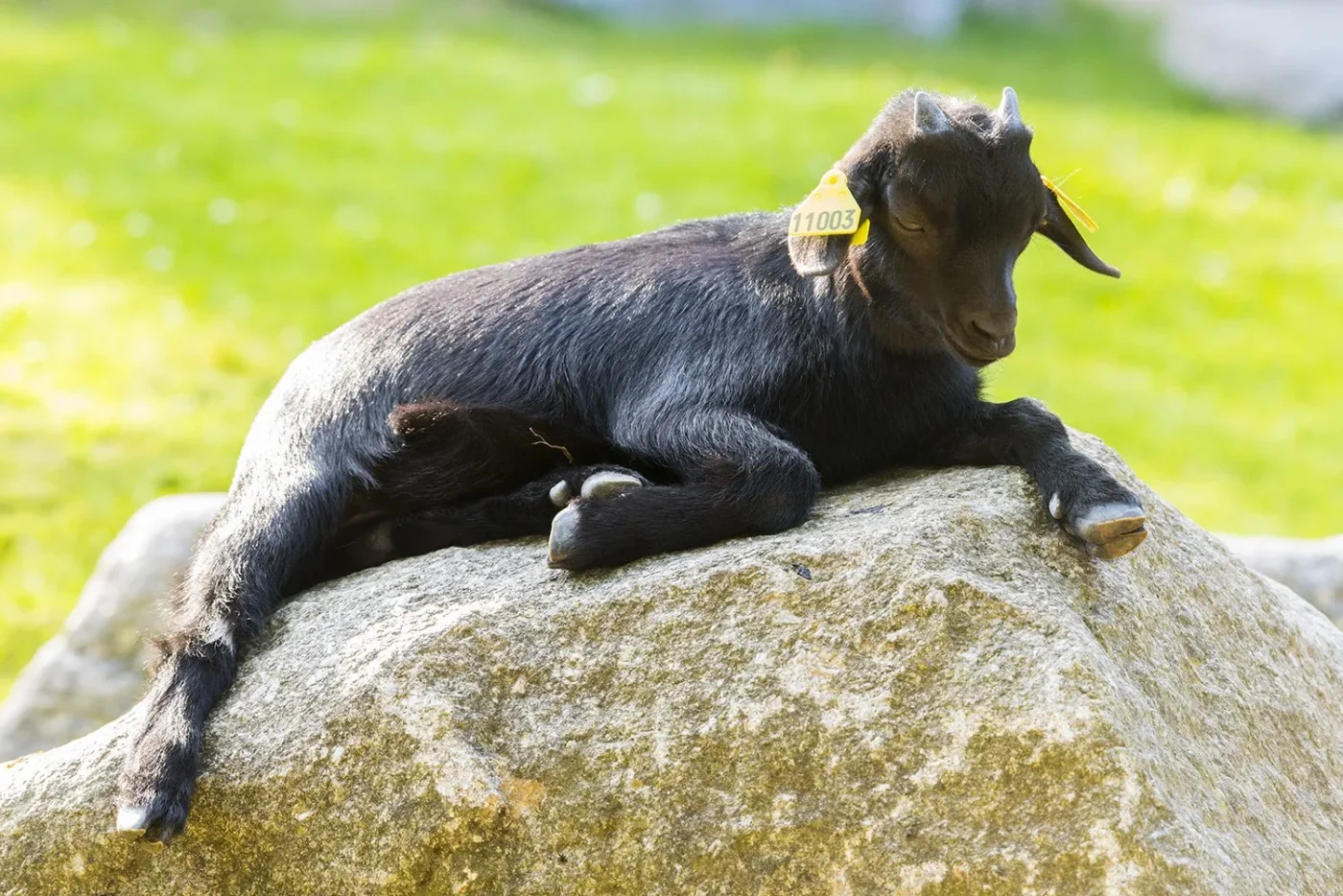
Dwarf goat

Order: Cetartiodactyla / Family: Bovidae / Genus: Capra

What is a pygmy goat?

The goat is part of the Bovidae family, like cows, bison, and antelopes. The genus Capra includes nine species, including wild goats and ibex. The goat was domesticated about 10,500 years ago from wild goats, Capra aegagrus. Currently, there are over a hundred breeds of goat around the world.

Goats are animals that have two horns, hooves with two toes, and a short tail.

Regardless of the species or breed, there is sexual dimorphism in goats, meaning it is easy to tell a male from a female. The billy goat is more stout, with more developed horns, a long beard, and above all, a strong odor. This odor stimulates the ovarian activity of the goats, who prefer to mate with those whose scent is the strongest.
Weight

15-30 kg

Habitat

Domesticated animal: mountain, plain

Diet

Herbivore

Gestation

150 days

Longevity

15 years

Longevity

12-17 years

Location

Frequently Asked Questions

Where does the dwarf goat live?

The wild ancestor of domesticated goats is the wild goat. It originates from Central Asia and it is still possible to observe them today in the mountains stretching from Greece to Pakistan.

Domesticated goats are animals that only live in captivity.

What does she eat?

Goats are herbivorous ruminants and enjoy a wide range of food.

Just like cows or giraffes, they have 4 stomachs containing bacteria capable of fermenting cellulose, the main component of grass. After being chewed the first time, the food is sent into one of their stomachs to then be brought back to the mouth. It is then chewed and ground even more finely to allow for better digestion of the cellulose.

Reproduction strategy

Goats tend to be polygynous; a dominant male mates with several females.

Gestation lasts 150 days and the young kids are weaned at about 3 months of age.

Behavior

The goat is a social animal, living in groups. It can have behavior described as mischievous, even stubborn. Gifted with a certain cognitive ability, it can pose problems in captivity because it does not hesitate to open doors. But these animals are also capable of forming a strong bond with the human who cares for them.

Their field of vision is also adapted to their prey lifestyle. Their retina is oriented horizontally and has a rectangular shape; in this way, they can see far and wide. When they graze, their eyes can move in their sockets to allow them to see both the food on the ground and the horizon, to watch for the potential arrival of predators. Thanks to the placement of their eyes on the sides of their heads, their panoramic field of vision is 330 degrees.

Breed or species?

Often the terms “race” and “species” are used without any distinction. In reality, they are very specific and do not mean the same thing. The term species is used to describe animals that result from natural selection. All wild animals are therefore species. Individuals of the same species can reproduce and have fertile offspring.

For example, the name wolf refers to a species. Each wolf population is adapted to its environment, and is therefore different from other populations. These are subspecies, but they remain fertile with each other.

The word “race” refers to animals resulting from artificial selection, carried out by humans starting from a species. Dog breeds were created from the wolf. Thus, they are the same species. Therefore, all dogs can reproduce with one another, as well as with wolves.

The pygmy goat breed originates from West Africa and Tibet. These goats are distinguished by their small size. Successive reproduction was carried out to select individuals of smaller size, better able to survive the harsh living conditions of these regions: scarce food, climates…

Upon arrival in Europe, these goats were crossed to obtain the breeds found today in many zoos and with private owners. They are raised for their skin, milk, or meat but are also highly valued as pets.

Other animals to discover