Psittacus erithacus

Grey Parrot

Order: Psittaciformes / Family: Psittacidae / Genus: Psittacus

What is a African grey parrot?

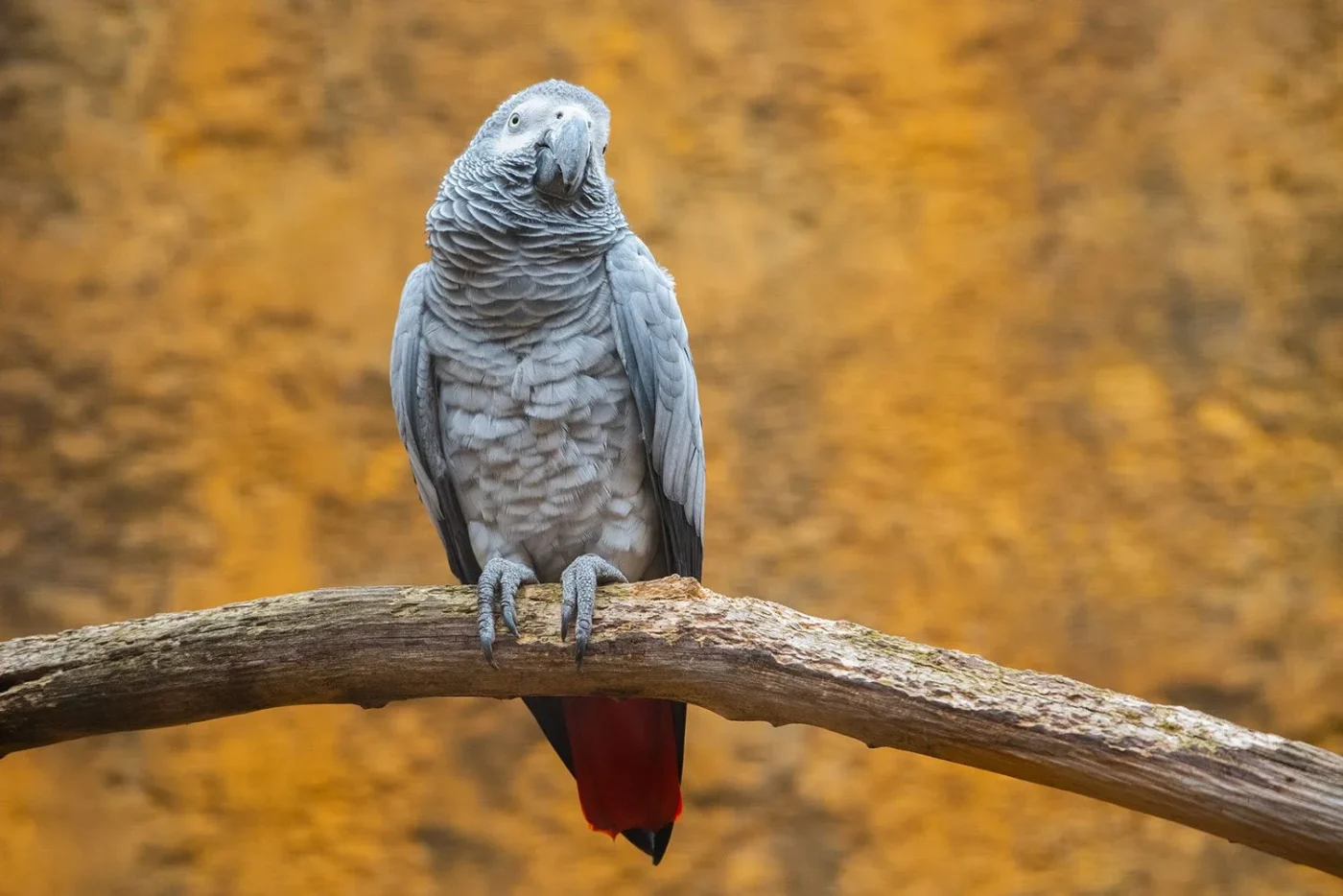
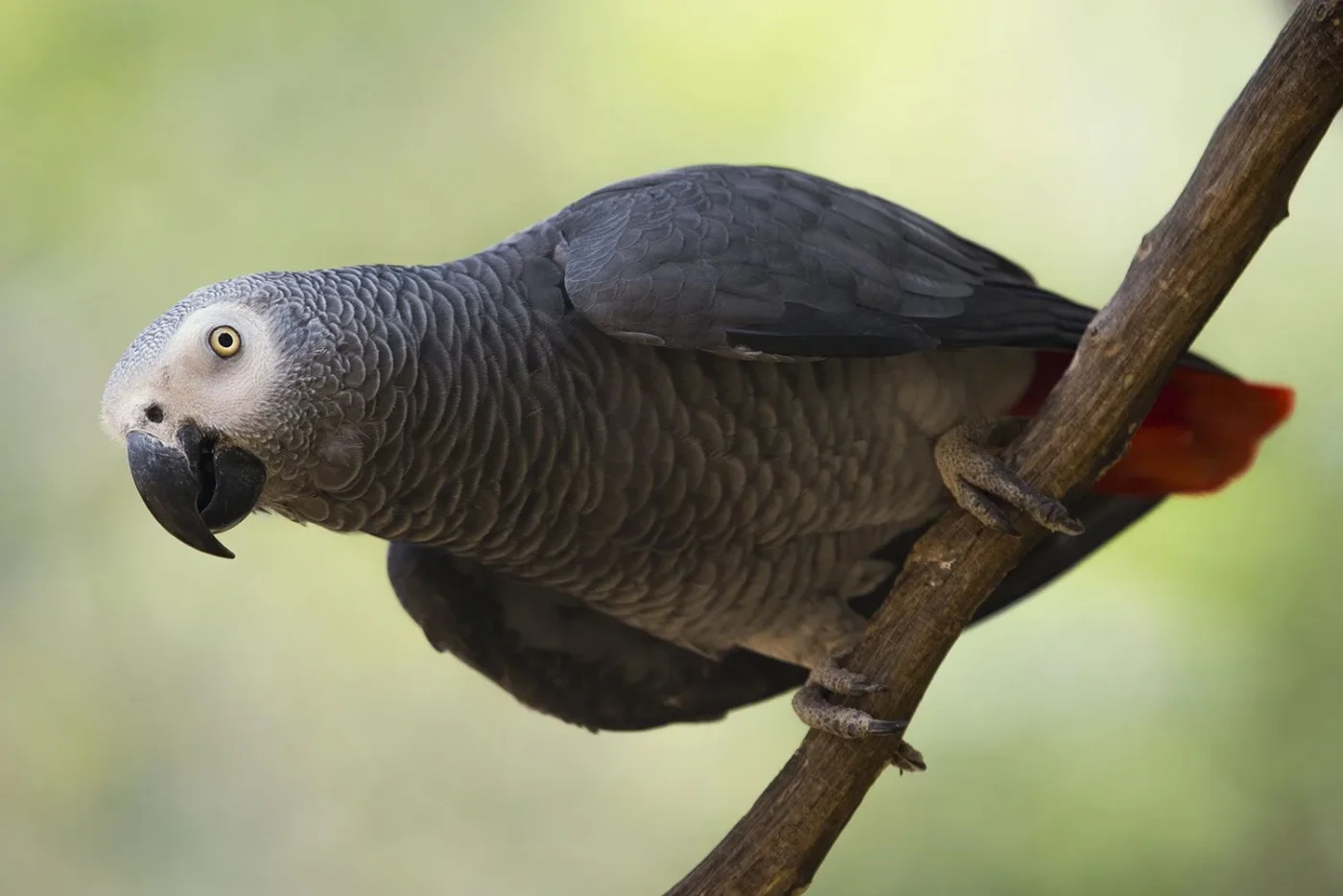
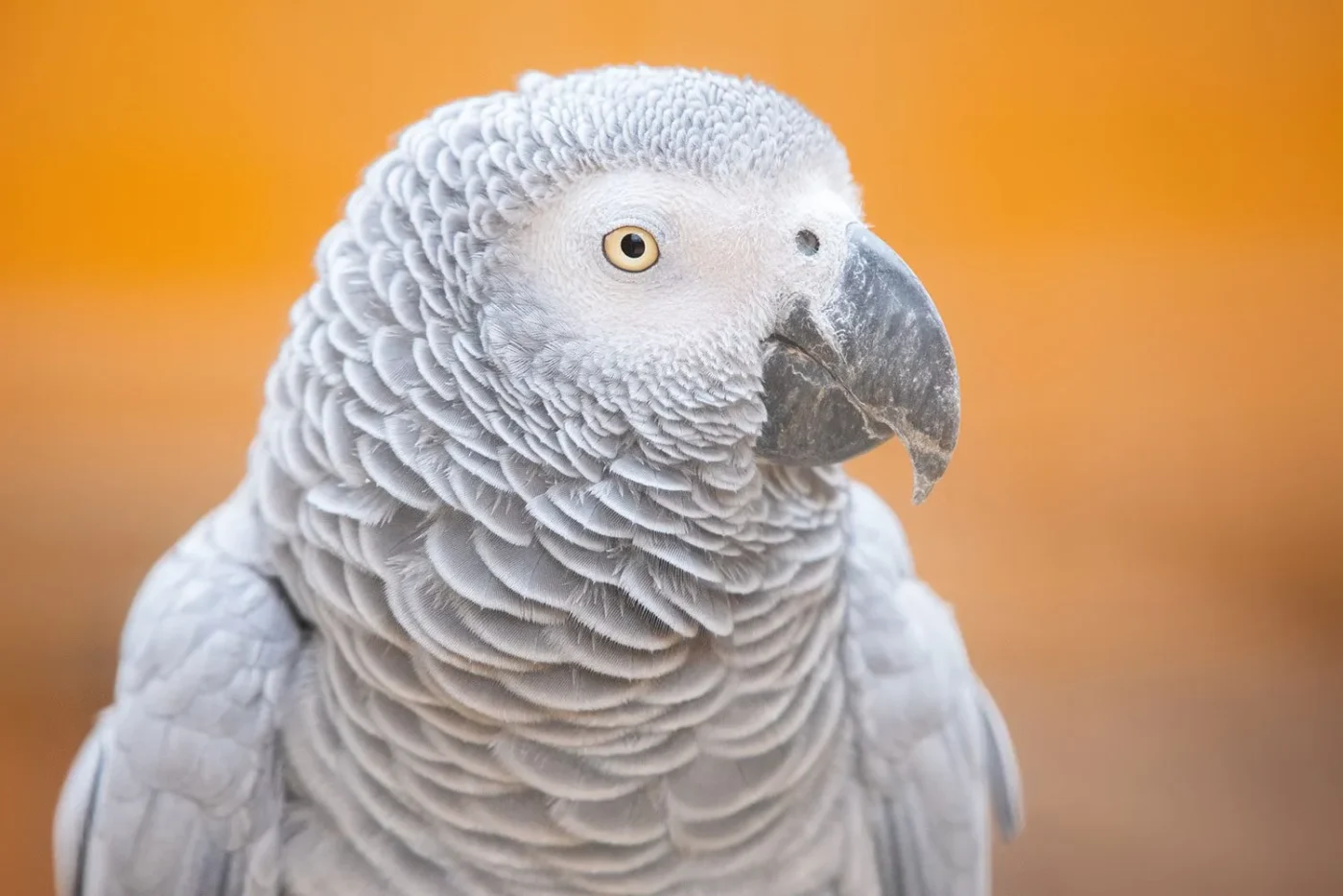
The Gabon grey is easily recognized by its plumage composed of a gradient of gray and its red tail feathers. Its yellow eyes are surrounded by bare white skin. Its beak is black.

This parrot is often confused with the Timneh parrot. But some details allow them to be easily differentiated. The plumage of its body and its tail is darker than that of the Gabon grey, and the upper part of its beak is reddish with a black tip.

Weight

400-450 g

Habitat

Tropical forest

Diet

Herbivore

Gestation

30 days

Longevity

About 30 (up to 50+ in captivity)

Longevity

12-17 years

Location

Central Africa: from Ivory Coast to Kenya
Frequently Asked Questions

Where does the grey parrot live?

The African grey parrot mainly lives in the humid forests of Central Africa from Ivory Coast to Kenya and can be observed up to 2,200 m above sea level. It also enjoys the edge of forests, shrub savannahs, mangroves as well as farmland. To perch, it prefers trees overlooking a body of water or islands of forests on a river.

What does it eat?

Its diet consists mainly of fruits and seeds, but it can also turn to flowers, leaves, or bark. Its fruit consumption relies mainly on those of oil palms, which it particularly enjoys.

Behavior

In the wild, these birds are rather shy and do not seek contact with humans.

Particularly social among their own kind, they live in groups of about ten individuals. The groups are made up of lifelong faithful pairs as well as their young, with each family occupying a single tree. They are gregarious birds, but some populations in West Africa migrate according to the seasons, for example to escape areas that are too dry.

The African Grey is an animal endowed with a highly developed cognitive capacity and possesses a wide range of vocalizations. Scientists estimate that the most developed individuals have a cognitive capacity equivalent to that of a 4-year-old child. In the wild, they are capable of distinguishing between toxic and non-toxic plants, defending their territory, and using complex communication within their group. Alarm calls, for example, vary according to the degree of danger and carry farther so that each individual receives the information. Other contact calls reinforce cohesion within the colony and help identify and locate the different members of the colony.

A parrot named Alex was studied for many years. Scientists working with him determined that he was able, among other things, to differentiate 50 objects, 7 colors, and 5 shapes.


Reproductive strategy

It is generally between 3 and 5 years old that an African Grey Parrot finds a mate for life. Today, there is still very little information on how males and females choose a partner. Only courtship displays in flight near the nest, as well as males feeding females to woo them, have been observed.

During reproduction, groups of African Greys live in loose colonies, with each pair isolating themselves and occupying a different tree for nesting. They set up their nest in a tree cavity, sometimes reusing nests abandoned by other species. Breeding seasons vary from region to region, but all pairs usually breed once or twice a year with 2 to 5 eggs per clutch. The female incubates alone and is entirely fed by the male. After 30 days of incubation, both parents take care of the chick until it becomes independent.

The young, within a colony, are gathered in trees that serve as nurseries, allowing them to interact with other birds of the same age. All group members participate in the education of the youngest. They will reach maturity between 3 and 5 years old.

What are its predators?

Its favorite fruit being that of the oil palm tree, the African grey parrot is regularly harassed and even preyed upon by the palm-nut vulture with whom it has to share its food. When African grey parrots feed on the ground, they are vulnerable to attacks by terrestrial predators such as certain primates. The latter also attack the young or steal the eggs directly from the nests.

What is he threatened by?

The IUCN classifies the Gabon grey parrot as endangered, due to the many threats it faces.

It has, for many years, been a flagship species among new pets. Its ability to mimic human words and phrases has always amused and fascinated people. Unfortunately, this enthusiasm for the Gabon grey parrot has led to real trafficking. More than 1.3 million individuals were captured in Africa between 1982 and 2014. With a mortality rate varying from 30 to over 60% even before the animals arrive at their destinations. In addition to animal trafficking, it is hunted for its meat but also for its feathers or feet for traditional medicine. Furthermore, deforestation for timber exploitation and agriculture strongly impacts the populations.

Other animals to discover