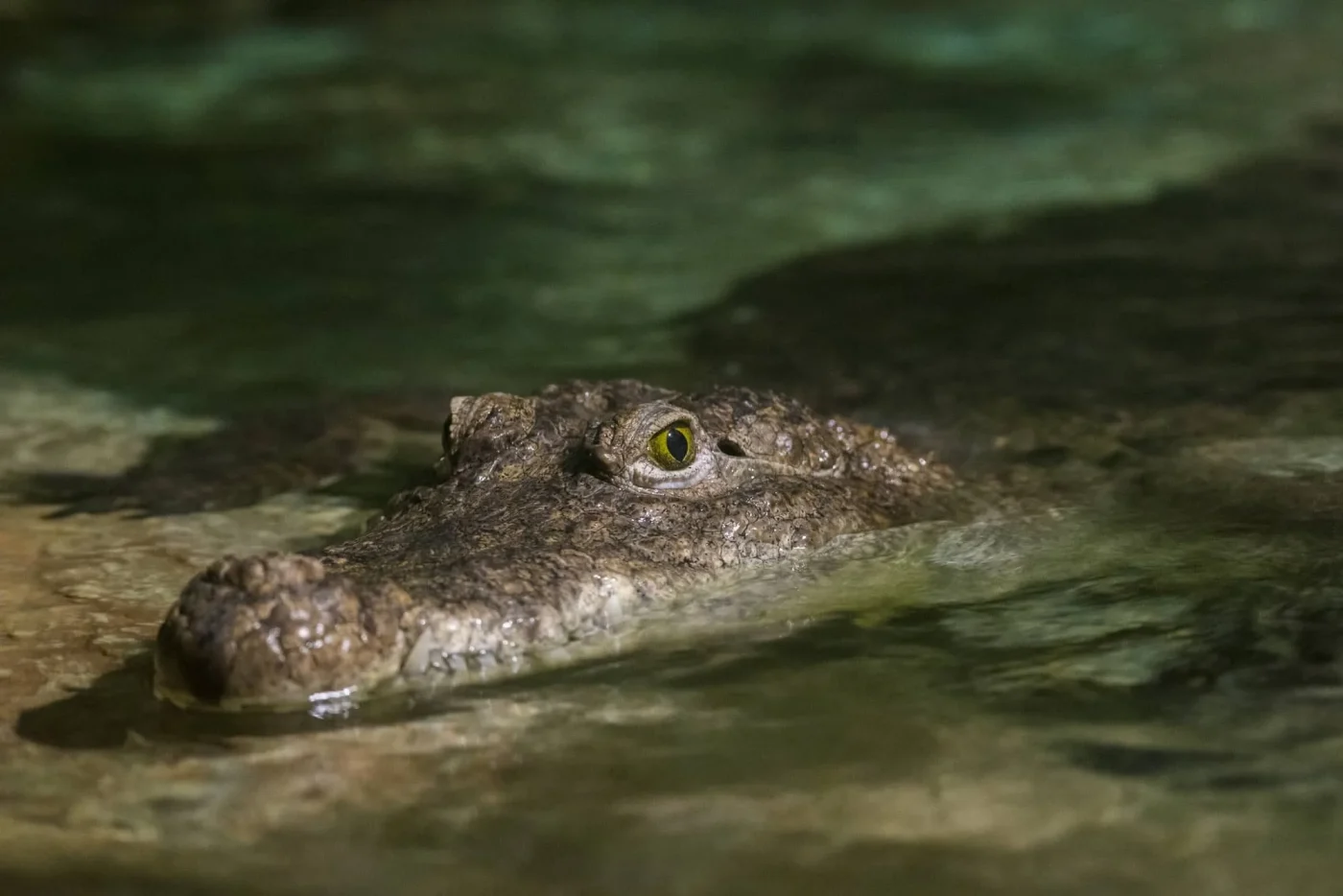
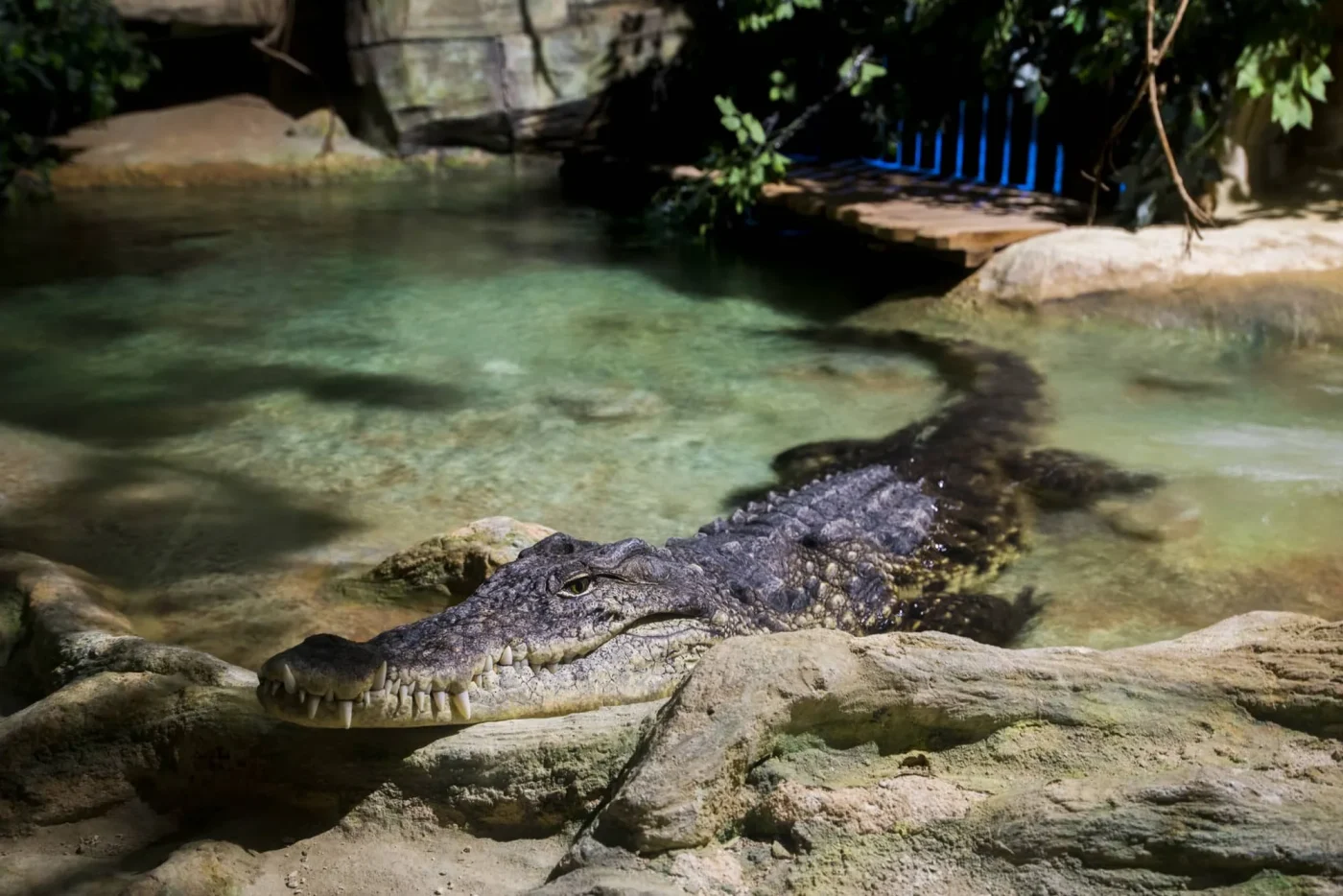
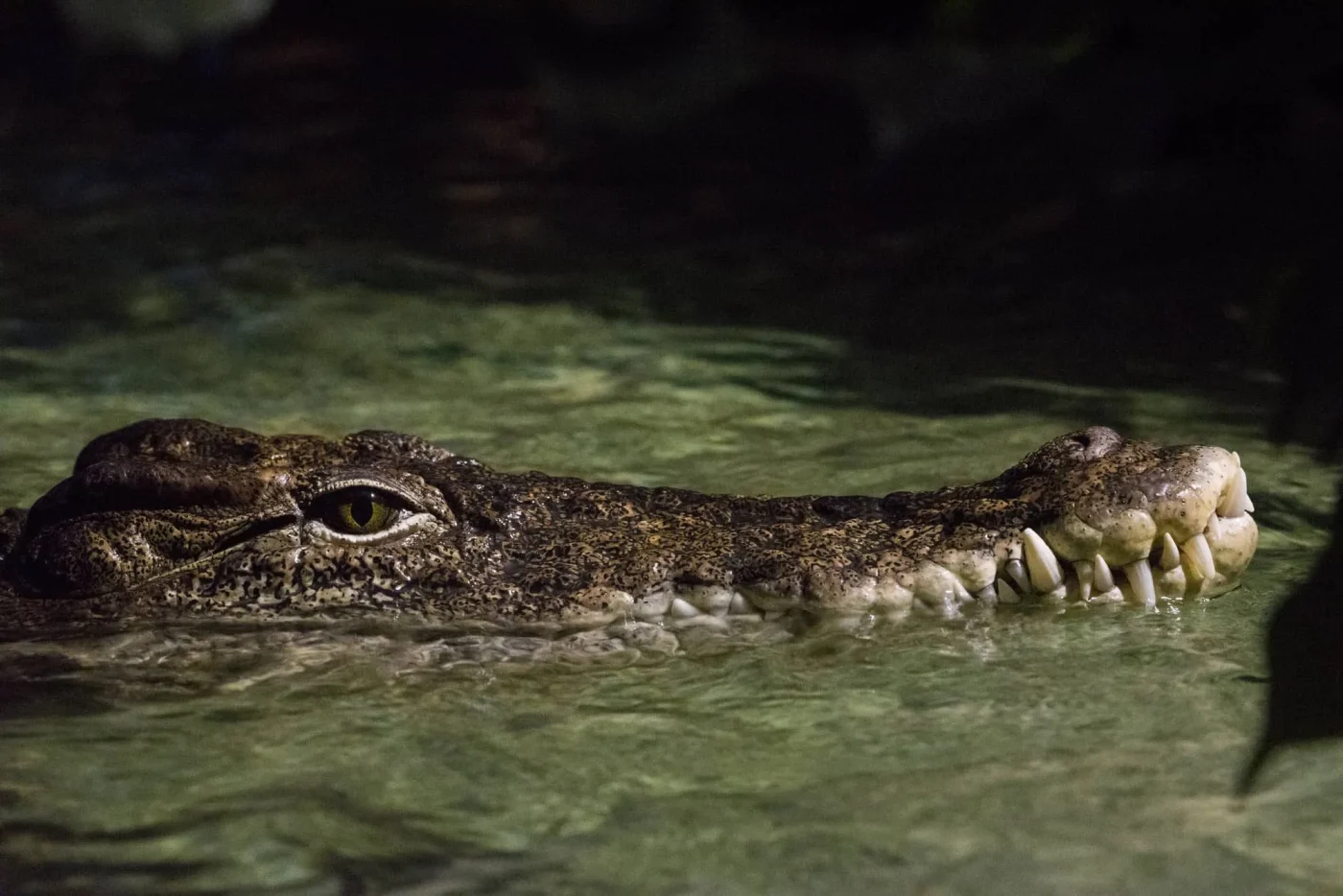
Like all reptiles, the Nile crocodile is an ectothermic animal. This means that it does not produce heat and is unable to regulate it without help from the external environment. To warm up, it exposes itself to the sun’s rays, and conversely, to avoid overheating, it immerses itself in water. This little habit allows it to maintain a body temperature between 19 and 29°C. These animals are not very active and spend more than a quarter of the day with their mouths open, warming up on the riverbanks.
If the summer conditions no longer allow temperature regulation, the Nile crocodile estivates. It digs a tunnel 3 meters long and 2 meters deep, in which it buries itself to enter a physiological state of semi-lethargy allowing for survival.
Although it usually stays underwater for only a few minutes, the Nile crocodile is an excellent freediver, able to stay underwater without breathing for up to 30 minutes. If it remains completely still, it can even stay submerged for 2 hours! This is possible thanks to the organism’s high tolerance to high concentrations of lactic acids, a chemical compound produced by the body during exertion or apnea.
They are solitary reptiles but can nevertheless coexist on the same banks. They communicate with each other using many sounds, such as bellowing, for example. There is a mutualistic relationship between the Nile crocodile and the Egyptian plover, a small bird about 20 cm long with gray feathers on its back, white on its belly, and black on its head. This means it is an interaction that is beneficial to both individuals, but not mandatory. Either one can do without this relationship. In fact, these birds peck at leftover food stuck in the crocodile’s mouth as well as leeches attached to its body. This relationship thus provides food for the bird and care for the reptile. Moreover, some Egyptian plovers are content to nest close to the crocodiles in order to benefit from their presence to scare away potential predators. These birds also serve to warn of danger, such as the approach of a human or a lion, for example.