Bubo scandiacus

Snowy owl

Order: Strigiformes / Family: Strigidae / Genus: Bubo

What is a Snowy Owl?

The snowy owl is a species of nocturnal raptor that can only be found in the Northern Hemisphere, and more specifically on the lands surrounding the Arctic Circle. Its geographic range extends from the North American continent, from Alaska to Eastern Canada, Greenland, and Eurasia, from Norway to Kamchatka. When winters are too harsh, they can migrate further South, sometimes even as far as China, the Baltic States, or the central United States.

This owl lives in the rugged Arctic tundra where there are rocks and little vegetation made up of grasses, bushes, and moss.

Weight

♀ 1000 to 2500 g - ♂ 800 to 1600 g

Habitat

Tundra and Grassland

Diet

Carnivore

Gestation

30 days

Longevity

15 years (30 years in captivity)

Longevity

12-17 years

Location

Alaska, Canada, Greenland, Norway, Kamchatka, China, Baltic countries, United States.
Frequently Asked Questions

What does it eat?

These birds are carnivores, whose presence and breeding are closely tied to that of their favorite prey, the lemmings. They also feed on voles, small birds, or sometimes insects. Most of the time, they swallow their prey whole and the elements that are not digested, such as bones or fur, are then expelled as pellets. Their silent flight allows them to hunt without being detected.

In years when there is an abundance of prey, the clutches of snowy owls are also larger. It can happen that snowy owls are found in great numbers in areas where prey is plentiful, and on the contrary, if their prey becomes scarce, snowy owls will be rarer.

Reproduction strategy

Snowy owls are monogamous birds; they reach sexual maturity at one year old, but only begin to breed from their second year of life. These birds nest on the ground around the month of May. The nest is basic, located on top of a mound of earth to be able to observe the surroundings. The nest consists simply of a hollow made in the ground, in which the female lays 3 to 11 white eggs. Only the female incubates the eggs for about 33 days. The chicks hatch a few days apart. The female is solely responsible for keeping them warm, while the male provides food to the nest. Once the chicks are 3 weeks old, both parents leave them alone in order to hunt enough prey to ensure their growth. The young stay at the nest for about 50 days, but continue to live around the family site for 2 to 3 months. They are born covered with thick gray down, and the first feathers that appear are also gray, allowing them to blend in with the ground and rocks around the nest.

Characteristics

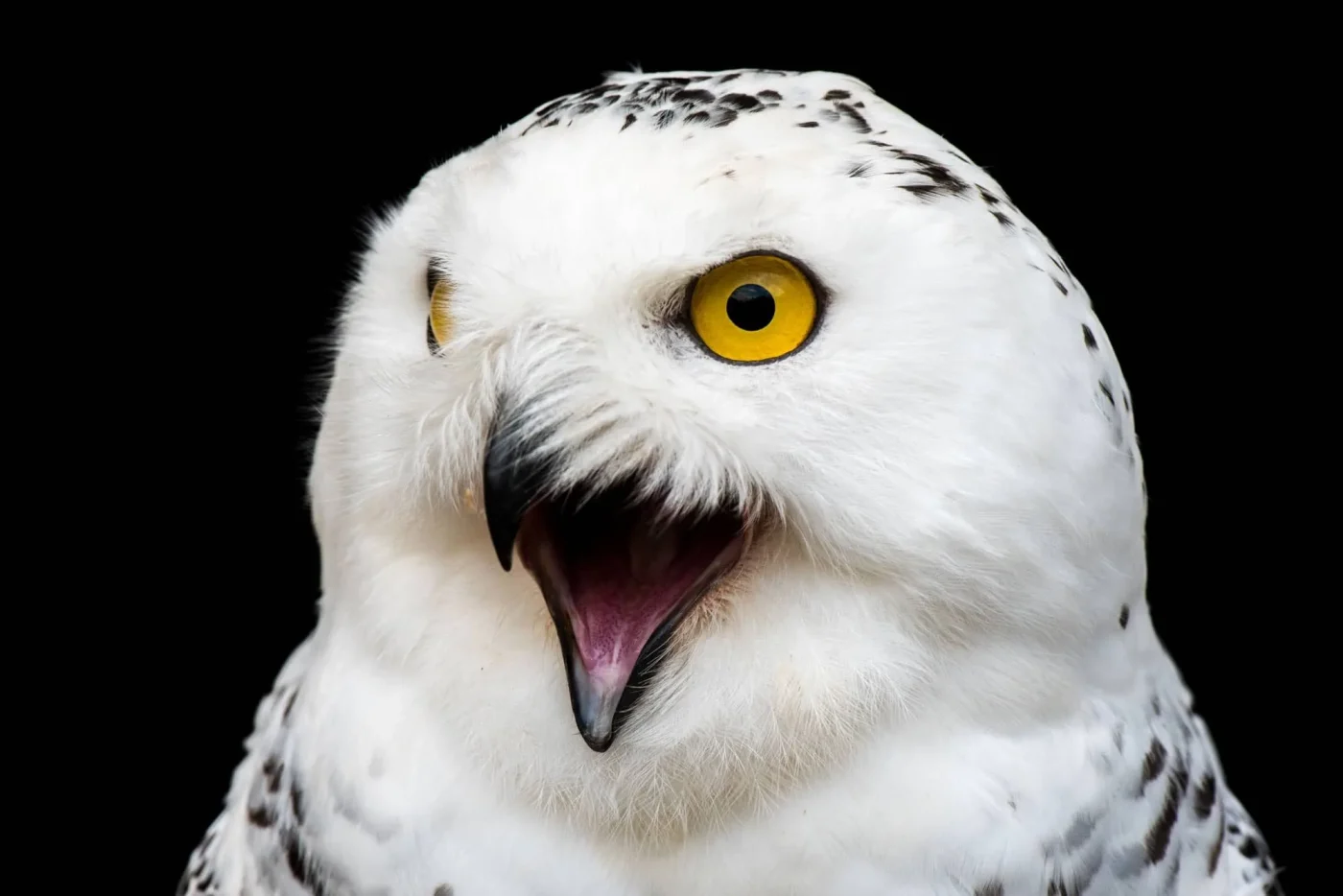
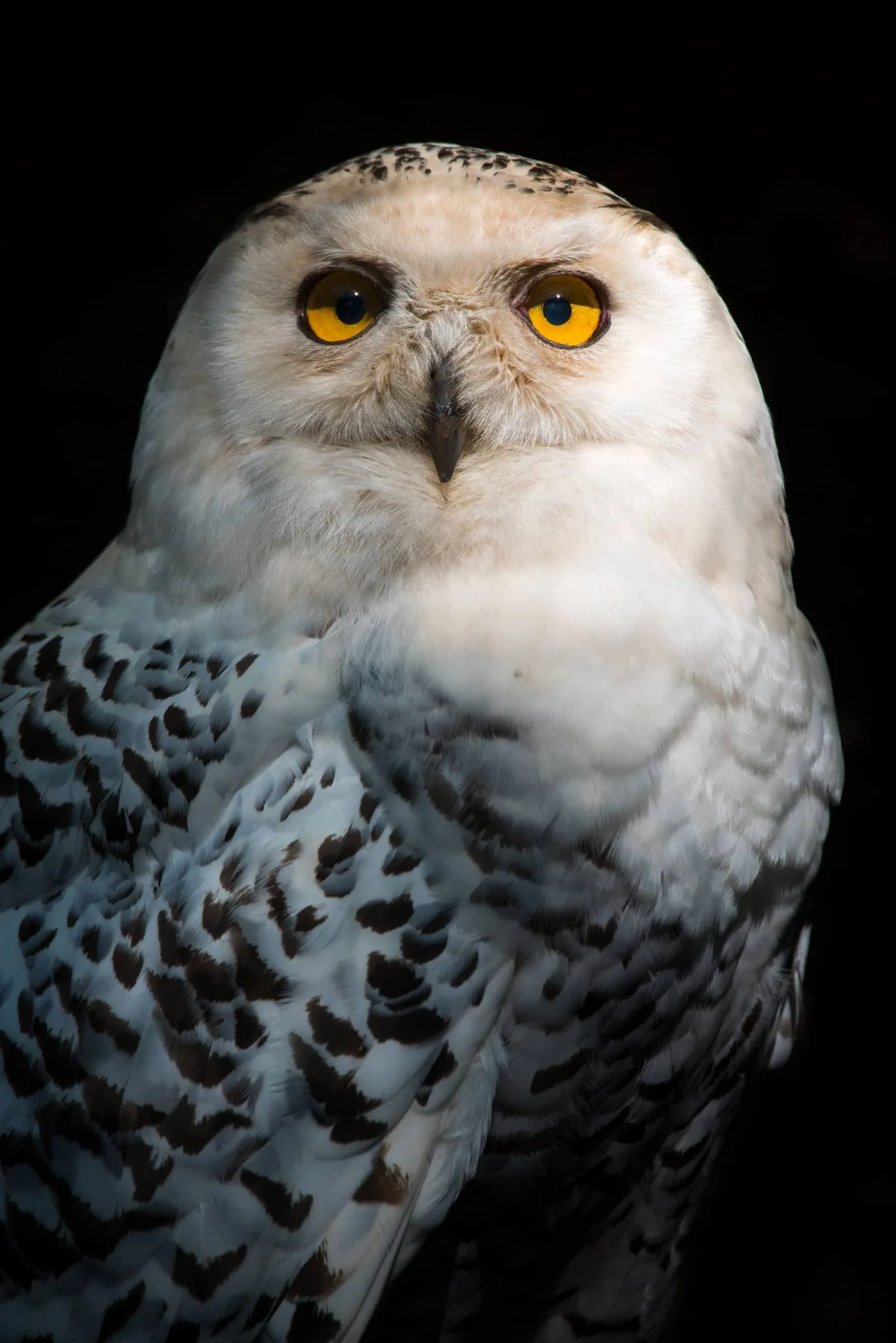
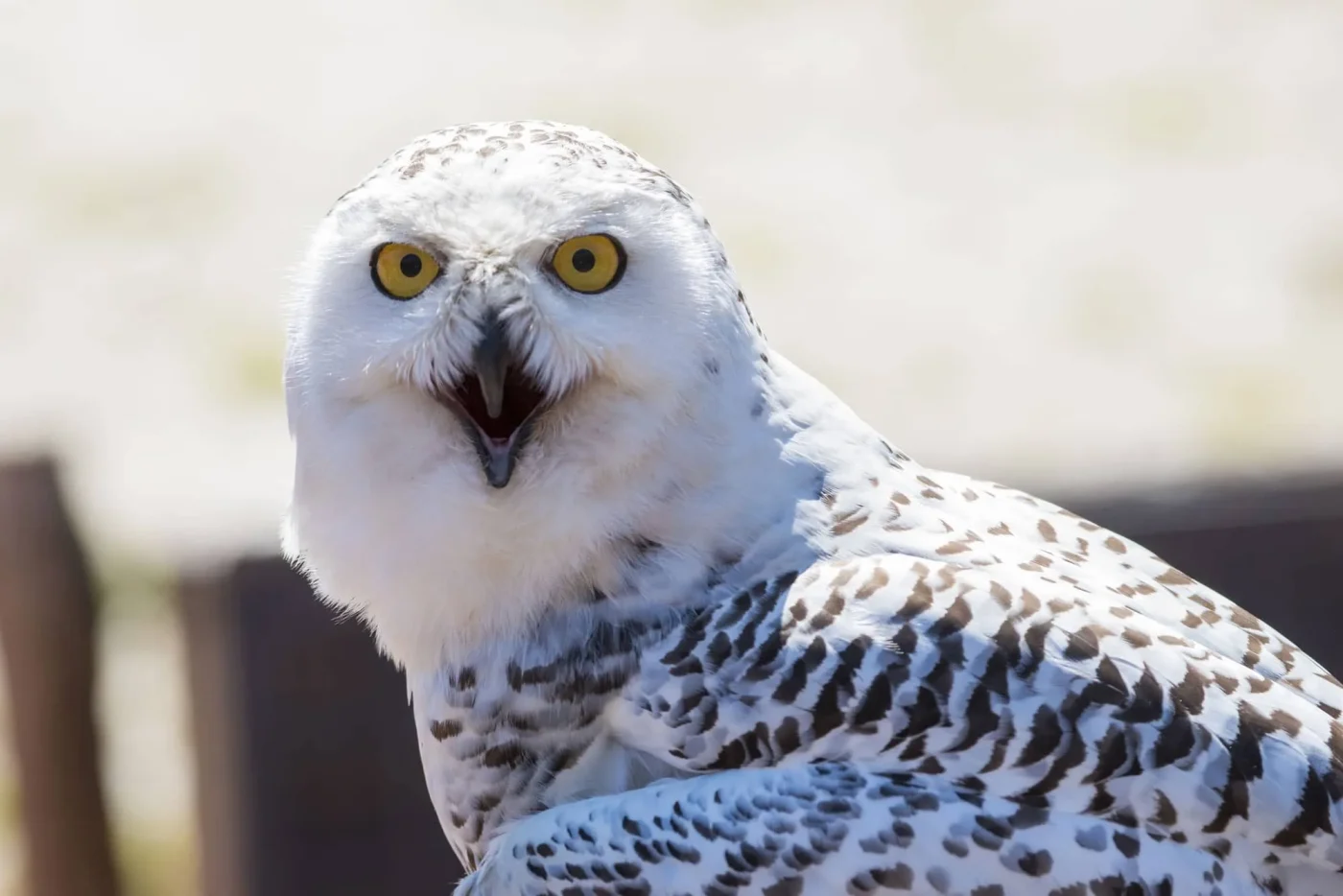
Sexual dimorphism in these birds is characterized by the female being larger, as is the case with many other raptors, as well as by a difference in plumage coloration. The male has predominantly white plumage, with very few spots on the rest of the body. In contrast, the female has white plumage that is heavily speckled and striped with black on the wings, tail, and belly.

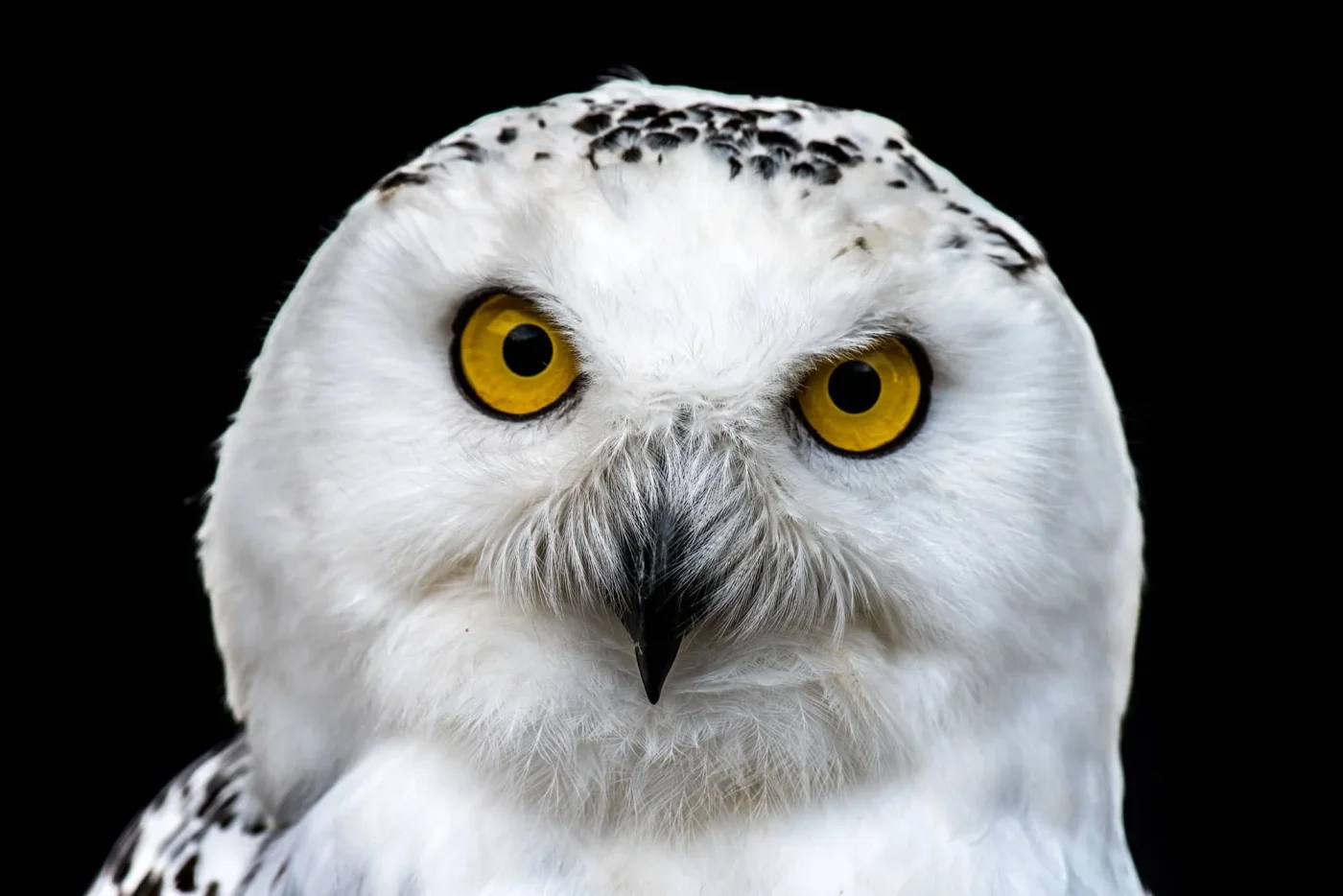
Like many nocturnal raptors, snowy owls have a facial disk made up of feathers, arranged to form a sort of parabola that helps amplify sounds and capture them better. The ear openings are not located at the same level within the skull. This offset arrangement allows them to more precisely locate where sounds are coming from and thus better locate their prey.

The eyes of the snowy owl are yellow, and do not move in their sockets. Therefore, to see around itself, this bird must turn its head to evaluate its surroundings. Its binocular vision also allows it to assess depth fields very well, in order to be able to capture its prey.

Like all nocturnal raptors, the snowy owl flies silently. This special trait is possible thanks to feathers that are fringed with comb-like filaments. This arrangement helps reduce noise during wingbeats.

To differentiate an owl from a barn owl, you need to check for the presence of small feathers on the top of the head, which are called ear tufts. Only owls have them, and they are completely absent in barn owls. In snowy owls, the ear tufts are present but they are small and folded back on the head, so they are barely visible. The snowy owl is therefore indeed an owl, and not a barn owl.


Lifestyle

The snowy owl is a monogamous and diurnal animal. Indeed, unlike other owls, they are active during the day, from dawn until dusk. This is explained by the fact that they live in northern regions, where the sun hardly ever sets in summer. These are birds that are often found on the ground or perched on a rock. Very comfortable on land, they are able to walk and run quickly.

The male marks the territory with vocalizations and special flights during which he alternates between flapping and gliding. The display ends with a dive towards the ground. Males are very territorial and aggressive. When confronted with a predator, females can simulate an injury to lure it away from the nest.

What threatens it?

Many threats weigh on snowy owls, which are classified as vulnerable by the IUCN.

Climate change has a significant impact on prey populations that snowy owls depend on. Urban development, which degrades habitats, strongly affects the reproduction of snowy owls that no longer have nesting areas.

Traps set for foxes and poisons intended for rats cause many deaths among snowy owl populations.

Anecdote

The snowy owl has been officially the emblem bird of the province of Quebec since 1987.

Discover other species: terrestrial tapir

Other animals to discover