Hylobates lar

Lar gibbon

Order: Primates / Family: Primates / Genus: Hylobates

Description

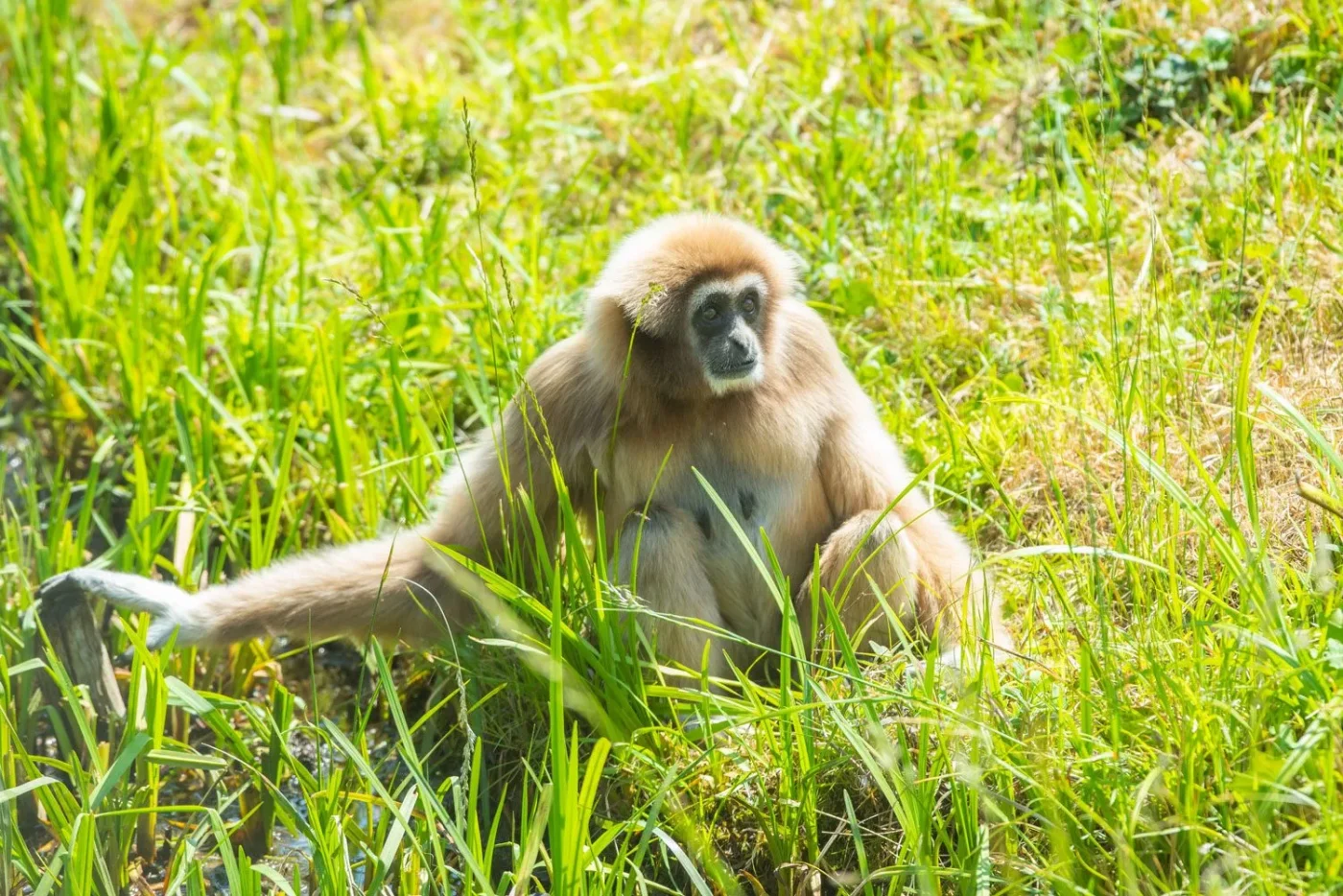
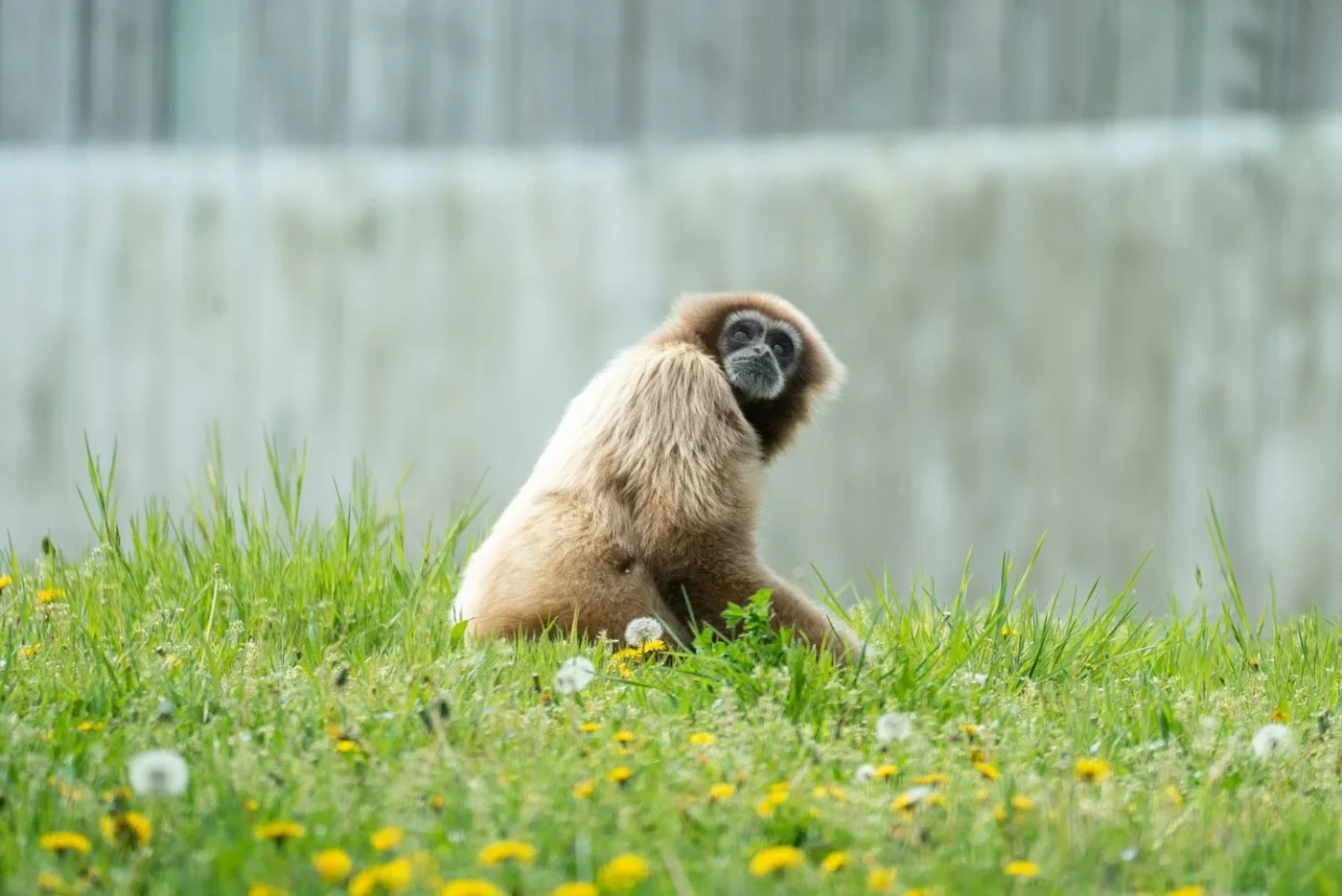
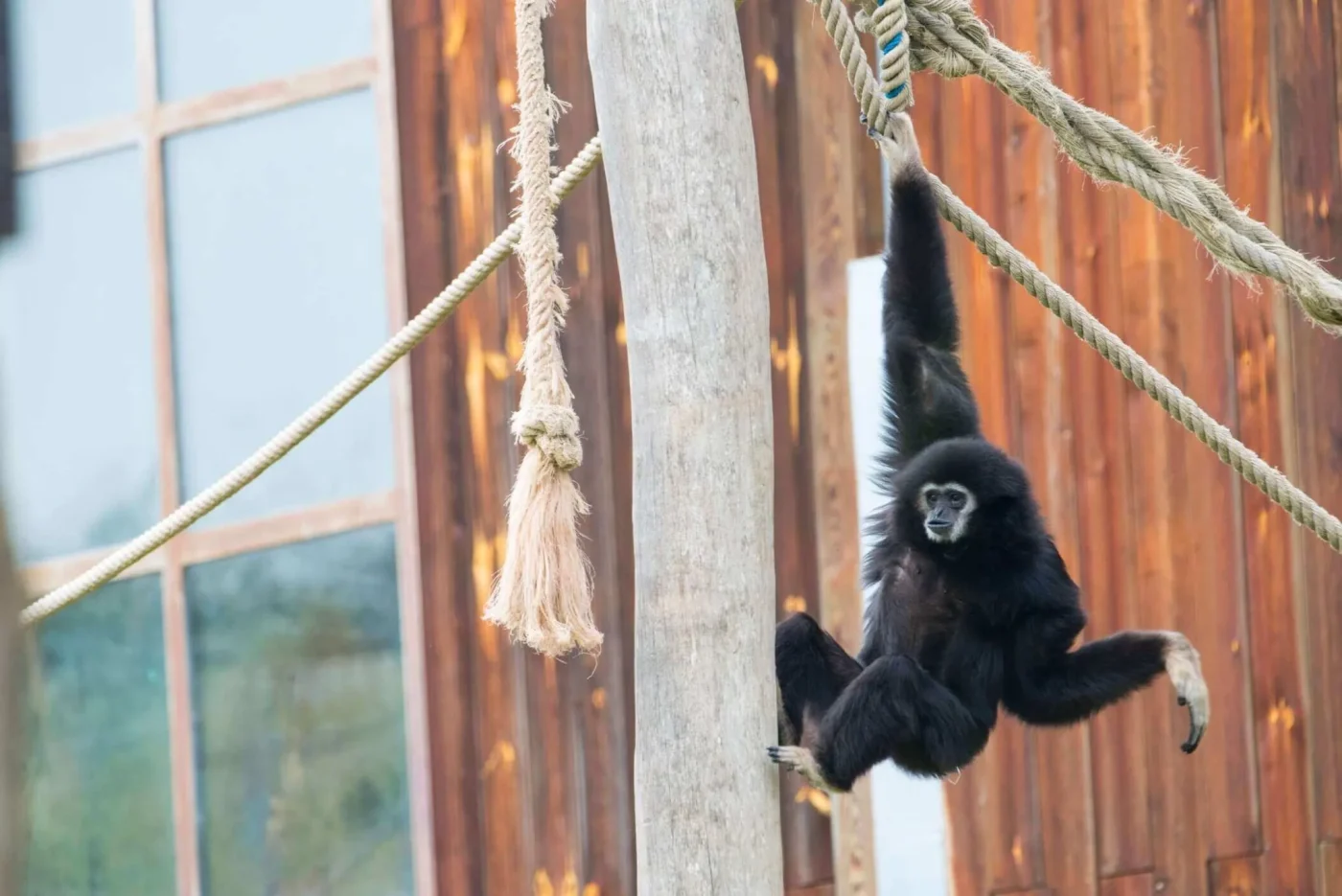
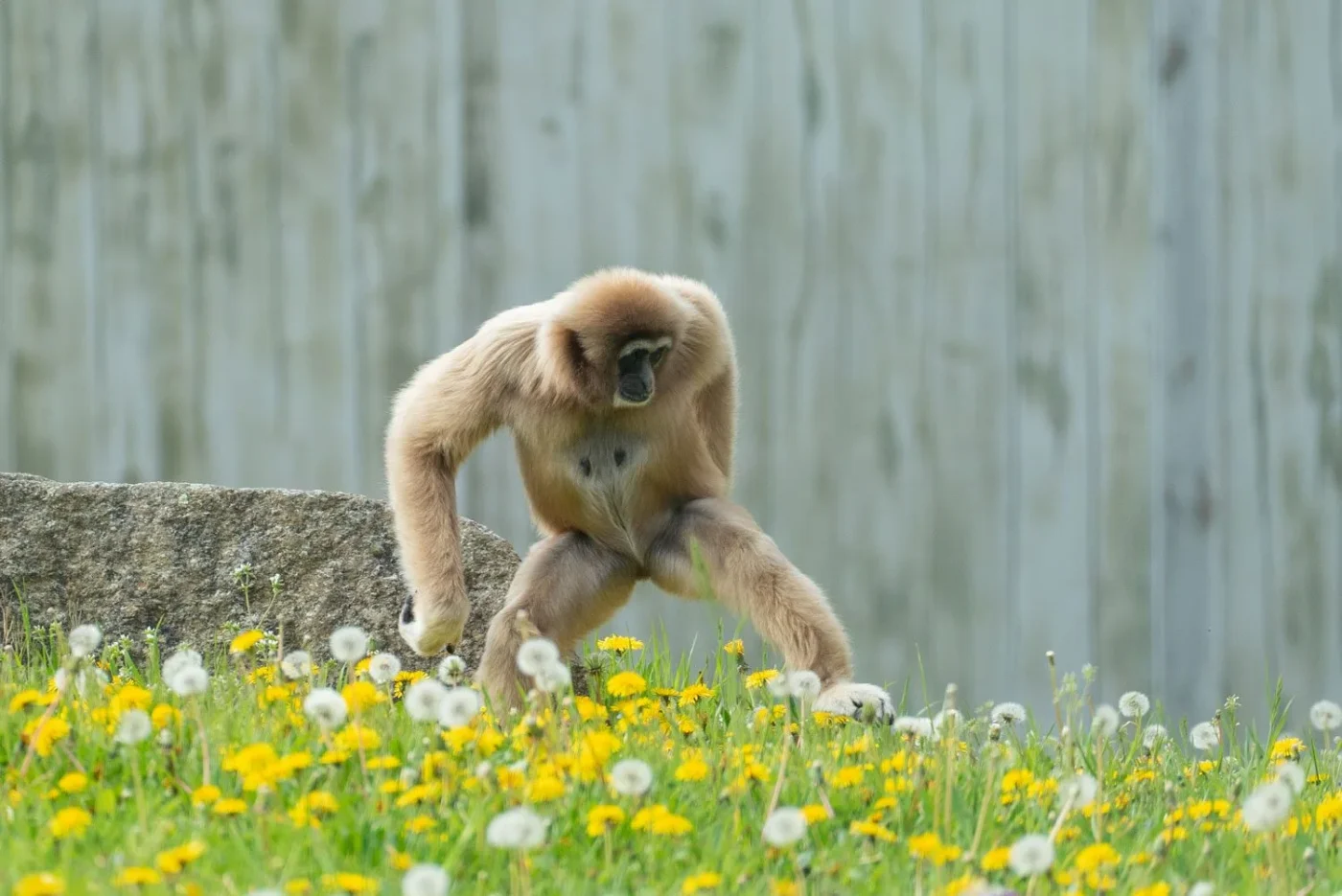
The lar gibbon or white-handed gibbon is one of the 9 species of the genus Hylobates. White-handed gibbons have a dichromatic range, meaning that regardless of sex, individuals are either cream-colored or brown-black. The hairless face is surrounded by a ring of white fur. The hands and feet are white, which is where its name comes from. The forelimbs, hands, and feet are very elongated and adapted to life in the canopy. Despite its small size, the gibbon is part of the group of great apes. Like all group members, it doesn’t have a tail but has a coccyx and has a large cranial volume and high cognitive ability.

Weight

4-8 kg

Habitat

Tropical forest

Diet

Herbivore, mainly frugivore

Gestation

Seven and a half months

Longevity

30 years and up to 40 in captivity

Longevity

12-17 years

Location

Southeast Asia
Frequently Asked Questions

Where does it live?

White-handed gibbons inhabit the humid tropical forests of Southeast Asia. They are found in the north of the island of Sumatra in Indonesia, Laos, Malaysia, Myanmar, and Thailand. Lar gibbons have disappeared from southern China. The population present in Phuket, Thailand, was most likely reintroduced.

Their habitats include lowland and submontane rainforests, mixed forests, bamboo forests, and peat swamp forests.

Lar gibbons are not found above 1,200 meters in altitude. The white-handed gibbon is a species that lives in the high canopy and rarely ventures into the lower layers or onto the ground.

Size and weight

Males measure from 43.5 to 58.4 cm long and females from 42.0 to 58.0 cm long. Males weigh from 5.0 to 7.6 kg and females from 4.4 to 6.8 kg.

What does the lar gibbon eat?

They mainly eat fruit but also leaves, flowers, and insects. Lar gibbons are very selective and only eat ripe fruit. Because of this, a tree is visited several times so that only ripe fruit is eaten on each visit. Being frugivorous, gibbons actively participate in seed dispersal and therefore play an important role in the forest ecology.

Behavior

Every morning, gibbons sing to strengthen bonds and mark their territory. These melodious calls are made from sunrise until noon. They last about 11 minutes and can be heard up to 1 km away. Gibbons use vocalizations to communicate between individuals of the same species—this is called intraspecific communication. The songs are performed near the territory boundary to drive away potential intruders.

The songs are complex and can be broken down into an introduction call, a great call, and various interlude sequences.

The introduction call is a song performed by both members of the pair. The great call is a song always initiated by the female and answered by the male. The interlude sequences can be a song performed by both members of the pair or can also be a song initiated by the female and answered by the male. Generally, the young do not participate in the vocalizations.

Their long limbs enable a unique form of movement called brachiation. This means they move by swinging their bodies from one branch to another.

White-handed gibbons are both allo- and auto-groomed animals. This means they groom themselves and also groom each other among different individuals in the group. On average, they spend ten hours a day grooming. For lar gibbons, allogrooming is a behavior with a hygienic purpose rather than a social one, unlike what is observed in other primates.

Lar gibbons spend more than 15 hours per day in the trees used as sleeping sites for the night. This behavior reduces the risk of predation. Once in these trees, the gibbons stop singing and remain as calm as possible to avoid detection by predators.

Group size varies by latitude: Populations in the north consist of groups of 4-5 individuals, while those in the south have groups of 2-3 individuals. Home ranges measure between 17 and 40 hectares and are defended when different groups of gibbons meet.


Reproduction strategy

Most of the time, white-handed gibbons are monogamous, living in groups of 2 to 6 members. White-handed gibbons are monogamous in areas where food resources are abundant, meaning when home ranges are small. On the other hand, in areas where food resources are scarce, meaning when home ranges are large, white-handed gibbons form polyandrous groups, that is, groups formed by one female and several males.

After a 7-month gestation, the female gives birth to a single baby. Females only give birth to a young every 3 to 4 years.

Weaning lasts about 20 months. It is the females who take care of the young; males do not directly care for the babies. Sexual maturity occurs around the age of 9 years.

How long does it live?

Gibbons live on average 30 years in the wild and more than 40 years in captivity.

What are its predators?

Lar gibbons are targeted by several predators such as eagles, panthers, marbled cats, and also pythons.

Threats and conservation

Classified as endangered, they suffer mainly from poaching for their meat and for resale as pets in Thailand. The destruction of their habitat greatly impacts populations. Highway construction, for example, creates insurmountable barriers that fragment habitats, increase the risk of inbreeding, and make it easier for poachers to access.

Unfortunately, deforestation for crops, especially for palm oil fields for the production of palm oil, also impacts populations.

Wherever the lar gibbon lives, it is protected, but unfortunately most places are not well secured.

Discover other animals from Asia: orangutan, binturong, siamang.

Other animals to discover