Dromaius novaehollandiae

Emu

Order: Struthioniformes / Family: Casuariidae / Genus: Dromaius

What is an emu?

Emus are birds of the order Struthioniformes, like ostrich or rhea. With an average height of 1.75 meters and an average weight of 35 – 40 kg, it is the second largest bird in the world after the ostrich. Like the ostrich, the emu is a bird that doesn’t fly due to the absence of a keel, the bone extension of the sternum that allows for the attachment of the powerful pectoral muscles necessary for flight. This grounded bird, however, is adapted for running. It has legs with three toes facing forward and none facing backward. It is the only bird in the world that has muscles in its calf.

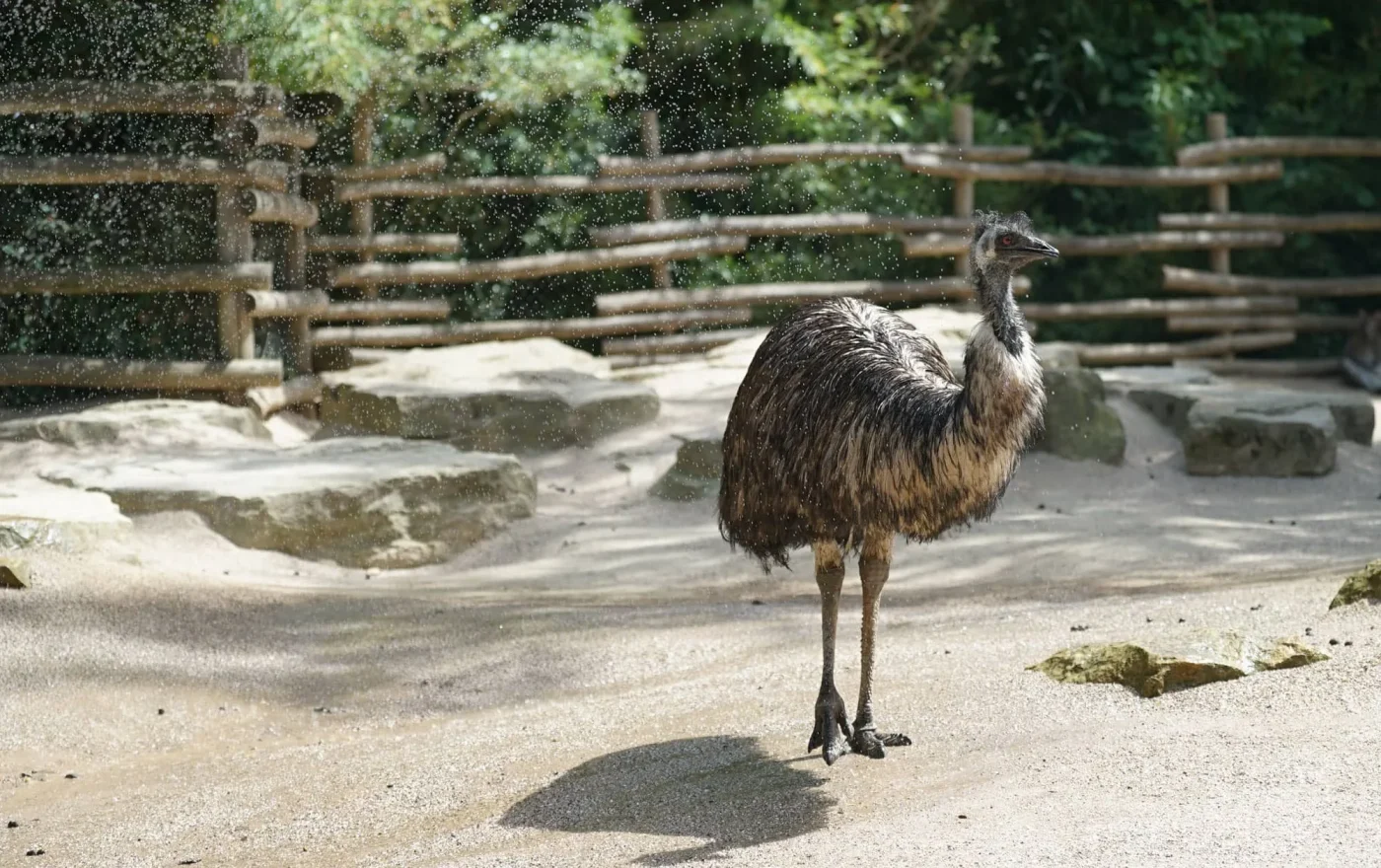
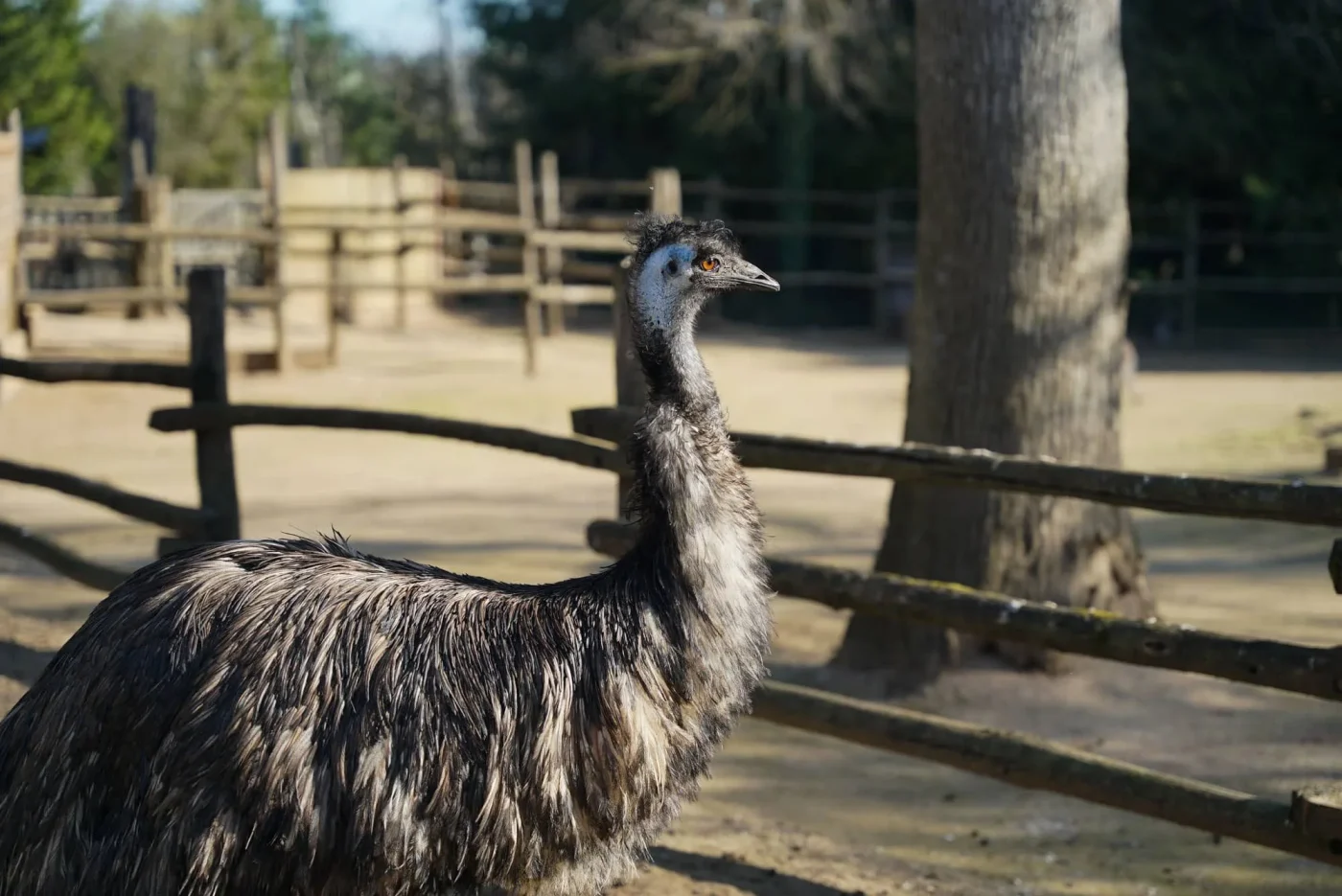
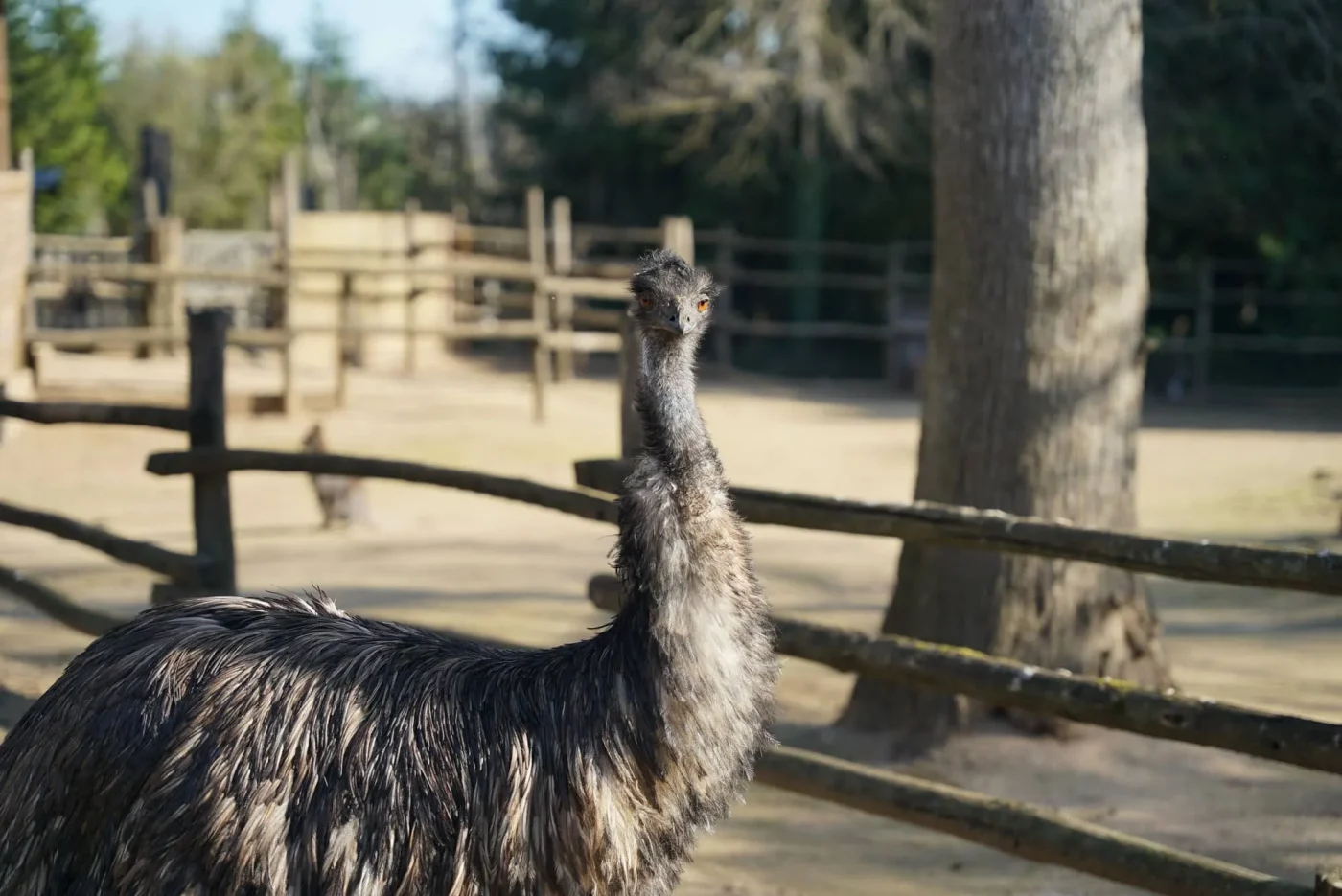
In this species, the female is bulkier than the male. The main role of the plumage is to protect the body from the sun’s rays. As a result, the brown-gray feathers are long and curly. They have a long neck, the upper half of which is bare and shows a blue coloration. The head is covered in black feathers and ends with a broad, dark beak. The wings are very small but are capable of flapping. The juveniles, on the other hand, are covered in beige-brown-black striped plumage, which allows for increased camouflage.

Weight

30-40 kg

Habitat

Savanna, desert region, plain

Diet

Omnivore with herbivore tendencies

Gestation

About 50 days

Longevity

About 10 years and up to 20 in captivity

Longevity

12-17 years

Location

Australia
Frequently Asked Questions

Where does the emu live?

Emus are birds endemic to Australia. They are present throughout the island except in heavily wooded areas as well as desert areas. The vast spaces offered by the savannah are preferred, but it is also possible to encounter them in grasslands and lightly wooded environments.

What does it eat?

The emu is an omnivorous animal but remains quite picky. It prefers rich foods such as seeds, fruits, or shoots rather than grass or leaves. In terms of meat, it catches insects, small rodents, or even lizards when they are abundant.

It also ingests pebbles that can weigh up to 46 grams, which allow it to grind food in its stomach. By adding water to this diet, the emu easily gains weight.

When food resources become scarce, it can travel many kilometers to find a source of nourishment.

Behavior

These diurnal birds are mainly solitary but can gather in large flocks if this benefits their survival. For example, when food becomes scarce, they migrate together to new food resources. The emu has an unsuspected voice, equipped with a pouch at the level of the throat, it can produce sounds audible up to 2 km away. It is, in fact, this call that earned them their name “e-moo.” One of their vocalizations has the peculiarity of sounding like a drum roll. The physiology and morphology of their legs allow them to reach speeds close to 50 km/h with strides of 3 meters. Emus open their wings during intense heat to increase heat regulation and cool the body.

What are its predators?

The main predators of the emu are dingoes, a carnivore from the canine family. They mainly target the eggs using a particular technique. One of them distracts the male who is incubating so that the nest is left unattended.

To defend itself, the emu quickly jumps, putting distance between itself and its predator, who generally aims for its head and neck. This is often accompanied by powerful kicks that can be fatal for the predator.

But emus can also fall prey to eagles or hawks that try to break the bird’s neck by attacking after diving.

Reproduction strategy

The breeding season begins in December and January. It starts with a courtship dance. During this dance, the male must perform precise movements to attract the female. If the male makes a mistake in these movements, the female may become aggressive and not choose him. Afterwards, the female lays between 5 and 24 eggs, each weighing 600 grams. These dark green eggs blend perfectly into a nest made of foliage constructed by the male. It is the male who incubates the eggs for the entire incubation period, which lasts about 50 days. During this time, he does not eat, drink, or pass waste; he survives thanks to his fat reserves and can lose up to 20% of his body weight. The male turns the eggs several times a day and brings back those that have rolled out of the nest. Once the male starts the incubation period, the female emu seeks to mate with other available males. Once the eggs have hatched, the male protects and raises the young for about 7 months. In some cases, he may even adopt chicks that are lost, younger or smaller than his own. At birth, the chicks already weigh 500 grams. The young only become independent at 18 months of age, which is also when they reach sexual maturity.

What threatens it?

Following the arrival of settlers, several subspecies of emu were completely wiped out on the islands of Tasmania, Kangaroo, and King. They were intensely hunted for their meat as well as the oil extracted from their bodies. Today, only one species remains in Australia. The populations are abundant and it is not considered endangered. However, it too nearly disappeared if humans had not lost “the emu war.” In 1932, thousands of emus attacked crops and devoured them at a tremendous speed. The army therefore sent a handful of armed men to help farmers exterminate the emus. But contrary to all expectations, it was a spectacular failure. They managed to kill “only” 1,500 individuals out of the 20,000 present. Fast and resilient, they never managed to get rid of them all. They then decided to abandon the war. Hence, the emus emerged victorious.

From now on, fences are installed around crops to prevent emus from reaching them. In addition, many emu farms exist today to market their feathers, their eggs, but also their meat.

Discover other species from Oceania: Bennett’s wallaby, sugar glider, kea.

What is the difference between an emu and an ostrich?

The emu of Australia is distinguished from the ostrich by its slightly smaller size, its brown plumage, and its head with bluish skin. While the ostrich is native to Africa, the emu is inextricably linked to the vast plains of Australia. Adapted to its environment, the Dromaius novaehollandiae has powerful legs that allow it to run at impressive speeds, although it cannot fly. Unlike the ostrich, which shows marked sexual dimorphism, dimorphism in the emu is more subtle, making it difficult to distinguish between males and females at first glance.

Other animals to discover