Lynx lynx carpathicus

Carpathian lynx

Order: Carnivora / Family: Felidae / Genus: Lynx

Description

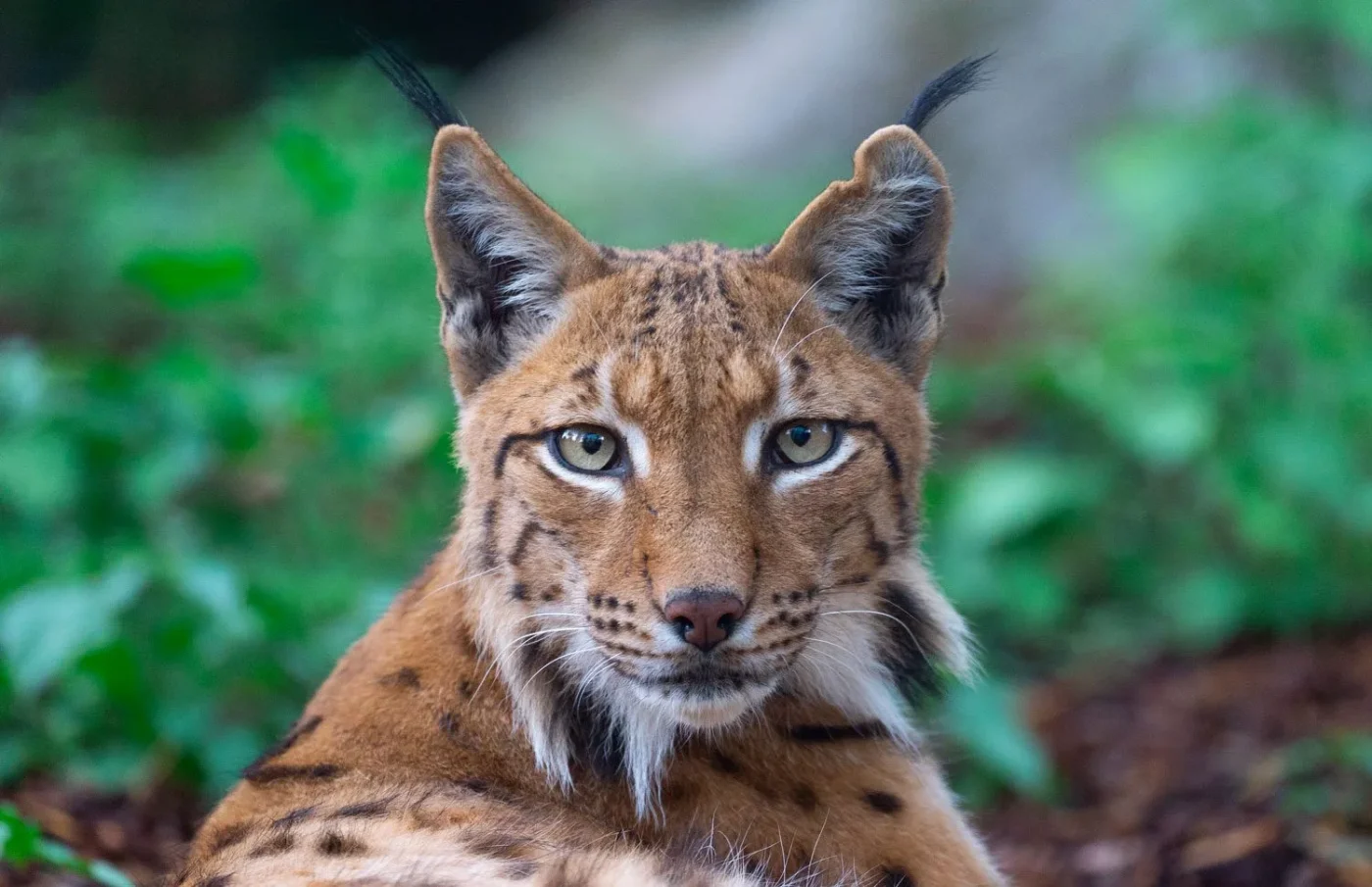
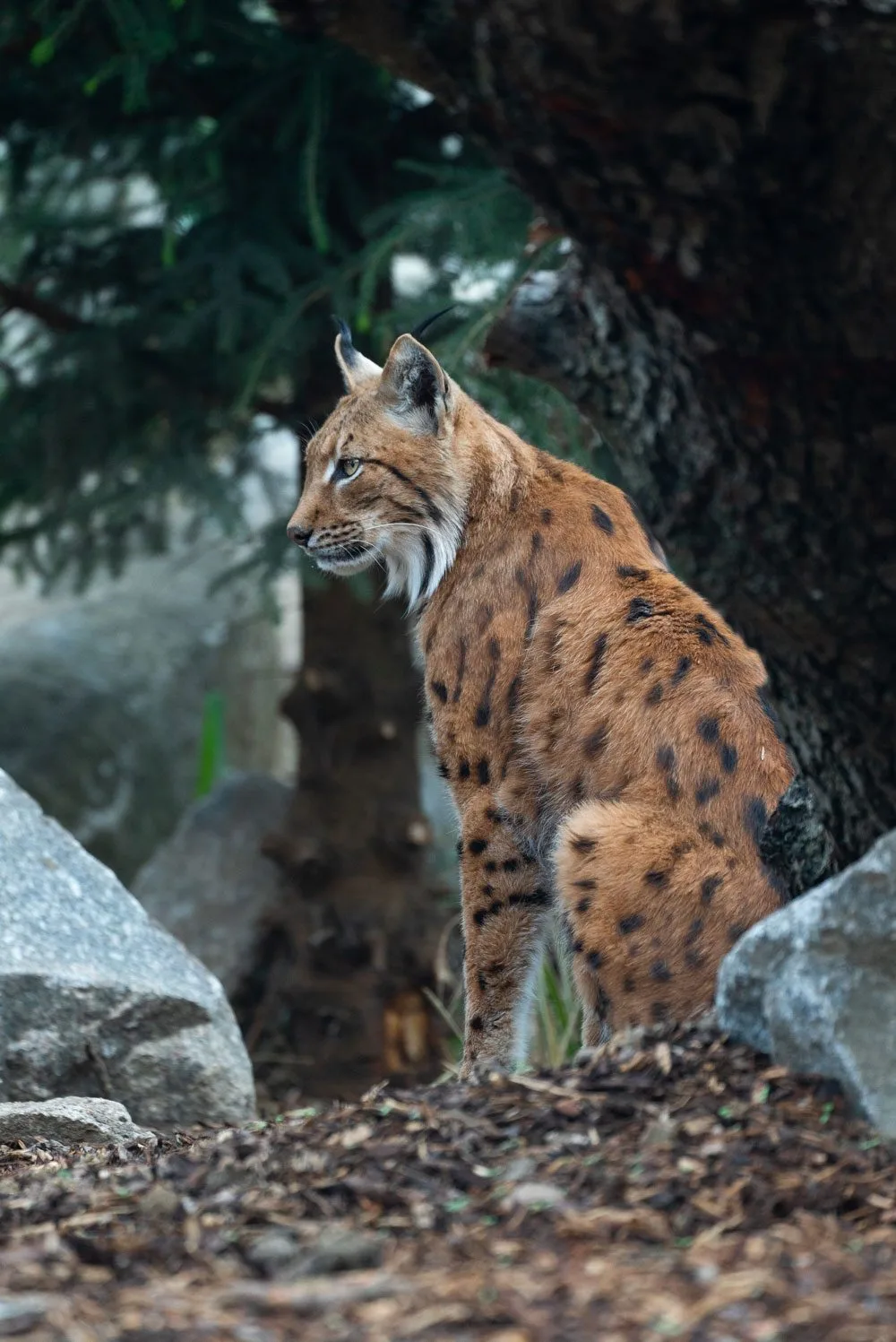
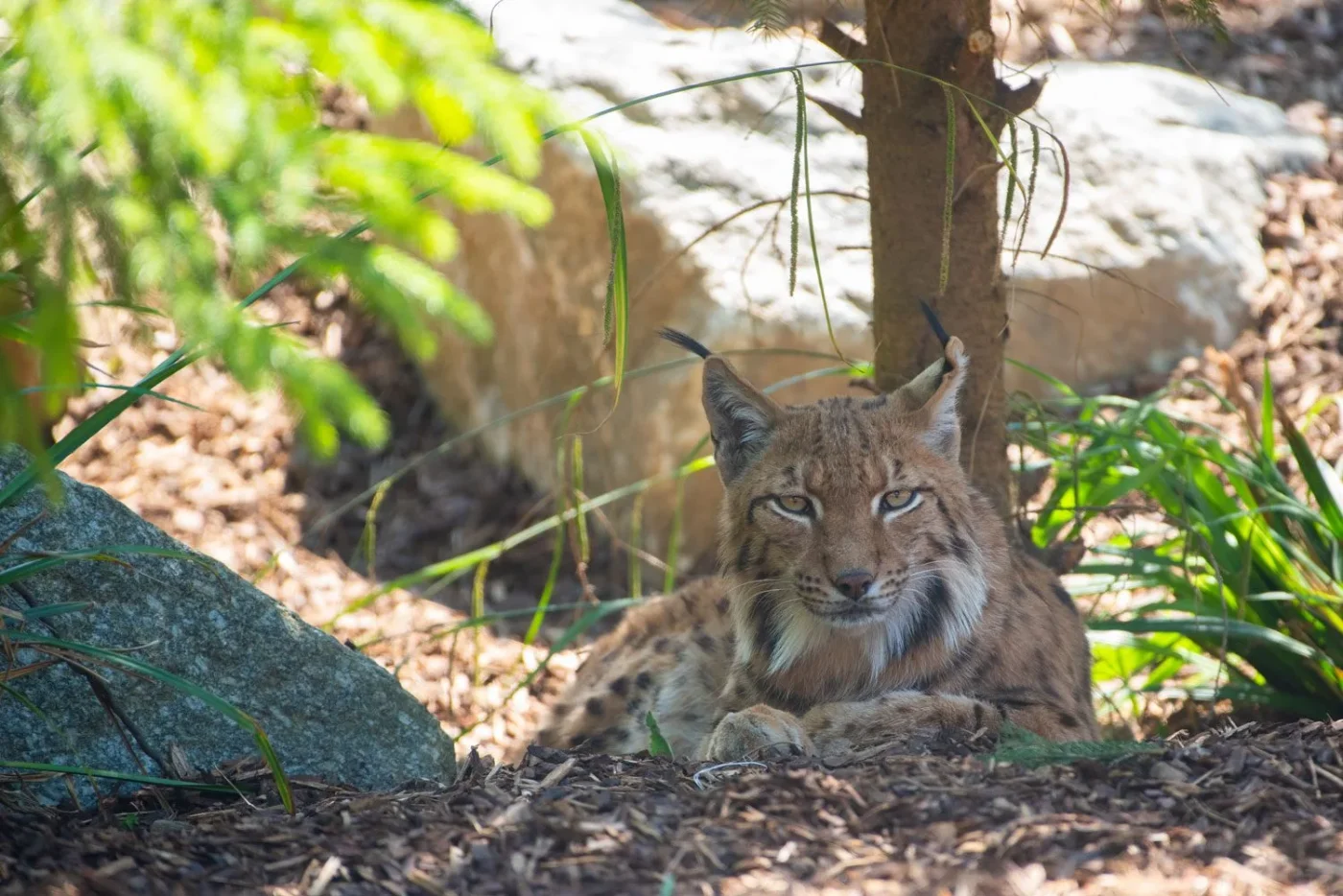
In Europe, the lynx is one of the largest predators after the brown bear and the gray wolf. Weighing between 18 and 36 kg, the Eurasian lynx is the largest among the 4 species of lynx worldwide. It measures between 70 and 130 cm in length and stands 60 to 65 cm tall. Its fur varies from gray-beige to reddish and can be solid, striped, or spotted. The short tail ends with a black tip, and the triangular ears are topped with a characteristic tuft of black hair. These large, furry paws act like snowshoes to move through the snow and also help the lynx sneak quietly up on prey. The lynx also has sideburns, a kind of fringe of hair on its cheeks.

Males are generally about 25% larger than females.

Attention, even though the lynx and the caracal look similar, they do not belong to the same genus in classification.

Weight

18-36 kg

Habitat

Forest

Diet

Carnivore

Gestation

70 days

Longevity

15-20 years

Longevity

12-17 years

Location

Europe
Frequently Asked Questions

Where does the Carpathian lynx live?

The Eurasian lynx (Lynx lynx) frequents a multitude of different environments such as lightly wooded areas, forests, rocky mountains, or even desert areas. Among all the species of felines, it has one of the largest geographical distributions. This species is present over almost the entirety of the Eurasian continent.

There are three other species of the genus Lynx recognized by the scientific community: the bobcat (Lynx rufus) and the Canada lynx (Lynx canadensis) in North America, as well as the Iberian lynx (Lynx pardinus) found only on the Iberian Peninsula (about 1,000 individuals).

Due to its large geographical range, the Eurasian lynx is subdivided into several subspecies. Even though the number of subspecies is debated, the IUCN recognizes six subspecies: the Northern lynx (L. l. lynx), the Balkan lynx (L. l. balcanicus), the Carpathian lynx (L. l. carpathicus), the Caucasian lynx (L. l. dinniki), the Turkestan lynx (L. l. isabellinus), and the Siberian lynx (L. l. wrangeli).

In France, it is the Eurasian lynx that is present, mostly found in forested mountainous regions. Nowadays, there is an established population of lynx in France. The bulk of the population is found in the Jura, where about one hundred individuals are established and breeding. The Vosges and the Alps only host a few individuals. Today, the population of the European lynx is estimated at only 9,000 or 10,000 individuals (excluding Russia). The Russian population is estimated at 22,500 individuals. The Asian population is estimated at 40,000 individuals.

What does it eat?

The lynx is a strictly carnivorous animal that feeds mainly on animals it has hunted itself. Ungulates such as roe deer and chamois make up 90% of its diet. The remaining 10% consists of young deer, young wild boars, sheep, but especially small animals like foxes, hares, marmots, or birds. This feline is capable of attacking prey 3 to 4 times larger than itself. These are consumed over 3 to 5 days, during which it takes 1 to 3 kg of meat per day.

A lynx can consume up to 50 to 60 herbivores per year. Thus, the lynx plays an important role in regulating herbivore populations.

Reproduction strategy

These are solitary felines that only meet during the breeding season between February and April. The female is fertile only for a short period of about 3 days during which the lynxes attract each other by making harsh cries that can be heard several hundred meters away; this sound is called feuling. The female breeds only every 2 or 3 years, while the males seek females every year.

After a gestation period of 3 months, she gives birth to 2 or 3 cubs in a cavity of a stump or rocky wall called the den. At birth, these cubs weigh barely 300 to 350g. It is after 4 weeks that they begin to venture outside, and by 2 months they are able to follow their mother. They leave their mother once independent, around the age of 10 months. It is often the mother who encourages the young to leave in order to prepare for the next birth. At first, they remain within the mother’s territory, a familiar environment, while improving their hunting skills, then set off in search of their own territory. This is called dispersion. Lynxes can disperse up to nearly 100 km from their birthplace. The distance of dispersion depends on the density of lynxes in the region, the availability of vacant territory, and barriers and obstacles (lakes, streams, roads, railways, etc.) to movement. As soon as they acquire a territory, they generally keep it for life. It is at the time of their departure that the mortality rate of young lynxes is highest, succumbing to malnutrition, disease, or incidents related to humans such as collisions. Only 1 in 2 young survives after becoming independent. They reach sexual maturity after 2 to 3 years and have a life expectancy of 15 to 17 years in the wild.

Behaviors

The lynx is solitary and territorial. Different territories can be close and slightly overlap. The size of territories ranges from 25 to 2,800 km² and depends on the type of habitat and food availability. The territory is not used in the same way throughout the year. The lynx uses portions of its territory for hunting during the year as well as for raising the young.

As a result, the size of the territories varies according to geographic location:

  • In the Vosges, the territory measures 187 km² for males and between 73 and 102 km² for females.
  • In the Jura, males have territories ranging from 260 to 280 km² and females from 150 to 180 km².
  • In the Alps, males have territories of 170 km² and females 100 km² on average.

The lynx is mainly nocturnal with peaks of activity at dusk and at dawn. Thanks to the “tapetum lucidum,” a tissue in the eye that recovers light energy, the lynx can see at night. The expression “lynx eye” suggests these animals have very good vision, but in reality, their vision is less sharp than that of humans. The rest of the time, it rests. It is an excellent climber and a good swimmer.

It is a very discreet animal and difficult to observe. It adapts well to the presence of humans but still avoids areas that are too heavily frequented.

Park life

Here at Amnéville, you can observe Carpathian lynxes, which are one of the 6 subspecies of Eurasian lynx.

Discover the other felines at the zoo: sand cat, jaguar, puma, white tiger, serval, caracal, Siberian tiger, Amur leopard, snow leopard, lion, cheetah.

a0

Other animals to discover