Anodorhynchus hyacinthinus

Hyacinth macaw

Order: Psittaciformes / Family: Psittacidae / Genus: Anodorhynchus

What is a Hyacinth Macaw?

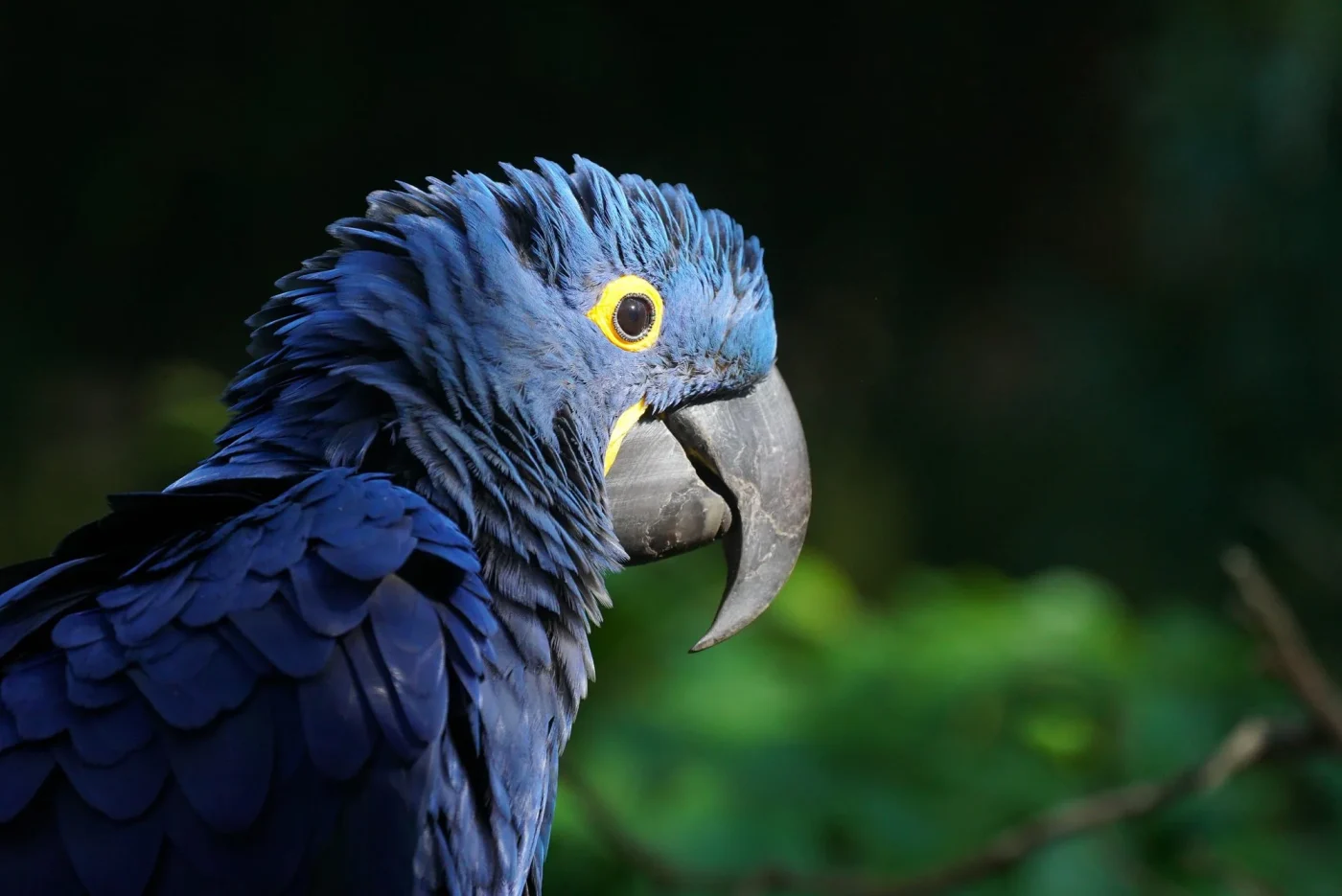
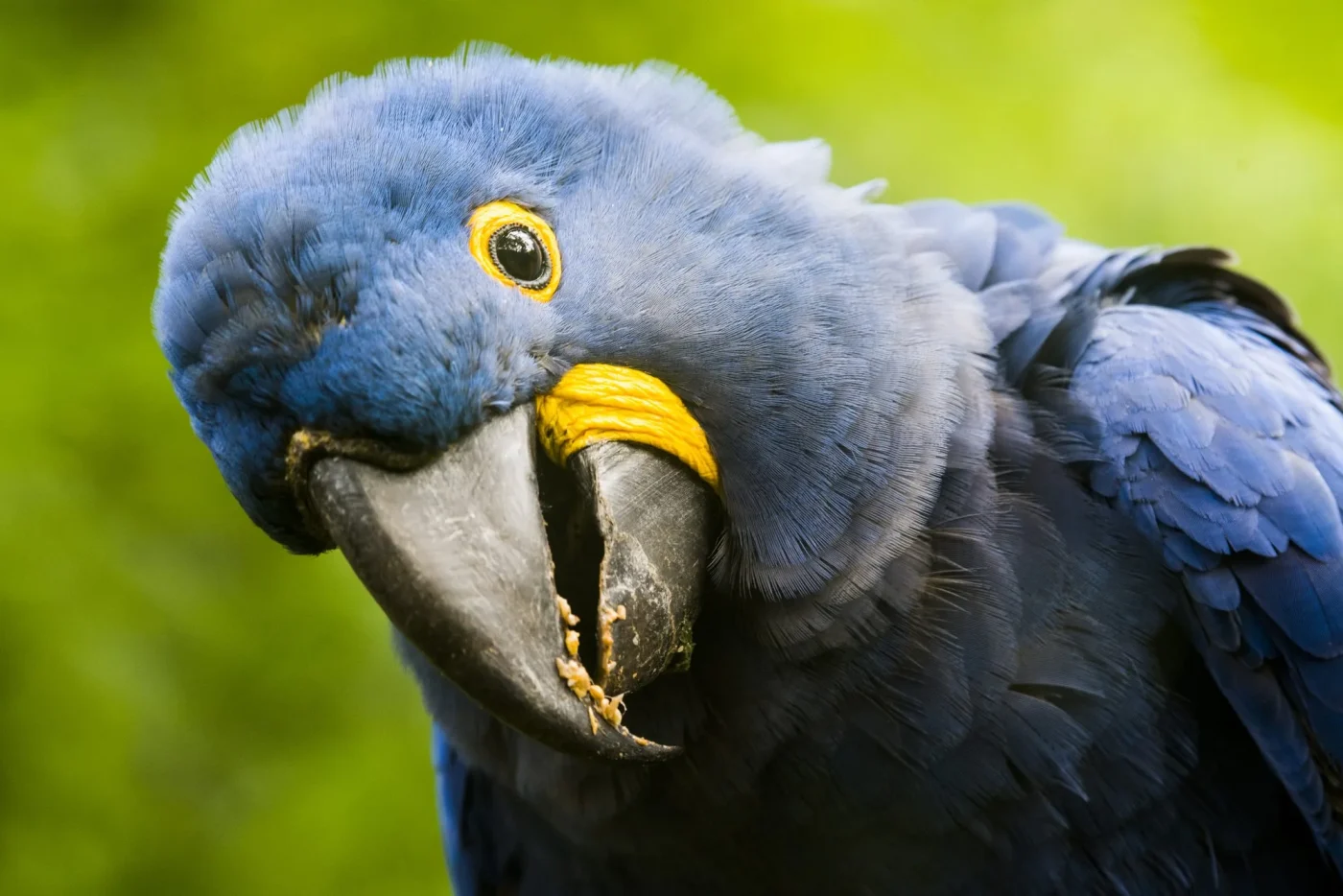
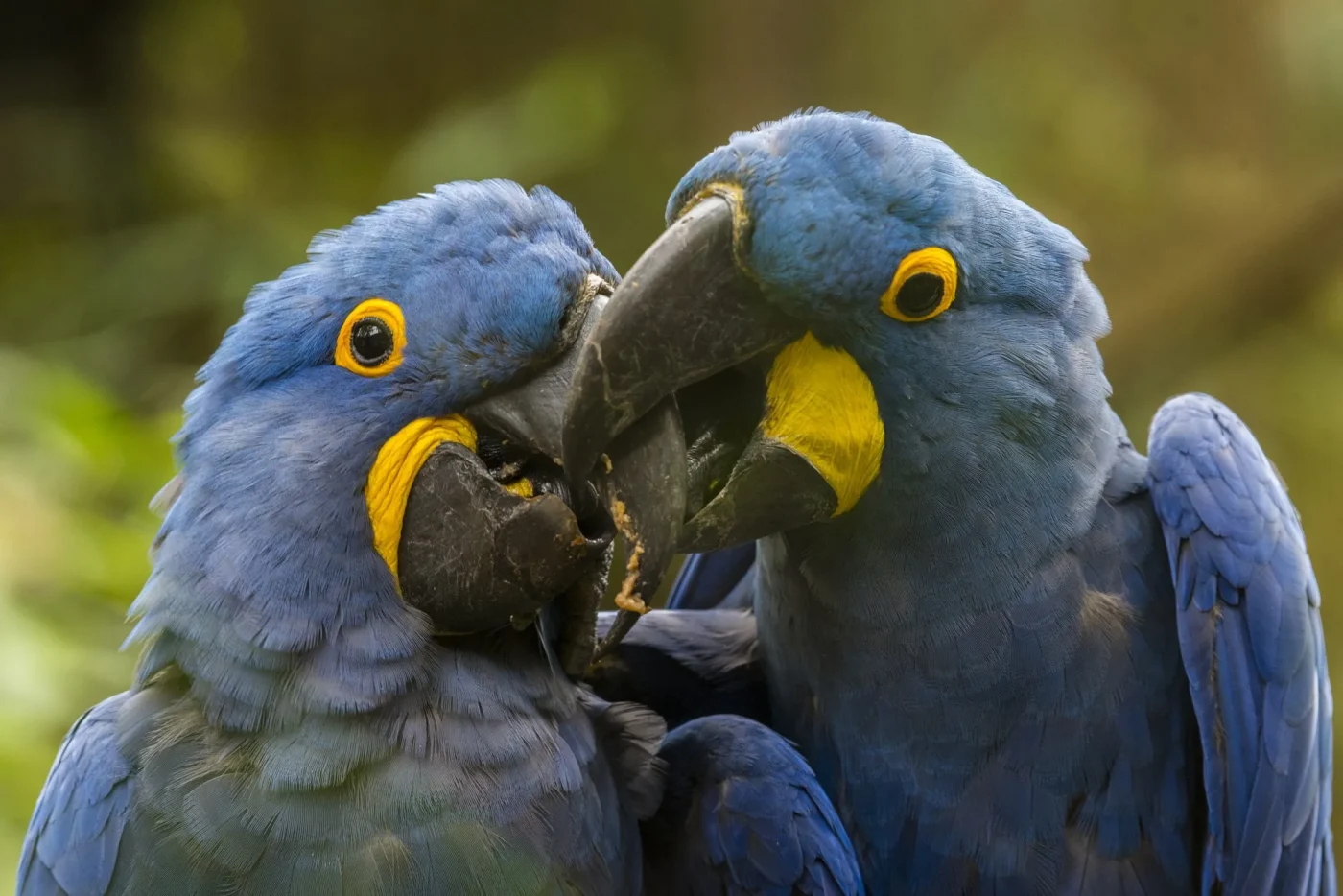
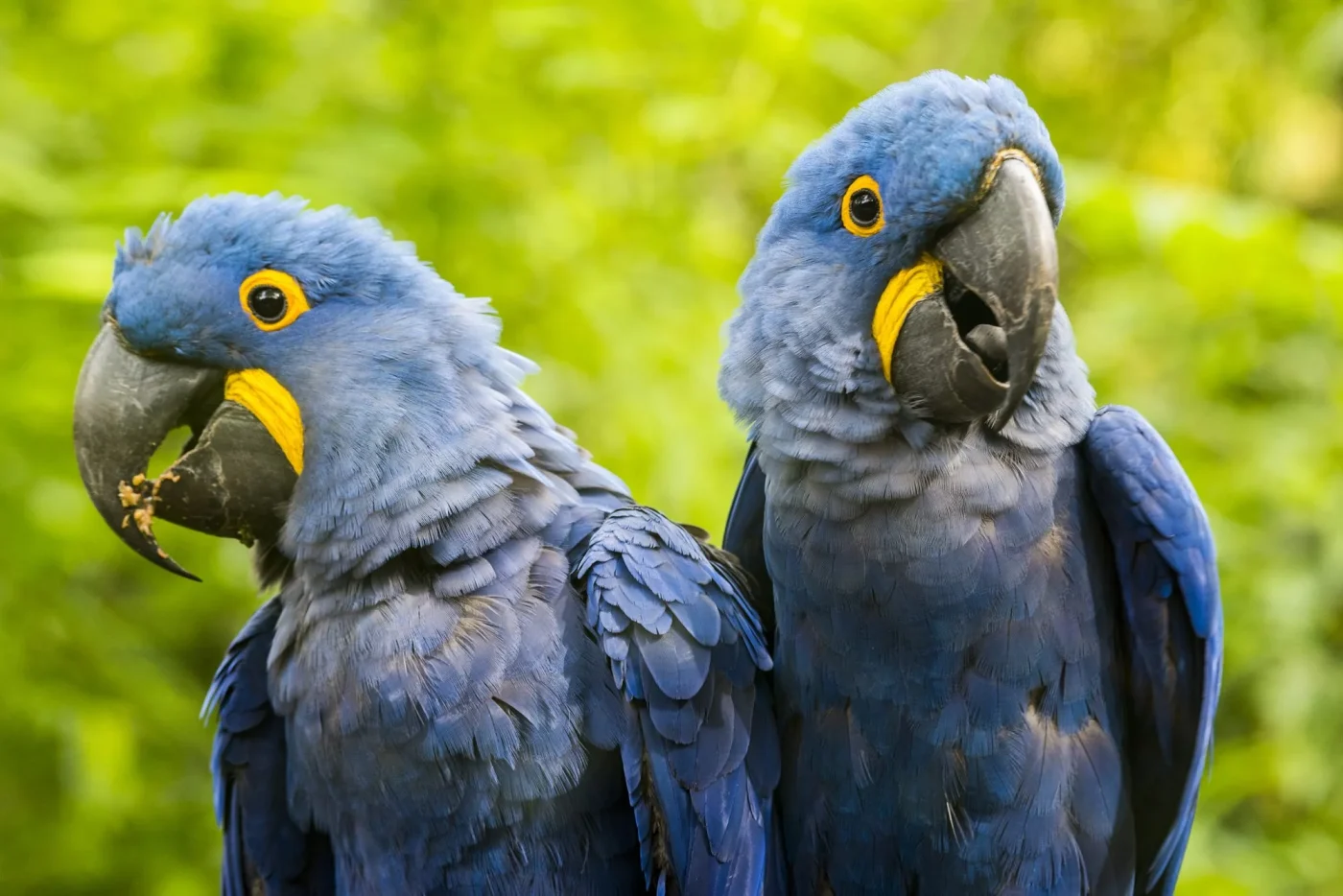
As its name suggests, the hyacinth macaw is blue-violet in color from its head to the tip of its tail; only the lower part of the flight feathers and the tail are dark gray. The skin around its eyes as well as at the base of its lower mandible is bright yellow. These parts are actually a good way to tell juveniles apart, as they are duller, white or light yellow in color in the younger birds. The legs and hooked beak of the hyacinth macaw are black. In terms of size, it is the largest parrot in the world, reaching over 1 meter including the tail and a wingspan of over 1.30 meters. It is also the parrot with the biggest beak. The beak is used for feeding, moving, climbing, and gripping onto trees like a third foot. Visually, there is no difference between the male and the female.

Highly appreciated by the general public, the hyacinth macaw is regularly confused with the blue parrot presented in the animated film Rio. However, these are two different species. The film showcases the Spix’s macaw, which is smaller and whose blue-gray plumage is lighter. Another species also closely resembles the hyacinth macaw, the Lear’s macaw, which can only be distinguished by being smaller in size.

Weight

1.2 - 1.7 kg

Habitat

Tropical forest, savanna

Diet

Granivore

Gestation

25 - 28 days

Longevity

50 years

Longevity

12-17 years

Location

South American tropical forest.
Frequently Asked Questions

Where does the hyacinth macaw live?

The population of the hyacinth macaw is concentrated in central South America. Its range extends from northern Brazil to eastern Bolivia and northern Paraguay. They are found in semi-open environments such as wooded savannahs or gallery forests.

Reproduction strategy

This parrot has a reputation for being a gentleman. In fact, two individuals form a lifelong pair. From then on, they do everything together: eat, sleep, and even fly. The nesting season takes place from July to December; the nest is set up in the cavity of a living or dead tree between 10 and 25 meters above the ground. If the nest is too deep, the pair places pieces of wood inside so that the chicks can more easily reach the nest opening. The female usually lays two eggs. The reproduction rate is very low; out of 100 pairs, the number of births per year does not exceed 25. The female, fed by the male, incubates the eggs most of the time for 25 to 30 days. The chicks are nestlings and stay more than 100 days in their parents’ nest. It is at this point that they begin to take flight, becoming completely independent from the age of 18 months. At that age, the young usually join groups of other young hyacinth macaws. Sexual maturity is only reached between 6 and 10 years old.

Behavior

This very social bird lives alone or in pairs during the breeding season but can form small family groups or flocks of up to 20 individuals for the rest of the year. The number of birds in a flock varies depending on the regions frequented by the hyacinth macaw. When moving around, the different members of the group always keep in contact through powerful vocalizations. At night and during rest periods, young macaws and individuals without partners often perch on the same tree, called the roost. This is also where many social interactions occur. The birds vocalize, preen, and play with their fellow macaws.

The hyacinth macaw can live for nearly 50 years in the wild and even up to 60 years in captivity.

What does it eat?

Its diet consists mainly of palm nuts but also fruits or other seeds. Thanks to its large beak, it can effortlessly open many hard-shelled fruits, which it collects from trees or picks up from the ground. Additionally, it is not uncommon for this parrot to rummage through livestock droppings, such as those of cows, to recover undigested seeds left inside. This species often moves in groups in search of food, with one individual taking on the role of sentry, sounding the alarm at the slightest danger.

Conservation

The capture of individuals for resale to private owners in the 1980s was one of the greatest threats to the species. No fewer than 10,000 individuals were thus captured. Unfortunately, trafficking still continues today, albeit on a smaller scale. Deforestation also impacts the way of life of hyacinth macaws. Indeed, they need old trees with cavities to nest, and these are increasingly rare. Yet, thanks to their great ability to break all kinds of nuts, hyacinth macaws play an important role in seed dispersion and thus in the regeneration of their ecosystem.

Today, about 6,000 birds are still present in the wild, and 90% of this population lives in the Pantanal, the largest wetland in the world, essential for the survival of this species.

What are its predators?

The main predators of the hyacinth macaw are coatis, jays, and also toucans, who mainly feed on their eggs, which they take directly from the nest.

Discover other species: terrestrial tapir, emperor tamarin, cotton-top tamarin, Patagonian sea lion, California sea lion, maned wolf, giant anteater, golden eagle, raccoon, puma, wolverine, jaguar, snowy owl, Humboldt penguin, military macaw.

Other animals to discover