Ursus arctos

Brown bear

Order: Carnivores / Family: Ursidae / Genus: Ursus

What is a brown bear?

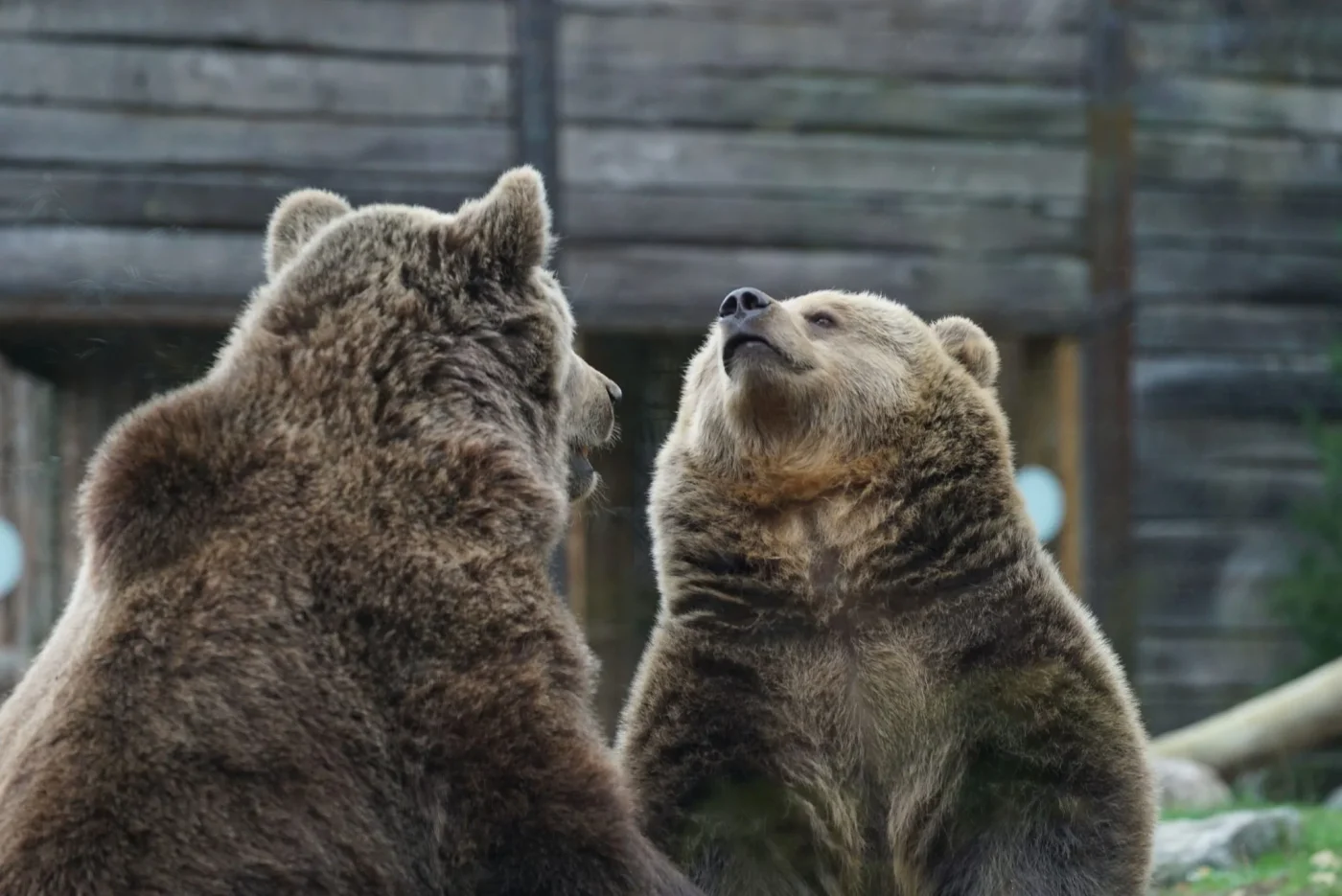
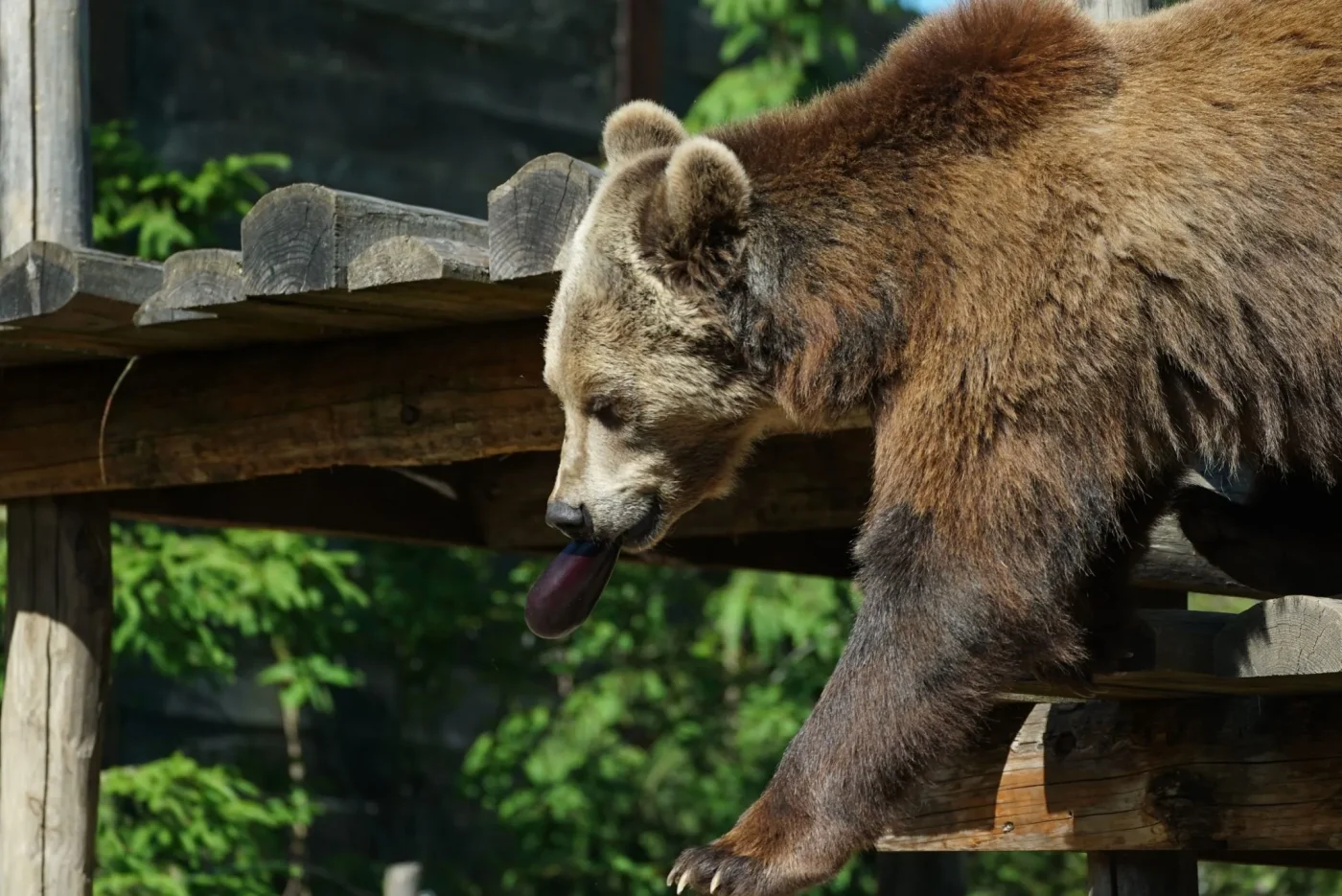
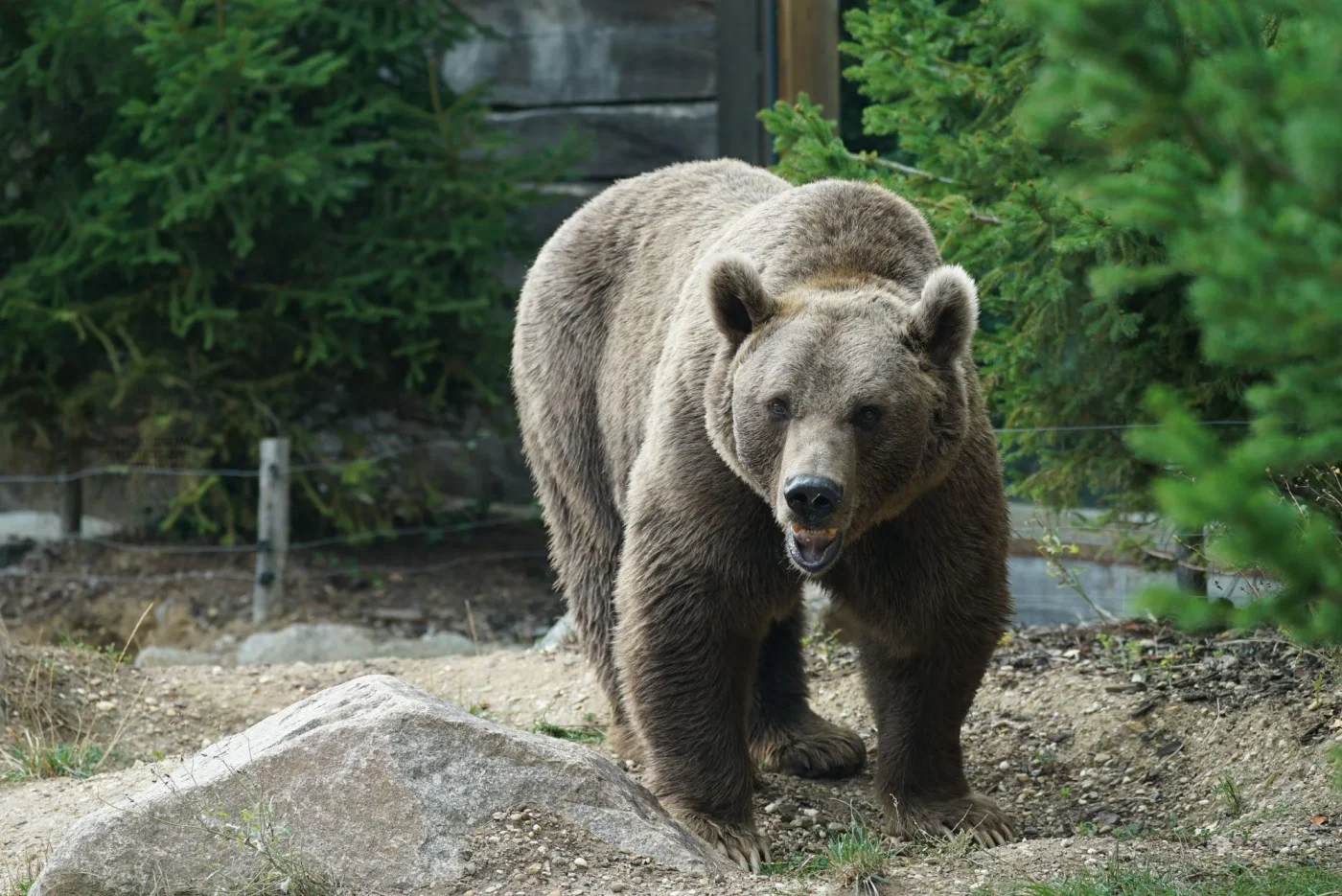
Like all bears, representatives of the ursid family, the brown bear is plantigrade, meaning it walks on the soles of its feet. The brown bear can be recognized by its muscle hump between its shoulders. The fur is generally brown in color, which can vary from almost black dark brown to light brown. It has a short tail and non-retractable claws. Their eyesight is not very strong, but they have very well developed hearing and sense of smell.

They are massive animals endowed with incredible strength. They are capable of killing prey the size of a cow with a single swipe of a paw.

The grizzly bear found in North America (U. a. horribilis), which is undoubtedly the best-known subspecies, measures between 1 and 2.8 meters from head to tail and between 90 and 150 cm at the shoulder. Standing on its hind legs, it can reach almost 2.50 meters. Its average weight is between 80 and 600 kilograms. The presence of grayish hairs on its shoulders and back gave it its name, grizzly.

The Eurasian brown bear (U. a. arctos), found in Europe, is clearly much smaller as it measures up to 1.80 meters from head to tail and between 90 and 120 cm at the shoulder. Standing on its hind legs, it reaches between 1.7 and 2 meters. The average weight of females is between 70 and 170 kilograms and between 80 and 230 kg for males. It is the largest wild terrestrial mammal in mainland France.

The largest of the 16 subspecies is the Kodiak bear (U. a. middendorffi), as an individual weighing one ton has been recorded!

The largest of the subspecies is the Kodiak bear (U. a. middendorffi).

Alaskan brown bear (U. a. alascensis), Dall Island brown bear (U. a. dalli), East Siberian brown bear (U. a. collaris), Eurasian brown bear (U. a. arctos), Gobi bear (U. a. gobiensis), Grizzly bear (U. a. horribilis), Himalayan brown bear (U. a. isabellinus), Kamchatka or Far Eastern brown bear (U. a. middendorffi), Kodiak bear (U. a. middendorffi), Marsican or Apennine brown bear (U. a. marsicanus), Peninsula brown bear (U. a. gyas), Sitka brown bear (U. a. sitkensis), Stickeen brown bear (U. a. stikeenensis), Syrian brown bear (U. a. syriacus), Tibetan blue bear (U. a. pruinosus), Ussuri brown bear or Amur brown bear (U. a. lasiotus).

Weight

♀ 70 - 170 kg; ♂ 80 - 240 kg

Habitat

Forest and Mountain

Diet

Omnivore

Gestation

8 weeks

Longevity

30 years

Longevity

12-17 years

Location

Russia, Romania, Scandinavia, Italy, France, Spain, Poland, Croatia, Greece.
Frequently Asked Questions

Where does the brown bear live?

The brown bear is found on the Eurasian continent as well as on the North American continent. Historically, they also lived on the African continent, in the Atlas Mountains, in Algeria and Morocco, as well as in the Middle East and Mexico. Nowadays, it is present in Western Europe all the way to Siberia and Central Asia, notably in the Himalayan range. It is also found in North America, in Alaska and Canada. Currently, the largest populations are found in Canada (25,000 individuals), the United States of America (33,000), as well as in Russia (100,000). In general, northern populations appear relatively stable, while southern populations are more threatened due to fragmentation of their habitat.

Brown bears frequent a variety of very different habitats. In North America, they live in open environments such as prairies, tundra, or even maritime coasts. In Eurasia, they inhabit rainforests both in plains and mountains, as well as dry steppes.

In the Pyrenees, the only area where the brown bear is present in France, it moves according to the seasons and thus occupies various environments. It frequents both low valleys under 600 meters, and high mountain pastures above 2,000 meters in altitude. It is especially fond of beech forests.

Because of its large geographic range, the species Ursus arctos has 16 subspecies around the world.

Alaska brown bear (U. a. alascensis), Dall Island brown bear (U. a. dalli), East Siberian brown bear (U. a. collaris), Eurasian brown bear (U. a. arctos), Gobi bear (U. a. gobiensis), Grizzly bear (U. a. horribilis), Himalayan brown bear (U. a. isabellinus), Kamchatka or Far Eastern brown bear (U. a. beringianus), Kodiak bear (U. a. middendorffi), Marsican or Apennine brown bear (U. a. marsicanus), Peninsula brown bear (U. a. gyas), Sitka brown bear (U. a. sitkensis), Stickeen brown bear (U. a. stikeenensis), Syrian brown bear (U. a. syriacus), Tibetan blue bear (U. a. pruinosus), Ussuri brown bear or Amur brown bear (U. a. lasiotus).
Behavior

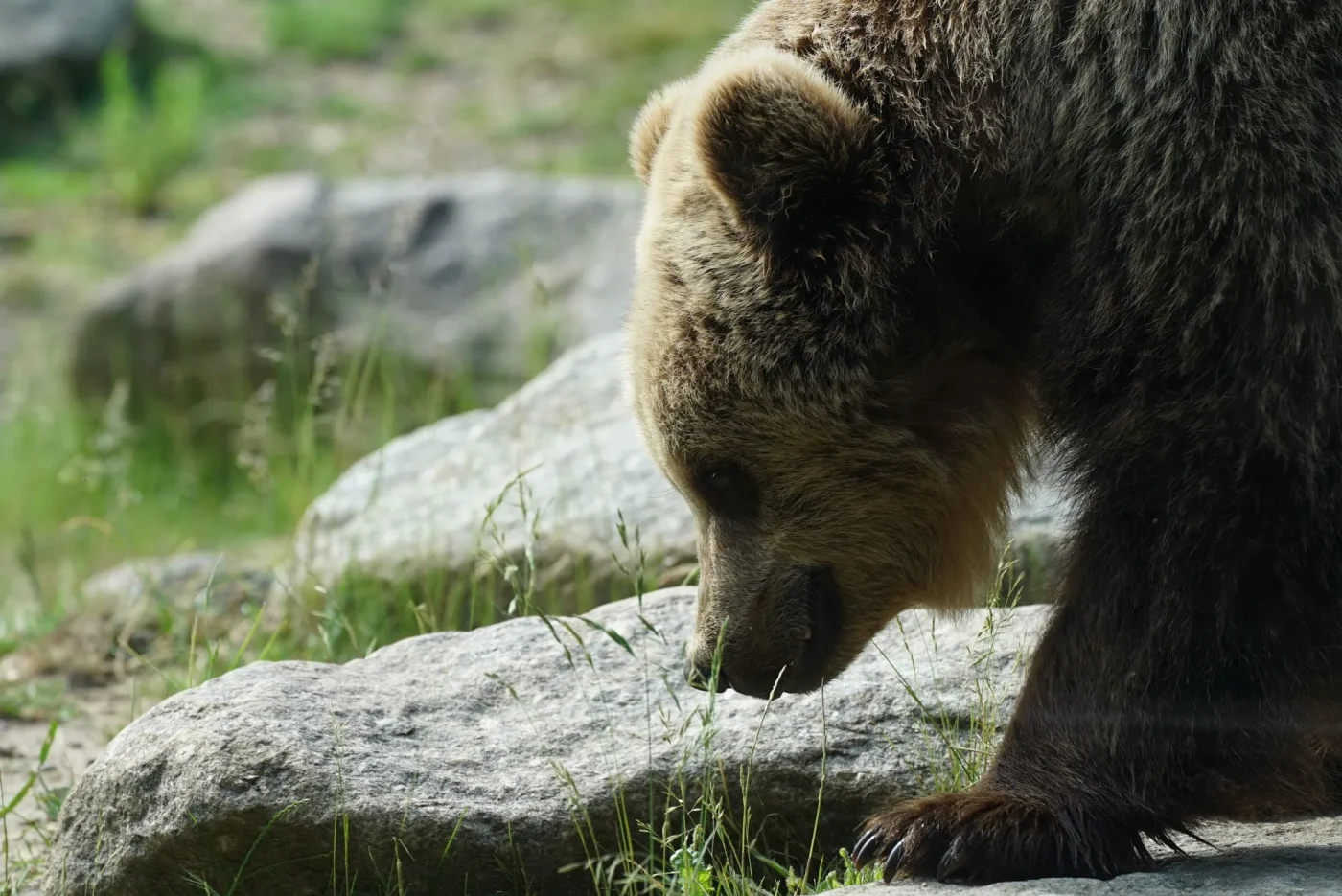
The brown bear is a solitary and territorial animal; they only meet during the breeding season. The home range varies according to many factors (population density, food resources, etc.). In Europe, the size of the territory varies between 200 and 1,000 square kilometers for a male and between 70 and 300 square kilometers for a female. However, the entire territory is not permanently occupied. In fact, it consists of a small refuge area that the bear occupies regularly, as well as many larger areas which it only visits occasionally.

The brown bear is an animal capable of running faster than a human, as it can reach speeds of 56 km/h. In addition, it swims very well and climbs trees easily. However, the bear is a peaceful animal that spends much of its time searching for food.

One of the peculiarities of the brown bear is its winter rest. In fact, we talk about “hibernation” and not “true hibernation”. Hibernation is a specific physiological phenomenon where a drop in body temperature by 20 to 25 degrees allows for deep lethargy. Animals that truly hibernate, like the marmot and the hedgehog, are in a deep sleep throughout the winter and only wake up in spring. In brown bears, the winter rest—which takes place in a den (a cave, a cavity, etc.)—allows for phases of waking and even trips outside. The duration of hibernation is not the same everywhere and for everyone; it varies according to the geographic area, climatic conditions, reproductive status, sex, and age of the individuals, etc. Adult males remain active as much as possible. In contrast, a female with her cubs stays in the den as long as possible.

In the Pyrenees, males begin hibernation in December and end it at the end of March, while pregnant females begin in November and end at the end of April.

Some individuals move seasonally over distances of several hundred kilometers in order to reach feeding areas.

Reproduction strategy

In general, reproduction in Ursids is rather unique due to delayed implantation. This term refers to a pregnancy in which there is a pause in embryonic development for several weeks. For the brown bear, the mating season lasts throughout spring, from mid-April to mid-June. At this time, females mate with several different males. Males may fight among themselves to gain access to the females. Additionally, in some cases, the male may keep the female with whom he has mated. This means he stays by her side to make sure she does not mate with other males. This is done to ensure the paternity of the young and thus the transmission of genes. Five to six days after fertilization, the embryo, still at the blastocyst stage and not yet attached to the uterus, stops its development for several weeks. This embryo only implants in the uterus about 5 months later on average. This generally occurs in November when the female begins her hibernation.

This is followed by a short period of actual gestation of only about 8 weeks. The female gives birth to her cubs in the middle of winter during a waking phase between January and March. Litters generally consist of 1 to 3 cubs, each weighing between 300 and 400 grams, blind and naked. They then grow quickly, as at 3 months they already weigh about 15 kilograms and 25 kilograms at 6 months. They are suckled by the mother until 18-30 months but already begin tasting different plants at 5 months. The young remain with the mother for the first 2, 3, or 4 years of their lives before becoming independent. Mortality is very high since only 1 cub in 2 reaches sexual maturity, which occurs between 4 and 6 years. The causes are multiple: accidents, malnutrition, predation… Brown bears generally live between 25 and 30 years.

In the Pyrenees, males begin hibernation in December and finish at the end of March, while pregnant females begin in November and finish at the end of April.

Some individuals move seasonally over distances of several hundred kilometers to reach feeding grounds.

What does he eat?

The brown bear feeds mostly in the morning and evening. They are opportunistic omnivores who eat whatever they find: plants, mushrooms, and meat. They consume a wide range of plants such as grasses, roots, fruits, mosses, bulbs, nuts, berries… The plant component represents between 75 and 80% of its diet. The remaining 20 to 25% is of animal origin. Half of the meat eaten comes from carrion. The other half consists of ungulates (sheep, cattle, deer, etc.), fish, micro-mammals, amphibians, and insects. It has been shown that consuming moth larvae in autumn enables a quick gain of fat mass, which is essential for hibernation.

Some individuals make seasonal movements of several hundred kilometers in order to reach food sources such as salmon rivers, for example. This can cause groups of individuals to gather and, therefore, hierarchical confrontations. Large adult males and females accompanied by cubs are at the top of the hierarchy.

What threatens it?

Due to their size and nature, bears have very few predators. Only the young can be preyed on by other bears, wolves, or even pumas, but this remains exceptional.

Conservation

In general, the brown bear is classified as of least concern by the IUCN. The global population is estimated at about 110,000 mature individuals and occupies a significant range. However, conflicts with humans over crops and livestock lead to killings. Furthermore, human activities increase mortality: road and rail collisions. Poaching for beliefs is unfortunately still practiced. In addition, habitat fragmentation isolates individuals from each other, impacting the demography and genetic diversity of populations.
Nowadays in France, the brown bear population is classified as critically endangered. Historically present throughout the country, by the Middle Ages it was only found in the eastern and southern mountain ranges. It officially disappeared from the Vosges at the end of the 18th century, from the Jura and Massif Central in the 19th, and from the Alps in the 20th century. Currently it is only present in the Pyrenees. In 1995, only 5 individuals, including just one female, were detected. As a result, a population reinforcement took place, and in 1996/1997, 3 bears were relocated from Slovenia to the Pyrenees. Following the killing of two females—including Cannelle, the last female of Pyrenean descent—in 2004, five bears were released in the Pyrenees in 2006. The last release dates from 2018, with two females.
Thanks to protection and population reinforcement, 70 bears were detected in the Pyrenees in 2021. Too small to sustain itself spontaneously, the population remains fragile, especially since coexistence with humans remains complicated.

Discover other animals from Europe and Asia: red panda, Amur leopard, snow leopard, Siberian tiger, orangutan, golden eagle, caracal, white tiger, binturong, siamang, bearded vulture, flying phalanger, Asian small-clawed otter, peregrine falcon, steppe eagle.

Life at the park

Here at Amnéville zoo you can observe our pair, Sano and Nela, as well as Oural, our male born in 1998 at the Amnéville zoo.


Other animals to discover