What is a giant anteater?
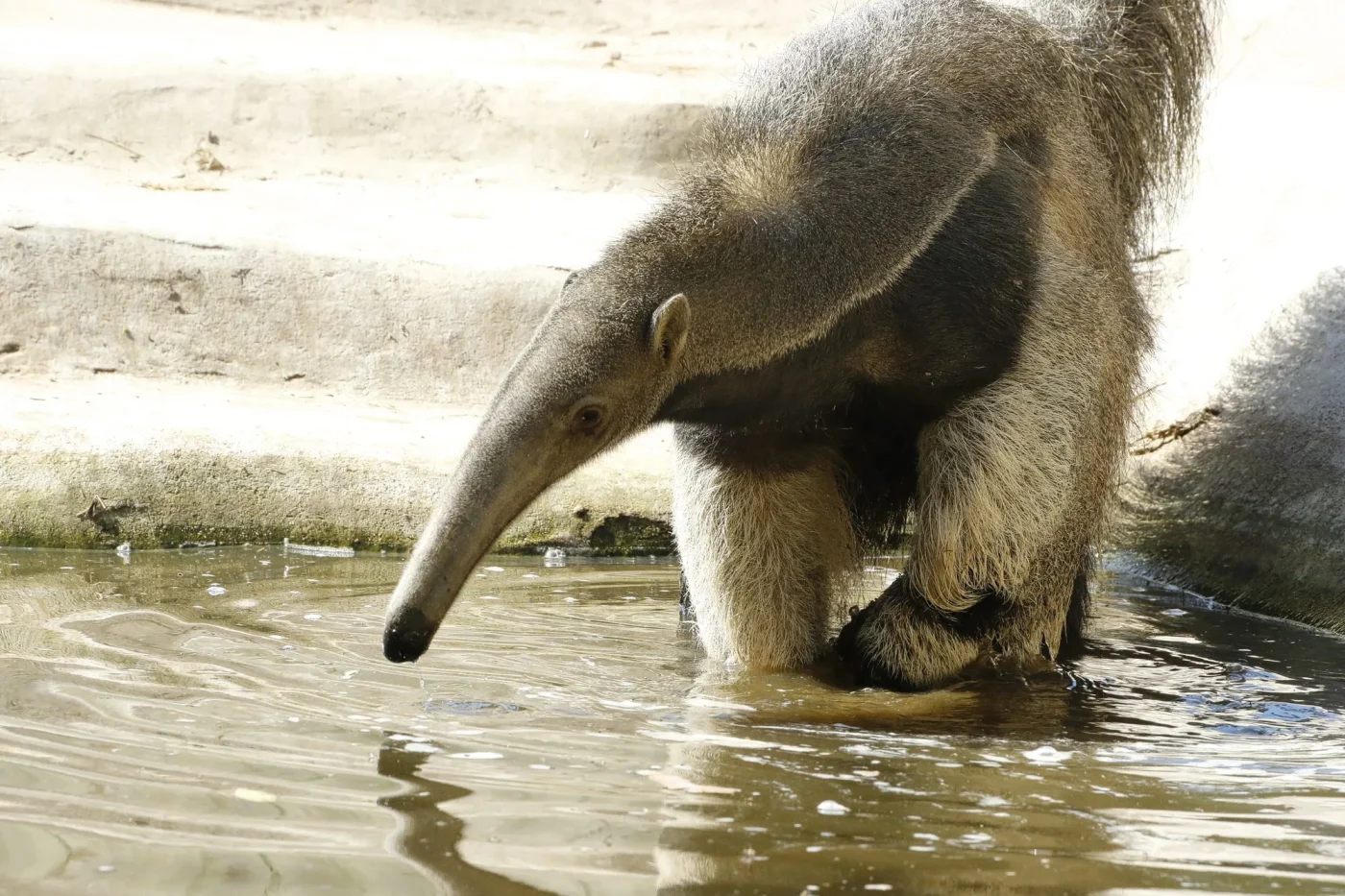
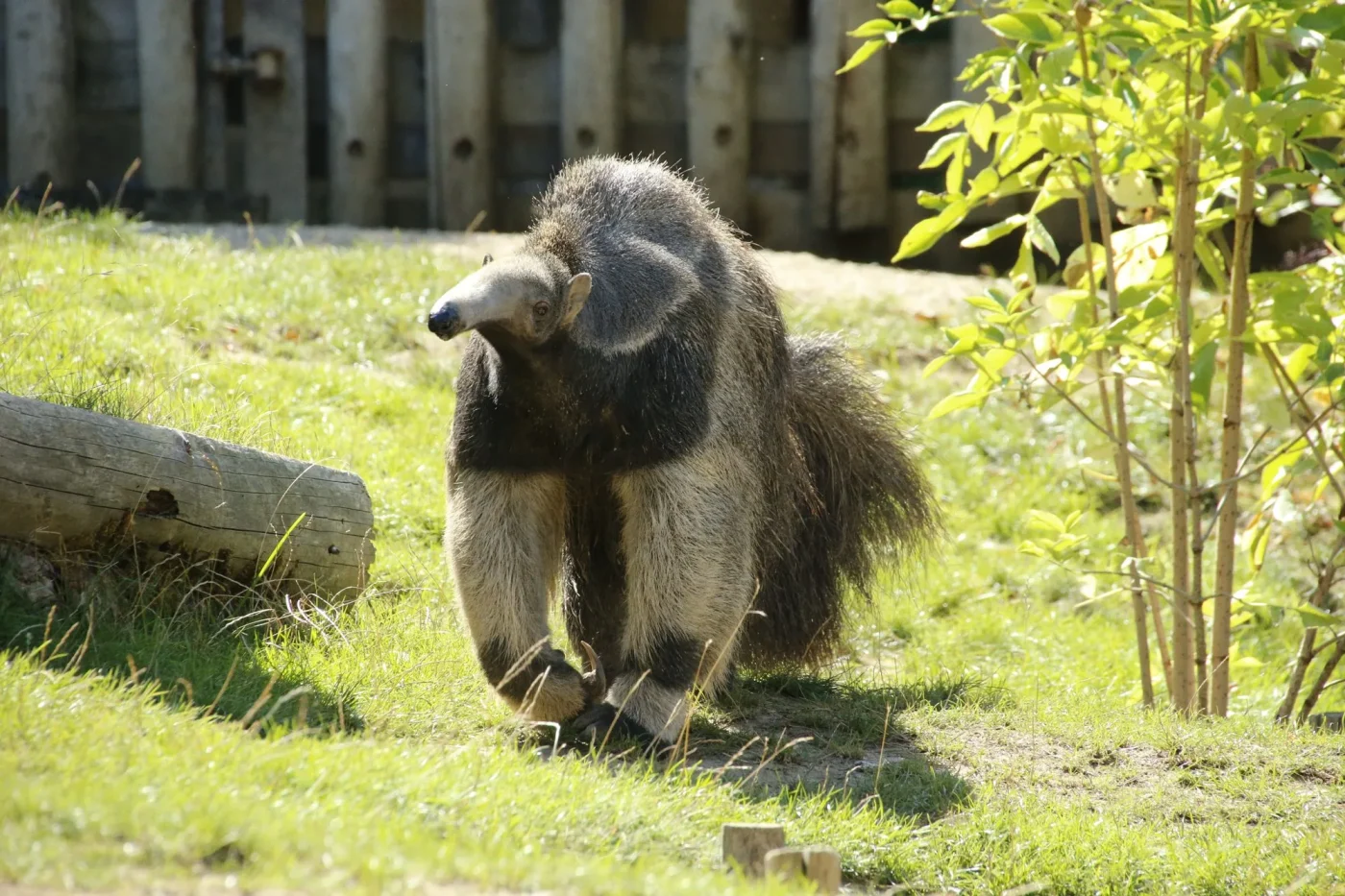
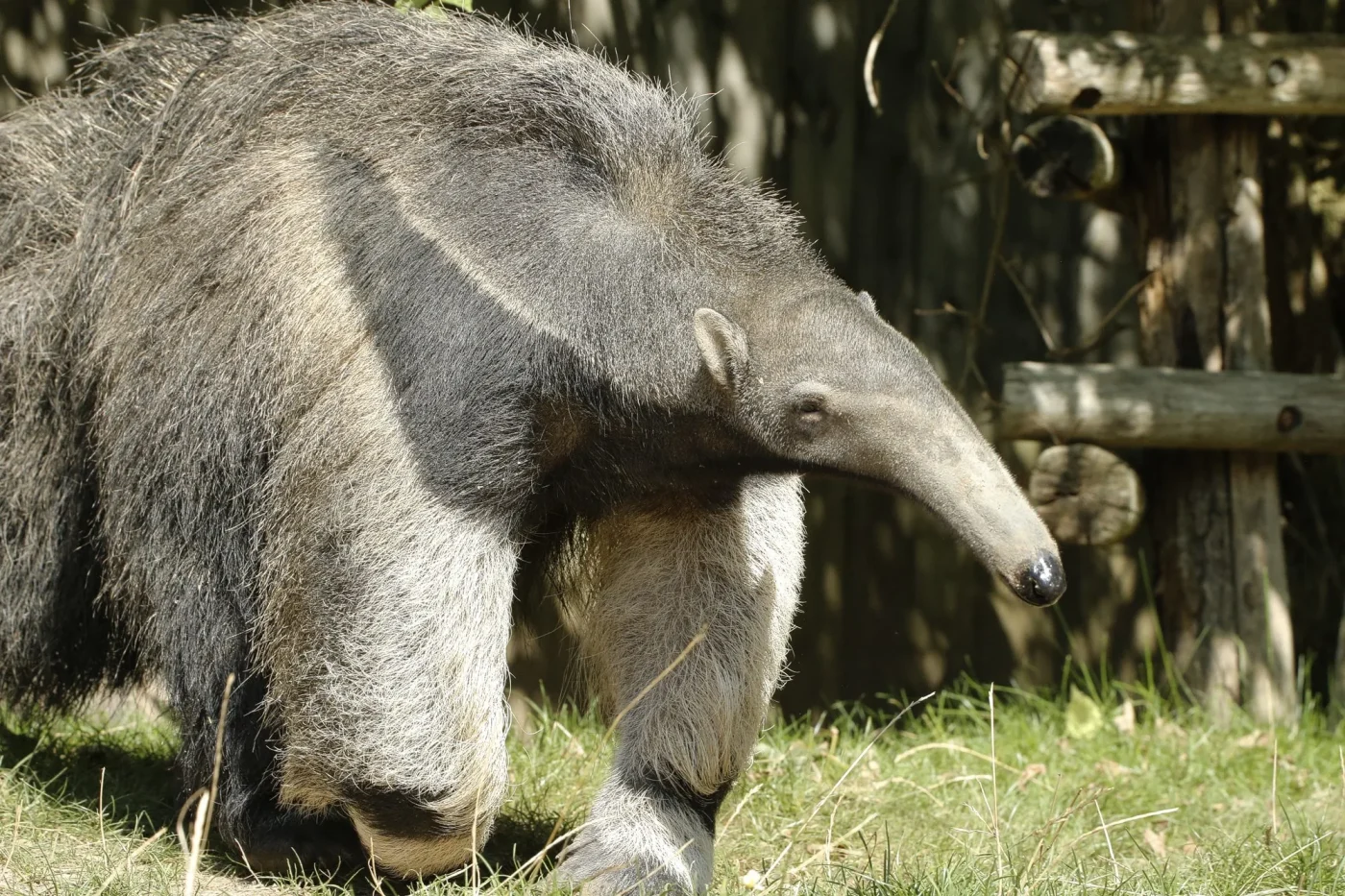
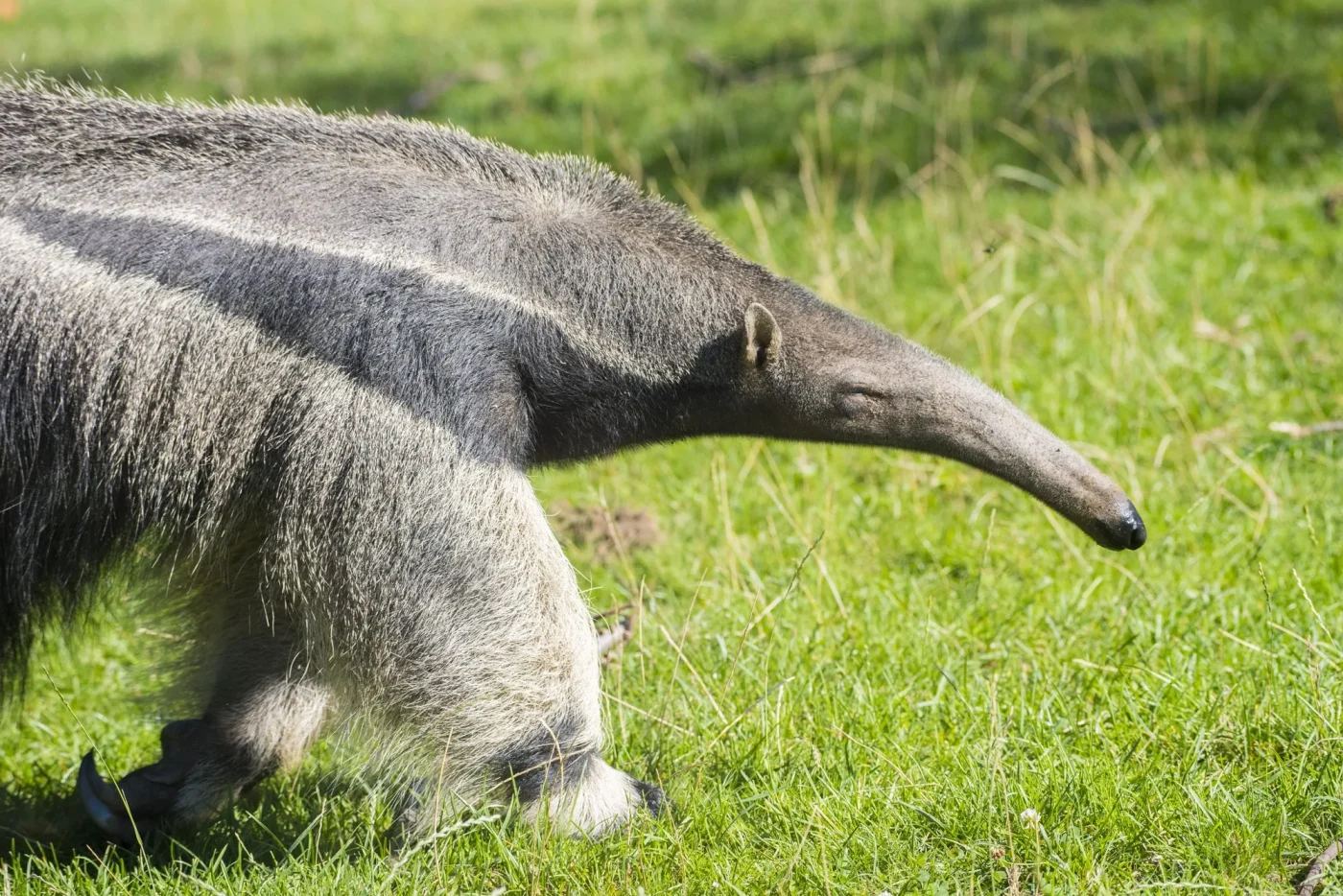
The giant anteater is the largest representative of all the species in the anteater family, which is why it is also known as the giant anteater. The largest individuals can reach nearly 1.2 meters in length and weigh nearly 40 kg. It is a very unique species morphologically, as it has an elongated head with small eyes, small ears, and ending in an extended snout measuring up to 45 cm long. The oral opening is very narrow and the jaw has no teeth. The tongue has a particular spine-like structure allowing the animal to extend it more than 60 cm out of its body. The body is covered with coarse, gray-brown fur with a white and black triangular pattern at the shoulders. The body ends in an impressive, very bushy tail that can measure up to 90 cm. The forelegs are white with black bars at the level of the 5 fingers. The 3 inner claws are 10 cm long. To avoid damaging them and to keep them sharp, it moves on its wrists, with the claws turned backwards. The claws of the hind legs are relatively short.
There is no sexual dimorphism for this species; males and females are identical.
Where does the giant anteater live?
The giant anteater is native to South and Central America, with its range extending from Guatemala to northern Argentina. It is found in many different habitats, such as tropical or dry forests, grasslands, as well as swamps.
What does it eat?
It is an almost strictly insectivorous animal, feeding mainly on ants, termites, and worms, but it sometimes also eats fruit. Hence its scientific name Myrmecophaga, which means ant eater. Its tongue, which can reach up to 60 cm in length, is covered with sticky saliva to catch insects that happen to be within its reach. Since it can only spend a few minutes at each nest before the insects start to attack it, it is able to flick out its tongue 150 times per minute with a back-and-forth movement to eat several thousand insects in record time. Its long claws also allow it to dig into wood, earth, or termite mounds with ease to extract the insects.
Its relatively large size protects it from most predators; only pumas and jaguars attack the giant anteater.
Reproduction strategy
Very little scientific data on the reproduction of giant anteaters in the wild has been collected up to now. The data has mainly been collected in zoos.
There is no real breeding season; they can reproduce throughout the year. However, in some regions, it appears that there are seasonal reproductions. The gestation period lasts about 90 days, after which the female gives birth to a single young weighing 1.3 kilograms. The newborn has a coat identical to that of adults and immediately after birth climbs on its mother’s back.
It will stay there until it reaches about half the size of its mother between 6 and 9 months. It is only around 2 years old that it becomes independent. Sexual maturity occurs between 2 and 4 years of age.
Females can theoretically reproduce every 9 months, but it actually happens about once a year.
The lifespan in the wild appears to be 15 years, but some individuals have lived up to 25 years in captivity.
Behavior
Anteaters are generally solitary; they usually only meet to reproduce. Some individuals possess a specific territory, while others wander.
In most cases, when two specimens cross paths, they avoid each other, but violent agonistic behaviors can occur. At this moment, they stand on their hind legs, using their tail as a balancer. In this position, they can then use their forelegs, equipped with long claws, as weapons.
Essentially diurnal, it spends the night hidden in vegetation, in abandoned burrows, or in crevices in the ground. However, in urbanized areas, they may become nocturnal to avoid humans.
Its small eyes give it rather poor vision, and its hearing is bad. However, its snout has a sense of smell 40 times more developed than that of a human.
They are relatively slow animals but are capable of running fast and swimming if needed.
What are its predators?
The giant anteater is the most threatened mammal in Central America; the IUCN lists this species as vulnerable; its numbers have declined by more than 30% over the past 10 years.
This disappearance is mainly due to the loss of habitat caused by deforestation, as well as by frequent forest fires. Road traffic is the second cause of its disappearance. Furthermore, in many of the areas it frequents, it is also a victim of poaching for its meat and its claws. Yet, the giant anteater still plays an important role in its ecosystem by helping to regulate the number of insects present.
Conservation programs are underway, notably to study the impact of road collisions. As a result, individuals are tracked with GPS collars to determine the movements of the species.