Ailurus fulgens

Red panda

Order: Carnivore / Family: Ailuridae / Genus: Ailurus

Description

The origins of the red panda have always been difficult to determine. It has often been considered as part of the bear family like the giant panda because of their similar names. Moreover, other characteristics are common to these two species.

For example, just like the giant panda, the red panda has an extension of the radial sesamoid bone at the wrist. This modification acts as a sixth finger and more specifically as an opposable pseudo-thumb, allowing it to grasp bamboo stems more easily and climb trees better.

Later, it was attributed to the raccoon family due to its resemblance to raccoons. It was ultimately through genetic studies that it was discovered that the red panda is actually the sole representative of its family, the ailurids. Two subspecies have been identified: the eastern red panda and the western red panda (Ailurus fulgens styani, Ailurus fulgens fulgens).

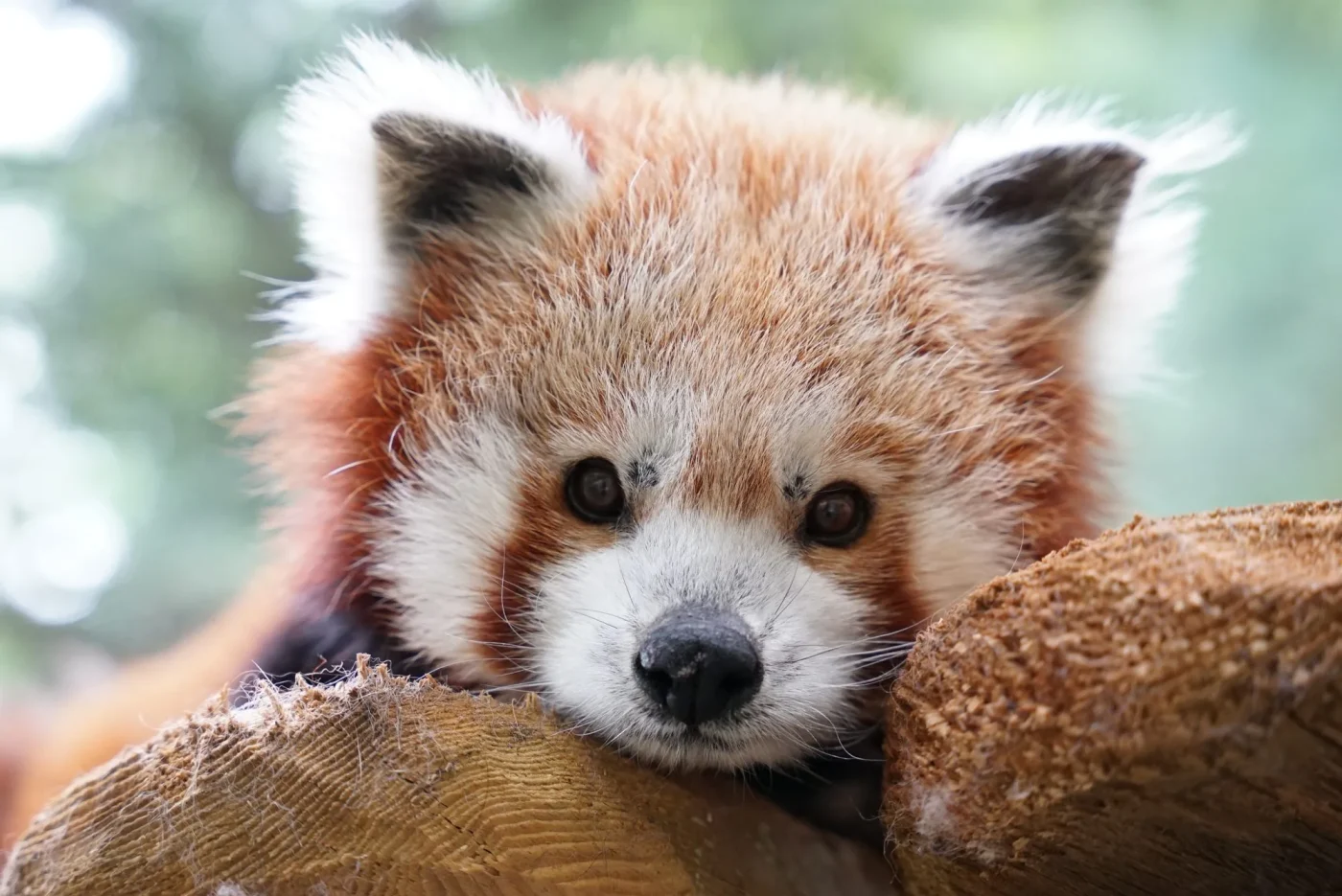
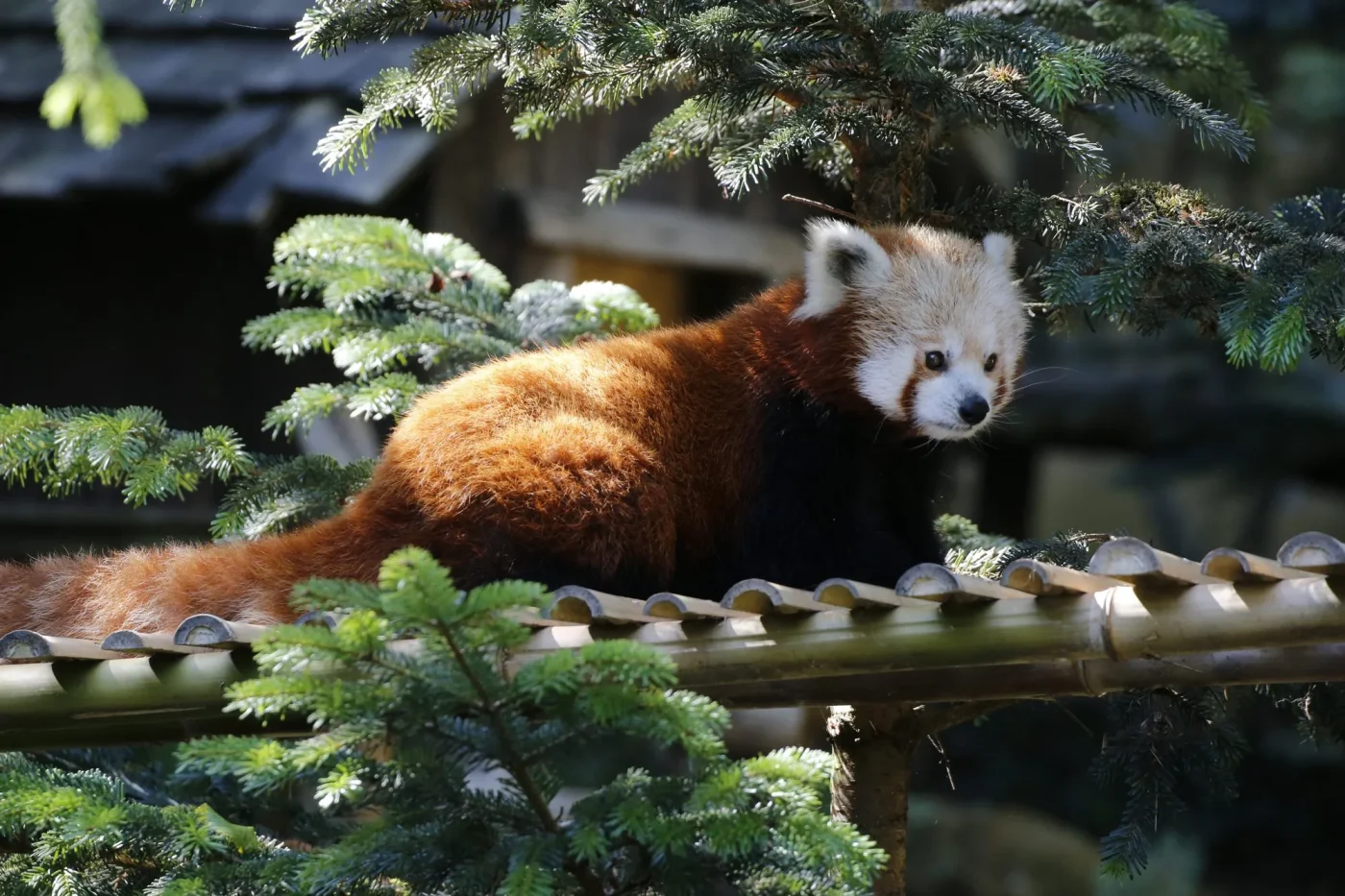
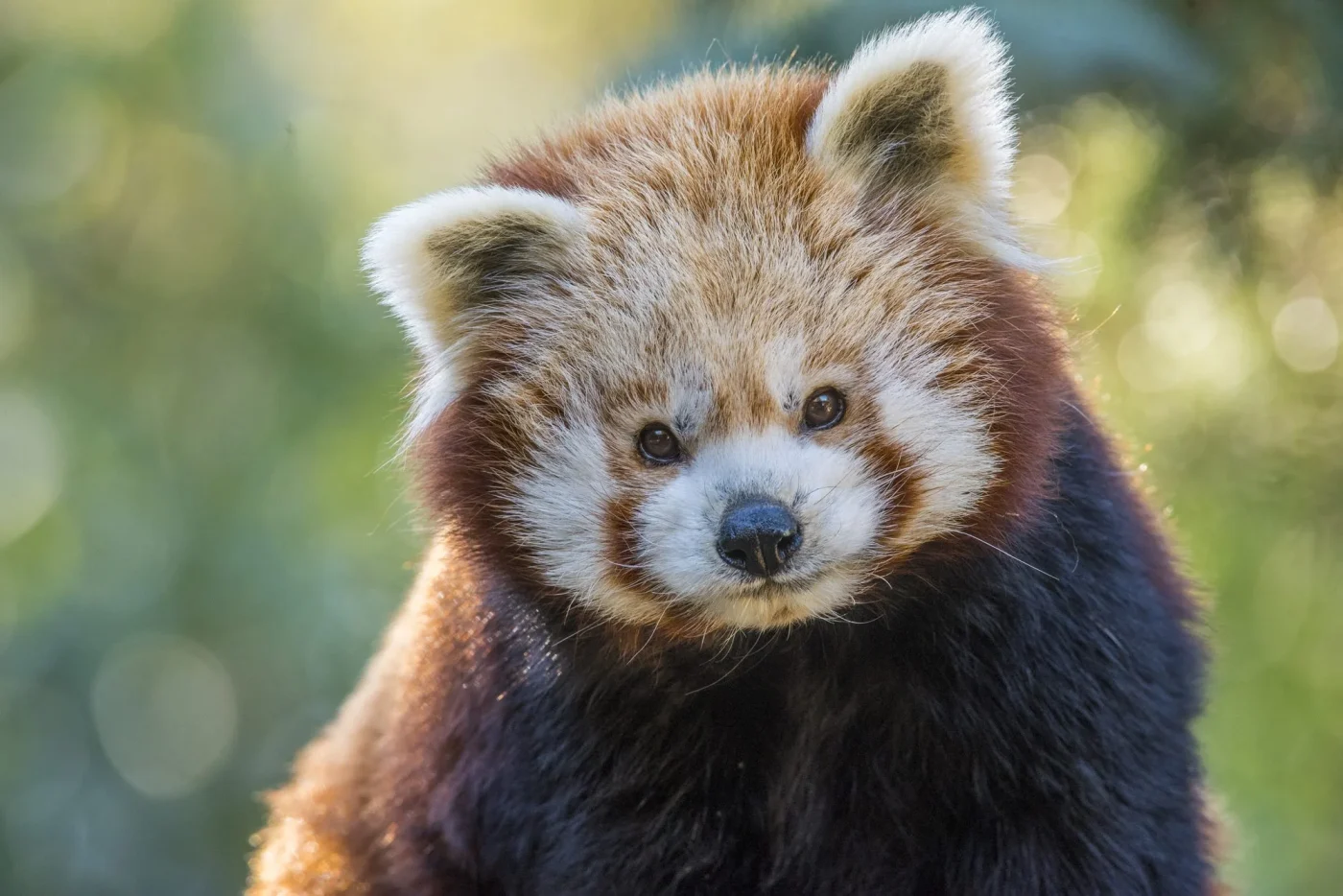
There is no sexual dimorphism in this species. Red pandas measure between 56 and 62 cm in length and have a long furry tail ranging in size from 37 to 47 cm. They measure between 20 and 25 cm at the shoulder and weigh between 3 and 6.5 kg. This non-prehensile tail features alternating red and cream rings. The coat is dense and consists of 2 layers: the guard hairs, which are long, and the underfur, which is shorter and softer. As its name suggests, the fur on the back is a reddish-brown color. In contrast, the fur on the belly and legs is black. The face is white and displays red markings under the eyes which are more or less pronounced depending on the individual. This animal is plantigrade, meaning it moves on the soles of its feet. Thanks to its semi-retractable claws and fur under its feet, this arboreal animal can easily climb trees without slipping. An oily substance makes its fur waterproof. Thus, it is perfectly protected from cold and bad weather.

Weight

3 - 6.5 kg

Habitat

Forest, mountain

Diet

Omnivore tending toward herbivore (bamboo)

Gestation

4 and a half months

Longevity

10-15 years

Longevity

12-17 years

Location

Himalayan mountain ranges
Frequently Asked Questions

Habitat

The range of the red panda, or Ailurus fulgens, is concentrated in the Himalayan ranges, between 2,200 and 4,800 meters above sea level. The different populations of this species, classified as threatened animals, are scattered across several countries, including Nepal, India, China, and Bhutan. This magnificent animal, a member of the Ailuridae family, lives in temperate conifer forests, where the undergrowth consists of bamboo thickets and hollow trees. It is fond of these plants, which make up an essential part of its diet. Unfortunately, the fragmentation and loss of its habitat represent significant threats to the survival of the pandas, and conservation efforts are more than necessary to preserve this iconic species.

Reproductive strategy

Red pandas are solitary and only come together during the breeding season. The breeding period takes place between the months of January and March. During this time, males mark the environment with their urine and by rubbing their anogenital area. Although these are arboreal animals, mating actually occurs on the ground. Both male and female red pandas can mate with multiple partners in the same year. This is known as polygynandry. The female builds her nest in a hollow tree or in a crevice between rocks. The gestation period then varies between 112 and 158 days; the reason for this range is due to delayed implantation. The growth of the embryos can be paused for up to 50 days, allowing births to occur during times when environmental conditions are more favorable for the survival of the young. Most of the newborns are born in June. The female gives birth to 1 to 4 cubs per litter. The cubs are born covered in fur and measure from 10 to 15 cm including the tail, with a weight of 80 to 130 grams. After 90 days, the young leave the nest and begin to move around. Only the females provide care for the young.

Young red pandas can become independent as early as 8 months old but usually stay with their mother until the next breeding season. They reach adult size at around 1 year, but will only become sexually mature between 18 and 20 months. Red pandas have a lifespan of 10 to 15 years.

Behavior

Red pandas are solitary animals active from dusk to dawn. Their walk is quite slow but they are capable of short, faster sprints and can even make leaps of over a meter. They are arboreal animals that have nests in trees. They are very comfortable in trees and move easily from branch to branch with flexibility. The tail is very useful for balance. When they descend from the trees to the ground, there is a rotation of the ankle joint that allows them to go down head first in order to have a view of potential dangers. It uses its tail to cover its body and thus reduce heat loss. It is capable of standing on its hind legs.

What are its predators?

The main predators of the red panda are snow leopards.

What does it eat?

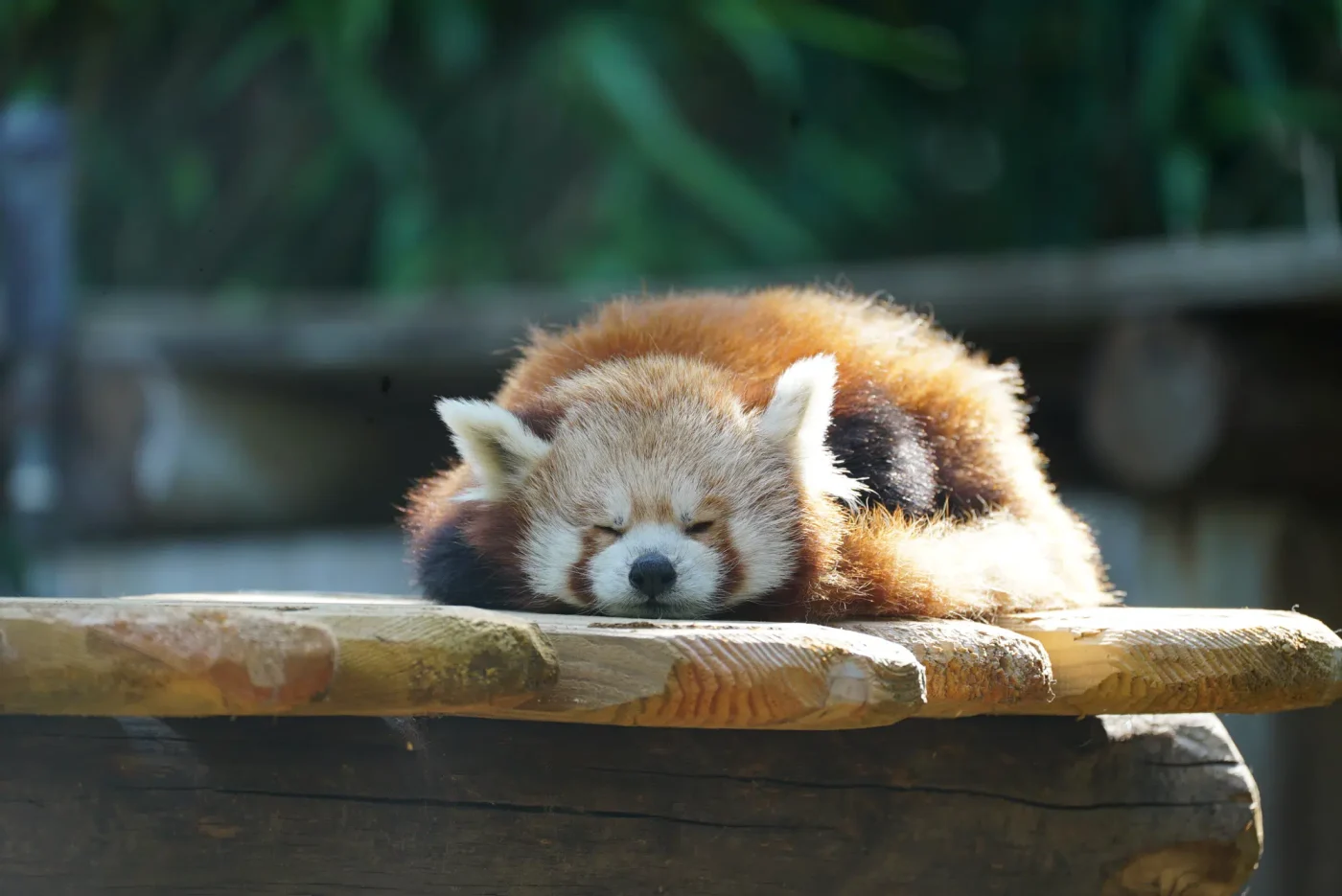
This mammal is omnivorous, so its digestive system is similar to that of a carnivore, and its ability to absorb nutrients found in plants is therefore limited. And yet, bamboo makes up more than 90% of its diet, with the remaining 5 to 10% consisting of berries, mushrooms, flowers, as well as eggs, insects, or other small mammals. Bamboo is a food that is low in nutrients and quickly digested, so the red panda has to consume a large quantity of bamboo each day. Additionally, to compensate for the limitations of its digestive system, it spends about 13 hours a day sleeping in order to reduce energy loss. Its metabolism is very slow and comparable to that of the sloth.

Danger and conservation

Many threats hang over the red panda: habitat loss and fragmentation, climate change, poaching… The main threat to the red panda is the destruction of its habitat, leading to a loss of nesting sites as well as food sources. Logging leads to the construction of roads that make it easier for poachers to access the area. It is also threatened by the presence of humans, who are getting closer and closer to its habitat, as well as by domestic animals like dogs, which can easily kill the red panda or transmit diseases such as distemper, which is deadly for red pandas.

Poaching for its fur, its meat, or for pets intended for the Chinese market greatly impacts the population numbers. All of this also results in creating highly fragmented and scattered populations, increasing inbreeding. Today, it is estimated that about 10,000 individuals still live in the wild, which corresponds to a decrease of nearly 50% of the population.

Fortunately, many organizations are working for the protection of this species. Close monitoring of current populations allows for better protection. In addition, awareness campaigns are organized for local populations.

Discover other animals from Asia and Europe: red panda, brown bear, Amur leopard, snow leopard, Siberian tiger, orangutan, golden eagle, caracal, binturong, white tiger, siamang, bearded vulture, sugar glider, Asian small-clawed otter, peregrine falcon, steppe eagle, white-handed gibbon.

Other animals to discover