Gypaetus barbatus

Bearded vulture

Order: Accipitriformes / Family: Accipitridae / Genus: Gypaetus

What is a bearded vulture?

13 subspecies of bearded vultures have been described, but they are difficult to distinguish by sight.

With a body length of 94 to 125 cm, a weight of 4.5 to 7 kg, and a wingspan of 231 to 283 cm, it is the largest European vulture.

There is no sexual dimorphism in this species, but females are on average smaller than males.

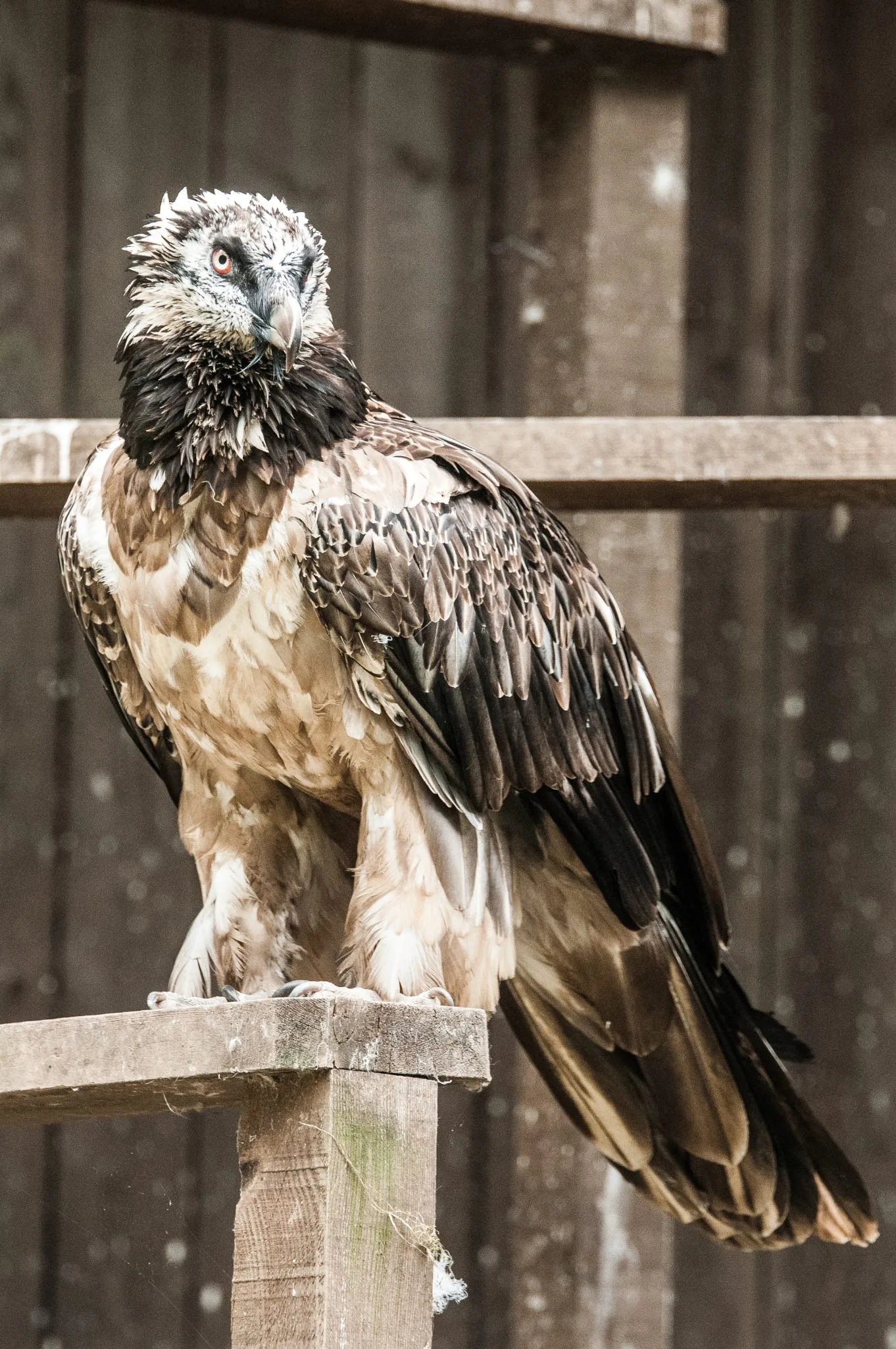
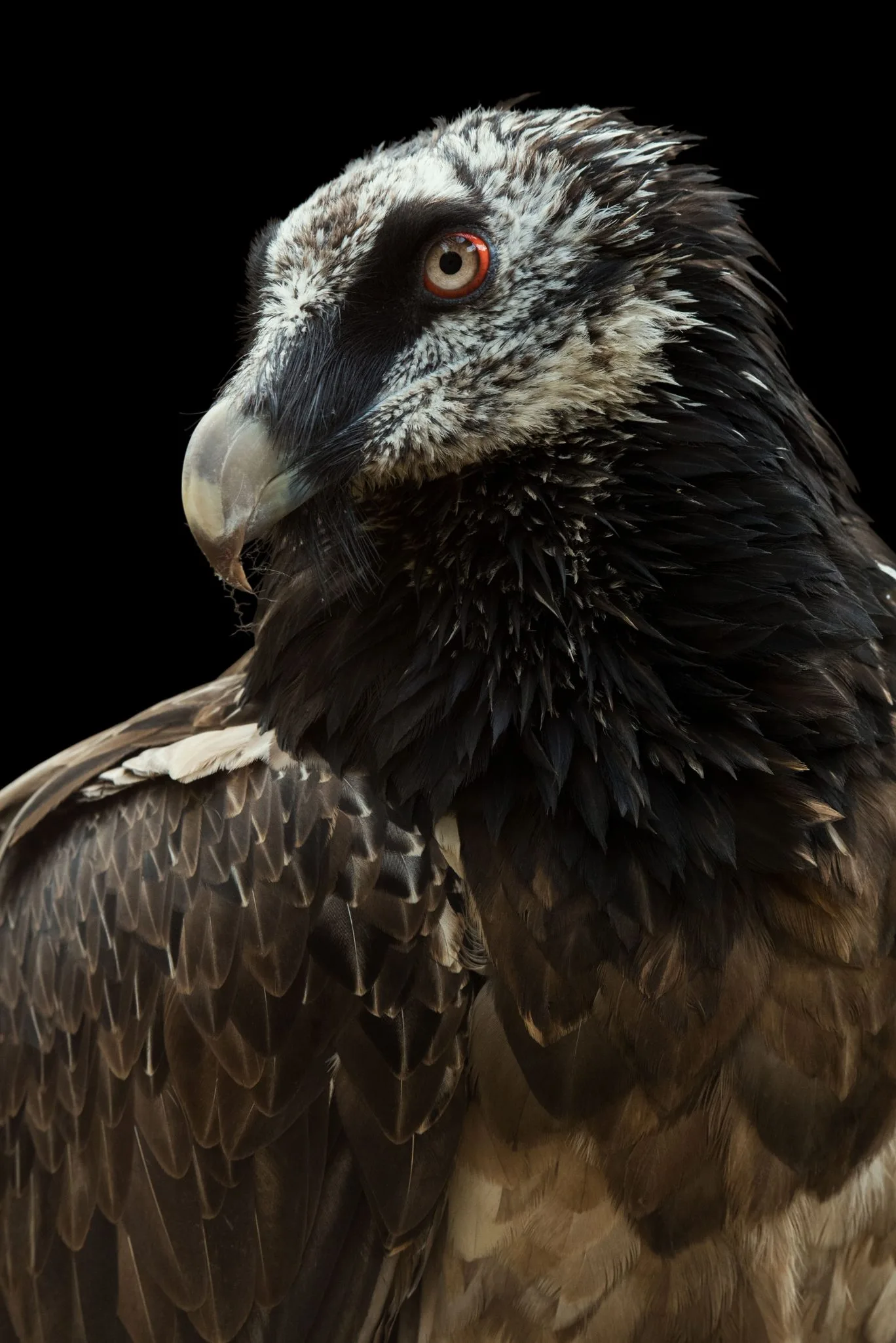
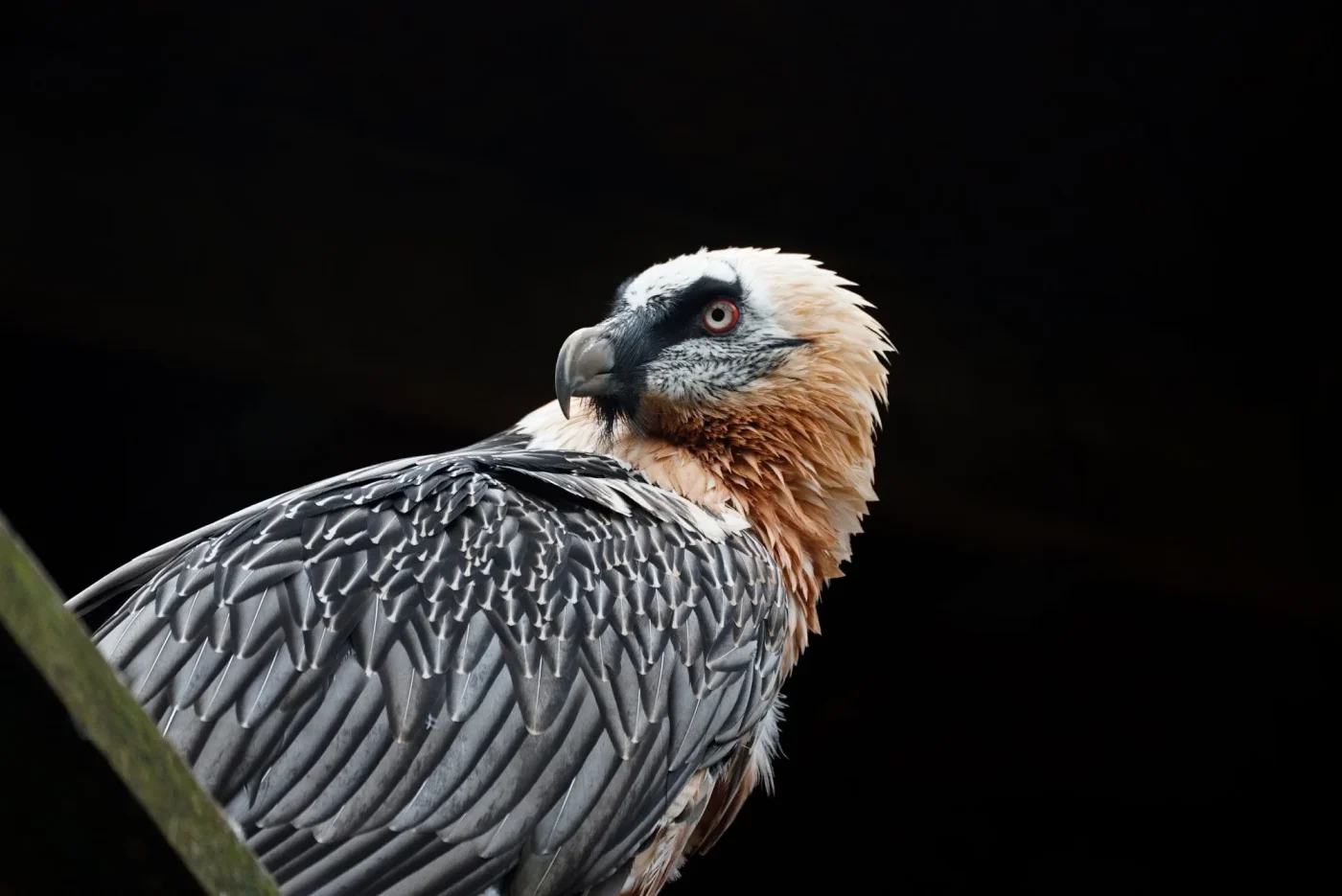
It has bluish black-gray plumage on top and yellow-orange underneath. A bright red eye ring surrounds the yellow eyes and a black mask spreads between the eyes. Its name might come from the black feathers at the base of its beak that form a sort of beard. The rust-colored throat is caused by bathing in iron-rich waters. Unlike most vultures, bearded vultures have a fully feathered head and neck. This difference is probably due to a difference in diet. In fact, bearded vultures mainly consume bones, so they are not soiled by carcass blood, unlike other vultures that eat carrion.

The juveniles do not look like the adults because they have entirely brownish-gray plumage.

Weight

4.5 to 7 kg

Habitat

Mountain and Plain

Diet

Scavenger

Gestation

About 2 months

Longevity

20 - 25 years (40 years in captivity)

Longevity

12-17 years

Location

Europe, Africa and Asia
Frequently Asked Questions

Where does the bearded vulture live?

The bearded vulture is a large vulture that frequents mountainous habitats across southern Europe, from the Pyrenees to Asia in central China. These birds are also found on the African continent in the Maghreb, on the Ethiopian highlands, as well as in South Africa. They are high-altitude birds of prey that generally live above 2,000 meters in altitude but can also be found as low as 300 meters and as high as 4,500 meters. They especially like cliffs overlooking meadows.

Reproduction strategy

Bearded vultures are monogamous birds, but cases of polyandry have been detected. It consists of a group formed by a pair joined by a young male.

The breeding season extends from December to February. Bearded vultures perform spectacular courtship displays: they make mutual circles, chase each other at high speed, and tumble over one another, almost hitting the ground before taking flight again just before impact. Juveniles also perform aerial dances, which are similar to social games intended to practice for the courtship displays. Nests are built with various materials: twigs, grasses, animal hair, pieces of skin, or even bones. Another explanation for their name comes from observations of bearded vultures carrying sheep’s wool in their beaks, mimicking a long beard. The female lays 1 to 3 eggs in the nest 50 to 90 days after mating. The eggs hatch after about fifty days of incubation. The hatching of the eggs is not synchronized and shows a gap of about 6 days. This helps to compensate for the potential death of chicks. However, the parents favor the oldest chick, and the other chicks die quickly. The chicks are fed with prey remains, not by regurgitation unlike other vultures. The young leave the nest at around 4 months old and reach sexual maturity at around 8 years.

The reproductive success of these raptors is influenced by many factors. The parents expend a lot of energy defending the nest, and as a result, spend less energy on the chicks. To avoid bad encounters, the nests are built in high altitude locations where weather conditions are harsh. Therefore, a pair will only see one chick fledge every 2-3 years. Bearded vultures have several nests within their territory. Located between 700 and 2,000 meters in altitude, these nests are occupied every 4 to 5 years. This rotation allows for the disappearance of parasites that have accumulated in the nest.

What does it eat?

Bearded vultures are scavenging carnivores that feed almost exclusively on bones. Their diet is made up of about 85% bone. Their food consists of 93% mammal bones, and mainly ungulate carcass bones, making up 61%. When prey is spotted, they patiently wait for other scavengers that eat meat to clean the carcass before they help themselves. Their 7cm wide throat allows them to swallow whole bones up to 25 cm long and 3.5 cm in diameter. The powerful stomach acids can dissolve them within 24 hours. Bones of 10 cm in diameter and weighing 4 kg are also a food source for the bearded vulture. To eat them, it grabs them with its talons, flies up, and drops them from over 100 meters high onto rocky sites to break them into several pieces. These rocky sites are called ossuaries. This way, they can consume the marrow. During lean periods, they are able to eat live prey such as turtles, lizards, or small mammals, which they kill using the same technique. They are capable of trapping large mammals at the edge of cliffs and making them fall with strong wing beats.

Scavengers play an essential ecological role, as by consuming carcasses they prevent the spread of disease.

Lifestyle

They are diurnal birds and pairs are faithful for life. They defend a territory within which they have several nests built in crevices of the cliff. The males are the ones who build the nests and defend the territory, allowing the female to judge the quality and reproductive potential of the male.

Cases of polyandrous trios have already been observed. This means a trio consisting of two males and a single female.

Bearded vultures are quiet birds but the vocalizations during mating sound like laughter.

They do not have a very developed sense of smell. As a result, they locate carcasses thanks to their excellent eyesight.

What is it threatened by?

Due to the large size of their territory, the population density of bearded vultures is fairly low. The range has decreased, especially in Europe, where in 2007 only 150 territories were recorded. Bearded vulture numbers have dropped significantly, with estimates ranging from 1,600 to 6,700 individuals. There are many threats: habitat destruction, poisoning, disturbance of reproduction, and collisions with infrastructure. Endangered in Europe, a conservation program is underway, as they are currently being reintroduced into the Pyrenees and the Alps.

Discover other animals: red panda, brown bear, Amur leopard, snow leopard, Siberian tiger, orangutan, golden eagle, caracal, binturong, white tiger, siamang, Asian small-clawed otter, Bennett’s wallaby, snowy owl, peregrine falcon, steppe eagle.

Other animals to discover