Description
The origins of the red panda have always been difficult to determine. It has often been considered as part of the bear family like the giant panda because of their similar names. Moreover, other characteristics are common to these two species.
For example, just like the giant panda, the red panda has an extension of the radial sesamoid bone at the wrist. This modification acts as a sixth finger and more specifically as an opposable pseudo-thumb, allowing it to grasp bamboo stems more easily and climb trees better.
Later, it was attributed to the raccoon family due to its resemblance to raccoons. It was ultimately through genetic studies that it was discovered that the red panda is actually the sole representative of its family, the ailurids. Two subspecies have been identified: the eastern red panda and the western red panda (Ailurus fulgens styani, Ailurus fulgens fulgens).
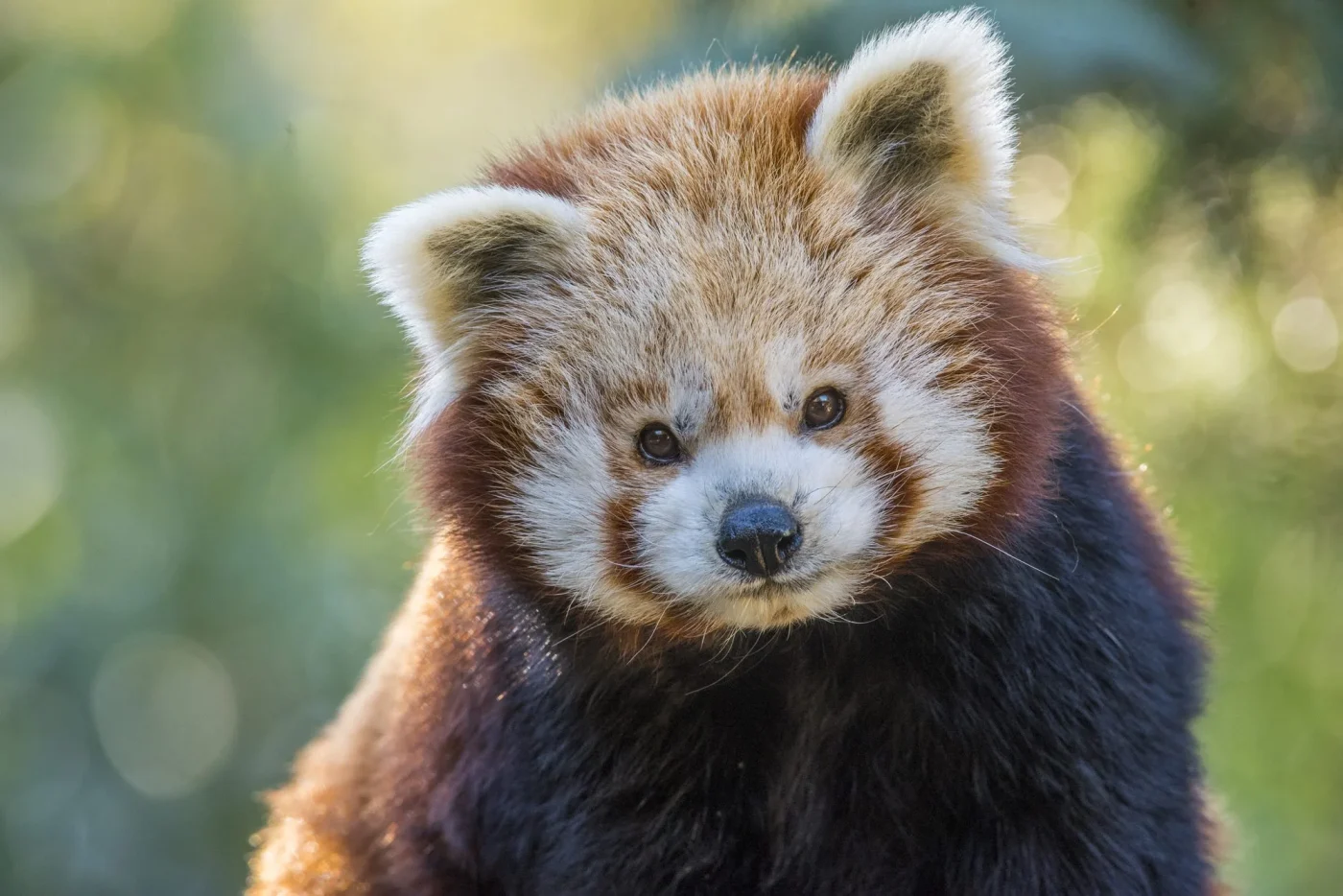
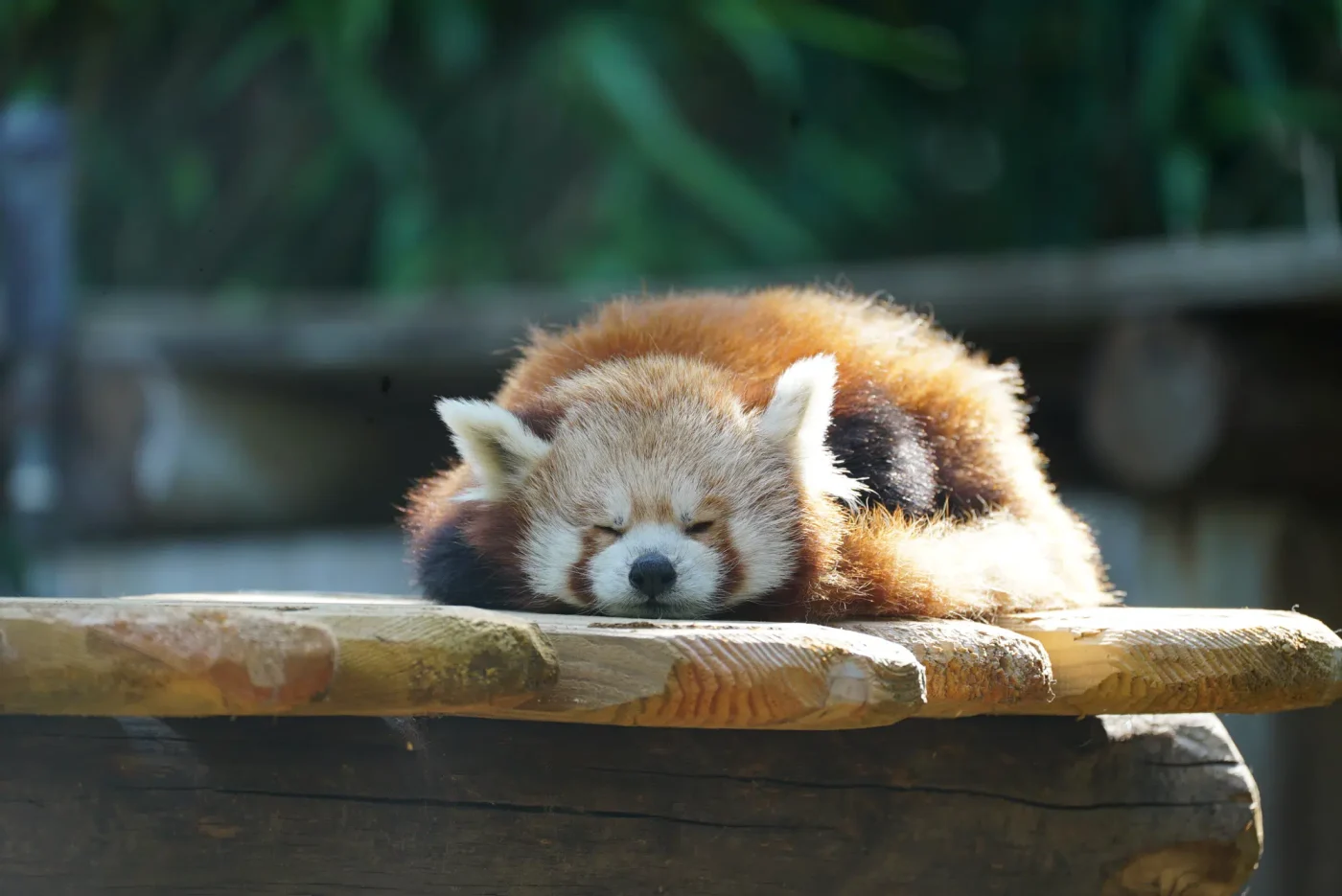
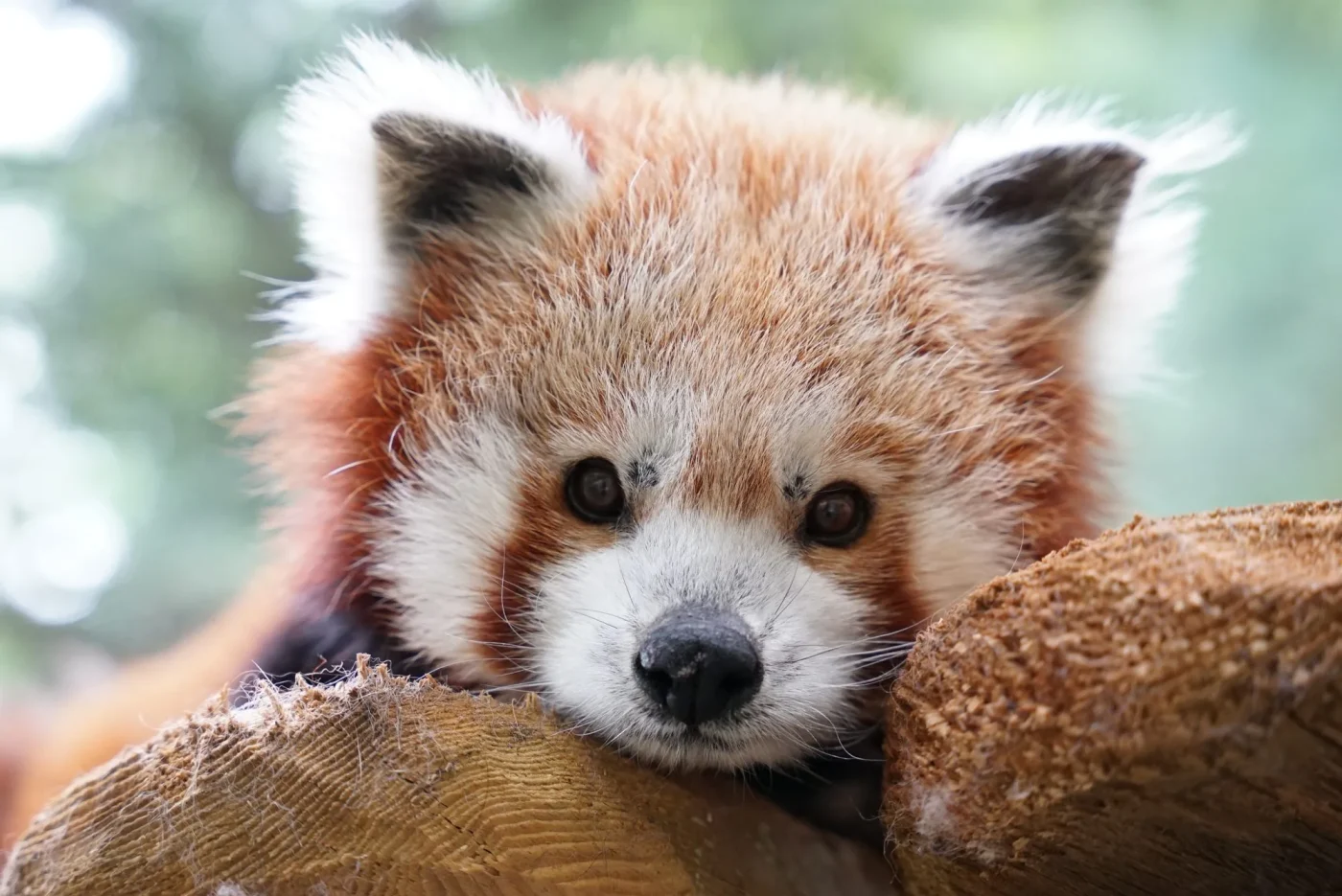
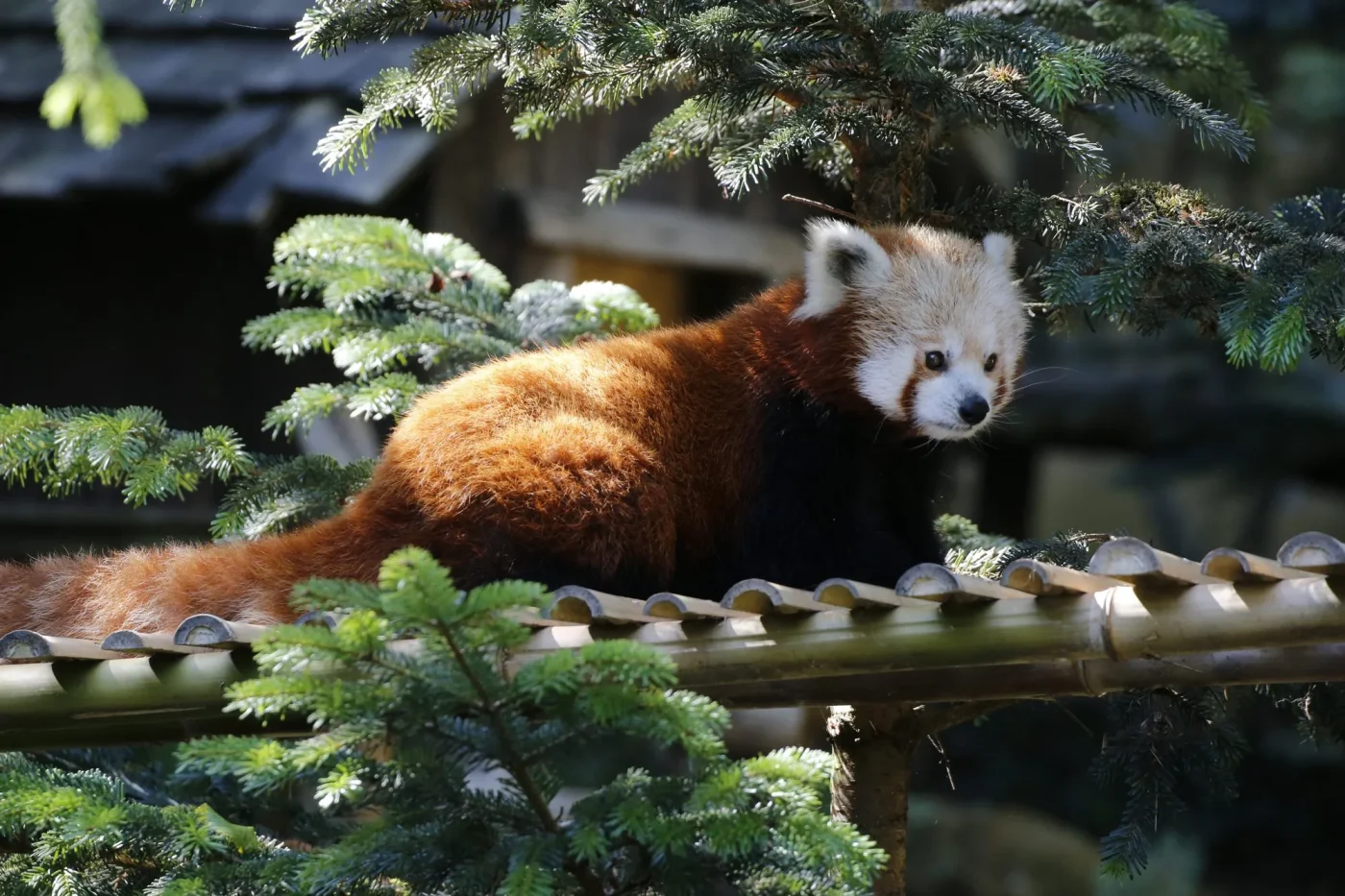
There is no sexual dimorphism in this species. Red pandas measure between 56 and 62 cm in length and have a long furry tail ranging in size from 37 to 47 cm. They measure between 20 and 25 cm at the shoulder and weigh between 3 and 6.5 kg. This non-prehensile tail features alternating red and cream rings. The coat is dense and consists of 2 layers: the guard hairs, which are long, and the underfur, which is shorter and softer. As its name suggests, the fur on the back is a reddish-brown color. In contrast, the fur on the belly and legs is black. The face is white and displays red markings under the eyes which are more or less pronounced depending on the individual. This animal is plantigrade, meaning it moves on the soles of its feet. Thanks to its semi-retractable claws and fur under its feet, this arboreal animal can easily climb trees without slipping. An oily substance makes its fur waterproof. Thus, it is perfectly protected from cold and bad weather.