Aquila nipalensis

Steppe eagle

Order: Accipitriformes / Family: Accipitridae / Genus: Aquila

What is a steppe eagle?

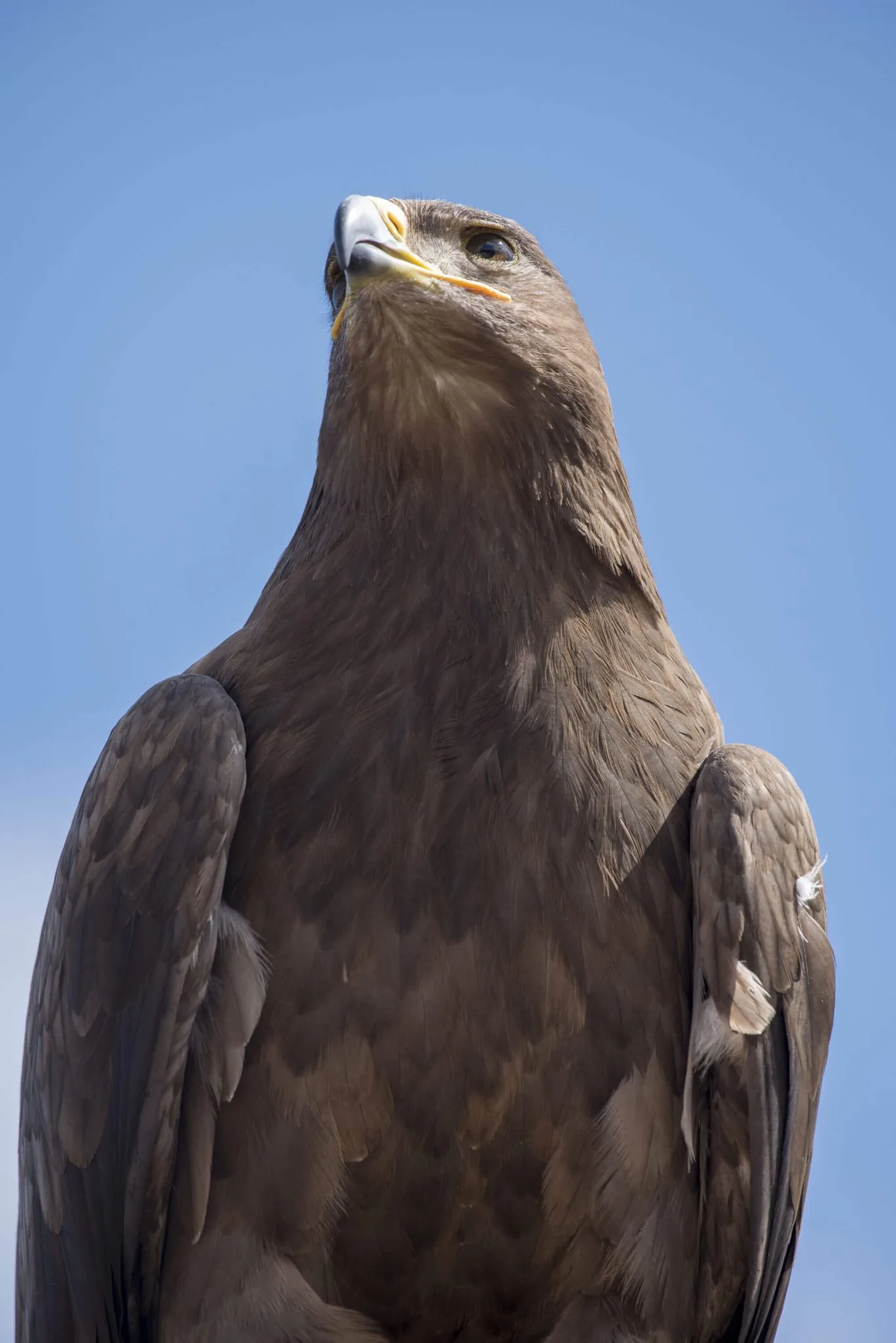
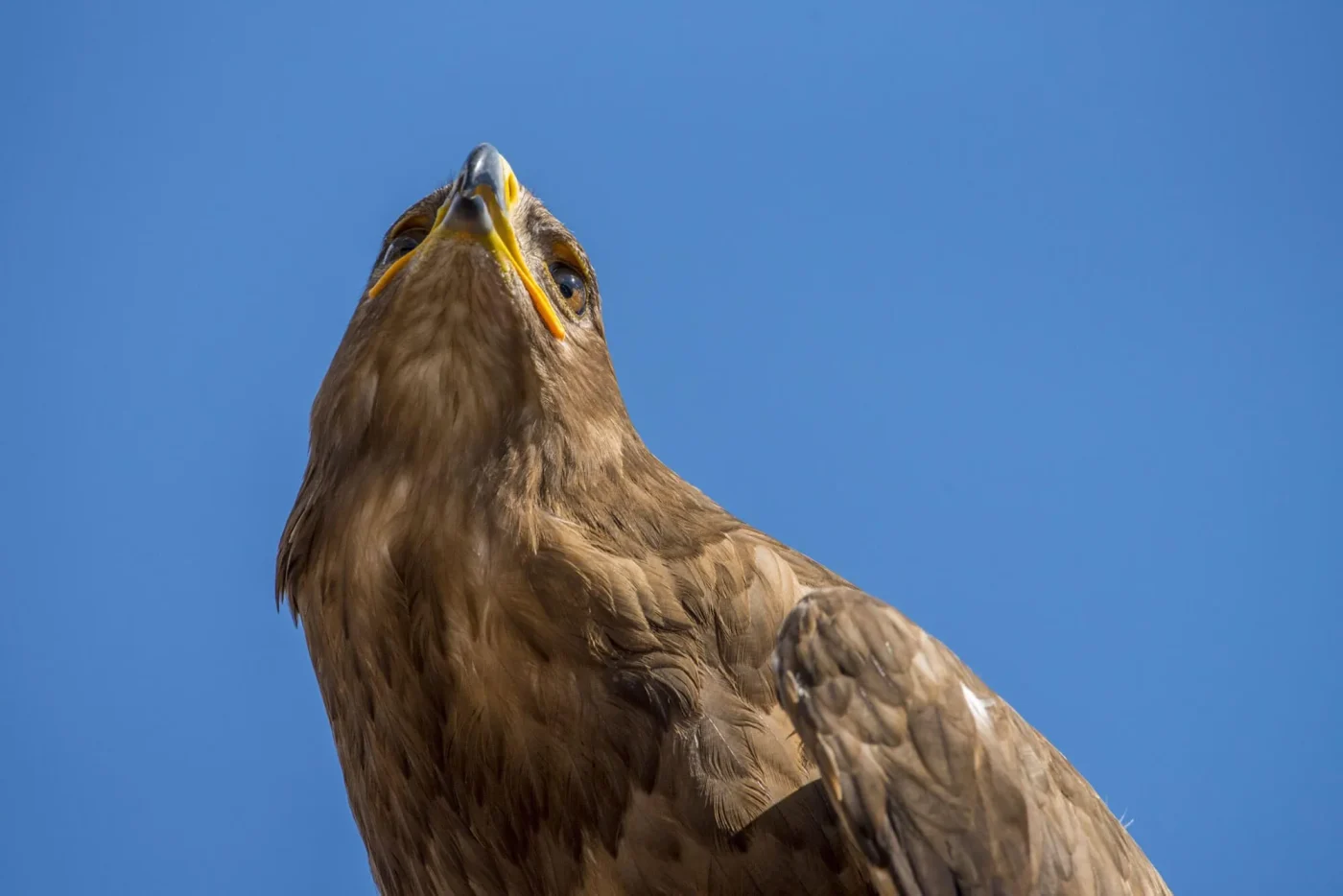
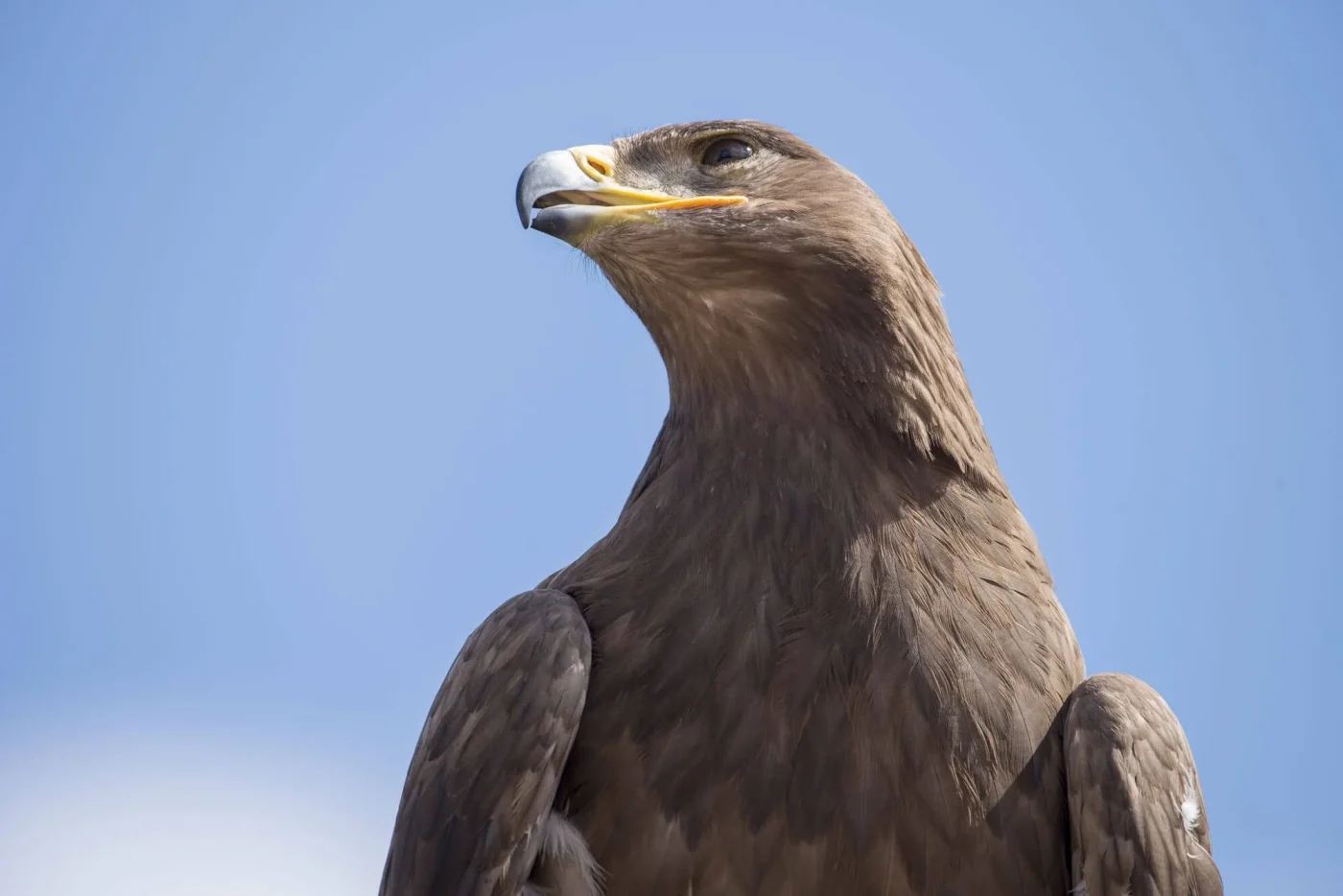
The steppe eagle is distinguished by a uniformly brown-tobacco body plumage, a lighter throat, and a reddish spot on the nape. The flight and tail feathers have a pale brown and gray color, barred with black. The beak and legs are yellow. The eye has a dark coloration. There is little sexual dimorphism in this species, as the only difference is that the female is more robust than the male.

Juveniles are different from adults. They have a gray-brown plumage with reddish spots on the shoulders. The underside of the wings is reddish and has a white band. The adult plumage starts to grow during the second year.

Weight

2.4-3.9 kg

Habitat

Steppe, semi-desert area

Diet

Carnivore

Gestation

40-45 days

Longevity

30-40 years

Longevity

12-17 years

Location

Europe, Africa, Asia.
Frequently Asked Questions

Where does it live?

It inhabits open and clear arid and semi-desert environments that facilitate hunting.

Its geographical range is vast since it can be found in Europe, Asia, and Africa. In fact, its scientific name Aquila nipalensis refers to Nepal, a country it frequents.

During the summer, these birds of prey can be found in the steppes of Russia, Kazakhstan, China, Mongolia, and Turkey where the climate and resources allow for breeding.

At the beginning of autumn, these birds migrate to winter in milder regions.

European and eastern Kazakhstan populations migrate to the Middle East, the Arabian Peninsula, and East Africa. Asian populations, meanwhile, migrate to Southeast Asia.

There are two subspecies of the steppe eagle: Aquila nipalensis orientalis and Aquila nipalensis nipalensis. The subspecies A.n. orientalis generally migrates to Africa, while the subspecies A.n. nipalensis migrates to Southeast Asia.

What does the steppe eagle eat?

This bird of prey can hunt in different ways thanks to its powerful talons. Either it soars at high altitude and dives to strike its prey, or it waits perched in ambush above the prey’s burrow. Finally, it can wait at the entrance of a burrow and chase after the prey as it emerges. In summer, it mainly feeds on a small rodent called the European souslik. It can also eat other mammals, insects, birds, and reptiles. In winter, it feeds on mole-rats, termites, and small passerines called red-billed queleas.

Behavior

The steppe eagle is a migratory bird. During its migrations, it avoids crossing the seas. It leaves the breeding grounds between August and November for milder areas. It leaves the wintering areas between January and May to return to the regions where it breeds.

It is a bird of prey that spends most of its days on the ground. Its flight is heavy and it flaps its wings slowly.

Reproduction strategy

To nest, steppe eagles settle in hills or mountains of low altitude. Most of the time, the nest is built directly on the ground or on a shrub to have a fairly wide view of the surroundings. The nest is an aggregation of branches, its bottom covered with small twigs and various materials. The nest measures about one meter in diameter. The female lays 1 to 3 eggs, which are then incubated for 45 days. At birth, the chicks have white down, which darkens over time. Around the age of 2 months, the young leave the nest.

Threats and conservation

This species, classified as endangered by the IUCN, is threatened by numerous human activities. European populations are even listed as critically endangered. This bird of prey is now only nomadic in Western Europe and has disappeared from Romania, Moldova, and Ukraine. The main threat remains the conversion of steppes into agricultural land, thus depriving them of their hunting grounds. Unfortunately, many individuals die from collisions with power lines or wind turbines as well as from poisoning by pesticides. This species also appears to be affected by diclofenac, a non-steroidal anti-inflammatory drug used in veterinary medicine. Some studies even suggest that the reduction in the number of individuals migrating through Israel since 1986 after the Chernobyl nuclear accident indicates that the steppe eagles were affected by radioactive contamination.

As a result, many projects for conservation actions have been proposed. The first step is to create large nature reserves and protected areas within the remaining European grassland steppes. Power lines and wind turbines should also be equipped with protective devices to prevent fatal collisions. Additionally, further research on the impacts of diclofenac on the environment and on steppe eagles must be conducted in order to ban its use.

Discover other animals from Asia and Europe: red panda, brown bear, Amur leopard, snow leopard, Siberian tiger, orangutan, golden eagle, caracal, binturong, white tiger, siamang, bearded vulture, flying phalanger, Asian small-clawed otter, peregrine falcon, grey crowned crane, rock hyrax.

Other animals to discover