Suricata suricatta

Meerkat

Order: Carnivora / Family: Herpestidae / Genus: Suricata

What is a meerkat?

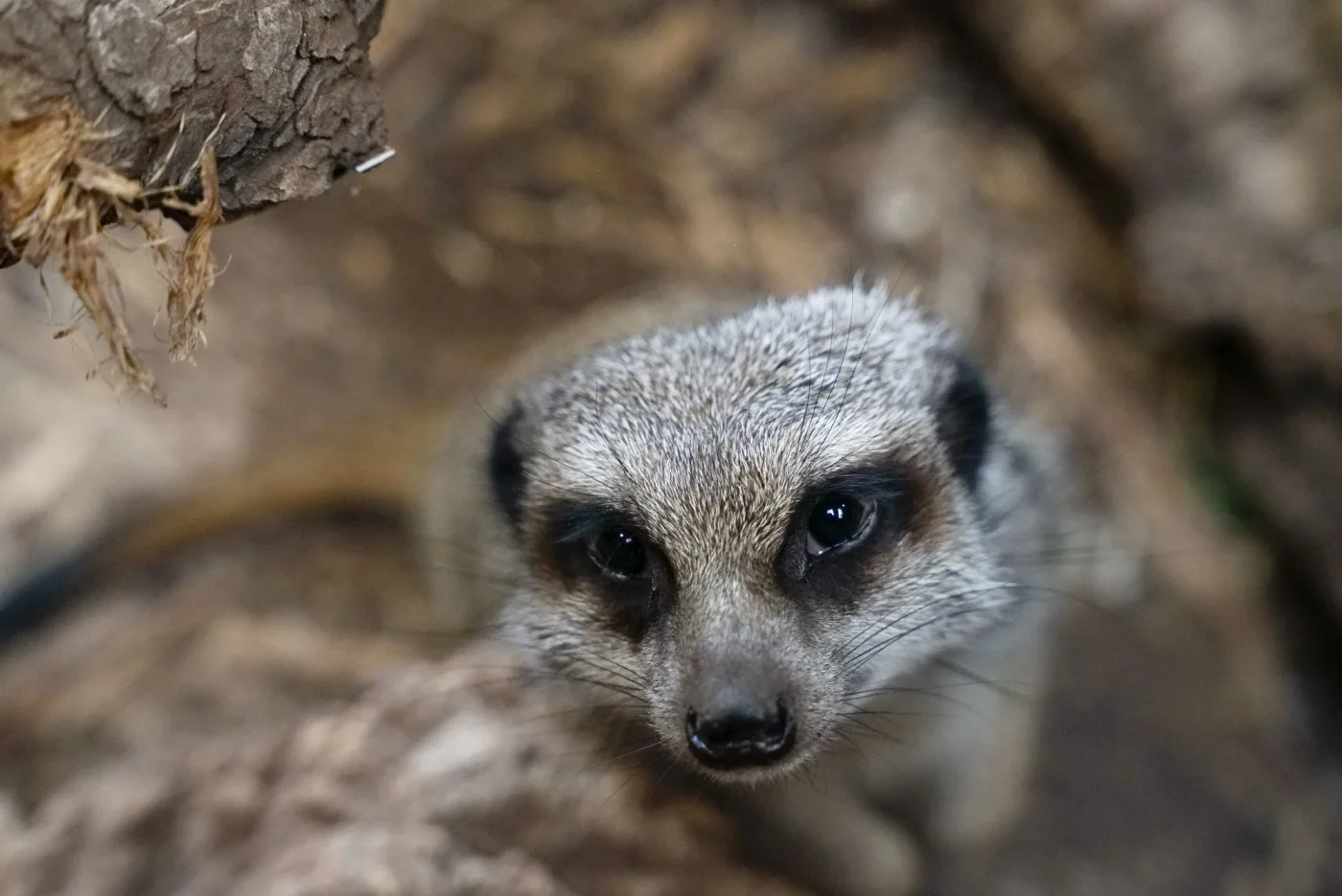
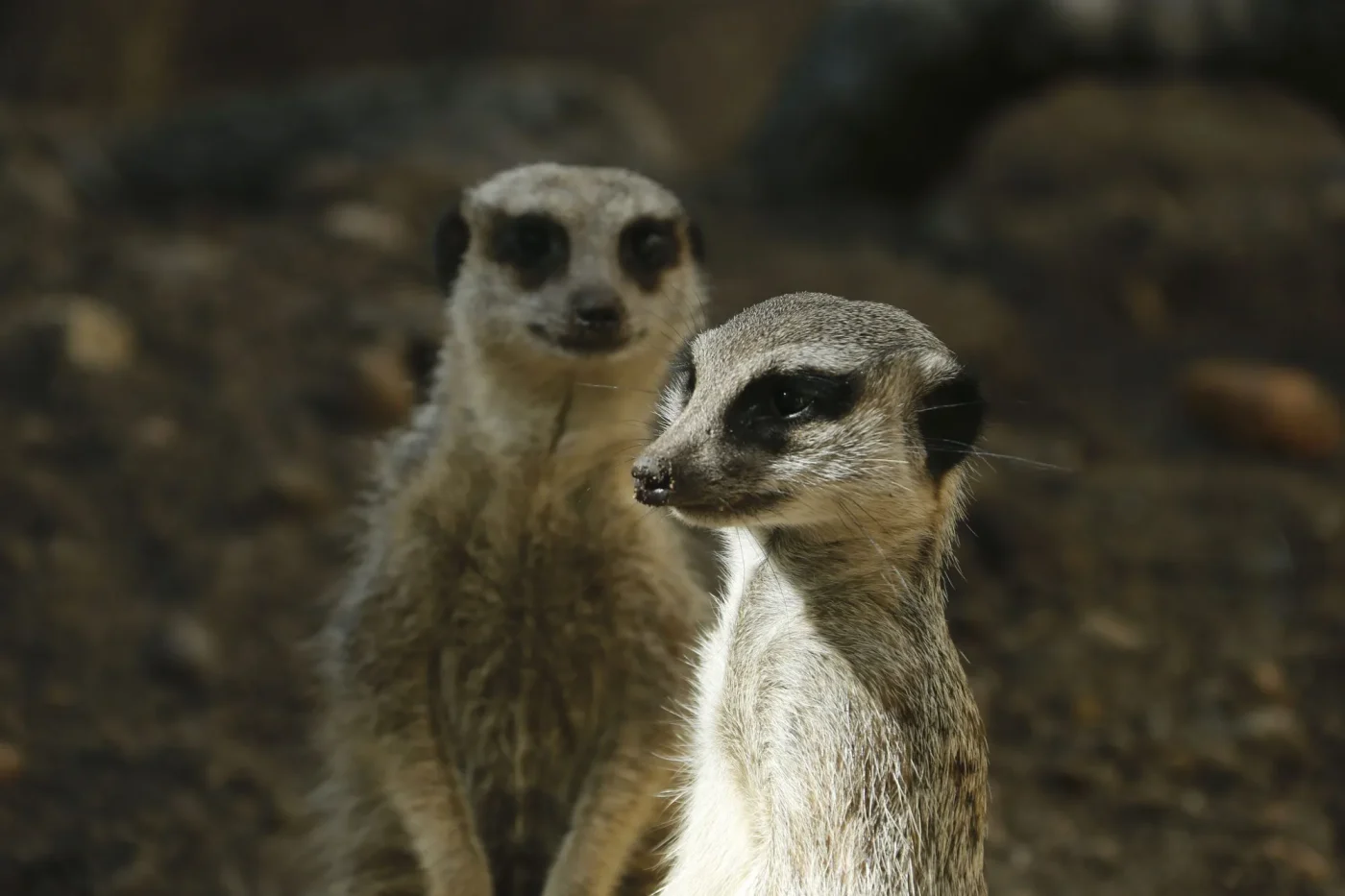
This species, the meerkat (Suricata suricatta), is one of the smallest within the Herpestidae family, which includes mongooses. It measures between 24 and 30 cm in length, with a tail between 19 and 24 cm. Characteristic of this family, the meerkat has an elongated body, a pointed snout, and large eyes. These are surrounded by black, allowing it to not be blinded by the sun, a bit like wearing sunglasses. Its legs are equipped with long claws allowing it to dig burrows, but also to find food.

Weight

700 - 800 g

Habitat

Savannah and Plain

Diet

Carnivore

Gestation

60 to 70 days

Longevity

10 - 15 years

Longevity

12-17 years

Location

South Africa, Namibia, and Botswana.
Frequently Asked Questions

Where does the meerkat live?

The meerkat inhabits arid and semi-arid environments such as savannahs or open plains located in the southwest of the African continent. It is found mainly in Namibia, Botswana, and South Africa.

Breeding strategy

Generally, reproduction can take place throughout the year, up to three times a year. However, reproduction peaks have been observed when temperatures are warmer and precipitation is higher. 75% of the offspring in the group are those of the dominant female, who puts pressure on the other females through aggressive and stressful behaviors. She may even go so far as to chase away subordinate, non-pregnant females or to kill their young. If this happens, then it is only after the dominant female’s young are born that the rejected ones are allowed back into the group. From then on, they take part in the education and hunting training of the youngsters.

It is only in years with more favorable conditions, where food resources are more abundant, that subordinate females give birth to young.

Each of them gives birth to 3 to 7 young, with closed eyes and ears, weighing only 25 to 36 grams. During the first few days after birth, they are unable to urinate or defecate on their own and need to be stimulated in the perineal region by their mother. After 23 to 30 days, they begin eating solid food and are completely weaned between 49 and 63 days. It will take them 2 to 3 months before they begin to be more independent and obtain food by themselves. Sexual maturity is reached at about 1 year old. Adult males often leave their birth group while females tend to stay longer within the colony. They then often take on the role of babysitter.

What does it eat?

Carnivorous, it feeds mainly on insects but can also eat small vertebrates or steal eggs from a nest. It drinks only rarely, as the water contained in its prey is sufficient for its survival. During the education of a meerkat, each of them learns how to disarm certain prey, such as a scorpion by pulling out its stinger before eating it, or trapping lizards by digging holes. The meerkat spends about 5 to 8 hours per day searching for food, with the different clan members staying close enough to keep seeing and hearing each other in case of danger. The meerkat hunts for itself. Only the young are initially fed by adults.

Behavior

A very social animal, it forms hierarchical clans composed of 2 to 50 individuals. These clans are made up of 2 to 3 family groups. A family consists of a breeding pair and their young. Within a clan, males and females each have their own hierarchy with a dominant male and a dominant female respectively. Generally, it forms a pair, which has exclusive breeding rights. Their place in the hierarchy is determined by their age, with older individuals ranking higher. In other cases, a female may acquire a high rank by inheriting her mother’s social position, by winning violent competitions, or by joining a group of males leaving their natal group.

Living in arid environments, meerkats dig underground tunnels with several galleries and chambers. Sometimes, they use burrows abandoned by other species, but also force other animals out of their burrows to reclaim them. So, when it is too hot or too cold, they can take refuge in the burrow where the temperature remains stable and comfortable.

The network of tunnels created by meerkats features multiple levels connecting the different chambers. These can measure 30 cm high and 15 to 45 cm long.

They dig up to 5 dens in their territory, each separated by 50 to 100 m. This offers more possibilities to take cover in case of danger.

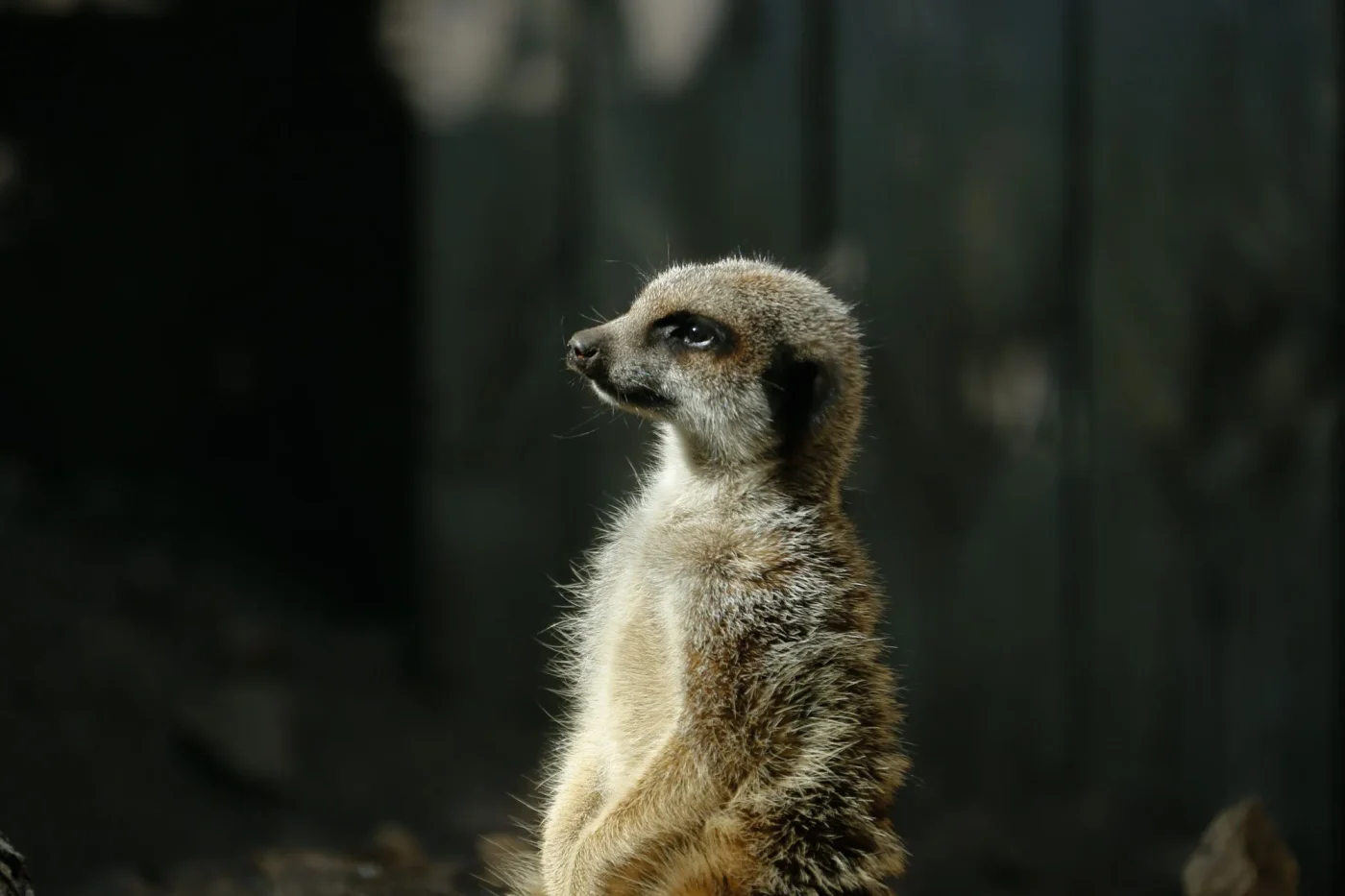
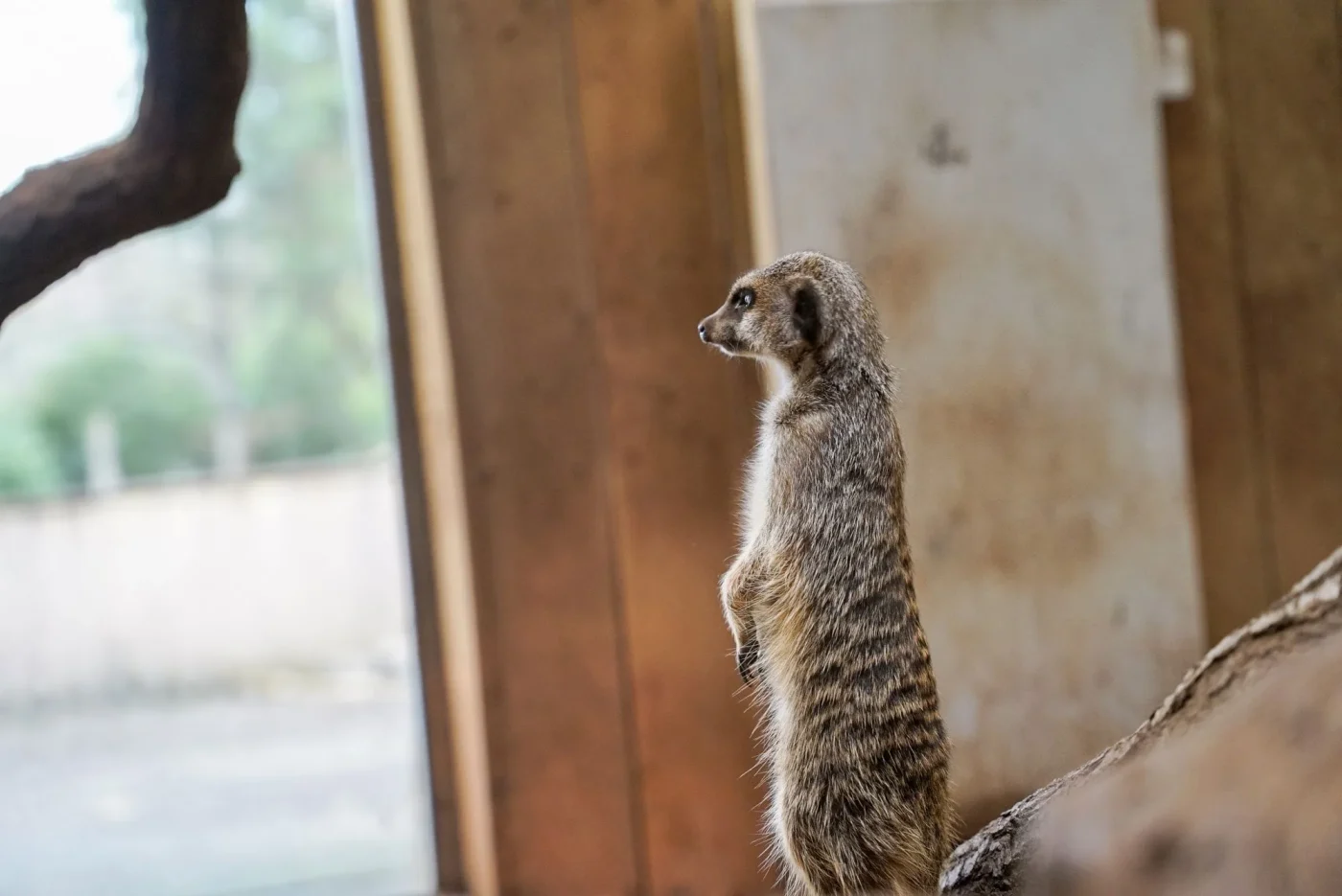
It owes its nickname of “sentinel” to its posture, which allows it to spot predators. In fact, group members take turns standing upright on their hind legs to watch the surroundings. As soon as the sentinel spots a predator, it emits a sound that will vary depending on whether the predator comes from the sky or the ground, and if it is close or far from the group. As a digger, the meerkat often has its muzzle pointed to the ground and is therefore vulnerable.

When resting, the meerkat uses several positions. One of them is to sit, arching its back and putting its head between its legs to preserve as much body heat as possible. When it is too hot, it stretches out on its belly in the shade to cool off. Conversely, to warm up, it lies on its back or side in the sun.


What are its predators?

About 30% of young meerkats fall prey during their first 3 months of life. They are mainly hunted by snakes such as cobras or birds of prey like eagles or falcons. As adults, they can also fall prey to lions, hyenas, or jackals.

To defend themselves against some predators like jackals or snakes, meerkats group together to harass and drive them away. Of course, this method is only possible if there are enough meerkats; otherwise, they take refuge directly in their burrow.

Discover other species from the African continent: rhinoceros, serpent eagle, African wild dog, lion, hippopotamus, giraffe, African elephant, cheetah, caracal, meerkat, zebra, ring-tailed lemur, serval, golden eagle, white lion, gelada, ostrich, sand cat, dik-dik, Nile crocodile.

Conservation

The meerkat population in the wild is stable; no major threat weighs on this species. It is therefore classified as of “least concern” on the IUCN (International Union for Conservation of Nature) list.

Other animals to discover