Tapirus terrestris

Lowland tapir

Order: Perissodactyla / Family: Tapiridae / Genus: Tapirus

What is a tapir?

The lowland tapir is one of the five existing tapir species on Earth. There are four species in South America: the lowland tapir, the mountain tapir, Baird’s tapir, and the kabomani tapir, as well as the Malayan tapir in Asia.

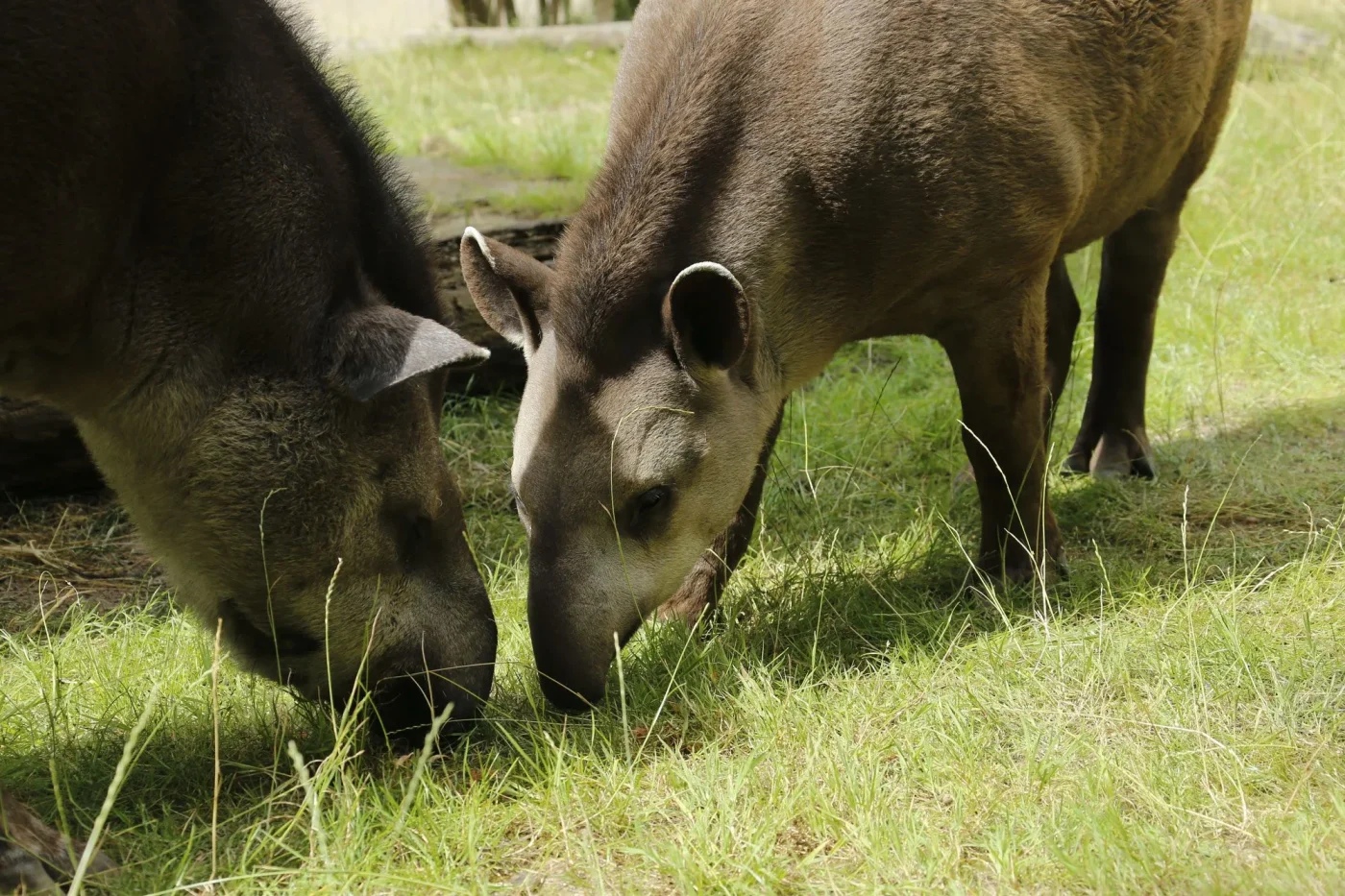
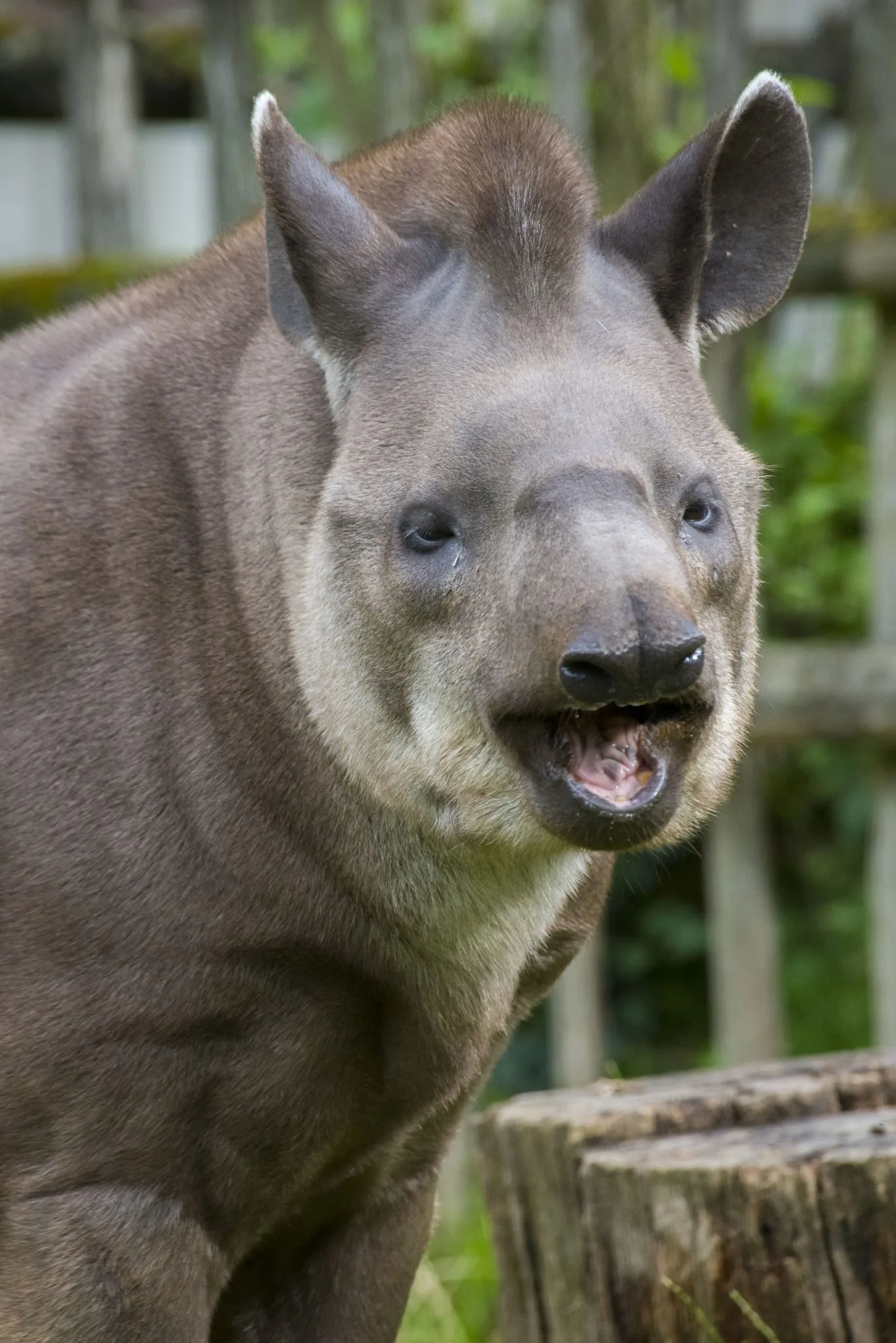
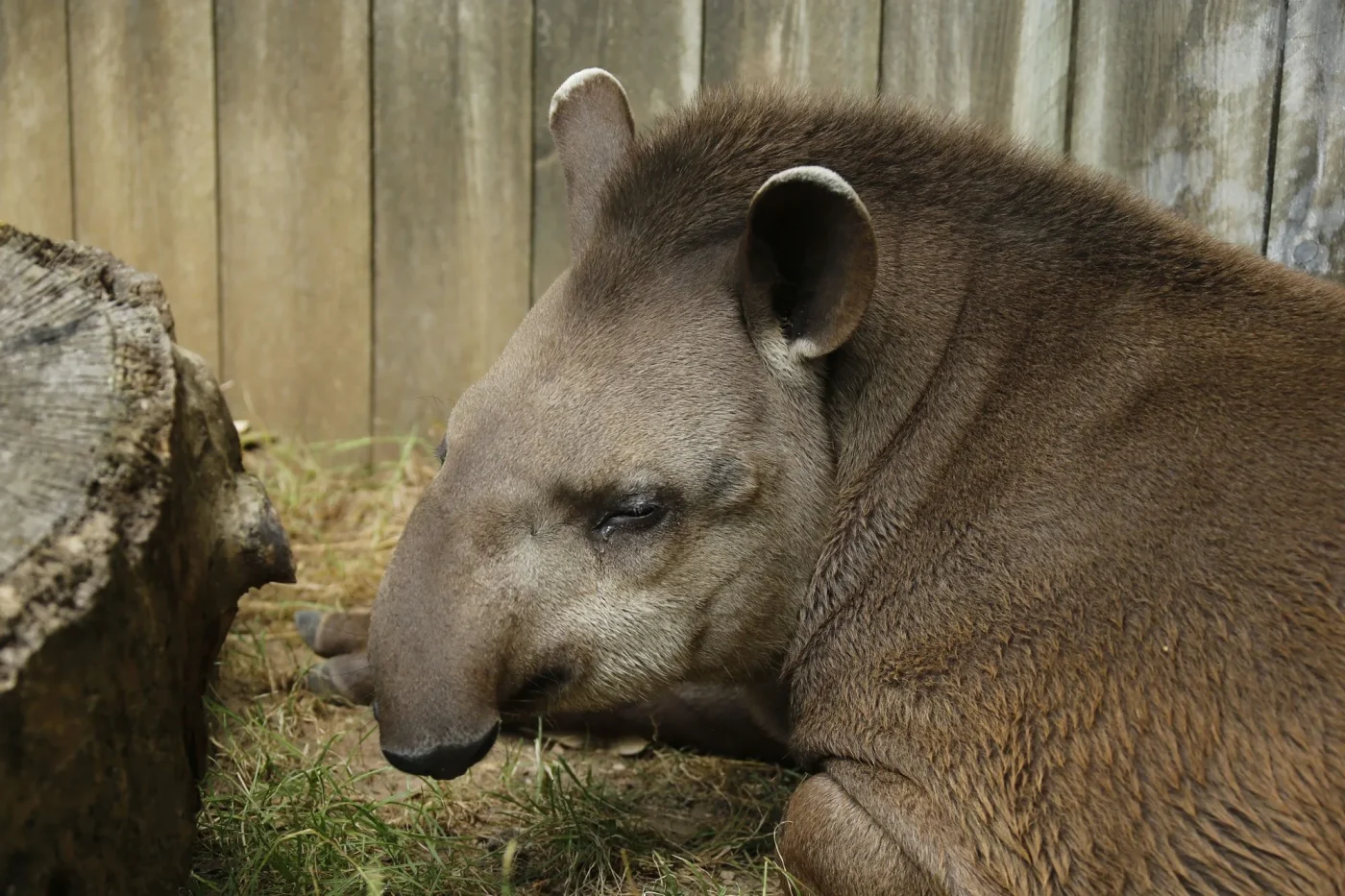
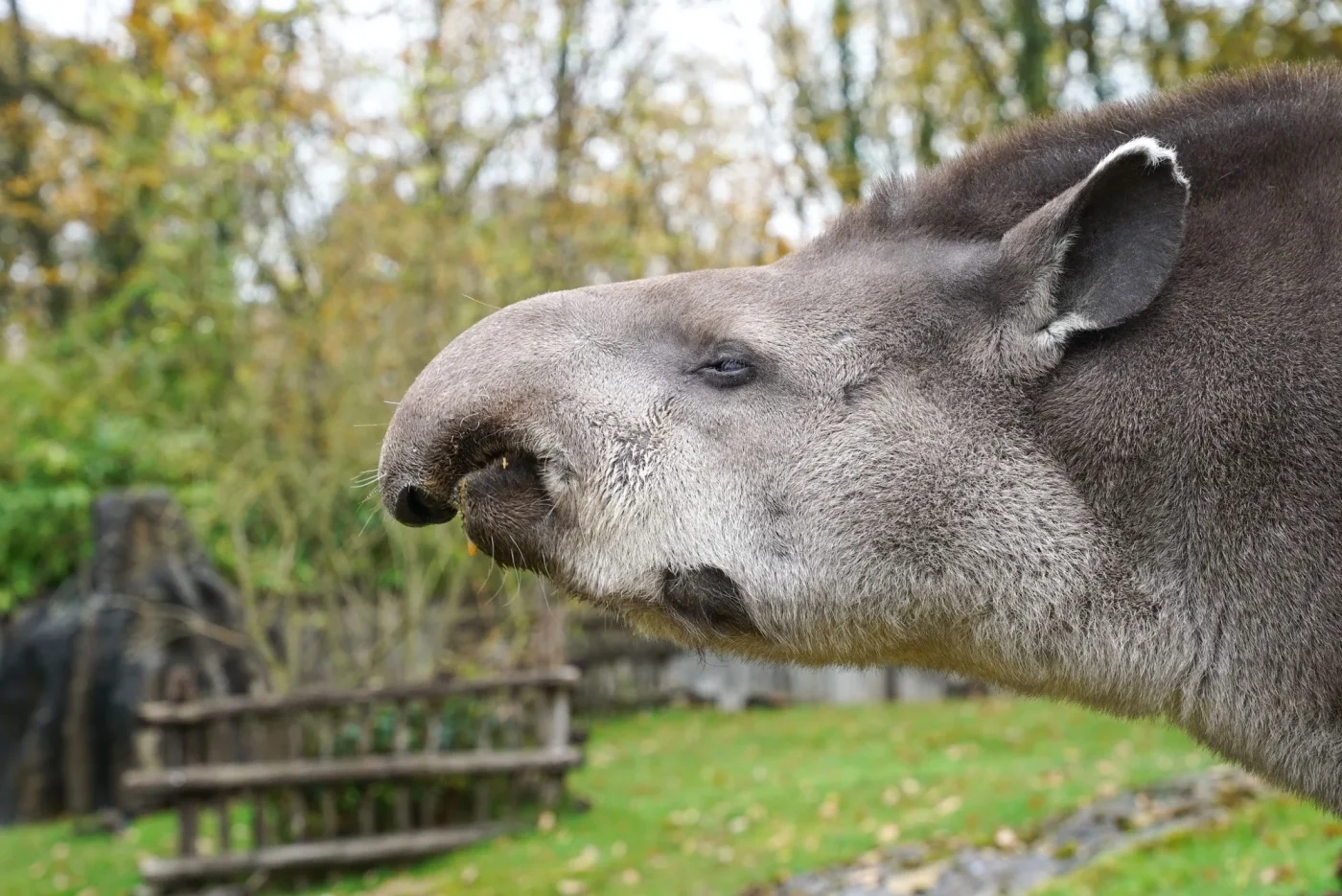
The lowland tapir has short brown hair. About the size of a small pony, it is the largest mammal in South America, weighing between 150 and 250 kg, standing 77 to 108 cm tall, and nearly 2 meters long. From its forehead to its shoulders, it has a sagittal crest giving it a thick neck, useful for protecting itself from predator bites. It is the only South American tapir species equipped with this feature. It also has a strange snout. In fact, the upper lip and the “nose” have fused to form a prehensile trunk, which gives the tapir its unique appearance. Another particular feature of the lowland tapir is that its front and back legs have a different number of toes, three in the front and four in the back.

Weight

150 - 250 kg

Habitat

Tropical forest

Diet

Herbivore

Gestation

380 days

Longevity

30 years

Longevity

12-17 years

Location

South America
Frequently Asked Questions

Where does the lowland tapir live?

The lowland tapir, also known as tapirus terrestris, is found mainly in Brazil but its range extends across most of the tropical forests of South America, from Venezuela to northern Argentina.

This beautiful animal, belonging to the tapiridae family, prefers humid areas such as tropical forests or marshes. It can inhabit environments rising up to nearly 4,500 meters in altitude, which shows the diversity of its range.

What does he eat?

This herbivore mainly eats fruit, leaves, and other plants. Its trunk, which is very handy, allows it to grasp its food more easily. Its large teeth help it cut branches from trees or break fruit seeds. Also called the gardener of the forests, it disperses seeds through its droppings, which are excellent fertilizers to allow better regrowth of trees.

Fond of salt, it regularly goes in search of salt rocks to lick their surface and extract essential minerals for its health.

Apart from humans, the tapir’s biggest predator is the jaguar. The thick skin covering its body is difficult to pierce and discourages many predators from hunting the tapir.

Behavior

It is a nocturnal and solitary animal, which does not have good eyesight but has a very developed sense of smell. It takes advantage of the forest cover during the day, only coming out at nightfall to feed. It enjoys areas near water and even frequents marshes. Its feet have several toes which, by spreading apart, allow it to move easily without sinking and even make it an excellent swimmer. It spends time there to cool off or get rid of parasites and does not hesitate to take refuge there if in danger. It can even use its trunk as a snorkel to breathe.

The tapir communicates with several vocalizations, including a very high-pitched cry that is particularly surprising. Each tapir also produces a sound resembling clicks unique to each individual, enabling recognition and communication among conspecifics. It marks its territory using pheromones. To do so, it urinates or rubs its facial glands on different surfaces.

Naturally rather discreet, it can still become aggressive towards certain conspecifics during the breeding season or when defending its territory.

Reproduction strategy

Still little information has been gathered about the reproduction of the lowland tapir. It can occur throughout the year. It is suggested that this species is polygynous, meaning that one male mates with several females. When a female is in heat, males may come into conflict to decide which of them has the right to reproduce. After a long gestation period of nearly 13 months, the female gives birth to one offspring at a time. The young tapir looks like a wild boar piglet, covered with white stripes on a brown coat, which is very useful for camouflage. It will lose its stripes at around 6-8 months and will be mature between 2 and 3 years old. The male does not participate in raising the young.

Conservation

This species is considered vulnerable on the IUCN Red List (International Union for Conservation of Nature); in fact, it has disappeared from some areas where it used to live. It is believed that its population has declined by more than 30% over the past 30 years. In Argentina, the tapir’s range has even been cut in half. The main threats facing the South American tapir are deforestation, hunting by local populations for its meat, and capture for exotic pets (observed, for example, in Brazil). Furthermore, it is often the victim of road collisions and its long gestation makes it difficult for the population to recover quickly, even in protected areas.

Discover more species from the African continent: rhinoceros, secretary bird, African wild dog, lion, hippopotamus, giraffe, African elephant, cheetah, caracal, meerkat, zebra, ring-tailed lemur, serval, golden eagle, white lion, geladaostrich, sand cat, dik-dik, Humboldt penguin.


Other animals to discover