Struthio camelus

Ostrich

Order: Struthioniformes / Family: Struthionidae / Genus: Struthio

What is an ostrich?

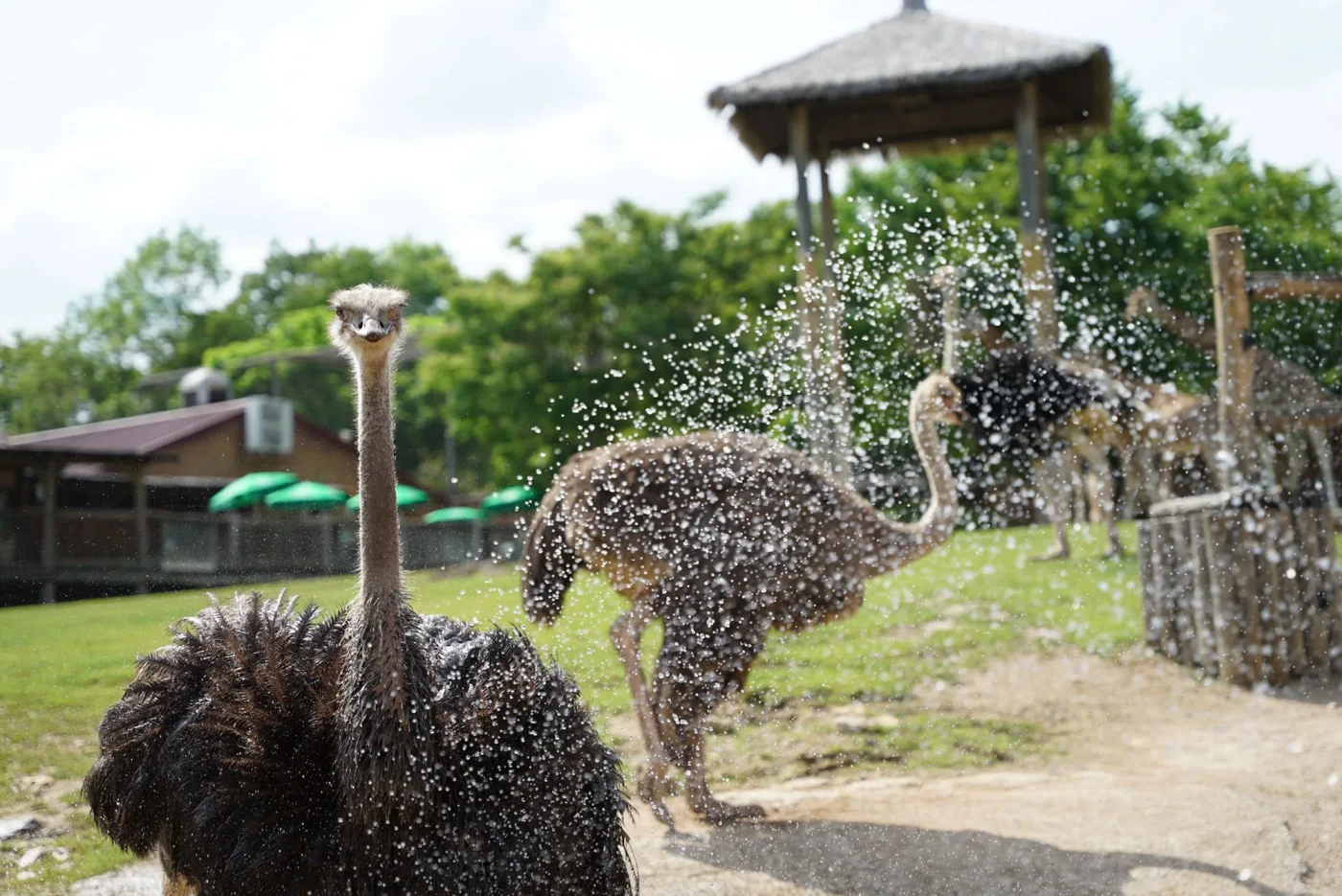
The ostrich is one of the ratites, a group of birds unable to fly, due to the fact that these birds lack a keel for the insertion of the pectoral muscles needed for flight. Beyond being the largest bird in the world—able to reach about 2 meters in height and weigh about a hundred kilos—the ostrich is also the fastest bird on land. With its powerful legs and only two toes, one of which has an inner claw used as support for running, it can exceed 70 km/h. These legs also allow it to defend itself against predators such as leopards, African wild dogs, and even lions. Besides being excellent at running, the ostrich loves water, and whenever it gets the chance, it takes baths.

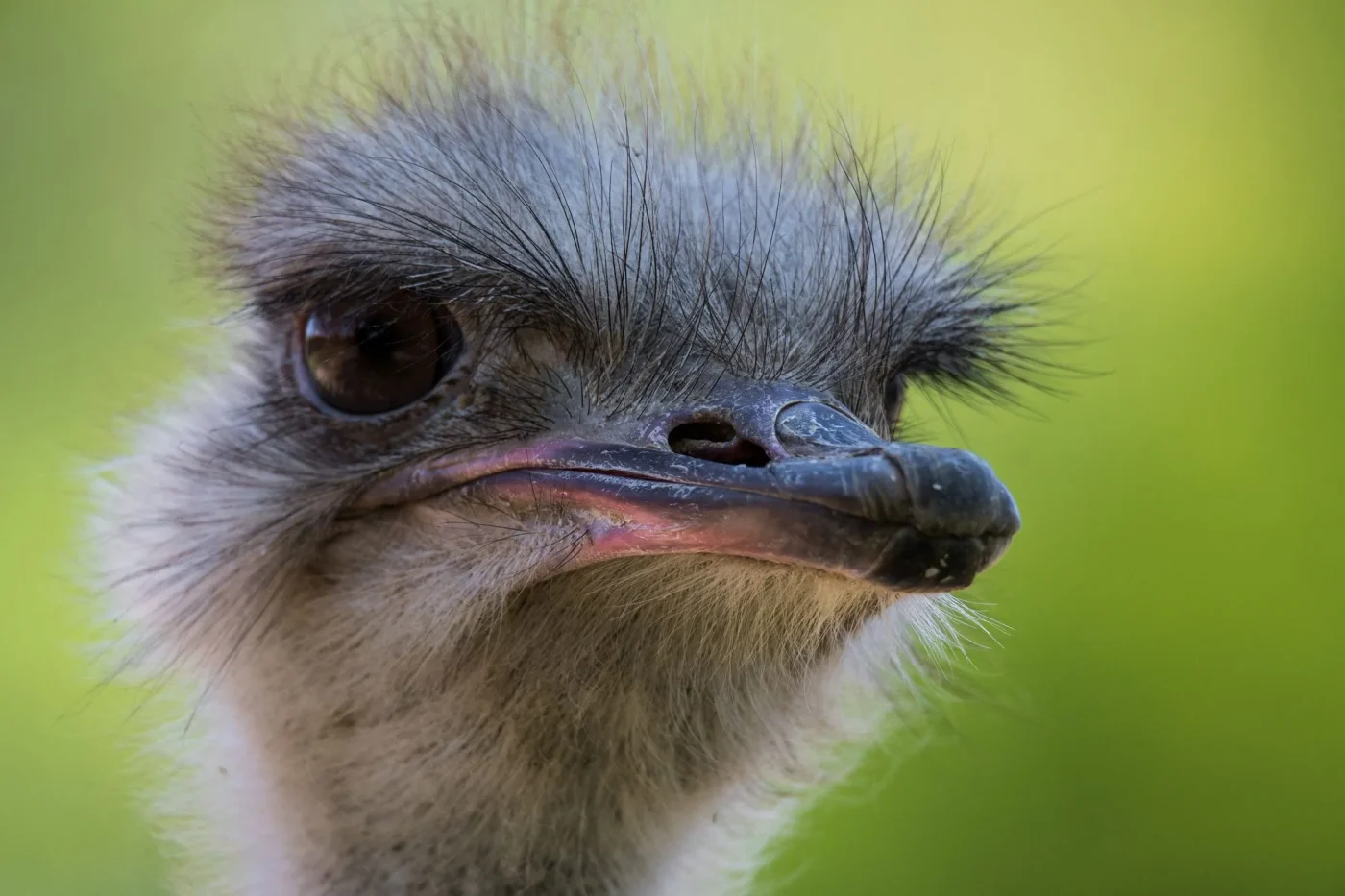
This bird has a very small head compared to the rest of its body. On the other hand, its eyes, fringed with long black eyelashes, are considered to be the largest eyes among all land animals. Its brain is in fact smaller than the size of its eye.

The ostrich’s feathers are somewhat peculiar because they do not have barbules, the small filaments connecting the barbs of the feathers to each other. As a result, they appear fluffy and puffy, providing good insulation against various extreme temperatures.

Weight

90-130 kg

Habitat

Savanna and Grassland

Diet

Herbivore

Gestation

40 days

Longevity

Up to 50 years in captivity

Longevity

12-17 years

Location

Angola, Botswana, Burkina Faso, Cameroon, Central African Republic, Chad, Djibouti, Egypt, Eritrea, Ethiopia, Kenya, Mali, Mauritania, Mozambique, Namibia, Niger, Nigeria, Senegal, South Africa, South Sudan, Tanzania, Uganda, Zambia, Zimbabwe.
Frequently Asked Questions

Where does the ostrich live?

Previously, up until the mid-20th century, ostriches could be found in various places such as southwest Asia, the Arabian Peninsula, or in Africa. Unfortunately, they were hunted to total extinction in several populations, leaving them only in sub-Saharan Africa and South Africa.

Breeding strategy

During the breeding period, which lasts almost 5 months, the males first mate with a female who will be designated as the dominant female. Four to six other females may still join this same harem. The females then lay between fifteen and sixty eggs in communal nests. These nests are not bundles of twigs as one might think, but simply a hole dug in the ground.

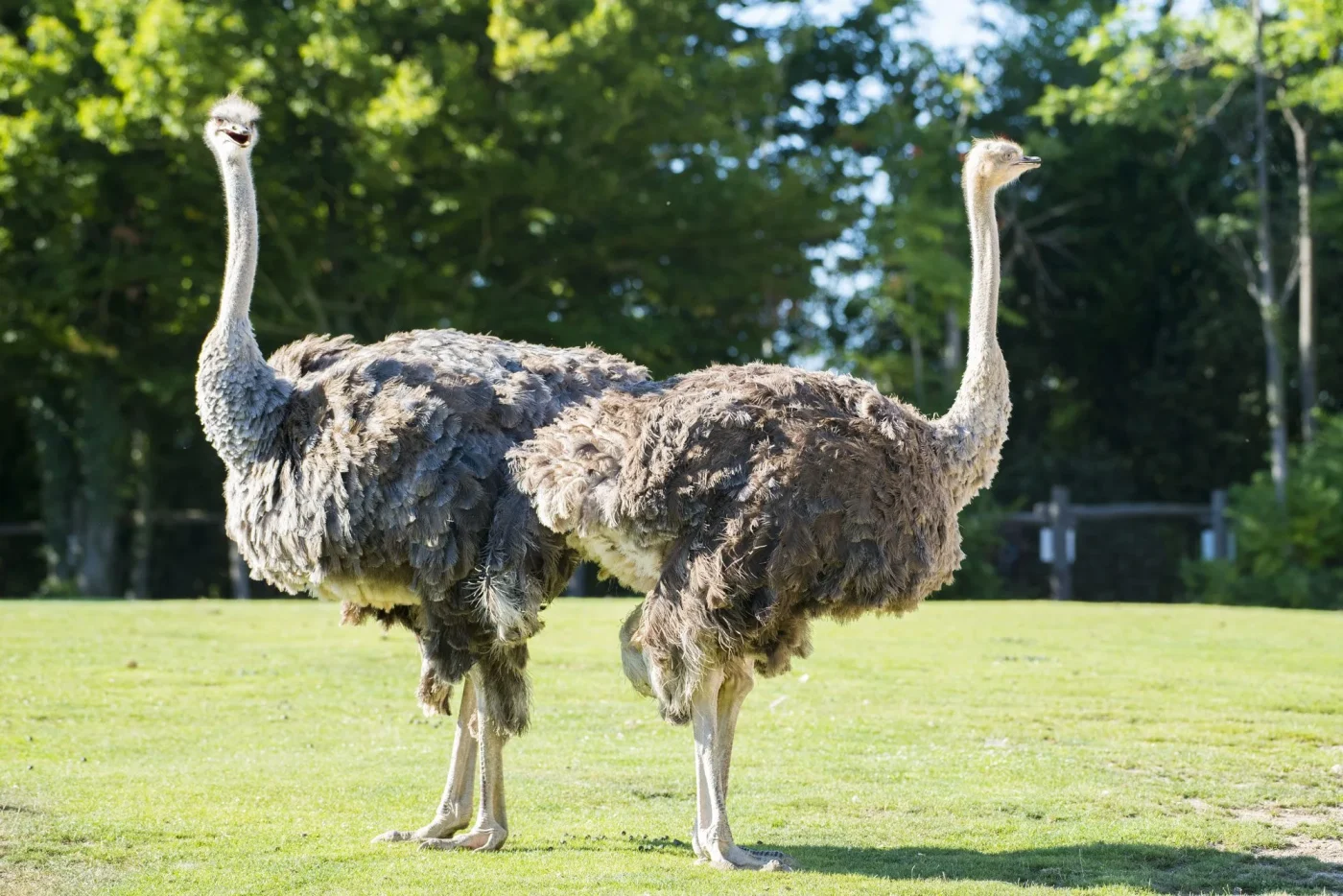
Afterwards, only the male and the dominant female take part in the incubation, while the other females defend the nest. The white and black males incubate at night, while the grayish females incubate during the day because the color of their plumage allows for better camouflage. This color difference is called sexual dimorphism. The eggs will hatch after 40 days of incubation.

These eggs can reach more than 1.5 kilograms, which is about 24 chicken eggs, making it considered the largest egg in the animal kingdom.

What does it eat?

They mainly live in dry, sandy areas alongside grazing animals like zebras or antelopes, and find the water they need for survival in the plants they eat. Ostriches are mainly herbivorous and are very selective about their food, so they only choose certain seeds, certain flowers, plants, etc. However, they can eat leftovers discarded by carnivorous animals, but this is quite rare.

Way of life

Ostrich groups have different social structures depending on their geographic location; the social structure is quite complex, with mixed-gender groups consisting of both males and females. The most territorial males will try to intimidate each other through whistling or other noises, and can even fight for a group of 3 to 5 females. They live on territories that can range from only 2 km^2 up to 15 km2.

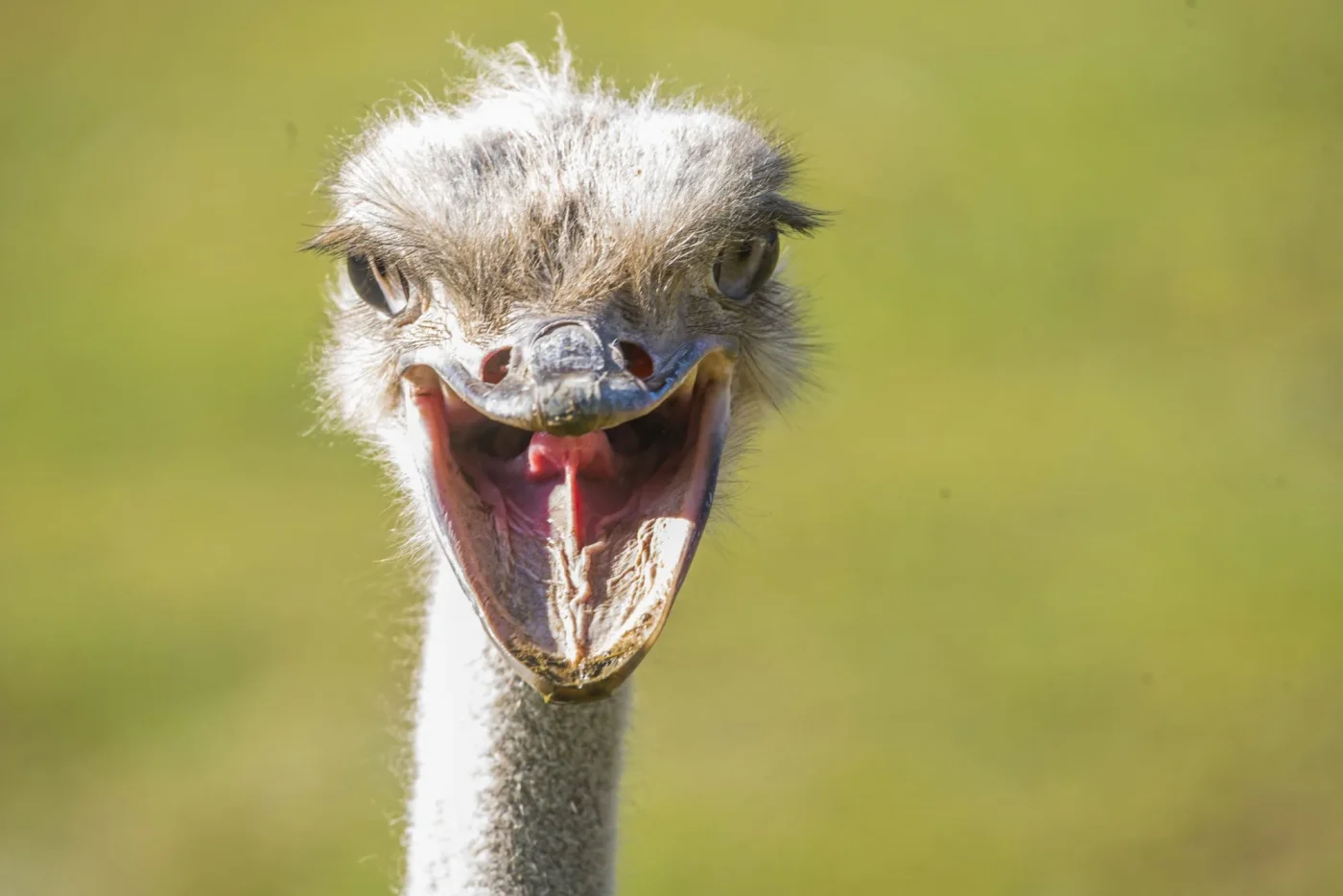
Originally, the ostrich is a rather silent animal, yet it can make several different sounds, such as whistling, guttural sounds, and snoring. When predators approach, males can imitate the roar of a lion.

What threatens her?

These birds were often killed, whether for their skin, as it’s good leather, or for their feathers, leading to the near-total extinction of this species in the 18th century. Since the mid-19th century, they have been farmed, which has allowed them to be domesticated but also to be plucked, thus avoiding hunting and killing them. Nowadays, the demand for ostrich feathers has considerably decreased, allowing for a safe and stable population.

Discover other species: rhinoceros, serpent eagle, African wild dog, lion, hippopotamus, gorilla, giraffe, African elephant, cheetah, caracal, meerkat, zebra, ring-tailed lemur, serval, golden eagle, white lion, gelada, ostrich, sand cat, dik-dik, flamingo, fennec, banded mongoose, emu, crowned crane.

Other animals to discover