Phoenicopterus roseus

Greater flamingo

Order: Phoenicopteriformes / Family: Phoenicopteridae / Genus: Phoenicopterus

What is a greater flamingo?

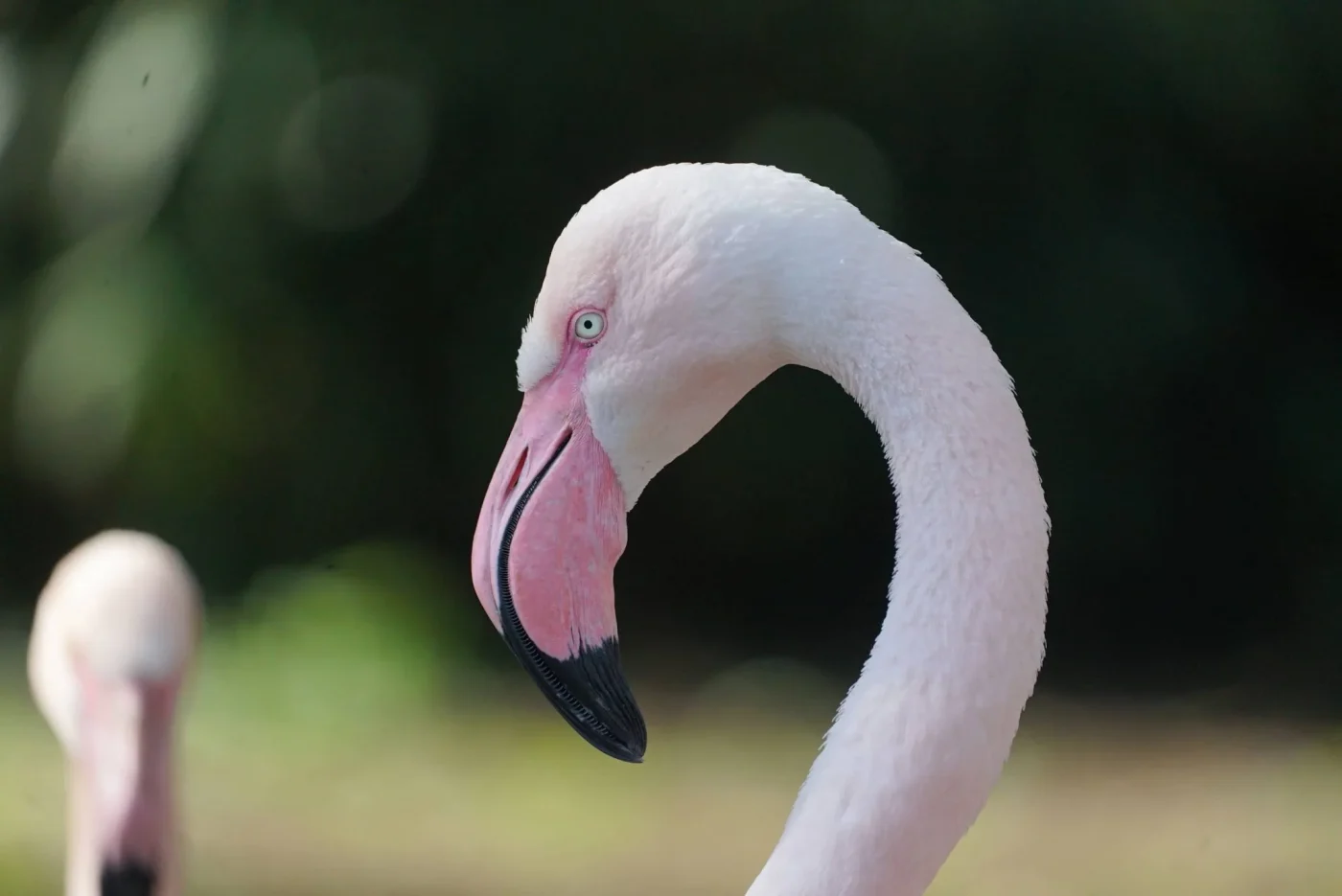
The greater flamingo is the largest among the 6 existing species of flamingos; it can reach nearly 1.50 m. This species inhabits the Old World: Africa, Europe, and Asia.

Gregarious, the greater flamingo constantly moves in response to water levels or the availability of food, as its diet is highly specialized, making it vulnerable to the slightest change. This is also why this bird migrates; when conditions are no longer suitable for its survival, it moves to warmer regions such as Africa or southern Asia. However, today many populations are sedentary, meaning they stay in the same location throughout the year.

Weight

2-4 kg

Habitat

Lagoon, salt marsh, coastline

Diet

Carnivore, crustaceans, algae

Gestation

27-31 days

Longevity

Over 50 years

Longevity

12-17 years

Location

Europe, Africa and Asia
Frequently Asked Questions

Where does the greater flamingo live?

The greater flamingo is found in lagoons, salt marshes, and along the coasts of Europe, Africa, and Asia.

Reproduction strategy

The breeding season takes place once a year and begins with a courtship display, a kind of dance in which the entire colony takes part! After multiple wing openings and closings, group marches, or synchronized head movements, male and female choose their mate for reproduction. Flamingos are polygynous—each sex can breed with several partners, so they will not reunite with the same one from year to year. Within the colony, every pair builds a nest made of compacted mud and other materials, ranging from 20 to 40 centimeters high. Featuring a hollow center, this mud nest hardens after drying in the sun. It will hold only one egg at a time, which is incubated alternately by the male and the female for 27 to 31 days. After hatching, the entire colony cooperates, with the young gathered and watched over by non-breeding adults in crèches. Over the following 65 to 90 days, these youngsters gradually acquire the ability to fly. Then it is time for their distinctive beak to develop, so they will no longer have to rely on their parents for food. Finally, they reach sexual maturity around 5 to 6 years old.

What does it eat?

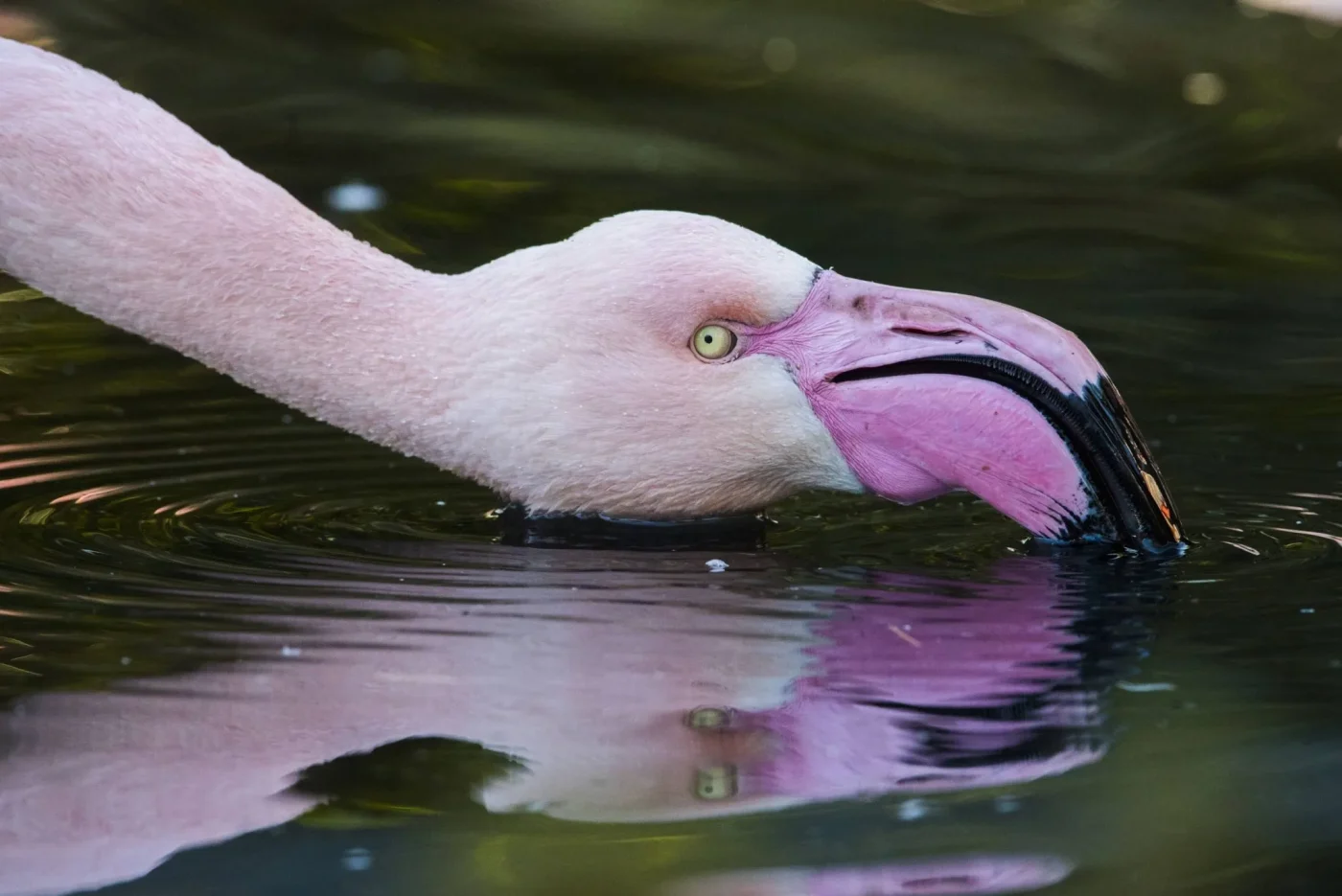
Its beak is one of the most sophisticated in the animal world. Because of its shape, it feeds upside down; submerged under the surface of the water. The latter is equipped with “combs” that filter the water and collect small invertebrates such as insect larvae or crustaceans, as well as plants that contain the carotenoid pigments responsible for its pink color.

Lifestyle

The pink flamingo lives in colonies of several thousand individuals along the coasts in brackish waters, lagoons, or deltas. Its long webbed legs, which are used for swimming, are also useful for scraping the bottom of the water and stirring up particles.

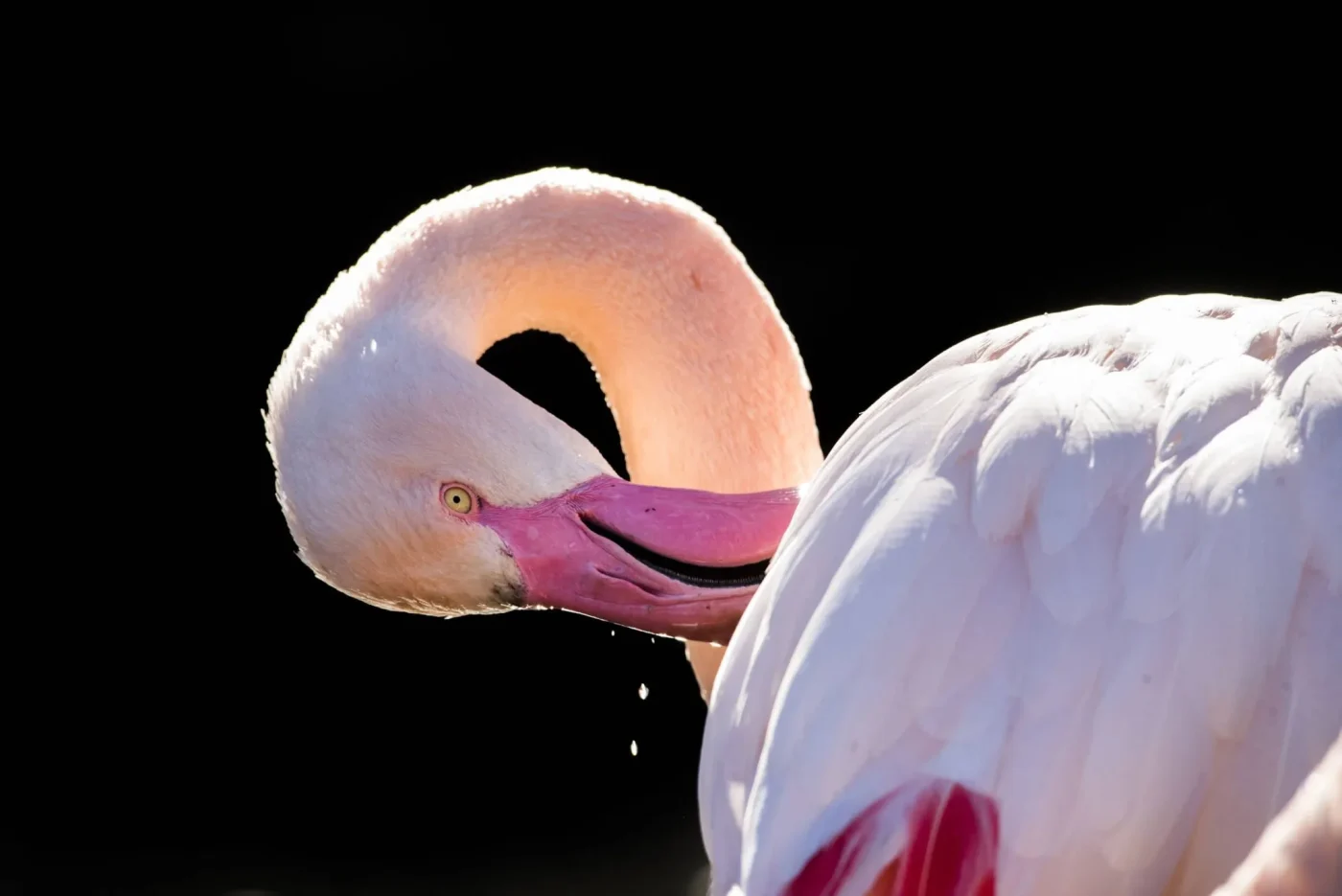
At rest, it is not uncommon to see the pink flamingo on one leg with its head tucked under its wing. When it bends one of its two legs, the flamingo’s body tilts slightly forward under the effect of gravity and then locks. This position requires no effort from them.

What are its predators?

As adults, these birds have few predators. Eggs and chicks, on the other hand, are hunted by gulls or marabou storks. They mainly target abandoned eggs or chicks that get trapped by salt accumulating around their ankles. Because of this low predation among adults, the greater flamingo can reach up to 50 years old in the wild, and some in captivity have lived over 60 years.

What is it threatened by?

With around 25,000 breeding pairs within the European Union, of which 25% are in France, the population of pink flamingos on our continent seems stable. Disturbances, destruction, and the drying up of wetlands remain the main threats to pink flamingos. When a disturbance affects the colony, it can lead to reproductive failure of all present pairs. The destruction and drying up of their natural habitat can lead to increased predation on nests or even too high a concentration of salt in the water, limiting food sources and reducing the survival of many young birds.

Discover other species: rhinoceros, serpent eagle, wild dog, lion, hippopotamus, gorilla, giraffe, African elephant, cheetah, caracal, meerkat, zebra, ring-tailed lemur, serval, golden eagle, white lion, gelada, ostrich, sand cat, dik-dik, snowy owl, grey crowned crane, Nile crocodile.

Other animals to discover