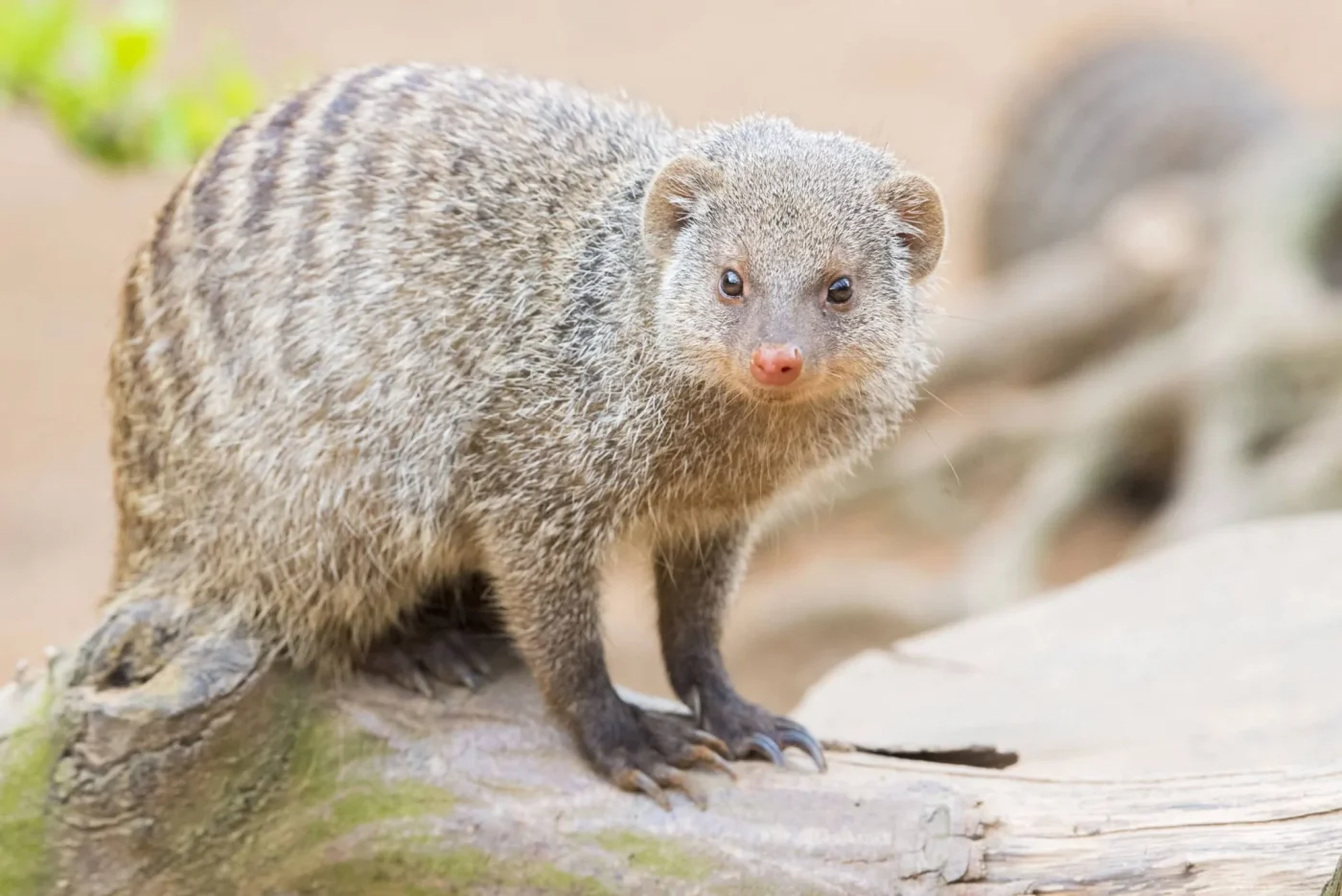
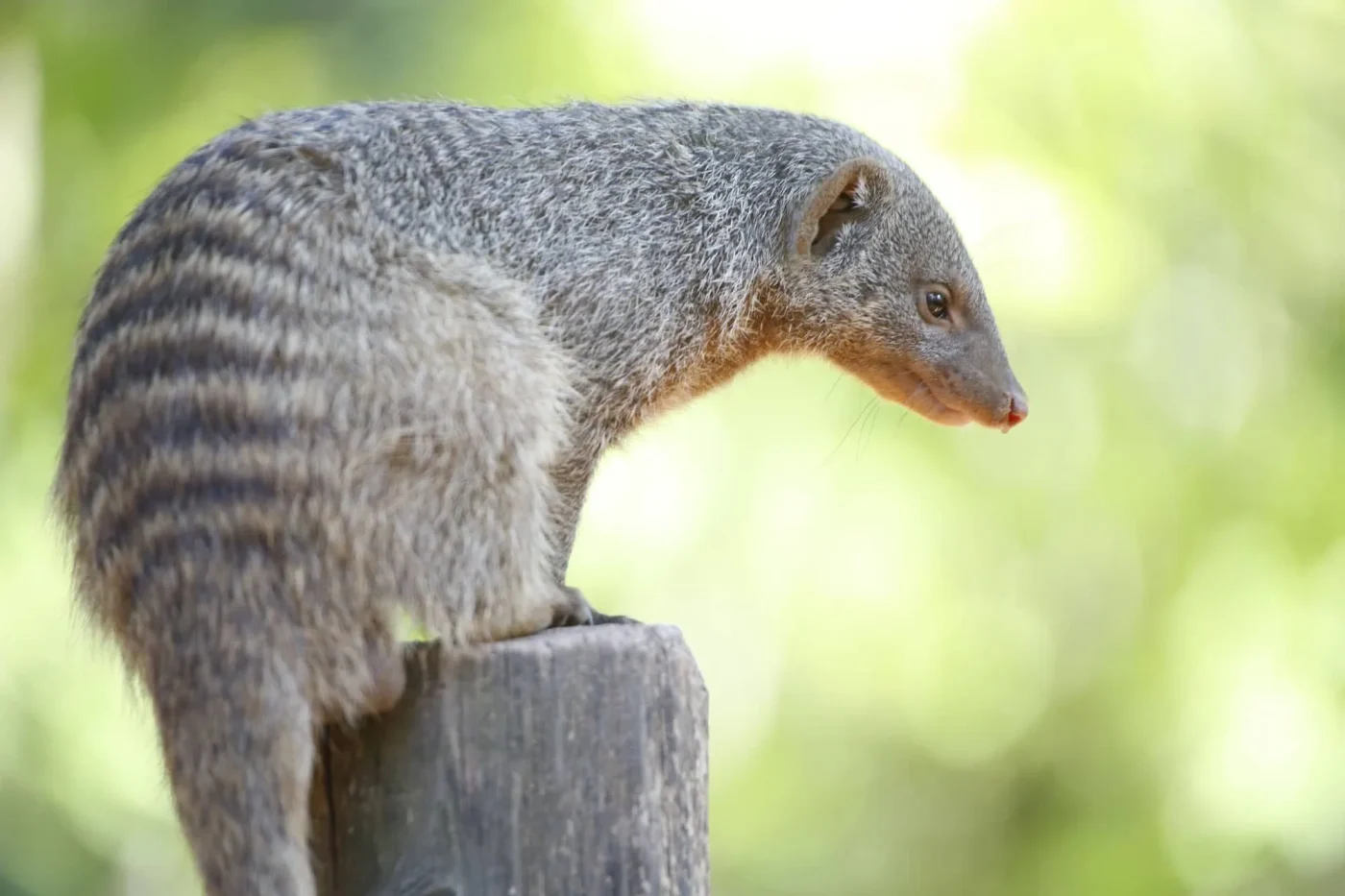
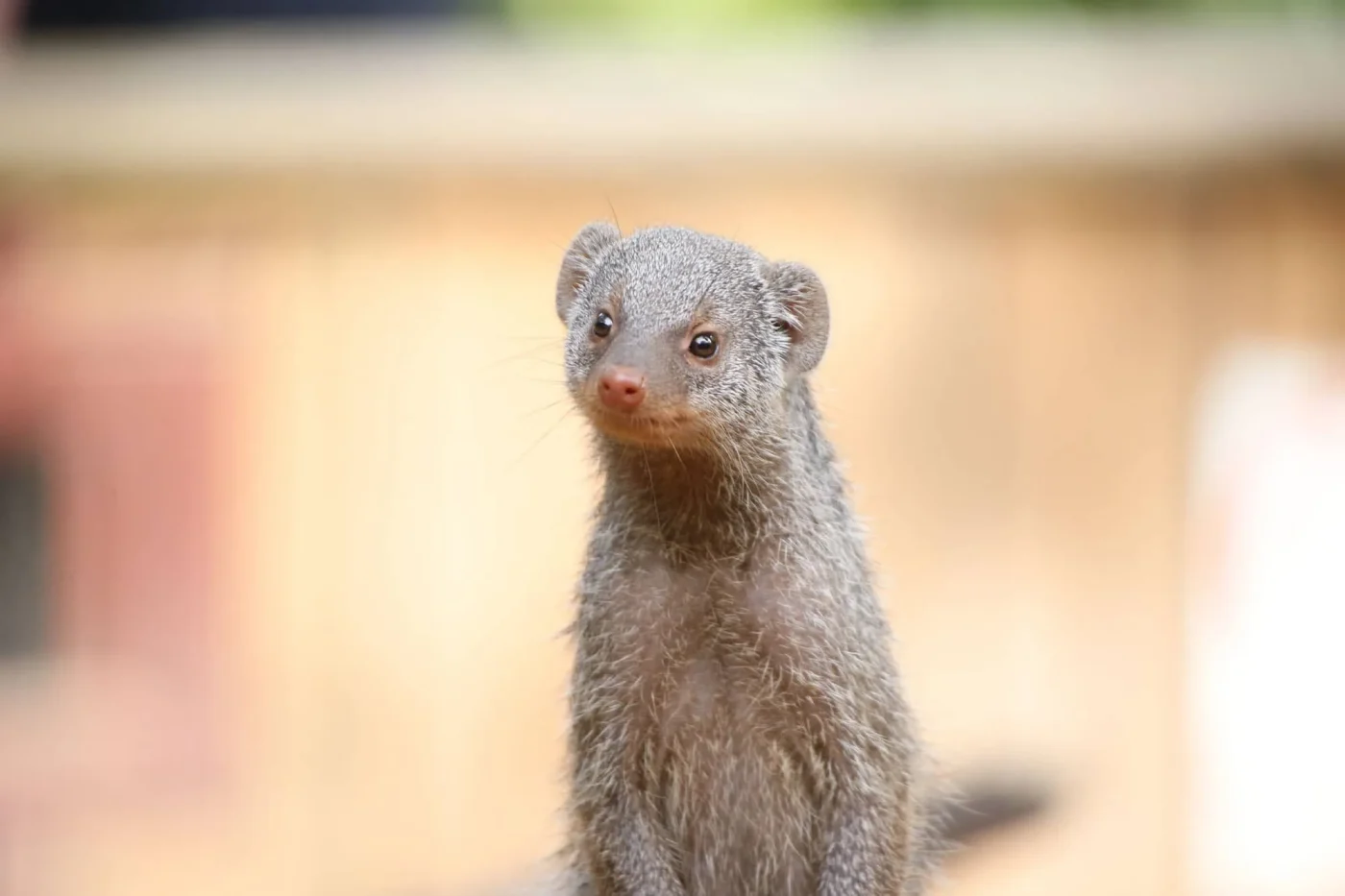
When members of the group go in search of food, several females, usually one for every eight young, stay with the latter. When danger is detected, an individual gives an alert by emitting a sharp warning cry. Some individuals may stand upright on their hind legs to assess the situation. If the terrain allows for an easy escape, they scatter and stay in contact thanks to their cries. On the other hand, if escape is not possible, all group members gather with the youngest in the center to protect them.
Each individual searches for its own food, which consists mainly of insects but also fruits, leaves, small mammals, and reptiles. Mongooses also enjoy finding eggs or snails; they will then use their forelegs to hurl them backward against a solid surface. However, when a large prey is found, such as a snake, mongooses cooperate to overcome it. Disabled or elderly individuals are not left behind; food will be brought to them by their companions.
To occasionally have privileged access to food, banded mongooses maintain a symbiotic relationship with warthogs, also known as savannah wild boars. The latter let the mongooses move easily on their bodies to rid them of parasites and insects that cover them. Thus, they relieve the warthogs, who in return offer them some protection against predators simply by their presence.