Mungos mungo

Banded mongoose

Order: Carnivora / Family: Herpestidae / Genus: Mungos

What is a banded mongoose?

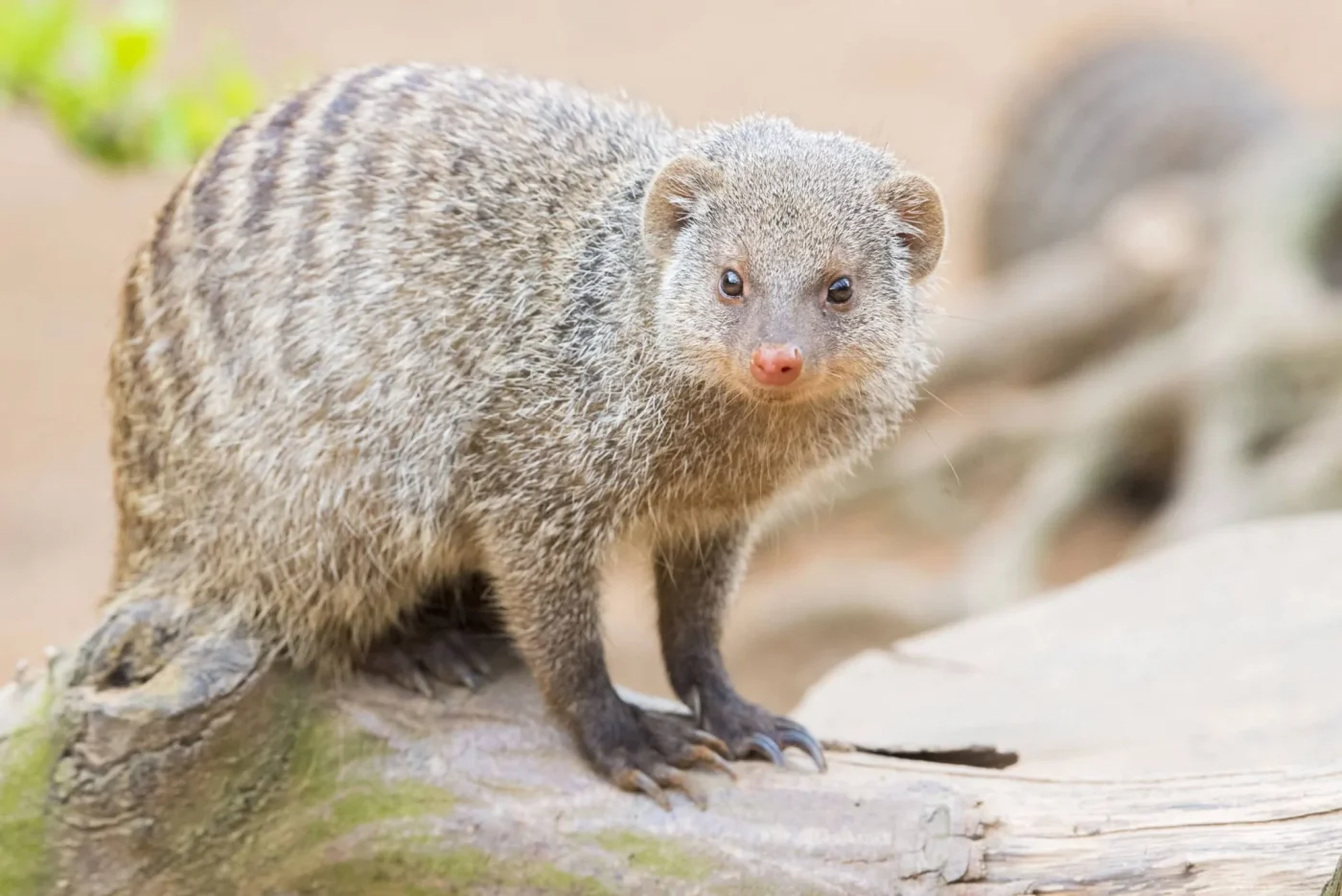
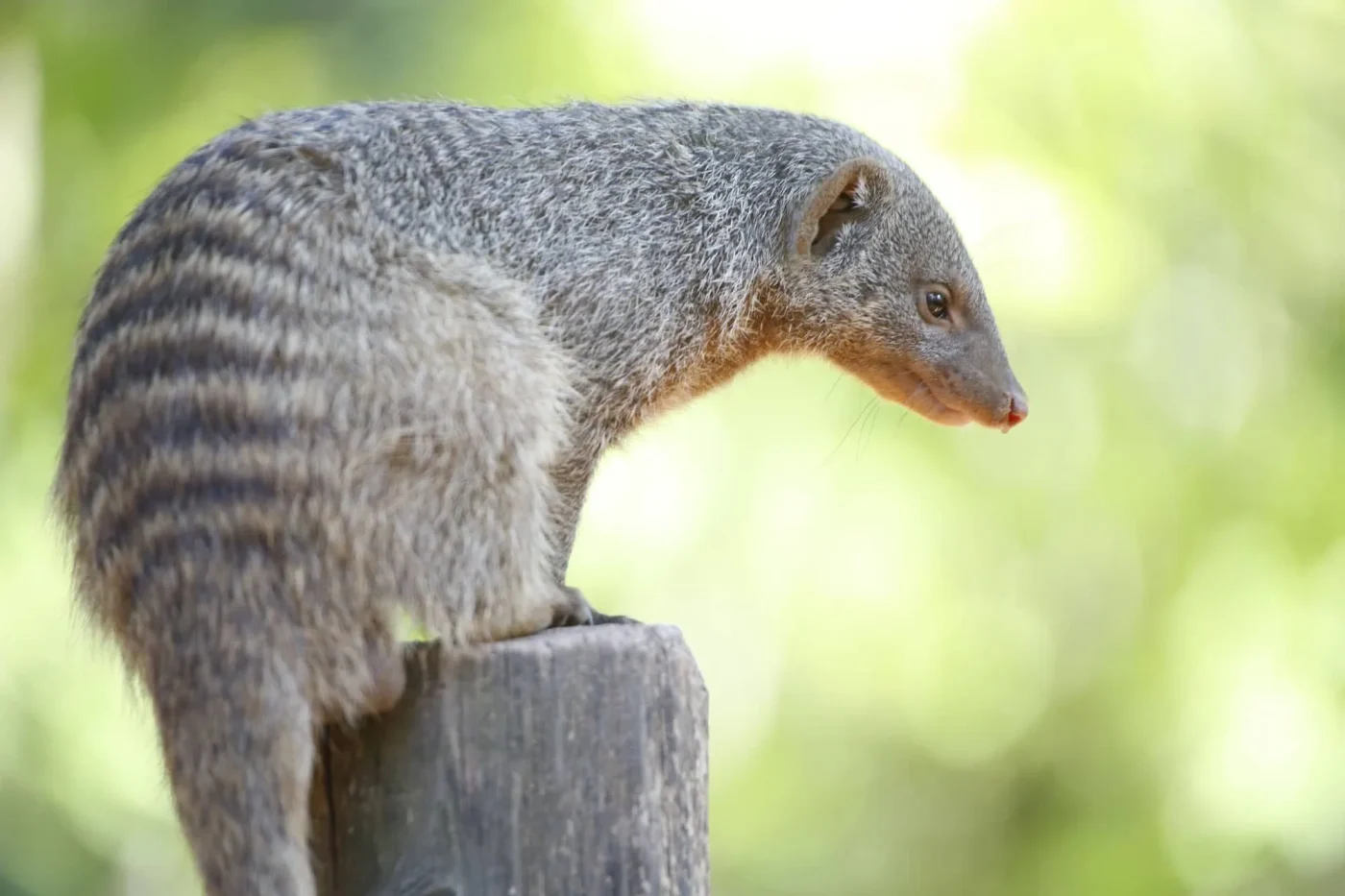
The banded mongoose can be distinguished from other mongooses by the black bands on its back. Native to Africa, it inhabits the grasslands, wooded areas, or rocky areas of sub-Saharan regions from Gambia to Ethiopia and down to South Africa. It is often observed near water points. It is absent from desert and semi-desert regions. The mongoose often lives near termite mounds, which serve as a food resource.

Weight

1000-1500 g

Habitat

Semi-desert, savanna, grassland

Diet

Omnivore

Gestation

60 days

Longevity

10 years

Longevity

12-17 years

Location

Africa
Frequently Asked Questions

Where does the banded mongoose live?

The banded mongoose can be found in several African countries: from Gambia to Ethiopia and South Africa.

Breeding strategy

All the females in a group can reproduce. The fairly short gestation period is two months and a litter comprises between 2 and 6 young. Reproduction within a group is synchronized, which allows the young to be nursed by any lactating female. All members of the group take care of the young and move together, maintaining close contact thanks to very specific vocalizations. At birth, the young are blind and almost hairless. After 5 weeks, the young mongooses accompany the adults on food searches.

Although they appear gentle and adorable, the banded mongoose can sometimes display sporadic violence towards members of their own group. Often motivated by competition in reproduction, this behavior may result in some individuals leaving to form new groups, thus avoiding inbreeding.

Outside the breeding season, these diurnal animals regularly change dens, favoring preferred sites and finding already existing holes or those dug by other species.

What does it eat?

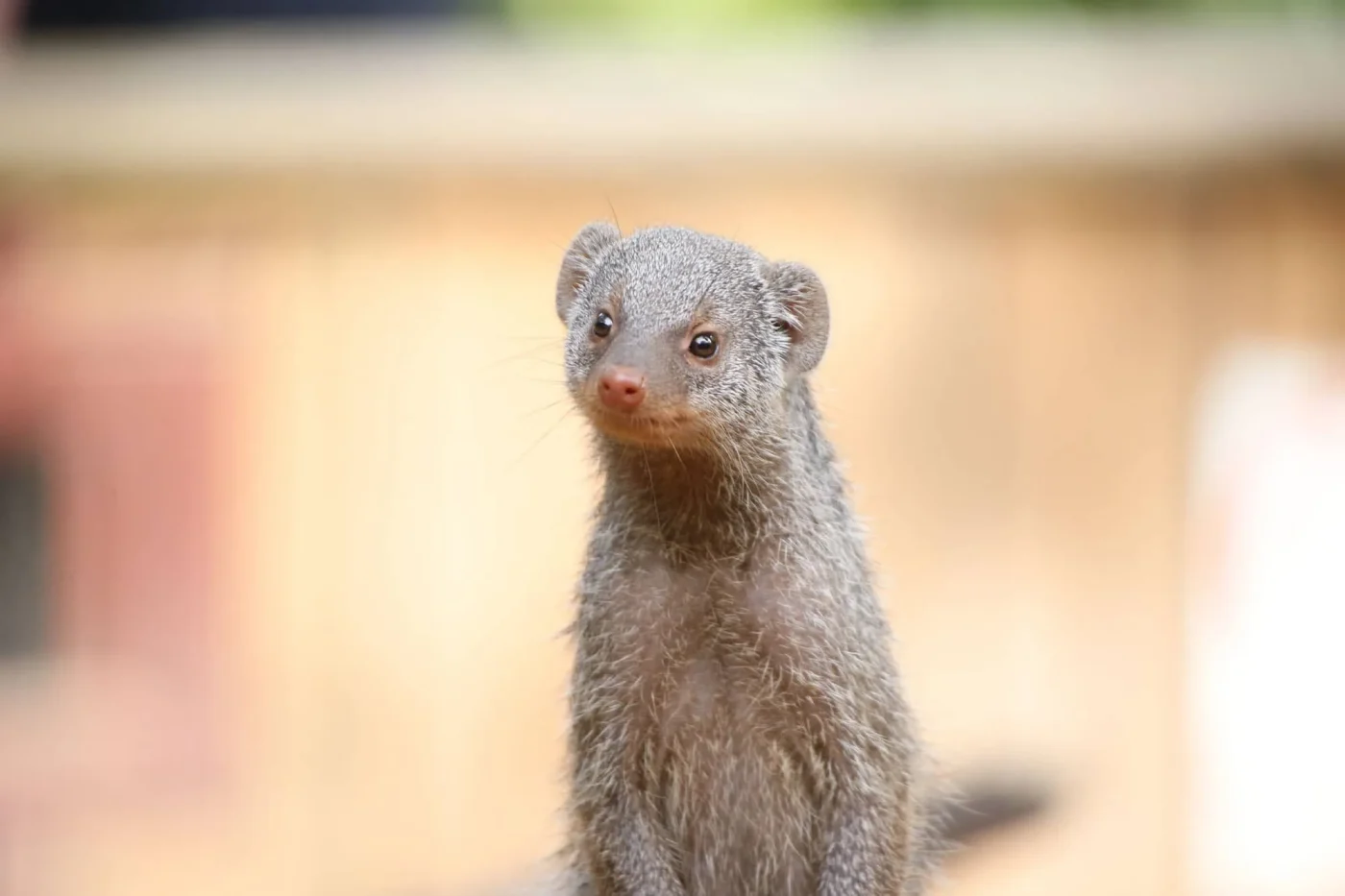
When members of the group go in search of food, several females, usually one for every eight young, stay with the latter. When danger is detected, an individual gives an alert by emitting a sharp warning cry. Some individuals may stand upright on their hind legs to assess the situation. If the terrain allows for an easy escape, they scatter and stay in contact thanks to their cries. On the other hand, if escape is not possible, all group members gather with the youngest in the center to protect them.

Each individual searches for its own food, which consists mainly of insects but also fruits, leaves, small mammals, and reptiles. Mongooses also enjoy finding eggs or snails; they will then use their forelegs to hurl them backward against a solid surface. However, when a large prey is found, such as a snake, mongooses cooperate to overcome it. Disabled or elderly individuals are not left behind; food will be brought to them by their companions.

To occasionally have privileged access to food, banded mongooses maintain a symbiotic relationship with warthogs, also known as savannah wild boars. The latter let the mongooses move easily on their bodies to rid them of parasites and insects that cover them. Thus, they relieve the warthogs, who in return offer them some protection against predators simply by their presence.


Way of life

Among the thirty or so mongoose species, ranging from 23 to 75 cm, the banded mongoose is medium-sized, with an adult individual reaching up to 1.5 kg and 60 cm. It is also the most social among the different species, living in groups of 10 to 20 individuals. The social organization appears to be matriarchal, so a female is at the top of the hierarchy.

What are its predators?

Due to its size, the banded mongoose has many predators such as the marabou stork, birds of prey, the Nile monitor, the African rock python, as well as the largest carnivores. The mortality rate among the young is therefore very high, less than 50% reach the age of 3 months.

What threatens her?

The banded mongoose is not particularly threatened. Its range is extensive and it adapts quite well to human activities. It is listed as “Least Concern” on the International Union for Conservation of Nature Red List. However, it is sometimes consumed locally.

Discover other species from the African continent: rhinoceros, secretary bird, African wild dog, lion, hippopotamus, gorilla, giraffe, African elephant, cheetah, caracal, meerkat, zebra, ring-tailed lemur, serval, golden eagle, white lion, gelada, ostrich, sand cat, dik-dik, flamingo, fennec fox, red river hog, Nile crocodile.

Other animals to discover