Crocuta crocuta

Spotted hyena

Order: Carnivora / Family: Hyaenidae / Genus: Crocuta

HABITAT

Originally present throughout the entire African continent as well as the Eurasian continent, the range of the spotted hyena is now concentrated in sub-Saharan Africa. The regions with the largest populations are found in Tanzania and Kenya. It inhabits various open and dry environments such as savannahs, semi-desert areas, acacia scrublands, or even mountainous regions up to 4,000 meters in altitude.

Weight

40 to 65 kg

Habitat

Savanna

Diet

Carnivore

Gestation

98 to 111 days

Longevity

12 years

Longevity

12-17 years

Location

Sub-Saharan Africa
Frequently Asked Questions

Description

The spotted hyena belongs to the order Carnivora and the family Hyaenidae. It is the largest among the 4 existing species of hyenas (Hyaena brunnea, Hyaena hyaena and Proteles cristata).

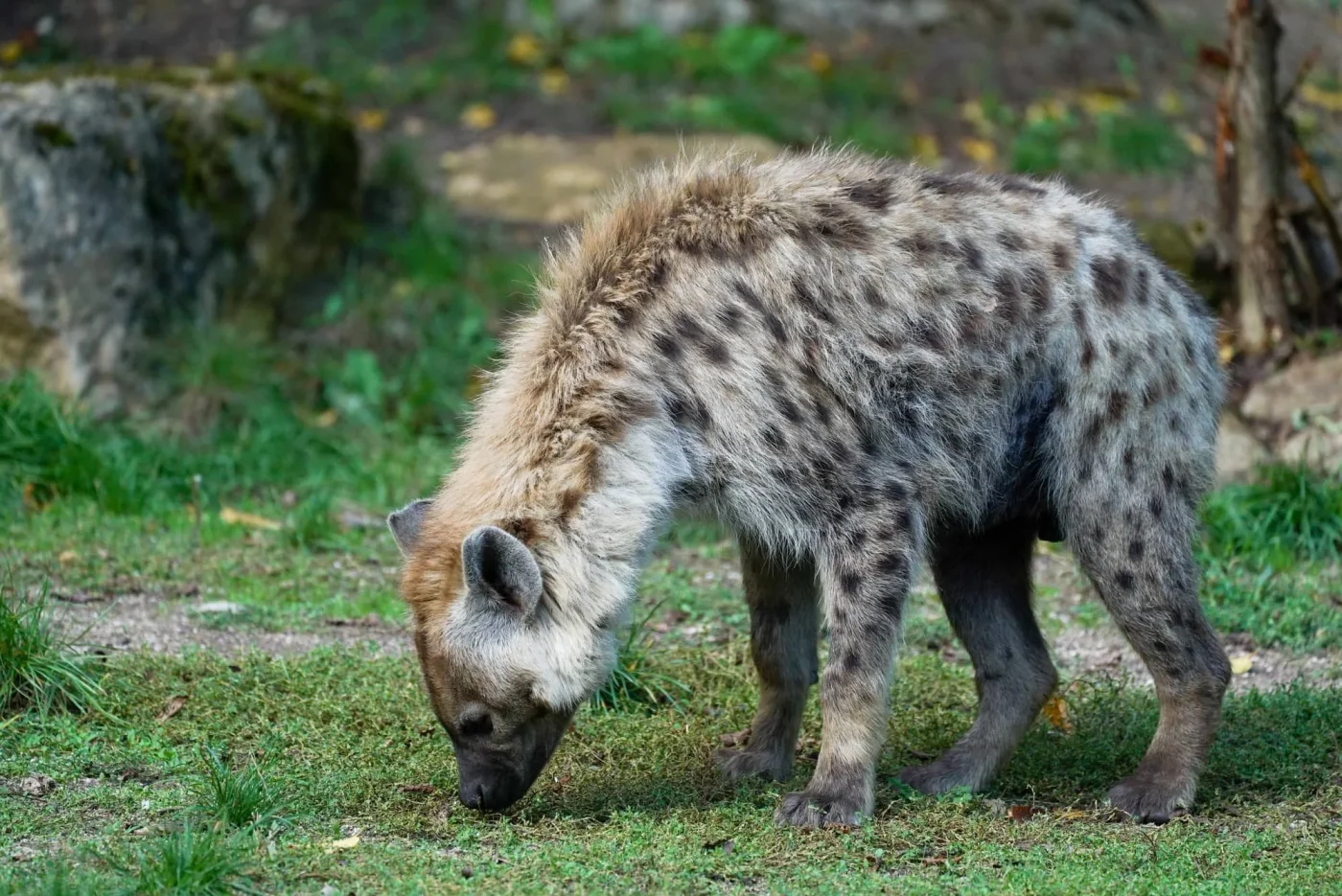
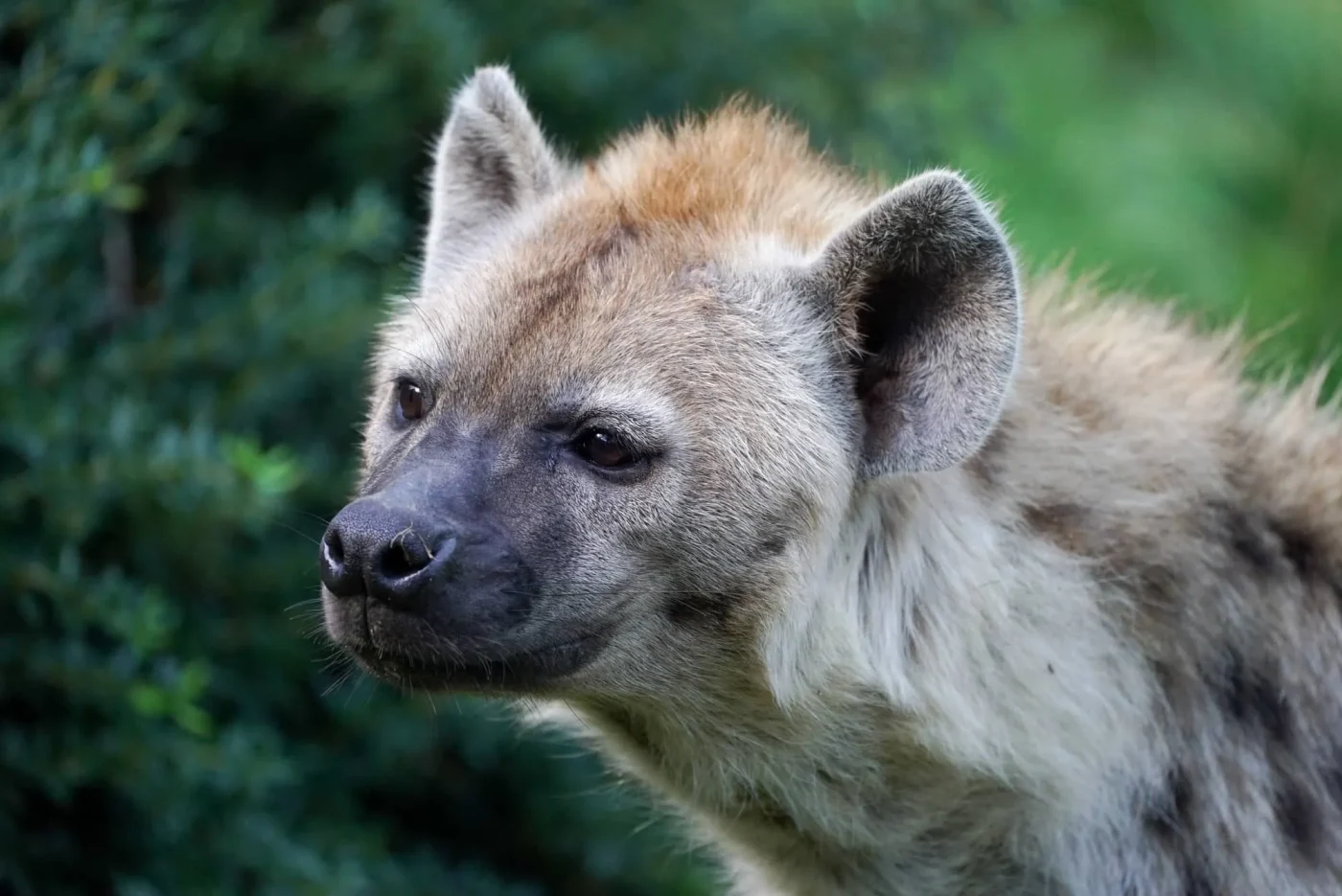
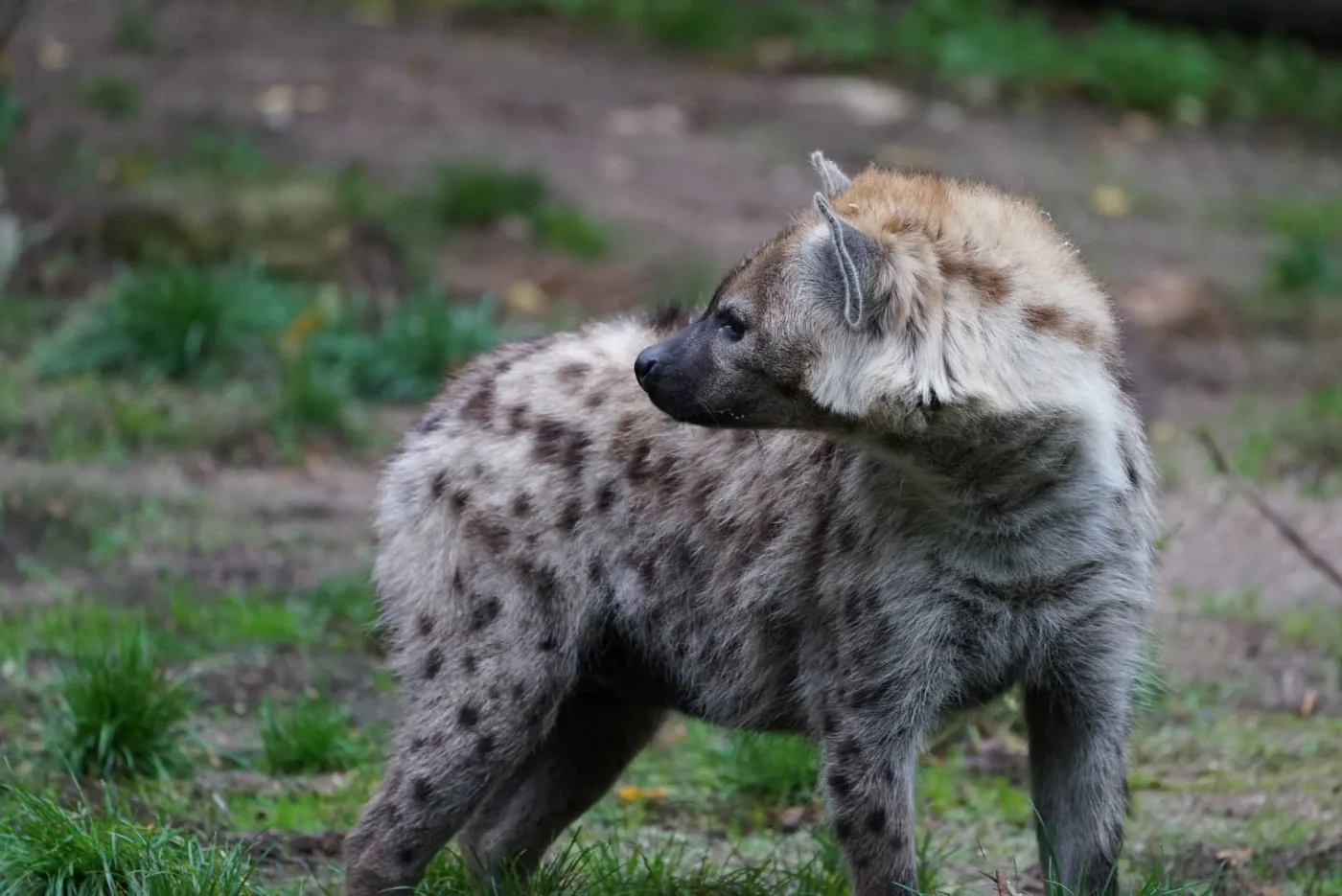
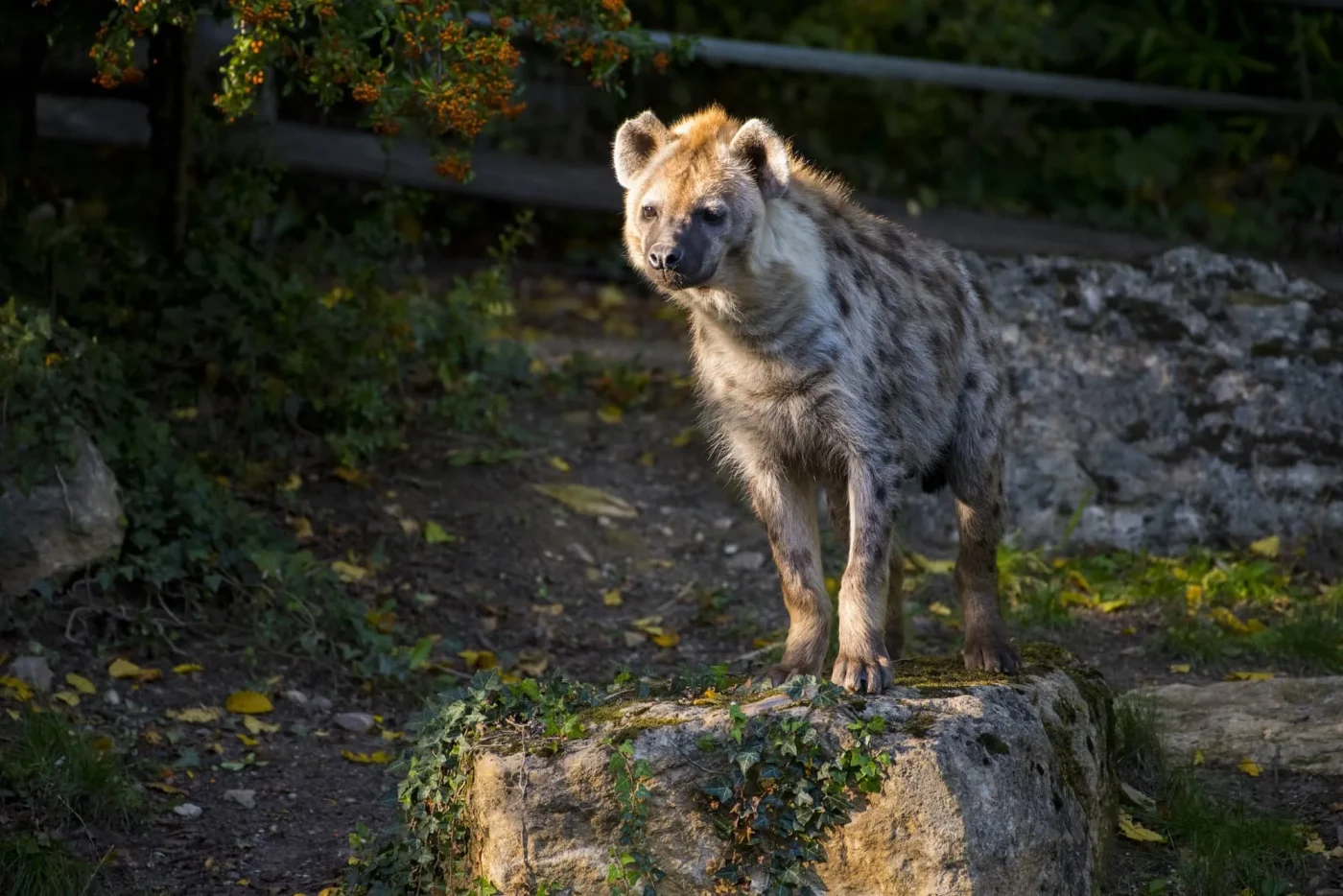
The spotted hyena has a coat whose color varies from creamy brown to gray. As its name suggests, its body is covered with dark brown spots. The older the individual gets, the more the spots fade. The body length ranges from 0.95 to 1.50 meters with a shoulder height of 75 to 85 cm. The tail is bushy and is about thirty centimeters long. The stocky body extends into a thick neck and ends with a large head with rounded ears. The jaw is broad and powerful. The silhouette of spotted hyenas is unusual due to the front legs being longer than the hind ones. The 4 claws present on each paw are not retractable.

There is sexual dimorphism in spotted hyenas. Indeed, females are larger and more massive; they can weigh more than 70 kg while males rarely exceed 60 kg. However, telling the difference between a male and a female is not an easy task. Females have the peculiar feature of having genital organs shaped identically to those of males. In fact, they are endowed with a hypertrophied clitoris that mimics the shape of the male reproductive organ, called a peniform clitoris. Inside this pseudo-penis is a urogenital canal. This means that the female urinates, mates, and gives birth to her young through her pseudo-penis. To make things even more complicated, the clitoris is even capable of becoming erect! The similarity doesn’t end there as females possess two pouches filled with fibrous tissue in the pelvic region.

Behavior

Spotted hyenas are social animals that live in groups called clans. The size of the groups depends on the available food resources; in areas where prey is abundant, up to 80 individuals can be counted in a clan. On the other hand, in areas where there is little prey, the groups will be smaller and may only have 3 individuals.

This species has a strictly matriarchal social system, meaning it is the females who are dominant. Even the lowest-ranking female in the hierarchy is dominant over all the males. Hierarchical position is passed from mother to daughter in each generation. This dominance of females at the top of the hierarchy is due to the fact that males disperse from their birth group to other clans. When a male joins a new group, he enters at the very bottom of the hierarchy. As males die and new males arrive in the clan, he will gradually rise in the hierarchy.

Particularly aggressive toward males throughout the year, it is only during the breeding season that females allow themselves to be approached.

To communicate, spotted hyenas produce a wide variety of vocalizations such as growls, whines, or howls. But the most well-known remains its laugh. Each individual has its own vocalizations, allowing them to recognize each other. This laugh can express different information such as excitement during the hunt or submission. Another call, called the whoop, is used to defend their territory and warn of their presence.

These animals are both diurnal and nocturnal. At night, their very good eyesight allows them to easily recognize their conspecifics.

What does the hyena eat?

Often considered as exclusively scavenging animals, spotted hyenas are actually excellent hunters; more than 70% of their diet consists of prey they have hunted themselves. They are capable of consuming a wide range of prey: wildebeests, zebras, gazelles, cobs, buffalo, impalas, warthogs, hares, porcupines, vipers, domestic animals, lions, and even other hyenas. During hunts, hyenas split into small groups of 2 to 5 individuals. High-ranking females associate with related females rather than lower-ranking ones.

They are able to recognize the circling of vultures above a carcass to feed effortlessly. They can also practice kleptoparasitism, which consists of stealing freshly hunted prey from another species such as lions or cheetahs. Since their prey is similar, this practice leads to great rivalry with various species, especially with lions.

Thanks to their developed senses and enhanced endurance, they pursue their prey until exhaustion, reaching speeds of up to 60 km/h. After their meal, there will be no trace left of their prey! With some of the most powerful jaws in the animal kingdom, with a bite force of nearly 3 tons per cm², they can break elephant bones. This is why the excrement of spotted hyenas is very often white, as it contains a high amount of calcium.

Reproduction strategy

In spotted hyenas, the mating system is a polygyny, which means that one male can mate with several females, but a female only reproduces with one male.

Since females are dominant, males must carry out a sort of submission ritual to win the favor of females and be able to reproduce. Due to the particular anatomy of the females’ reproductive organ, mating is not easy. The males must slide their pelvis under the female to begin penetration. Then in a second phase, he mounts the female in a more conventional position.

Within a clan, all females can reproduce. However, high-ranking females reproduce earlier and have shorter intervals between litters. Furthermore, the mortality rate of the young is lower. These advantages are believed to result from privileged access to food resources.

After a gestation of about 4 months, the female gives birth to a litter of 1 to 4 young. The female gives birth in a den, often abandoned by another species such as the warthog, for example. During birth, the clitoris tears and only heals after a few weeks. At birth, the young weigh between 1 and 1.6 kg, have completely black fur, and already have their eyes open. Violent fights occur shortly after birth, which often results in the death of one of the young. Two to six weeks after birth, the female moves the young to a communal den shared by all the females in the clan. This helps develop social behaviors in the young. However, there is no shared care, meaning each female takes care of her own young.

They begin eating meat around 3 months and are weaned between 14 and 18 months. Very rare among carnivores, by this age the young will have already acquired all of their adult teeth. Sexual maturity is reached at around 3 years old. From then on, males leave their original group to join another clan, while females generally remain within their family. Females can produce a litter every 11 to 21 months.


Threats and conservation

The spotted hyena is not considered an endangered species today. Nevertheless, due to habitat destruction, as well as hunting and poisoning, their populations are declining. Some traps set out to catch large herbivores cause many casualties among spotted hyenas. Considered dangerous, as soon as a group of hyenas nearby is suspected of attacking livestock, it may be killed. Moreover, due to their proximity to humans, stray dogs transmit diseases to carnivores such as hyenas, increasing mortality.

Discover other species from the African continent: rhinoceros, secretary bird, African wild dog, lion, hippopotamus, gorilla, giraffe, African elephant, cheetah, caracal, meerkat, zebra, ring-tailed lemur, serval, golden eagle, white lion, gelada, ostrich, sand cat, dik-dik, flamingo, fennec, banded mongoose, steppe eagle, crested crane, red river hog, ball python, rock hyrax.

Other animals to discover