Varanus exanthematicus

Savannah monitor

Order: Squamata / Family: Varanidae / Genus: Varanus

Description

Due to its wide geographical range, the savannah monitor species, Varanus exanthematicus, is divided into five subspecies. Therefore, there are measurement differences according to the different subspecies.
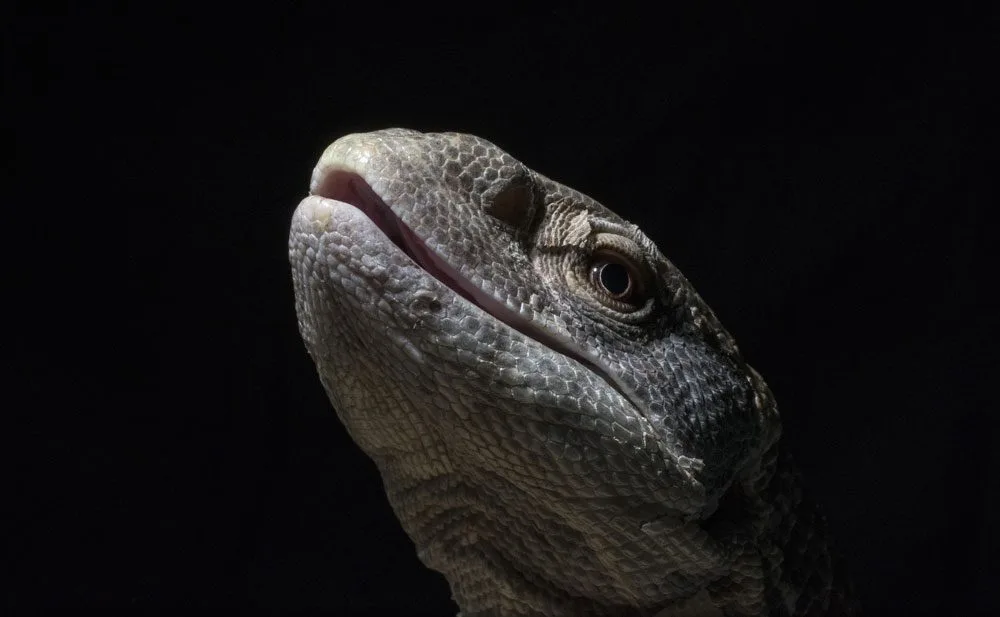
In general, it is a monitor with a broad and stocky body. Its head is wide, and it has a short neck and a fairly short tail. Depending on the subspecies, its length varies between 1.5 and 2 meters and its weight ranges from 1 to 70 kilograms.
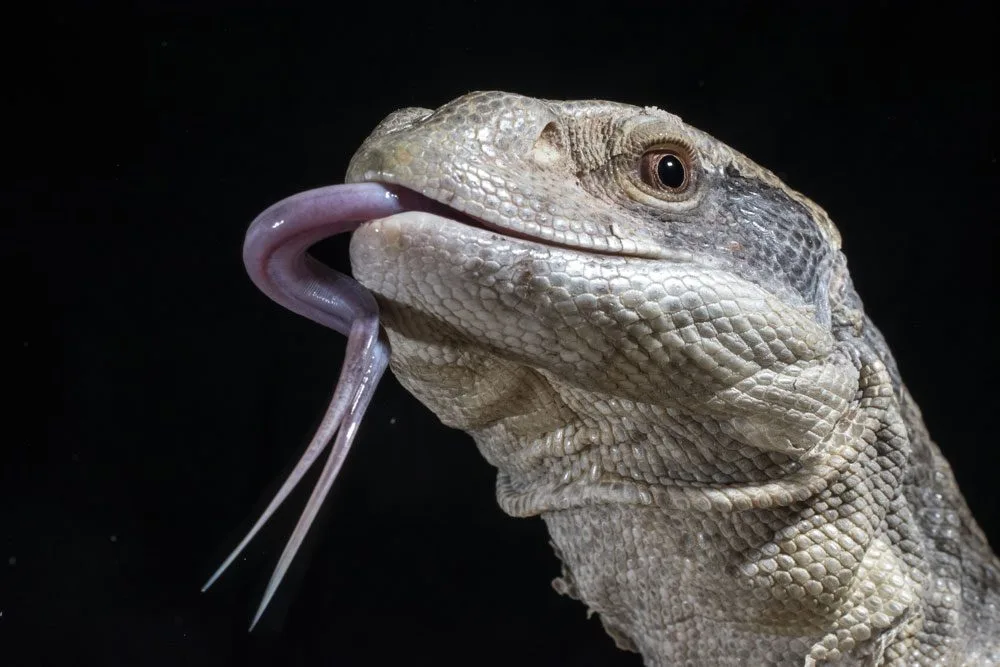
The animal’s belly is yellowish, while the dorsal part varies from gray to brown. Additionally, its back is covered with yellow spots bordered by dark brown. The tail is ringed with yellow and brown bands. The scales of the tail are keeled, which means they have a slight ridge along their length. Its forked tongue is bluish.

Weight

Habitat

Savannahs, grasslands

Diet

Omnivore: snails, small mammals, lizards, insects, eggs

Gestation

5-6 months

Longevity

10-15 years

Longevity

12-17 years

Location

Mainly in savannahs in sub-Saharan Africa
Frequently Asked Questions

Where does the savannah monitor live?

The savannah monitor, or Varanus exanthematicus, is found on the African continent. Its geographical range is a band located between the Sahara Desert and the tropical forest. As a result, it is found from Senegal to the Central African Republic, as well as in southern Sudan, Ethiopia, Eritrea, and South Sudan. This monitor can live in different African habitats. It is particularly fond of the savannah, but its adaptability allows it to live in rocky deserts, grasslands, bushy prairies, open forests, and even agricultural areas. However, it is not found in rainforests. Individuals have been recorded at altitudes up to 1,400 meters.

This varanus is a reptile belonging to the Varanidae family, and it is part of the genus Varanus, which includes several species of monitor lizards. As a predator, the monitor has a varied diet, feeding on birds and other animals, which it catches thanks to its sharp claws and long tail. The reproduction of monitors occurs through the laying of eggs, which the females take care of. Individuals have been observed in Mexico, near Puerto Vallarta, in 2010, which could suggest that an introduced population is established in this region. Thus, the savannah monitor remains a species that continues to attract the attention of scientists and reptile enthusiasts.

Behavior

Savannah monitors are diurnal reptiles, so they are active during the day. During the hottest hours of the day, they seek refuge in burrows. The environment is analyzed using their tongue, which they flick about 10 to 20 times per minute.
Male savannah monitors are extremely territorial and defend their territory aggressively. When two males meet, they start by threatening and intimidating each other. This takes the form of hissing and tail movements. If neither one backs down, a physical fight ensues. At this point, each tries to bite the opponent violently. The injuries inflicted are significant and can be serious.

What does it eat?

The savannah monitor does not feed all year round. It eats abundantly during the rainy season in order to build up fat reserves. At this time, it can eat up to a tenth of its body weight in a single day. When the dry season arrives, it lives on the accumulated fat reserves.
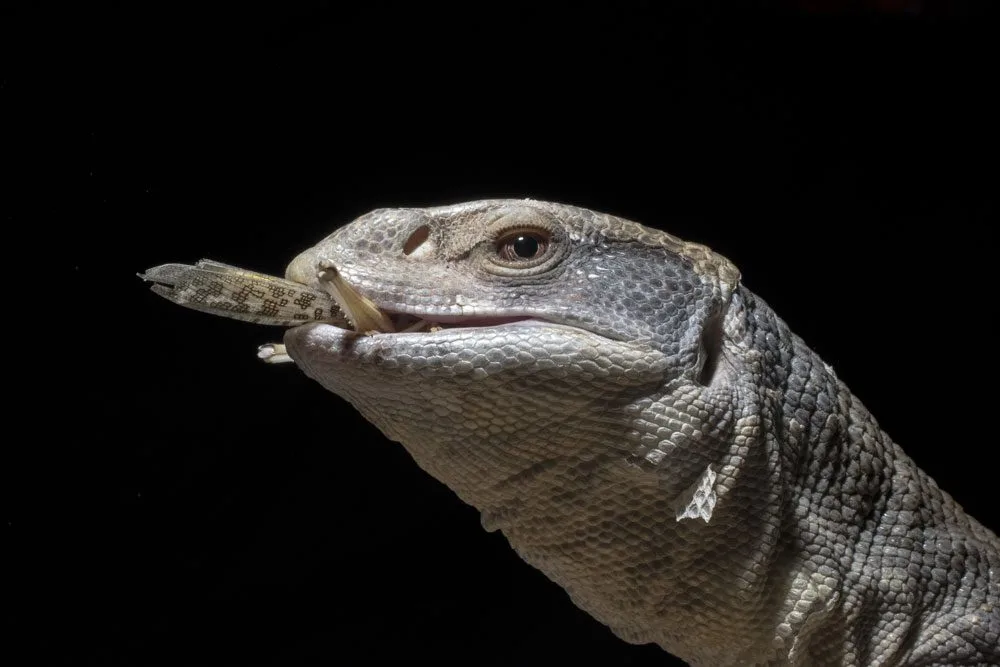
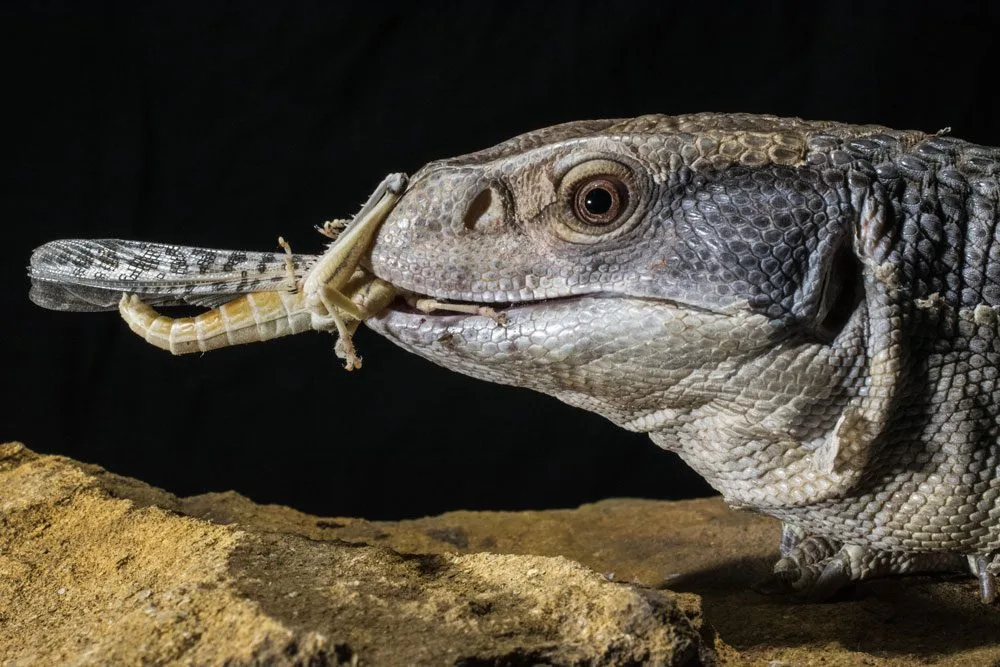
The diet of savannah monitors is still debated. In fact, scientists agree that adults eat a lot of snails and juveniles eat insects. However, some sources indicate that adults are capable of eating a wide variety of vertebrates such as small mammals, birds, snakes, toads, lizards, and eggs. The jaw of the savannah monitor has teeth with blunt tips. However, the jaw joint is designed to develop significant leverage to the rear in order to break snail shells. Carcasses can be exploited by adults. In addition, these are monitors capable of eating toxic millipedes. The technique is simple: they rub their chin on the millipede to make it excrete its defensive liquid. This effective technique can take up to 15 minutes.
Juveniles are insectivores because their jaws cannot break the shells of snails and thus cannot feed on them.
Once the savannah monitor has bitten prey it searches for it using its tongue, which can come out up to 80 times per minute.

Breeding strategy

The breeding season extends throughout the rainy season, so from July to November. Once a male has spotted a female, he follows her everywhere and scratches her legs and neck with his claws. From time to time, he may also bite her neck. If this courtship pleases the female, she then accepts to mate.
It is the female who digs a hole about 15 to 30 cm deep to lay between 15 and 50 eggs, each 36mm long and 23mm wide, with a soft shell. Some observations mention egg-laying behavior in termite mounds. After an incubation period of 5 to 6 months, the young break the shell. Almost all births occur in March. In this monitor, almost all the eggs reach maturity and the hatching rate is close to 100%. At birth the young measure between 12 and 15 cm and weigh about ten grams. During the first 2 months of their lives, the young grow quickly

What threatens it?

Even though the IUCN only classifies it as least concern, the savannah monitor faces numerous threats.
It is hunted as prey for consumption in certain West African countries or for use in traditional medicine.
Unfortunately, it is the most common monitor lizard in pet stores, and more than 100,000 wild individuals are captured each year for export to supply the exotic pet trade. It is also exploited for its skin.
From 1975 to 1986, 13,000 individuals were exported and 1,370,000 skins were recorded. The CITES database indicates that a little less than 650,000 individuals were traded between 1975 and 2005. Between 2010 and 2017, Ghana, Togo, and Benin exported 211,050 live specimens to supply the international exotic pet trade.

Discover other species from the African continent: rhinoceros, secretary bird, African wild dog, lion, hippopotamus, gorilla, giraffe, African elephant, cheetah, caracal, meerkat, zebra, ring-tailed lemur, serval, golden eagle, white lion, gelada, ostrich, sand cat, dik-dik, flamingo, fennec fox, banded mongoose, steppe eagle, grey crowned crane, red river hog, spotted hyena, Nile crocodile, ball python.

Other animals to discover